A tuxedo jacket hangs in the Musée Yves Saint Laurent Paris
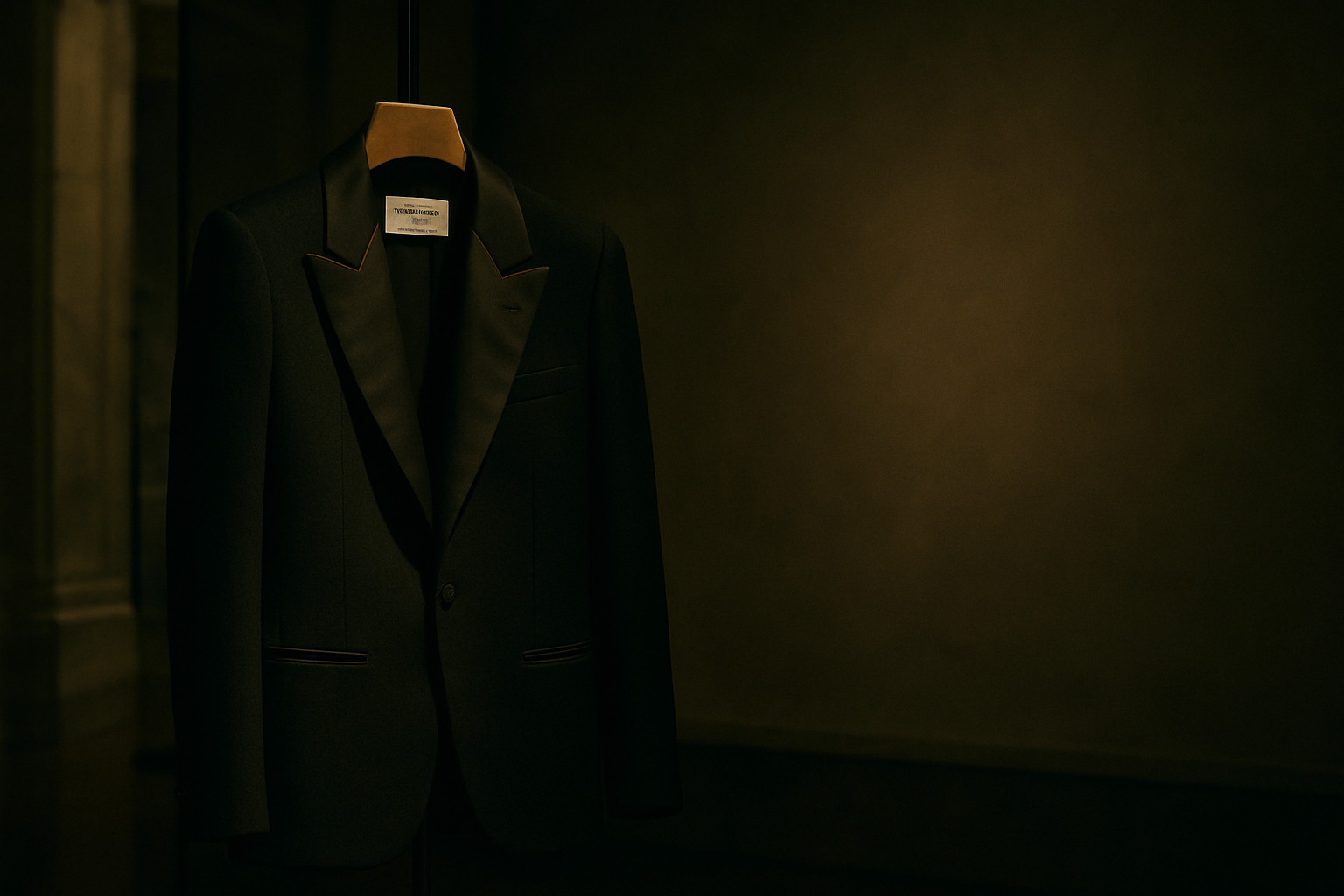
A tuxedo jacket hangs in the Musée Yves Saint Laurent Paris. Black grain de poudre wool, satin lapels, one button. The label reads spring 1966. The cut is narrow through the body, dropped at the shoulder, precise at the cuff. It was made for a woman who had never been offered such a thing before. Fifty-eight years later, the jacket still reads as an act of translation rather than pastiche. That is the work.
1961–2002: Yves Saint Laurent and the original proposition
Yves Saint Laurent opened his own house in 1961 after a brief, turbulent tenure at Dior. He was twenty-five. The maison's first collection showed trapeze lines and soft volume—gestures learned under Christian Dior but pushed toward a younger, lighter silhouette. The press was warm. The business was not yet stable.
What followed over the next four decades was not a single aesthetic but a method: take elements from elsewhere—menswear, workwear, non-Western dress, street culture—and make them legible within haute couture. The tuxedo jacket for women, shown in 1966, became the house's most cited garment, but it was not alone. There were safari jackets in 1968. Trouser suits cut from men's suiting cloth. Transparent blouses worn with nothing underneath, shown in 1968 and considered scandalous at the time. Peasant blouses and Ballets Russes references in the 1970s. Each piece borrowed a vernacular and re-rendered it in the language of French tailoring.
Saint Laurent worked with a narrow set of materials—wool crepe, silk satin, gabardine—and returned to the same shapes season after season. The blazer. The blouse. The jumpsuit. The trench. He was not interested in obsolescence. The house produced prêt-à-porter from 1966 onward, and the ready-to-wear line carried the same silhouettes as the couture, scaled for manufacture. This was not dilution. It was distribution.
The house's relationship to gender was often discussed, but the clothes themselves were not theoretical. They were specific. A woman could wear a man's tuxedo, but the one Saint Laurent made for her had a different shoulder line, a narrower lapel, a higher armhole. The gesture was legibility, not disguise.
By the 1990s, the couture shows had become retrospectives of the house's own archive. Saint Laurent revisited the safari, the tuxedo, the peasant blouse. He was not innovating. He was insisting. The final couture collection, shown in January 2002, included forty years of silhouettes compressed into one presentation. The house closed its couture atelier that year. Saint Laurent himself retired. The prêt-à-porter continued under other hands.
2012–2016: Hedi Slimane and the rupture
When Hedi Slimane was named creative director in 2012, he removed the word 'Yves' from the ready-to-wear line. The house became Saint Laurent Paris. The logo changed. The atelier moved from the Avenue Marceau to a new building in the eighth arrondissement. Slimane did not reference the archive in his first collection. He showed skinny jeans, leather jackets, mini skirts, stiletto boots. The silhouette was narrow, hard, young. The models were thin in a way that recalled the early 2000s. The front row was populated by musicians, not editors.
The response was divided. Some critics called it a betrayal. Others called it necessary. Slimane's position was clear: he was not interested in stewardship. He was interested in making Saint Laurent a brand that could speak to a customer who had not been born when Yves Saint Laurent retired.
The clothes were consistent across the four years. Skinny black jeans. Leather biker jackets with zippers at the cuffs and waist. Silk blouses with neck ties. Mini dresses in sequins or velvet. Ankle boots with a stiletto heel. The palette was black, white, metallic, occasionally red. The shows were held in Los Angeles, New York, and Paris. The front rows included rock musicians and actors. The advertising featured young women in dark rooms, often alone, sometimes in pairs. The aesthetic was legible: nighttime, urban, thin, expensive.
Sales grew. The house became one of Kering's most profitable brands. Slimane left in 2016. The circumstances were not made public.
2016–present: Anthony Vaccarello and the return to the body
Anthony Vaccarello was named creative director in April 2016. His first collection for Saint Laurent was shown that October. The silhouette shifted immediately. Shoulders widened. Waists pulled in. Hemlines rose and fell depending on the garment. The palette stayed dark but added gold, bronze, deep green. The reference points were clear: Yves Saint Laurent's 1970s work, specifically the period between 1976 and 1981 when the house showed strong-shouldered blazers, plunging necklines, high-waisted trousers, and fluid evening dresses.
Vaccarello did not reproduce those clothes. He took the proportions—the width of a shoulder, the drop of a neckline, the height of a waist—and applied them to a narrower, more body-conscious cut. The result was a silhouette that read as both archival and contemporary. A blazer might have the shoulder line of a 1978 Saint Laurent jacket, but the body would be fitted through the ribs and waist in a way the original was not. A dress might have the plunge and drape of a 1970s evening gown, but the hemline would hit mid-thigh instead of the floor.
The house under Vaccarello has been steady. The collections do not shift dramatically season to season. There are blazers, blouses, trousers, dresses, and coats. The materials are familiar: wool gabardine, silk satin, leather, velvet. The shows are held in Paris, outdoors when possible, often at night. The Eiffel Tower appears in the background of several presentations. The gesture is clear: this is a Paris house.
Vaccarello has also leaned into the house's relationship to evening wear. Many of his collections include dresses with plunging necklines, open backs, high slits. These are not cocktail dresses. They are dresses for being seen. The house has always made such garments, but under Vaccarello they have become central rather than occasional.
The question facing Saint Laurent now is not about identity. The house has had three distinct creative directors in twelve years, and each has articulated a different vision. The question is about duration. Vaccarello has been in place for eight years. That is longer than Slimane, longer than the tenures of Tom Ford and Stefano Pilati before him. The collections are commercially successful. The silhouette is established. What happens when a house stops changing is not collapse. It is calcification. Whether that is a problem depends on what the house believes it is for.
A blazer from Vaccarello's spring 2024 collection sits in the archive now, next to the 1966 tuxedo jacket. Same house. Different shoulder. Both are black.