Acne Studios, a starter primer
The grey melange sweatshirt with the oversized face logo — the one that looks like a child drew it in felt-tip — is probably the most common point of entry. It's £220, which is high enough to feel like a decision but not so high you need to justify it with a story about construction. Most people who own one bought it because someone they trust wore one first, and that chain of minor influence is more or less how Acne Studios has worked for two decades.
The house started in 1996 as part of a Stockholm creative collective called ACNE — Ambition to Create Novel Expressions, which tells you everything about the era and nothing about what the brand became. Jonny Johansson, who still runs it, began by making a hundred pairs of raw denim jeans with red stitching. He gave them to friends. The friends wore them. Other people asked where to buy them. This is the founding myth, and it's both true and tidier than the reality, which involved years of adjacent projects and a slow realisation that the jeans were the part worth scaling.
By the mid-2000s, Acne had become the Scandinavian answer to a question no one had asked clearly yet: what if a brand felt like art school but functioned like a business? The aesthetic was spare, cerebral, occasionally awkward in ways that read as intentional. Johansson's references leaned toward early Helmut Lang, Margiela's quieter gestures, Japanese proportions, and a specifically Northern European relationship to colour — grey, camel, navy, black, with the occasional slash of crimson or cobalt to prove you were awake. It wasn't minimal in the Jil Sander sense. It was cooler than that, which in 2006 mattered more than it does now.
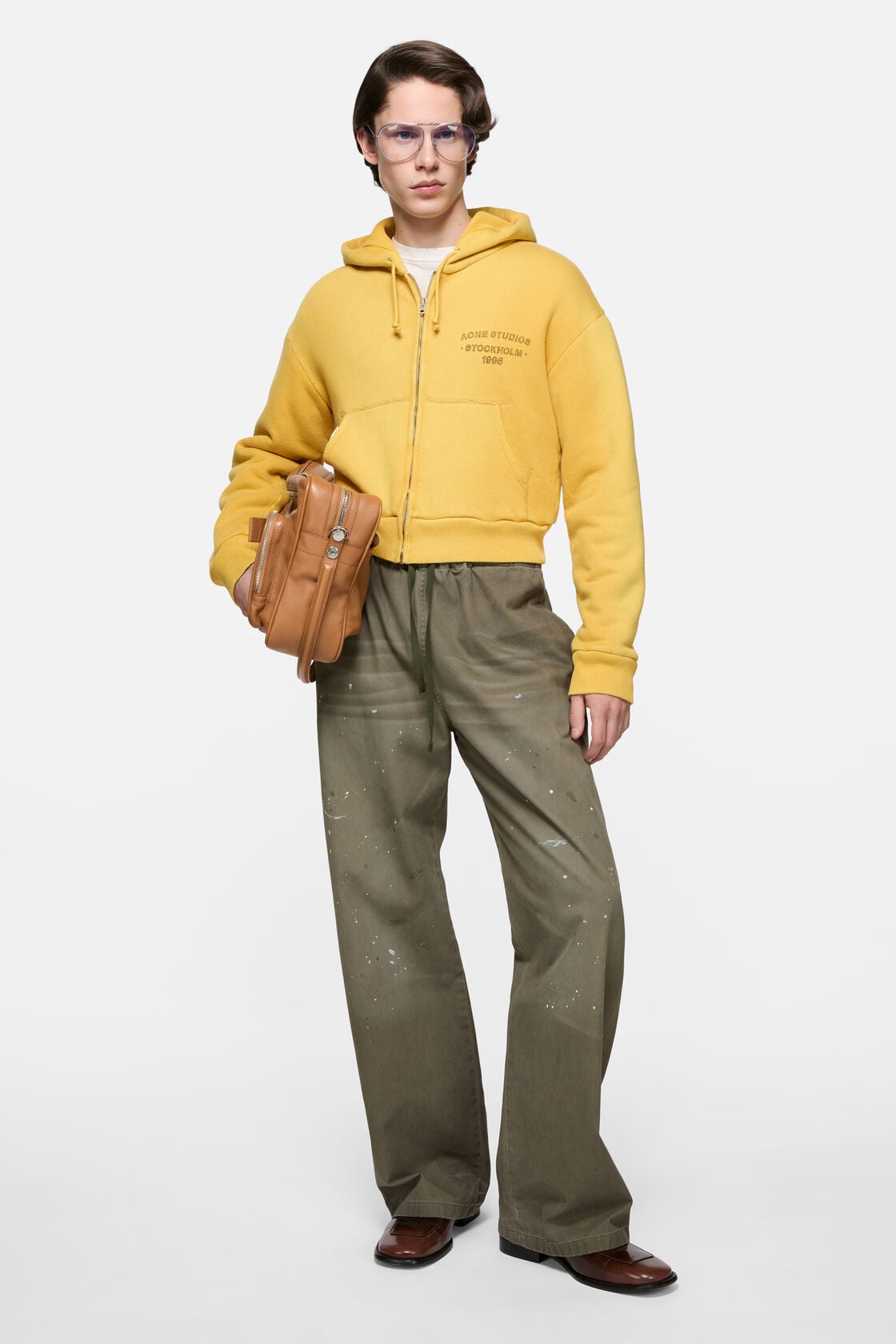
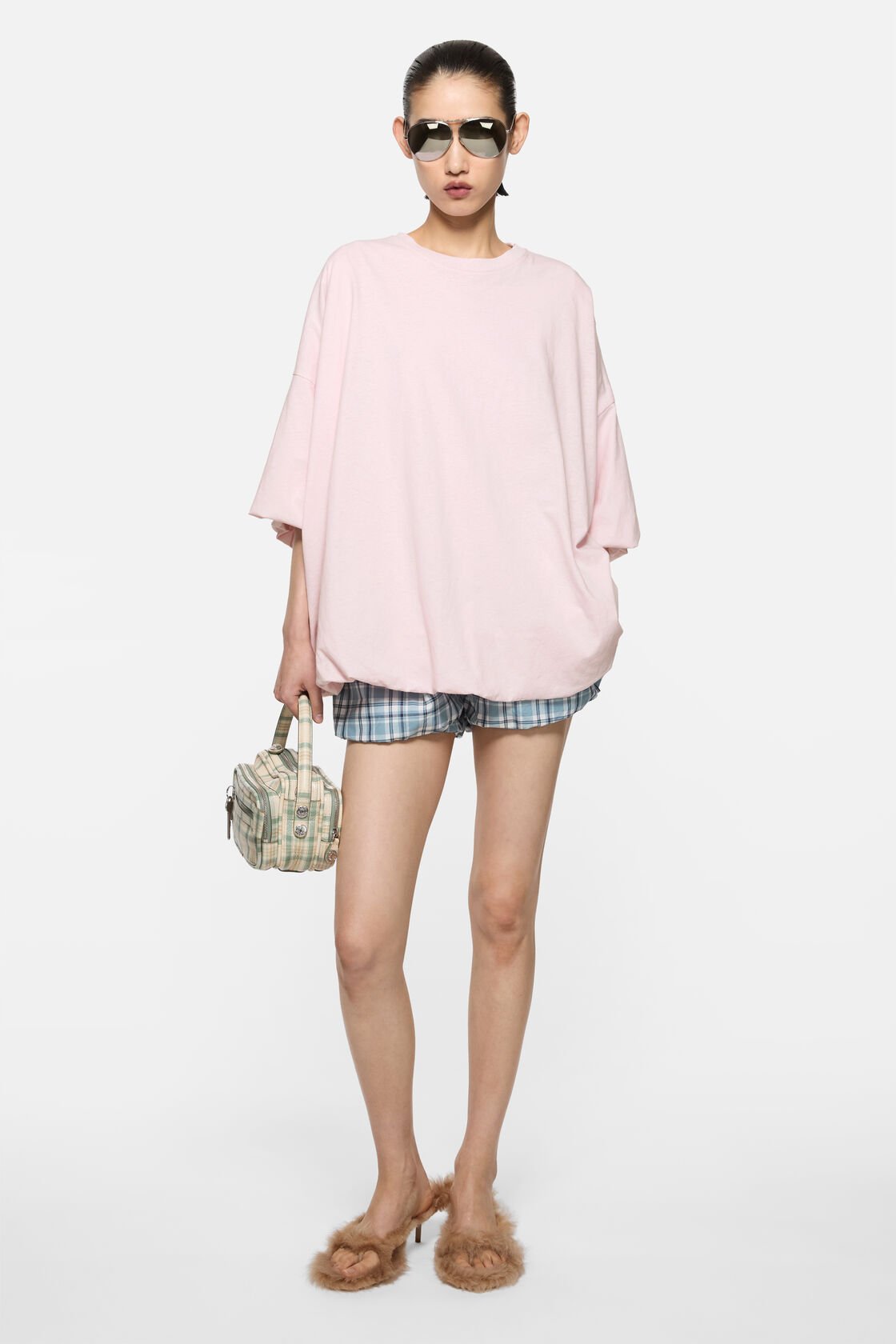
The house codes solidified around a few recurring gestures: oversized outerwear with dropped shoulders, trousers cut wide and cropped short, knitwear thick enough to photograph well, and a face logo that looked like a smiley drawn by someone who'd never seen one. The logo showed up on the back of a pink crewneck in 2016 and became, against all branding logic, the thing people wanted. It wasn't subtle. It wasn't ironic. It just worked, the way certain pieces do when the context is right and the price is almost but not quite prohibitive.
What you're buying into now
Acne operates at a bracket most people describe as "accessible luxury," which means the sweatshirts start at £200 and the leather jackets run £1,800. You're not paying for hand-stitched linings or atelier hours. You're paying for a specific kind of design confidence — the sense that someone made a decision and didn't second-guess it. The fits are boxy without being shapeless. The fabrics are good but not precious. A wool-blend overcoat will last you five years if you don't dry-clean it to death, and the denim still holds up, though it's no longer the centre of the offer.
The face logo pieces are the entry drug. The Fairview sweatshirt in grey melange or navy moves consistently, and you'll see it in every second coffee queue in Shoreditch or Nolita. It's a signifier, but a quiet one — it says you know, but not that you're trying. The Forres crewneck in pink is louder, and that's the point. Both are cut generously through the body, which makes them easy to wear and hard to style badly.
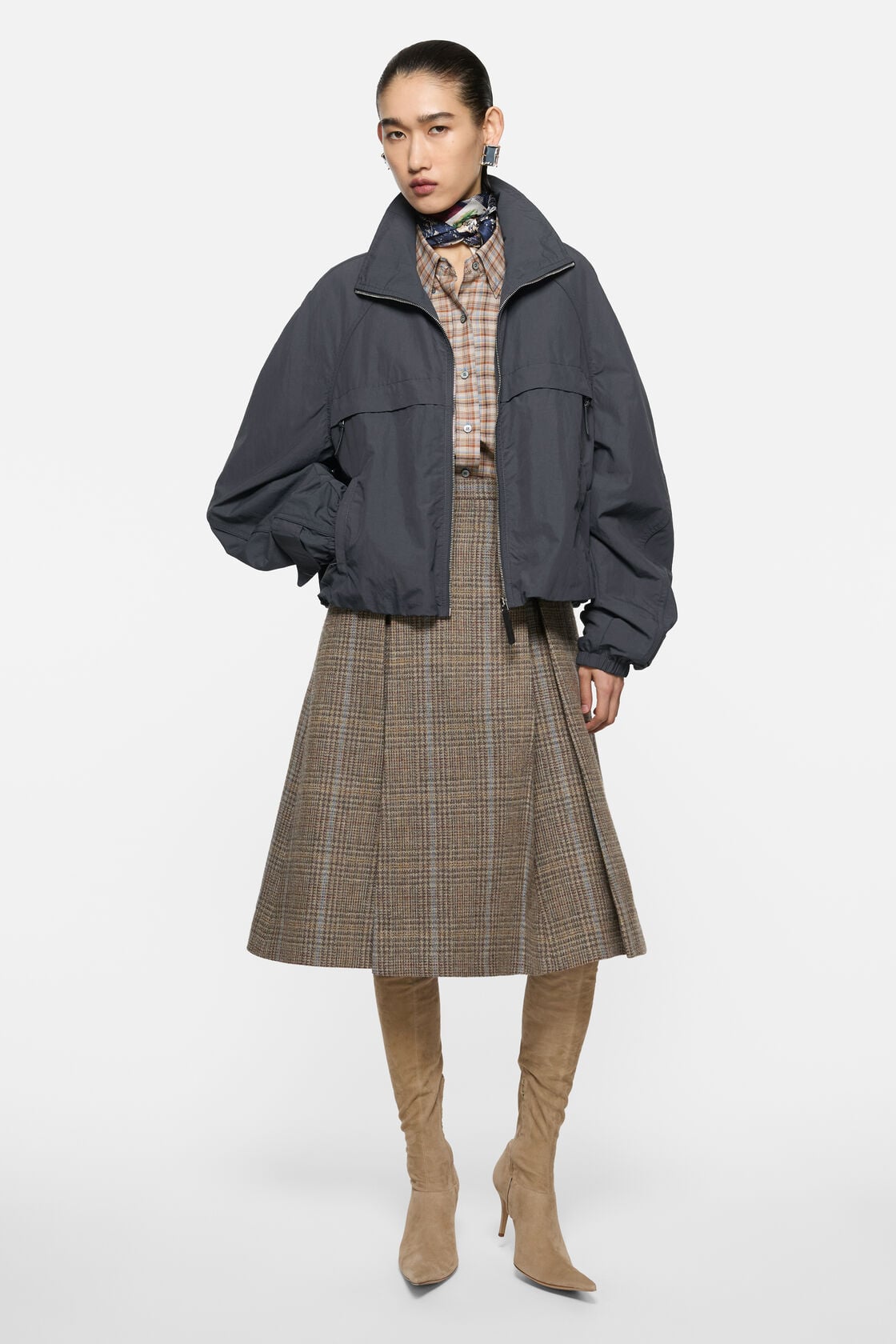
If you're moving past logo fleece, the outerwear is where Acne justifies its positioning. The Avalon double-breasted coat in wool and cashmere is £850, structured enough to work over tailoring, soft enough that it doesn't look stiff. The shearling-lined bombers and oversized leather blazers are closer to £2,000, but they photograph like £4,000, which matters if you're building a wardrobe that needs to function on and offline. The house doesn't do embellishment. It does proportion and texture, and when it works, it works quietly.
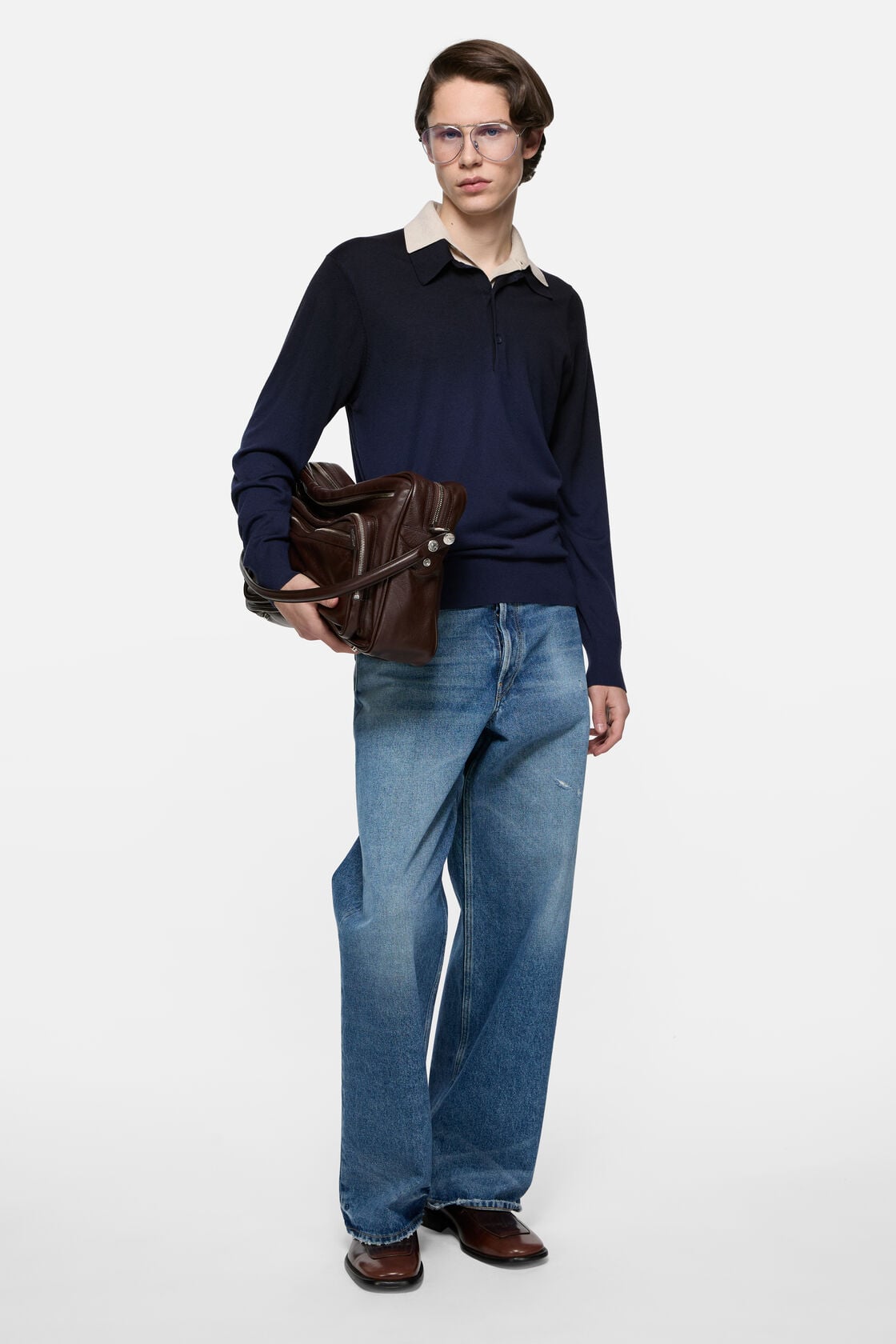
Denim is still in the range, though it no longer defines the brand the way it did in the early years. The 1996 jeans — straight-leg, mid-rise, slightly stiff — are a direct callback to the original pairs, and they're fine if you want the reference. The newer cuts skew wider, with a looser top block and a cleaner hem. Prices sit around £270, which is steep for denim that isn't selvedge, but you're not buying for the weave. You're buying the fit and the fact that it's Acne.
Knitwear is consistent. Wool-blend crewnecks, oversized cardigans in mohair blends, ribbed rollnecks that don't cling. The quality is mid-tier — better than COS, not quite as tight as Lemaire. Expect some pilling after a season, but nothing catastrophic. The colour palette stays narrow: grey, black, cream, occasionally a muted green or rust. It's a wardrobe, not a collection, and that's the point.
The Jonny Johansson era, which is still now
Johansson hasn't left, which makes Acne unusual in an industry that cycles through creative directors every four years. He's been at it for twenty-eight years, and the brand still feels like his — no hired-gun energy, no pivots toward streetwear or logo maximalism when those trends spiked. The collections shift, but incrementally. A season might bring wider trousers or brighter colours, but it won't bring embroidered bombers or logo-print trousers. The guardrails are clear.
That consistency is both the strength and the limitation. Acne doesn't surprise you the way Bottega did under Daniel Lee, and it doesn't generate the kind of heat that moves product in forty-eight hours. It just continues, season after season, making clothes that feel contemporary without chasing the contemporary. The customer base has aged with the brand — people who bought the jeans in 2008 are now buying the outerwear and paying full price because they know what they're getting.
The brand was majority-acquired by a private equity firm in 2019, which usually signals the beginning of the end, but so far the output hasn't flattened. The stores still feel like Acne stores — concrete floors, blonde wood, no music. The seasonal campaigns still feature artists and musicians instead of models. The prices have crept up, but not violently. It's possible the next five years will look different, but for now, the handover hasn't shown.
What to skip
The accessories are the weakest part of the offer. The bags — mostly structured leather totes and crossbodies — are competent but forgettable, and at £600 to £900, they're priced into a category where you'd rather buy Loewe or Bottega. The shoes are similarly fine: leather sneakers, Chelsea boots, loafers with a slightly squared toe. Nothing offensive, nothing essential. If you're spending at this level, go elsewhere.
The tailoring is hit or miss. Acne does loose, unstructured blazers well, but anything with a defined shoulder or a slim cut feels like it's fighting the brand's instincts. The trousers fare better — wide-leg wool blends, cropped chinos, pleated styles that sit low on the hip. But if you want a suit, you want a suit brand.
Seasonal pieces — printed shirts, graphic tees beyond the logo, anything that feels like it's trying — are usually worth skipping. Acne works best when it's doing what it always does. The experiments rarely justify themselves.
Where it sits now
Acne occupies a space that's harder to define than it was a decade ago. It's not quite a heritage brand, not quite contemporary, not quite streetwear-adjacent despite the logo creep. It's a known quantity, which in 2025 is both a strength and a ceiling. You buy Acne because you know what you're getting, and that knowledge is the product as much as the coat or the sweatshirt.
The grey Fairview crewneck is still moving. That probably tells you enough.