Acne Studios now: where the house stands
The beige trench on the rack at Dover Street Market — double-breasted, oversized through the shoulder, sleeves finishing two inches past the wrist — carries no visible branding save a tonal label at the back neck. One could walk past it. Many do. But the proportions give it away: lapels wider than strictly necessary, armholes dropped low enough that the garment reads as borrowed rather than tailored. This is Acne Studios in its current form. Recognisable to those who know, invisible to those who don't.
The house finds itself in an odd position. It is neither emerging nor legacy. It occupies that middle distance where a brand has been around long enough to accumulate history but not so long that the history does the work for it. Acne Studios turned twenty-five last year. A quarter-century in fashion is enough time to have made mistakes, survived them, and arrived somewhere new.
The founding mythology, briefly
Jonny Johansson started Acne — an acronym that stood, improbably, for Ambition to Create Novel Expressions — in Stockholm in 1996. The origin story involves raw denim and a hundred pairs of jeans with red stitching, distributed to friends and photographed. Whether or not that version is apocryphal hardly matters now. What does matter is that Acne Studios began as a collective, not a fashion house. It made jeans, yes, but also films, furniture, and graphics. The clothes were a byproduct of a broader sensibility: Scandinavian in palette, conceptual without being austere, and uninterested in the theatre that Paris and Milan required.
By the mid-2000s, the jeans had become a business. The business became a label. The label, in turn, became something recognisable: skinny cuts, muted tones, oversized outerwear, and a certain intellectual remove. Acne Studios was not trying to seduce. It was trying to think.
The Johansson era, and what it established
Johansson remains creative director, which is worth noting in an industry where founders are often ushered out after the first acquisition. He has been there from the beginning, and the house still reflects his instincts. Those instincts tend toward the cerebral. A collection might take its cues from a Fassbinder film, or the architecture of a Swedish power station, or the particular shade of grey found in a 1970s Volvo interior. The references are real, but they are also beside the point. What Johansson does well is translate a mood — call it melancholic modernism — into garments that function in the everyday.
The house established certain signatures early and has not abandoned them. Oversized tailoring. Shearling-lined leather. Denim that fades in specific, engineered ways. The Jensen boot, a Chelsea with an exaggerated Cuban heel, became a bestseller not because it was marketed aggressively but because it looked correct on enough people in enough cities. Acne Studios built a vocabulary, and that vocabulary has remained mostly consistent.
What changed, around 2014, was ownership. The Canadian firm Deloitte acquired a stake, later selling to IDG Capital Partners, a Chinese private equity group. The house is now majority-owned by investors based in Beijing. This is relevant not because it altered the aesthetic — Johansson retained creative control — but because it shifted the business logic. Expansion followed. Stores opened in Shanghai, Seoul, Hong Kong. The house began to court a customer base that was younger, wealthier, and less tethered to the original Stockholm ethos.
Where the house stands now
Walk into the Acne Studios flagship on rue Saint-Honoré and the first thing one notices is space. High ceilings, pale stone floors, minimal fixtures. The garments hang with room to breathe. There is no music, or if there is, it is so quiet as to be unnoticeable. The effect is gallery-like, which is intentional. Acne Studios wants to be taken seriously, and seriousness, in retail, often means silence.
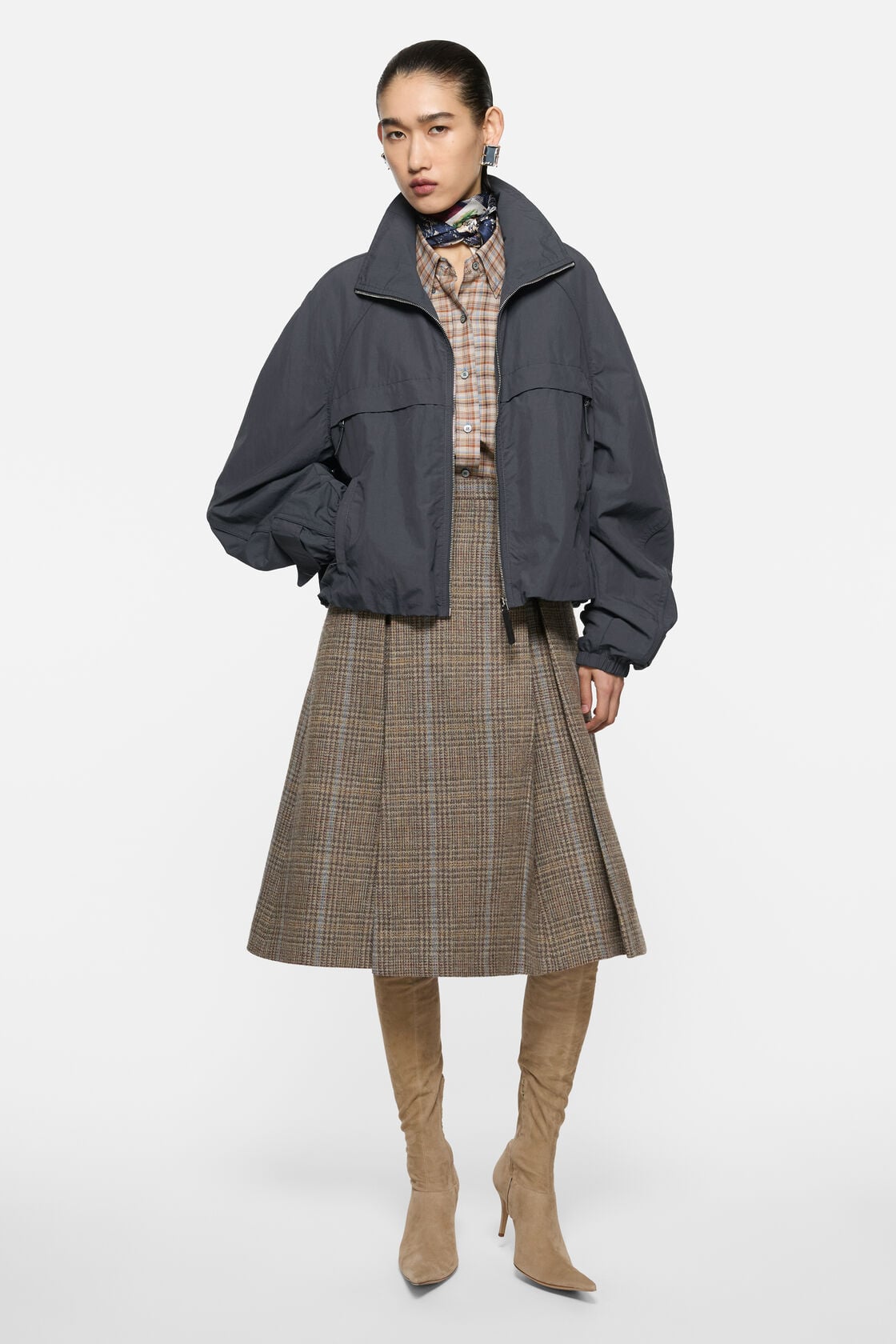
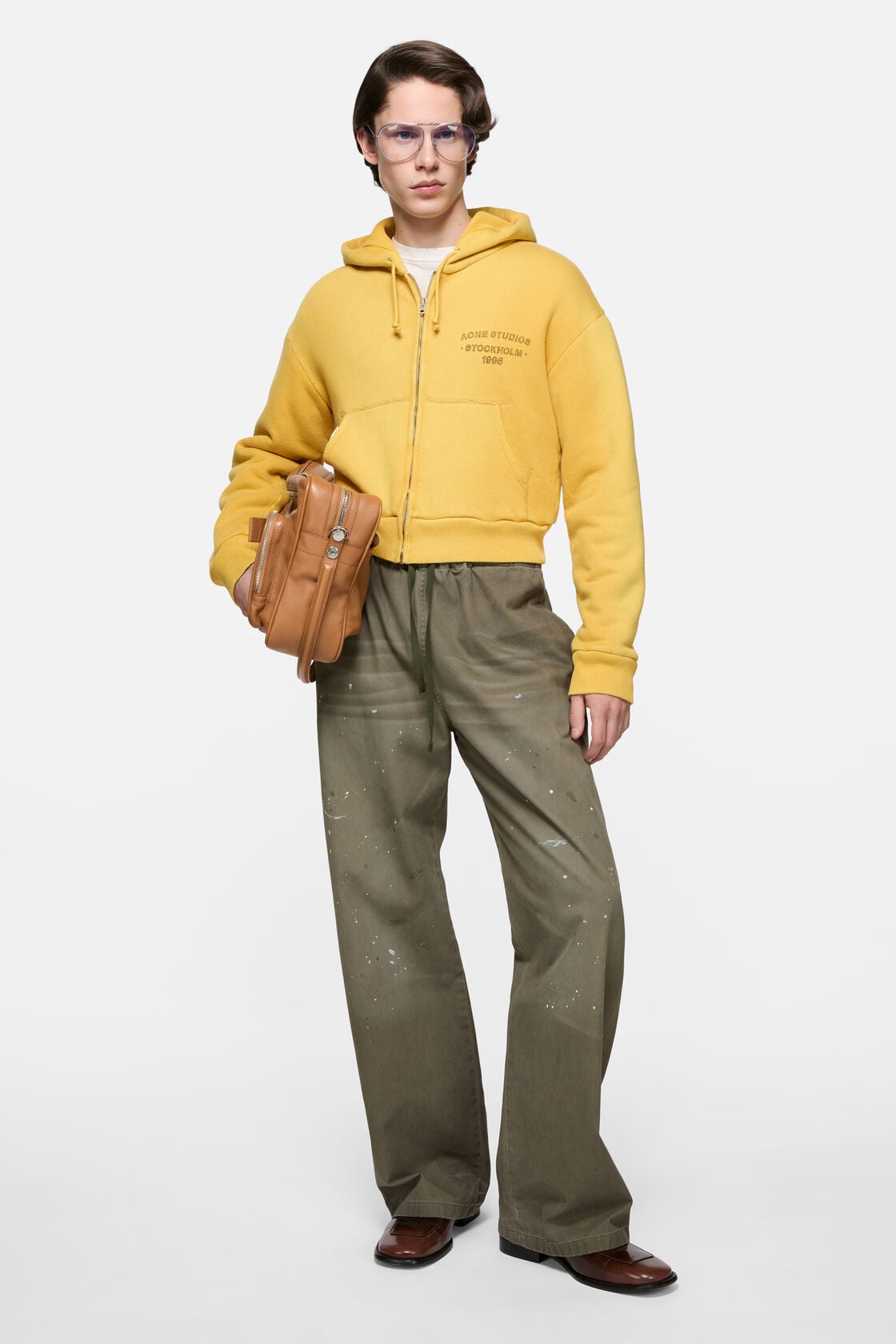
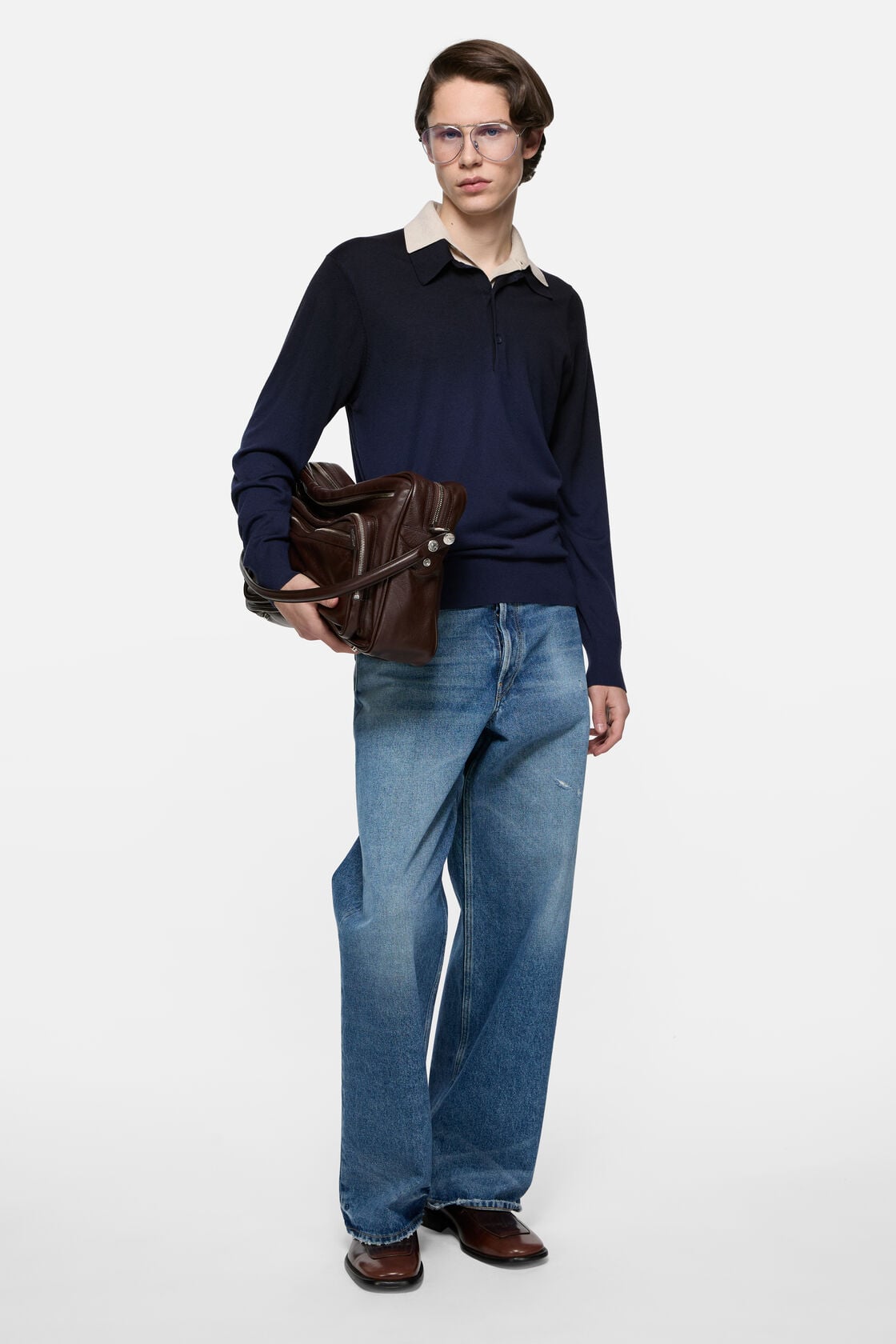
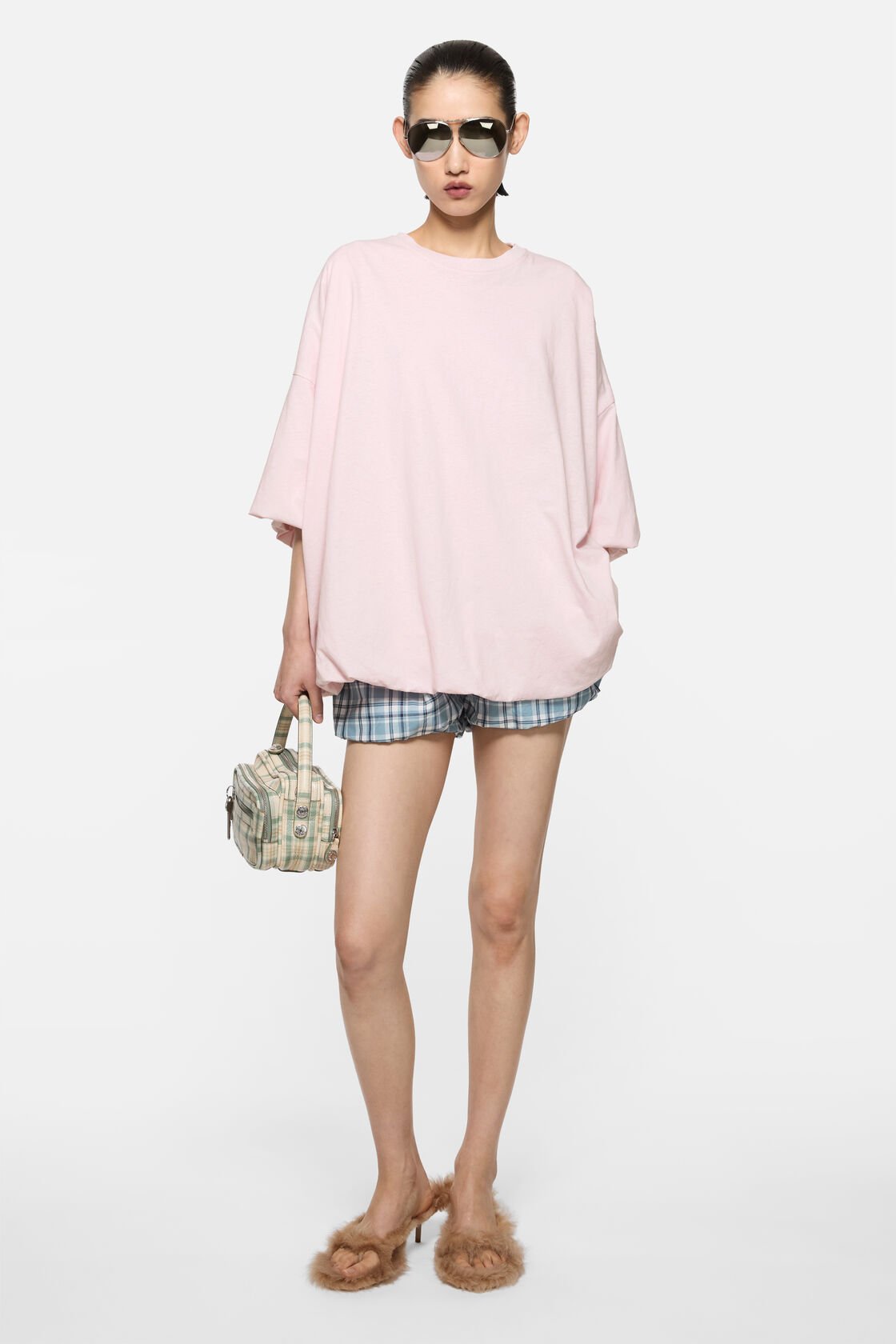
The current collections — Spring/Summer 2024 and the recently shown Autumn/Winter 2024 — continue the house's established codes but with a softness that feels new. Johansson has dialled back the severity. There are more pastels, more fluidity, more garments that drape rather than structure. A pink poplin shirt, cut wide through the body and worn untucked, appeared in the S/S 2024 lookbook alongside slim trousers in a washed-out khaki. The palette has expanded beyond grey, black, and navy. One sees lilac, butter yellow, a particular shade of dusty rose that reads as neither masculine nor feminine but somewhere outside that binary.
This is not a reinvention. It is a recalibration. The house is still making oversized blazers and raw-edged knitwear and those Jensen boots. But it is also making things that feel less intellectual, more tactile. A shearling coat in caramel, worn open over a ribbed tank, suggests comfort rather than concept. Whether this shift is a response to market pressure or a natural evolution in Johansson's thinking is difficult to say. Likely both.
Sales figures are not disclosed in detail, but the house is profitable, which is more than many independent labels can claim. It operates around fifty stores globally, with a strong presence in Asia and a steady if quieter foothold in Europe and North America. The customer base skews younger than it did a decade ago — mid-twenties to mid-thirties, urban, digitally native. These are people who buy fewer pieces but expect those pieces to last. Acne Studios has positioned itself, intentionally or not, as the thinking person's alternative to hype-driven streetwear. It is not Supreme. It is not Balenciaga. It is something cooler, in the original sense of the word: reserved, composed, slightly aloof.
The image problem, if there is one
The difficulty Acne Studios faces is one of definition. It is not a heritage house, so it cannot lean on decades of accumulated prestige. It is not a disruptor, so it cannot claim the energy of the new. It exists in that middle territory where a brand is known but not iconic, respected but not revered. This is not necessarily a weakness. It may, in fact, be a strength. Acne Studios does not need to be everything to everyone. It has found a lane and stayed in it.
That said, the house is quieter than it once was. There was a period, roughly 2008 to 2015, when Acne Studios felt urgent. It was the label that stylish people in Copenhagen and Berlin and Tokyo were wearing, often head-to-toe. That moment has passed. The house is no longer setting the pace. It is keeping pace, which is a different proposition.
Part of this is timing. The broader fashion conversation has moved toward spectacle — Demna's Balenciaga, Pharrell's Louis Vuitton, the ongoing theatre of Gucci and Prada. Acne Studios offers no spectacle. It offers garments. Whether that is enough in an image-driven economy remains to be seen.
A closing image
There is a photograph from the Autumn/Winter 2024 campaign, shot by Ola Rindal, that captures something essential about where Acne Studios is now. A model stands in an empty room, wearing an oversized grey coat over a white shirt and black trousers. The light is flat, the expression neutral. Nothing about the image demands attention. But if one looks long enough, the details accumulate: the way the coat's shoulder seam falls four inches down the arm, the precise width of the trouser leg, the fact that the shirt is untucked but not carelessly so.
This is what Acne Studios does. It makes clothes that do not announce themselves but that, on closer inspection, reveal a point of view. Whether that point of view is enough to sustain a house in the long term is a question the market will answer. For now, the work continues. Quietly, carefully, with a certain Nordic resolve.