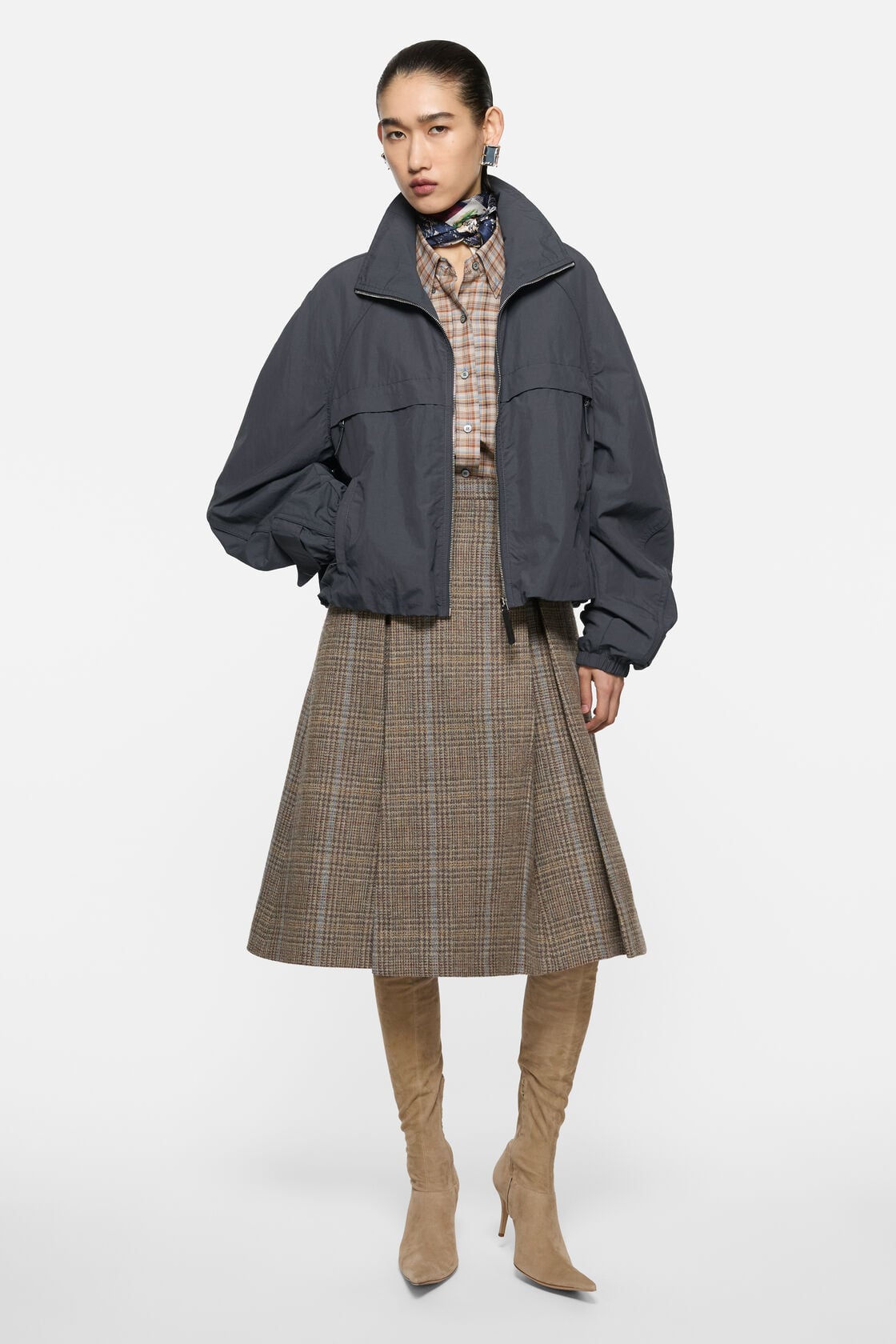
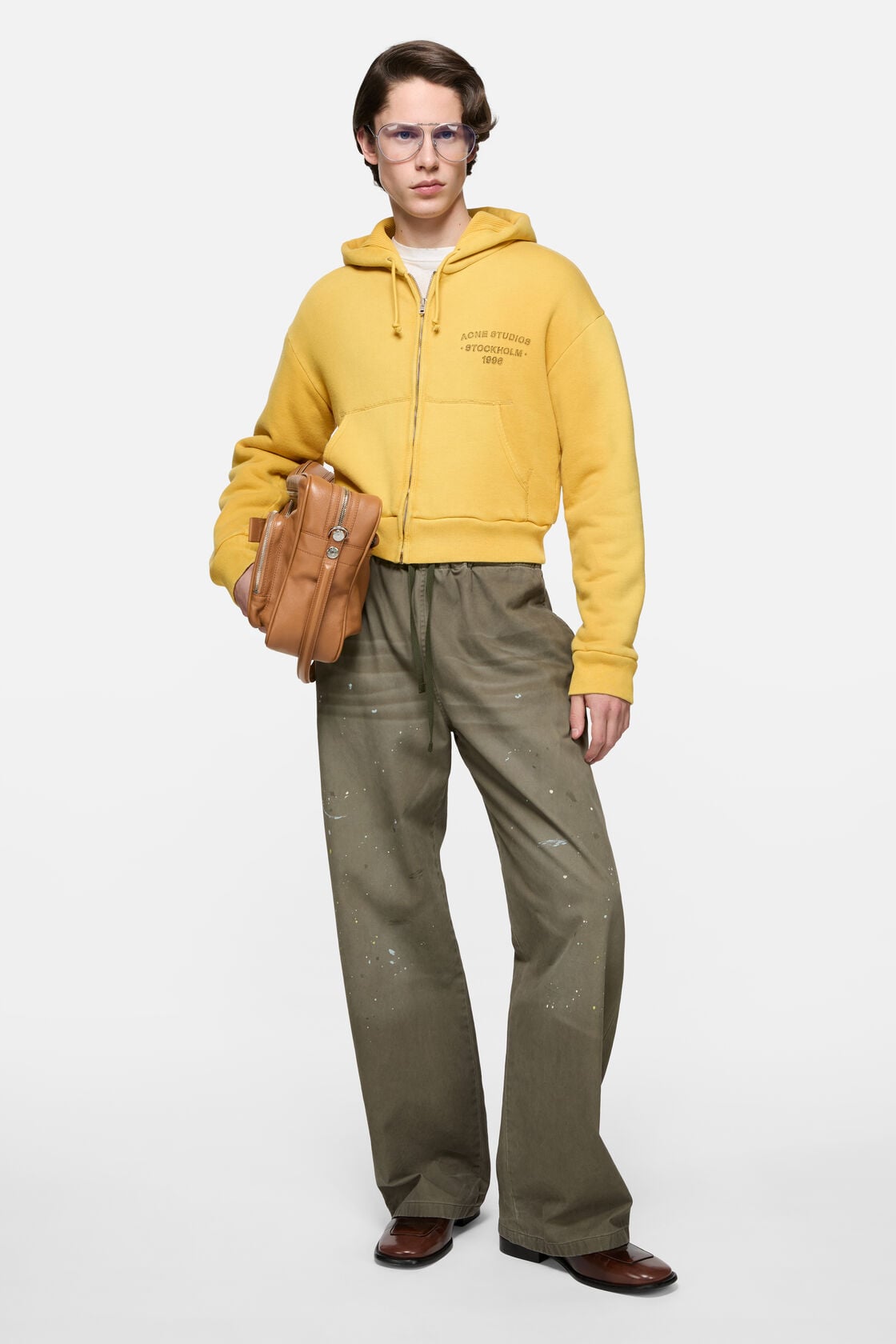
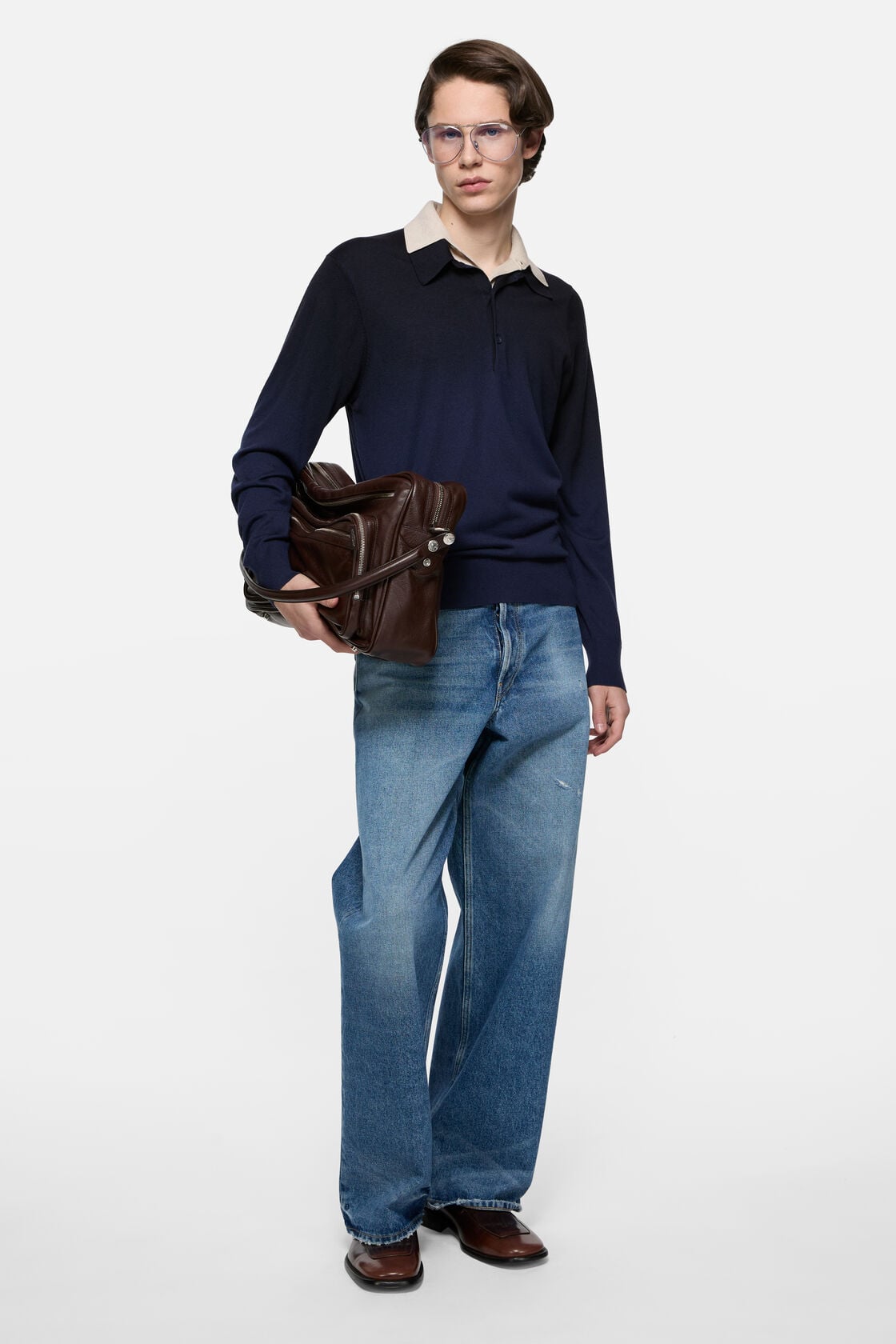
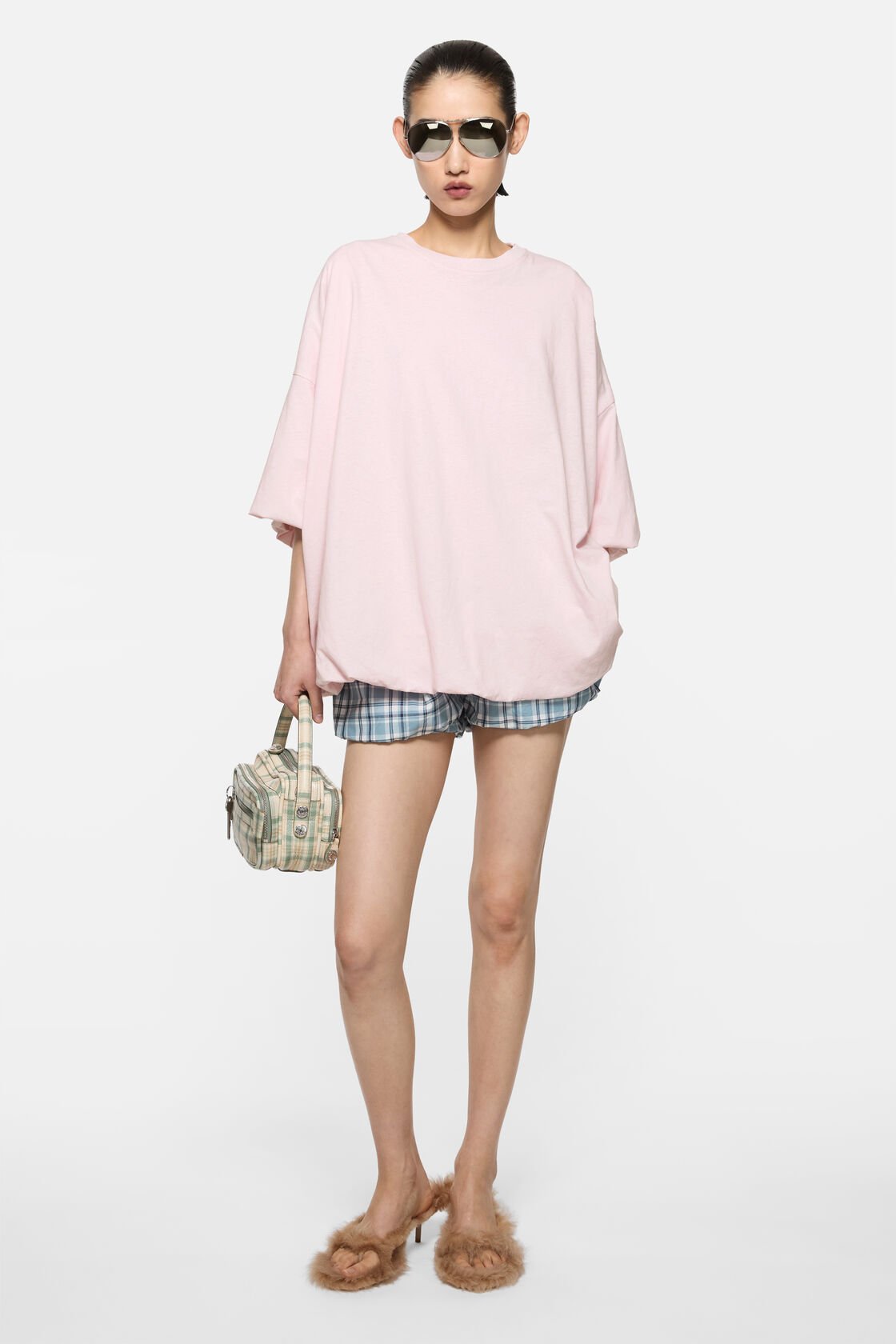
Acne Studios's overlooked codes
The coat rack at Acne's Norrmalmstrand office holds six black wool overcoats, all nearly identical save for the width of a lapel or the drop of a shoulder. This is not minimalism. This is something else — an insistence that variation lives in millimetres, that a house can build an entire language in the space between austere and severe.
Most people know Acne Studios for the scarf or the sneaker or, if they came up in the late aughts, the Hex jeans. Fair. But the house's actual codes sit elsewhere, in decisions so consistent they've become invisible. The refusal of hardware. The preference for a seam over a dart. The way a sleeve never quite bells but also never quite tapers. Jonny Johansson has spent two decades building a vocabulary that doesn't announce itself, and the industry mostly looks past it in favour of whatever's louder that season.
The founding myth, corrected
Acne started in 1996 as Ambition to Create Novel Expressions, a collective making jeans with red stitching in an apartment. The origin story gets told often enough that the details blur. What matters: Johansson, a photographer and art director with no formal fashion training, made a hundred pairs of raw denim with a friend's money and gave them to friends. They sold. He kept going.
The early years were jeans, then tailoring, then womenswear. By 2006, Acne had a Paris showroom and a reputation for trousers that sat low and jackets that didn't. The house showed during Paris Fashion Week but never quite played Paris rules. Collections arrived without a thesis. Lookbooks featured non-models standing in non-poses. The clothes worked in part because they didn't try to.
What the house understood early: that a uniform doesn't require a logo, just a set of proportions consistent enough to become recognisable. The Acne customer in 2008 wore black wool trousers with a straight leg, a grey crewneck sweater in a merino that pilled beautifully, and a leather jacket so plain it looked like a mistake until you saw it on. The pieces didn't match; they just shared a frequency.
The codes no one names
Acne's actual signatures aren't the Face logo or the Musubi bag. They're structural. The house has a set of recurring gestures that show up across categories, season after season, without ever getting called out in press notes.
First: the shoulder. Acne builds a shoulder that sits just slightly wider than natural but never reads as padded. It's not the Armani slope or the Saint Laurent spike. It's a shoulder that makes the body look like it's been wearing the jacket for six months already. The effect is subtle enough that most people don't notice it, but put an Acne blazer next to anything else on the rail and the difference is immediate.
Second: the avoidance of hardware. Acne uses snaps, hidden plackets, and magnetic closures where other houses would use zips or buckles. The leather jackets close with a single snap at the collar. The trousers have flat-front waistbands with a hook and bar, no button in sight. Even the bags — the Musubi, the Baker, the Micro — rely on knots, folds, and ties rather than clasps. It's not precious. It's a choice about where the eye should land, which is never on a piece of metal.
Third: the treatment of black. Acne doesn't do monochrome in the Yohji sense or the Lemaire sense. The house layers blacks that don't quite match — a matte wool trouser with a leather jacket that's gone slightly brown, a cotton shirt that's faded to charcoal under a coat that's still deep. The result isn't studied. It's what happens when you wear black for long enough that it stops being a statement and becomes a default.
Fourth: the refusal of drape. Where a lot of contemporary tailoring has moved toward fluidity, Acne holds the line on structure. The trousers don't pool. The coats don't swing. Even the knitwear — oversized, yes, but never slouchy — holds its shape. The house cuts for the body in motion but not in collapse.
And fifth: the length. Acne hems everything two centimetres longer than you expect. Trousers break once. Coats hit mid-thigh when you thought they'd stop at the hip. Sleeves cover half the hand. It's a small thing, but it changes the silhouette in a way that reads as deliberate without looking designed.
Johansson's unshowy hand
Jonny Johansson is still creative director, which is rare enough in 2025 to be worth noting. He's been at it for twenty-nine years. He doesn't do the post-show interview circuit. He doesn't talk about his references. He shows up in his own campaigns occasionally, wearing the same black trousers and grey sweater he's worn since 2003.
His approach hasn't shifted much. He works from fabric first — finds a wool he likes, builds a coat around it, repeats the coat in four colours, moves on. He doesn't do seasonal narratives. The AW24 collection was called "AW24." The lookbook was shot in a parking garage. The clothes were good.
What Johansson has managed, against the grain of the past decade, is to keep the house from becoming a brand. Acne still feels like a studio. The output is consistent but not systematic. There's no house code you can summarise in three words. The team still works in Stockholm, still shoots in natural light, still uses the same casting director they've used since 2010. The pace is slower than it should be for a house doing the revenue Acne does. It shows.
Where the house sits now
Acne is in a strange position. It's big enough to have standalone stores in every major city and a corporate parent — the Canadian firm Investor AB bought a majority stake in 2019 — but it still operates like a mid-sized independent. The product range has expanded into homewares, fragrance, and childrenswear, but the core remains outerwear, denim, and knitwear. The prices have climbed. A wool coat that cost €800 in 2015 is €1,400 now. The quality hasn't changed, but the customer has.
The house's influence is everywhere and nowhere. Every brand under the sun now does an oversized black blazer with a clean shoulder. Every contemporary label offers raw denim with a straight leg. Acne didn't invent these things, but it made them legible as a system. The problem is that the system works so well it's been absorbed. The Acne look is now just the look.
What remains specific to the house is the restraint. Johansson still won't do a logo T-shirt that isn't cut well. He still won't make a bag that relies on branding to sell. He still won't add a zip if a snap will do. It's a slow way to build, and it doesn't generate the kind of heat that moves product in Q4. But it's also the reason the house hasn't had to reinvent itself every three years.
The coat, again
There's a wool overcoat Acne has made, with minor variations, since 2009. It's double-faced, no lining, with a notched lapel and a single-button closure. The sleeves are slightly too long. The shoulder sits just wide. It comes in black, navy, charcoal, and camel, though the camel sells out first every year.
It's not the kind of piece that gets photographed on the steps at Paris Fashion Week. It's the coat you see on the train, on someone who's had it for five years and will have it for five more. The collar has softened. The hem has picked up a small stain that didn't come out. It still looks like the right choice.