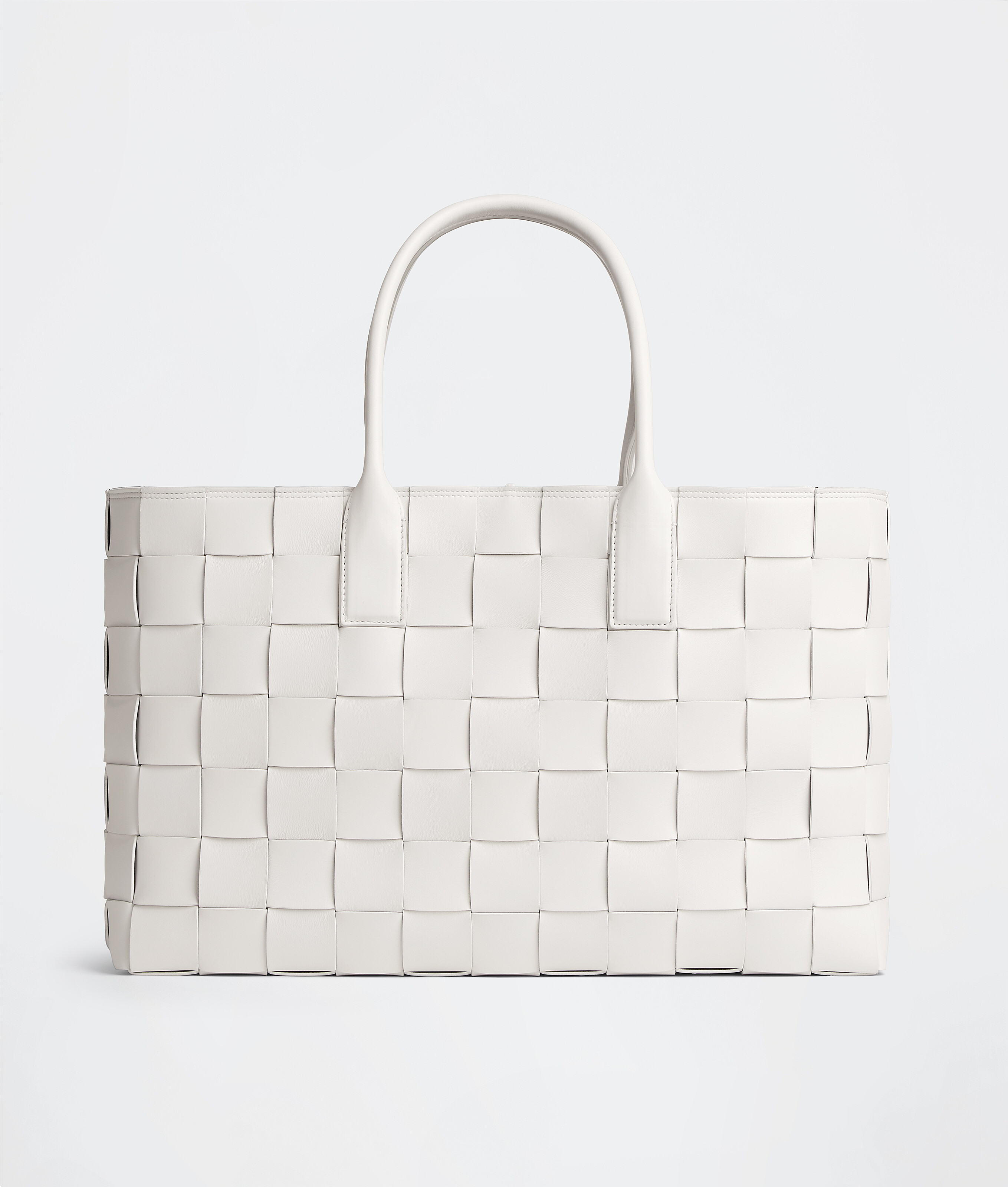
Bottega Veneta now: where the house stands
The Sardine bag — arched top-handle, pinched at the sides like a tin pulled open — sold out within weeks of its debut in 2020. Not because it was practical. Not because it was quiet. Because it looked like nothing else in a season when everything else looked the same.
That is still the operating principle at Bottega Veneta. Four years into Matthieu Blazy's tenure as creative director, the house has settled into a rhythm that feels less like reinvention and more like clarification. The intrecciato weave remains. The leather remains extraordinary. But the silhouette vocabulary has expanded past handbags and into a full wardrobe built on construction rather than logo.
The Founding Logic
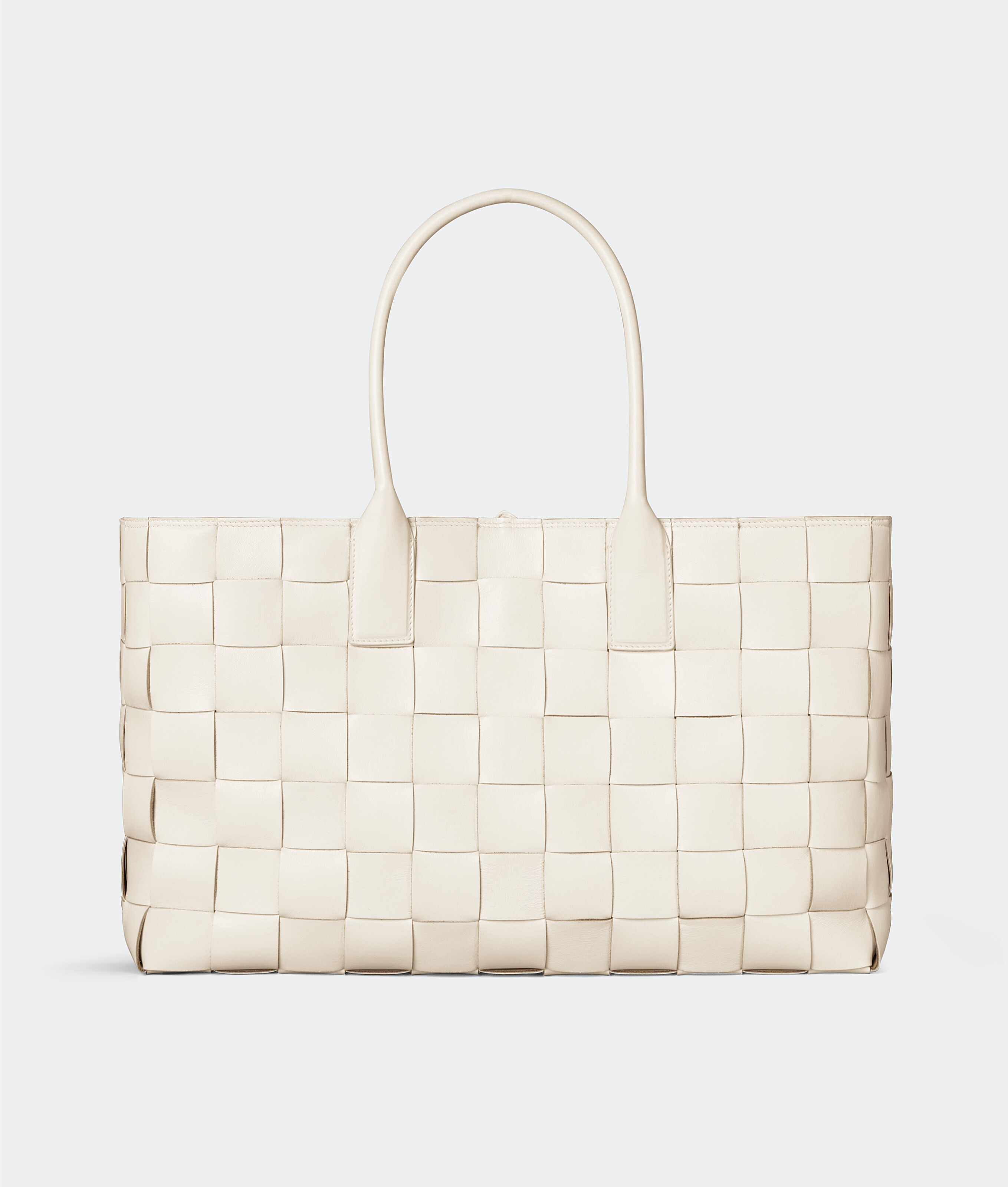
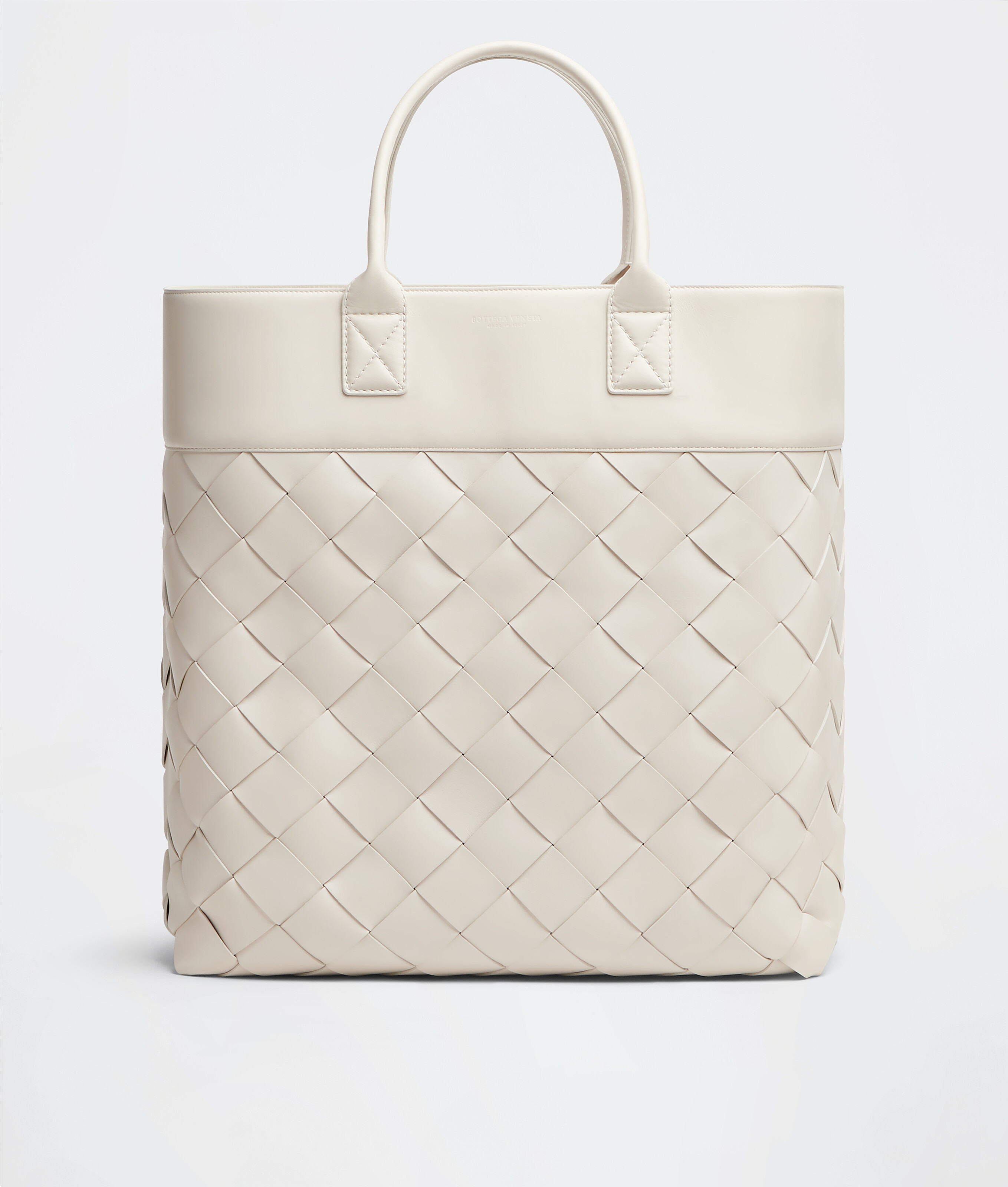
Bottega Veneta was established in Vicenza in 1966 by Michele Taddei and Renzo Zengiaro, two leather artisans who opened a workshop rather than a fashion house. The intrecciato — a woven leather technique borrowed from basket-making — was not a branding exercise. It was a structural solution. Woven strips distribute stress across the surface, so the bag holds its shape without internal framing. No hardware, no visible stitching, no logo plate. The work was the sign.
That approach made Bottega a quiet fixture through the Seventies and Eighties, worn by women who could afford Hermès but preferred something less declarative. By the Nineties, quiet had become invisible. The house drifted. In 2001, Gucci Group acquired it and installed Tomas Maier as creative director. His mandate: make intrecciato relevant without making it loud.
Maier stayed for seventeen years. He expanded the weave into ready-to-wear, introduced the Cabat tote, and established a house aesthetic that fashion editors summarised as "stealth wealth." The term stuck, often used as praise, occasionally as euphemism for boring. Either way, it worked. By the time Maier left in 2018, Bottega Veneta was generating over a billion euros in annual revenue.
The Interregnum
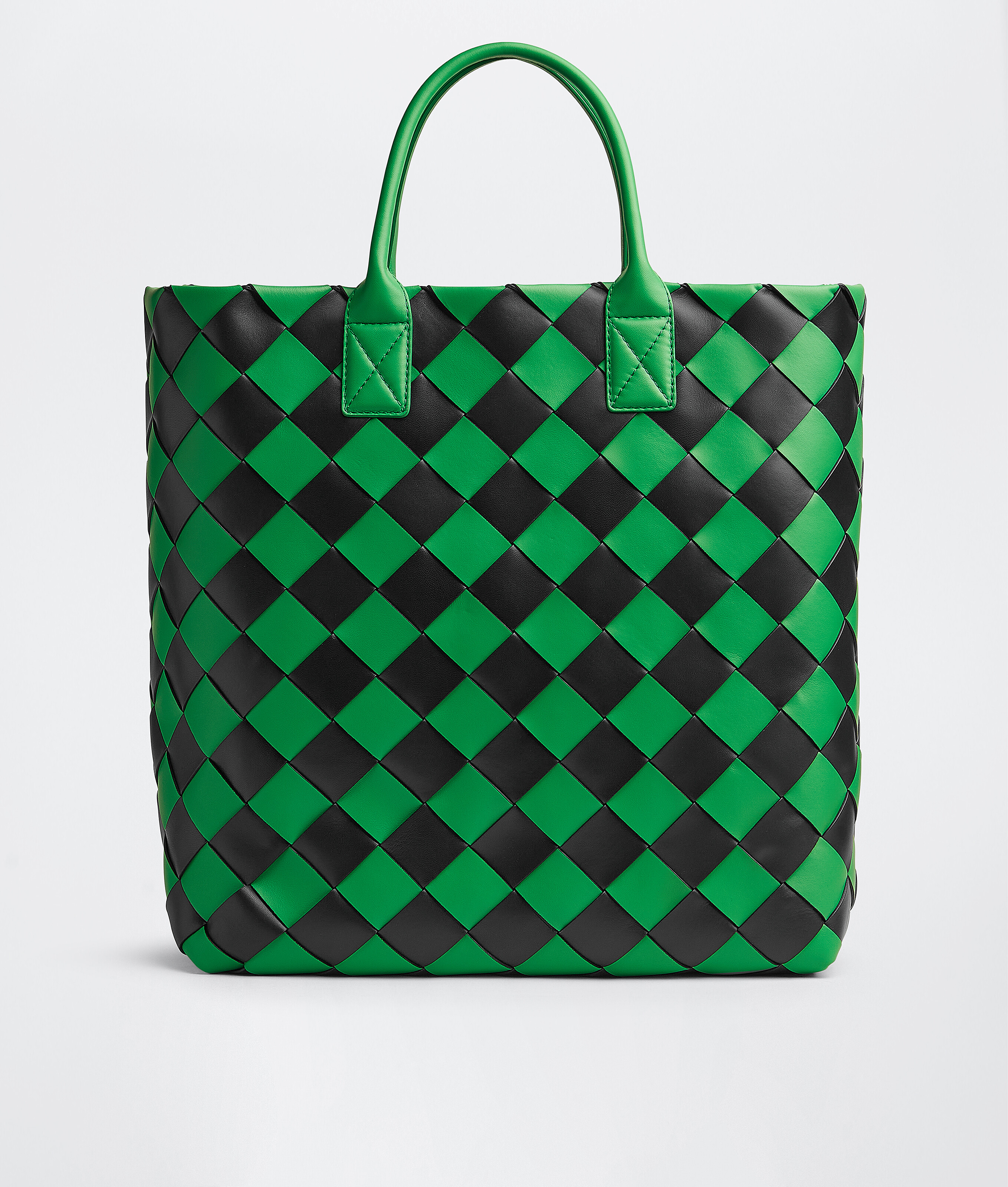
Daniel Lee arrived in 2018 with a different reading of the archive. He kept the intrecciato but inflated it — oversized weave on the Pouch, padded cassette quilting on the Padded Cassette, chain-link intrecciato on evening bags that looked like medieval armour. The silhouettes were sculptural. The campaigns were stark, shot by Tyrone Lebon in raw colour and tight crops. Bottega's Instagram account, which had been polite and beige, became one of the most-watched feeds in fashion. Lee deleted the archive, stopped tagging posts, and turned scarcity into content strategy.
Sales doubled. The Pouch — a soft, gathered clutch with no structure and no closure — became the handbag of 2019, carried by Rosie Huntington-Whiteley, Hailey Bieber, and women who did not usually align their taste with either. Lee won the LVMH Prize, then International Designer of the Year at the British Fashion Awards. Twice.
He left in 2021. Kering did not explain why. The industry filled the silence with speculation: creative differences, unsustainable pace, friction over the social media blackout Lee had orchestrated in 2021. None of it was confirmed. What mattered was the handover.
Blazy's Bottega
Matthieu Blazy had been Lee's right hand, leading ready-to-wear and overseeing the development of several key bag styles. When he was named creative director in November 2021, the appointment felt like continuity rather than rupture. His first collection, shown in February 2022, confirmed that instinct and complicated it.
The intrecciato was still there, but treated as material rather than motif. A trench coat in woven nappa, soft enough to crumple. A knit sweater where the yarn itself was intrecciato strips, so the garment had the drape of knitwear and the structure of leather. Blazy's training is in textiles — he studied at La Cambre in Brussels, worked at Maison Martin Margiela, then Celine under Phoebe Philo, then Raf Simons at Calvin Klein. He thinks in cloth first, silhouette second.
That shows in the ready-to-wear, which has become the house's calling card under Blazy in a way it never quite was under Lee. The tailoring is Milanese in cut but softer in finish, with a shoulder that sits rather than projects. The knitwear programme has expanded into fine-gauge intarsia, cable-knit dresses, and sweaters where the intrecciato is implied rather than literal. There is a recurring motif of trompe-l'oeil — jeans that are actually leather, leather that reads as denim, a bomber jacket in shearling cut to look like a shirt.
The handbags have followed a similar path. The Andiamo, introduced in Blazy's second season, is a structured top-handle with a curved base and a single rolled handle. It looks like a doctor's bag from 1952, rendered in butter-soft calf. The Gemelli, a small shoulder bag with twin compartments, plays with symmetry in a way that recalls Margiela's split-toe Tabi but feels entirely Bottega. The Sardine, which predates Blazy but has been reissued in new leathers and scales, remains in rotation.
Where It Stands
Bottega Veneta's revenue in 2023 was €1.6 billion, up 2% on the previous year. Not explosive, but stable in a market where several luxury houses have reported flat or declining sales. The brand is no longer the breakout story it was under Lee, but it has settled into a different kind of momentum — less about viral moments, more about sustained desirability.
The customer base has shifted slightly older and significantly broader. The Pouch is still in circulation, but the Andiamo and the Kalimero — a small, rounded shoulder bag introduced in 2023 — are the shapes moving fastest. Ready-to-wear accounts for a larger share of sales than it did five years ago, particularly in outerwear and knitwear. The intrecciato remains the house signature, but it no longer carries the entire collection.
Blazy has also quietly reversed Lee's social media blackout. Bottega Veneta returned to Instagram in 2022, though the account remains minimal — campaign images, runway clips, occasional product shots. No influencer partnerships. No behind-the-scenes content. The tone is closer to a gallery than a feed.
The maison's retail footprint has expanded, particularly in Asia. New flagships have opened in Shanghai, Seoul, and Tokyo, all designed by Blazy in collaboration with architect Gaetano Pesce's studio before his death in 2024. The stores are warm, textured, heavy on natural light and raw materials — travertine, walnut, hand-trowelled plaster. They feel like private libraries, not boutiques.
Criticism, when it comes, tends to focus on pace. Blazy's collections are dense, technically ambitious, and not always immediately legible. A leather trench coat woven from intrecciato strips is a remarkable piece of craft, but it does not photograph the way a neon Pouch does. The question is whether Bottega Veneta still needs that kind of image, or whether it has moved past it.
The Shape of Now
There is a photograph from Blazy's autumn 2024 show: a model in a long intrecciato coat, the weave so fine it reads as fabric from a distance, walking past a row of seated editors holding their phones at the same angle. The coat is extraordinary. The phones are all filming. The image captures something about where Bottega Veneta is now — making clothes and bags that reward sustained attention in an ecosystem built for glances. It is a difficult position. It is also, increasingly, the only position that matters.