Loewe: a house, in brief
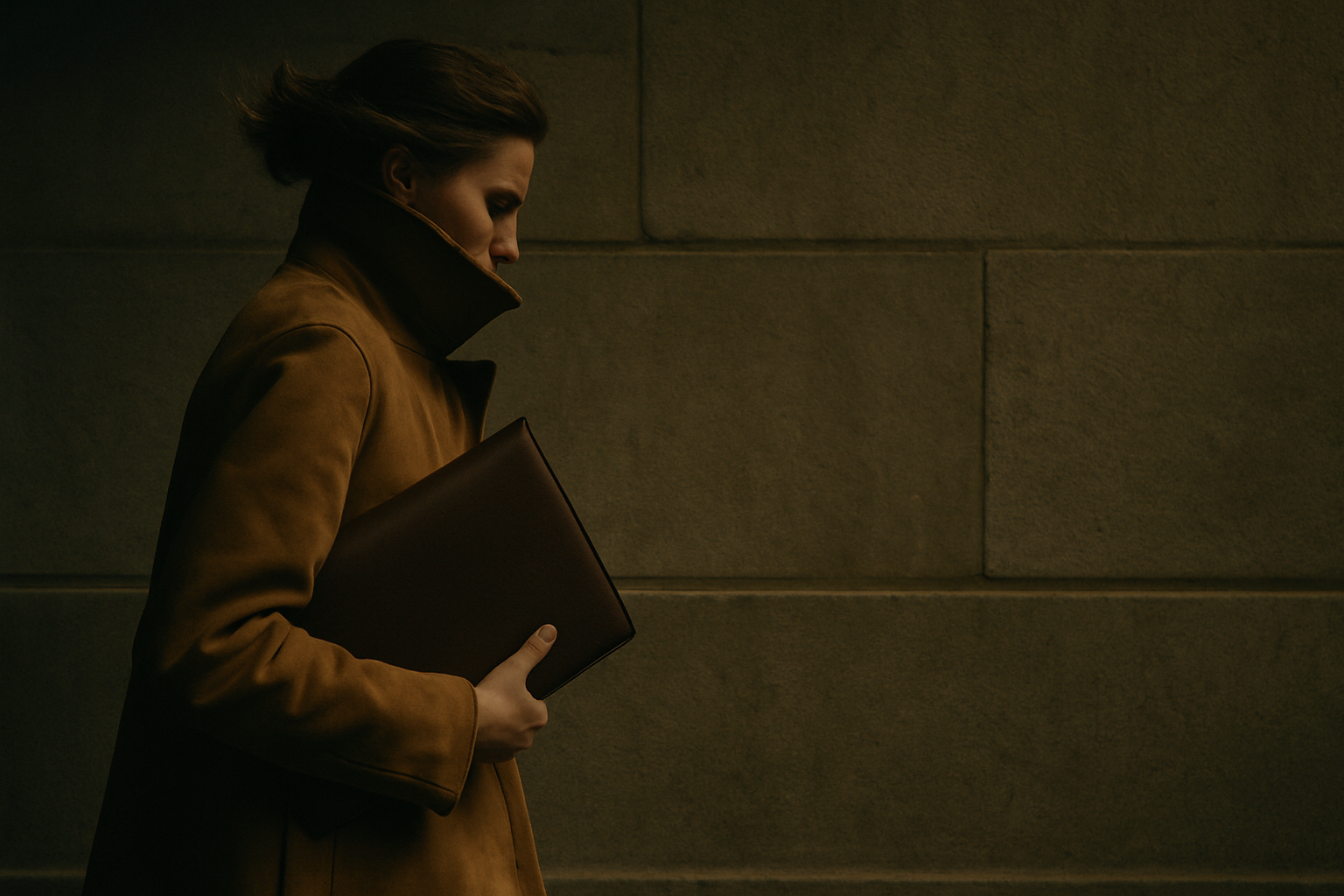
There is a photograph from 1965 of a woman in a suede coat, collar turned against the Madrid wind, holding a leather portfolio under one arm. The portfolio is unstiffened, almost soft, and it bends with her stride. You cannot see the logo. You do not need to.
That restraint—craft before announcement—is what Loewe has spent a century and a half either perfecting or recovering from.
The founding claim
Loewe began in 1846 as a collective of leatherworkers in Madrid, formalising under the German craftsman Enrique Loewe Roessberg in 1872. The house built its name on what it still insists upon: an understanding of skin. Not leather as surface decoration, but as structural material with grain, weight, and memory.
By the early twentieth century, Loewe held a royal warrant. Its workshops supplied King Alfonso XIII. The work was technical—saddles, trunks, upholstery for carriages—and that rigour carried into the accessories that followed. A Loewe bag from the 1920s is not precious. It closes with a buckle you can operate in gloves. The handle sits where your hand expects it.
This is the first era: craft as utility, luxury as a byproduct of competence. Loewe did not need to explain itself because the work was legible to anyone who handled it. A customer in 1930 knew what eight-ounce calfskin felt like. She knew whether a strap would hold.
The house opened its first store outside Spain in 1963, in London. Others followed—Paris, Tokyo, New York. Expansion brought visibility, but also a certain dilution. Loewe in the 1980s and 1990s became a house searching for an identity that was not just Spanish heritage and good leather. It tried ready-to-wear. It tried fragrance. It tried, as many houses did in that period, to mean more by saying more.
The interregnum under Narciso
When Narciso Rodriguez arrived as creative director in 1997, Loewe had scale but no centre. Rodriguez, then in his thirties and fresh from designing Carolyn Bessette's wedding dress, brought a kind of architectural minimalism that felt right for the tail end of the decade. His collections were clean, often severe. He cut close to the body. He used leather not as accent but as primary cloth—entire dresses in nappa, skirts in suede that moved like jersey.
It was a modern vision, but it was also a narrow one. Rodriguez lasted less than two years. His successor, José Enrique Oña Selfa, stayed longer but left less of a mark. Stuart Vevers followed in 2008, bringing a softer, more bohemian sensibility—fringed bags, relaxed tailoring, an attempt to position Loewe as accessible luxury. The Amazona bag, a structured top-handle with a rigid frame, became a signature under his tenure. It sold. It did not, however, shift the perception that Loewe was a house still figuring out what it wanted to be when it grew up.
By 2013, when Vevers left for Coach, Loewe was profitable and polite. It had stores in the right cities. It had leather goods that moved through duty-free. It did not have a point of view.
The Anderson reset
Jonathan Anderson arrived in 2013 with a reputation for conceptual menswear and a small, cerebral label under his own name. He was thirty. LVMH, which had acquired Loewe in 1996, gave him both menswear and womenswear. What he did first was not design a collection. He went to the archive.
Anderson has said in interviews that he found, in Loewe's back catalogue, a history of objects made by people who understood material in a way that fashion had largely abandoned. His first collection for the house, shown in Paris in 2014, opened with a coat in shearling so thick it stood away from the body. The silhouette was strange—proportions pushed, sleeves widened past function—but the craft was legible. You could see the hand in it.
He kept the Amazona, but he also introduced the Puzzle bag, a geometric construction of panels that folded flat and expanded into structure. It was not, strictly speaking, a new idea—Japanese furoshiki wrapping, origami, Rubik's logic—but it was new for Loewe, and it worked because it was, fundamentally, about leather behaving in ways fabric could not. The bag required a craftsman who understood how skin would crease, where it would hold tension, how weight would distribute. It was a return to the founding claim: we know this material better than you do.
Anderson's collections since have moved between rigour and fantasy. A spring runway might feature a dress that appears to be melting. An autumn show might open with a model in a shearling coat carrying a woven basket as a handbag. He collaborates with ceramicists, with the estate of the Bloomsbury potter Ken Price, with the Japanese architect Sou Fujimoto. Loewe stores now carry books, handmade furniture, incense. The Madrid flagship, reopened in 2016, includes a gallery space that has shown work by Anthea Hamilton and Takuro Kuwata.
This is not, strictly, fashion. It is also not not fashion. Anderson has said he is interested in craft as a continuum—that a leather bag and a ceramic vessel are both objects made by hand, and that a fashion house with Loewe's history has a responsibility to support that lineage. Whether that is true or simply good marketing is beside the point. It works because it is consistent. Every collection, every collaboration, every store installation returns to the same question: what does it mean to make something well?
Where the house stands
Loewe in 2025 is not the house it was in 2013. It is also not the house it was in 1965. Anderson has taken the founding claim—craft, material, restraint—and made it contemporary without making it safe. The bags sell. The ready-to-wear is worn by people who do not need to be paid to wear it. The brand is visible without being loud.
There is a risk in this. When a house becomes known for taste, for curation, for supporting ceramicists and showing experimental furniture, it can begin to feel more like a gallery than a maison. But Loewe has not, so far, lost the plot. The leather is still the leather. A Puzzle bag in 2025 is made the same way it was in 2014, in the same workshops outside Madrid, by craftsmen who learned the trade from craftsmen before them.
The woman in the 1965 photograph would recognise it. She might not wear it—the proportions are different now, the attitude less quiet—but she would understand what it was for. That is the test. Not whether a house can change, but whether it can change and still know what it is.