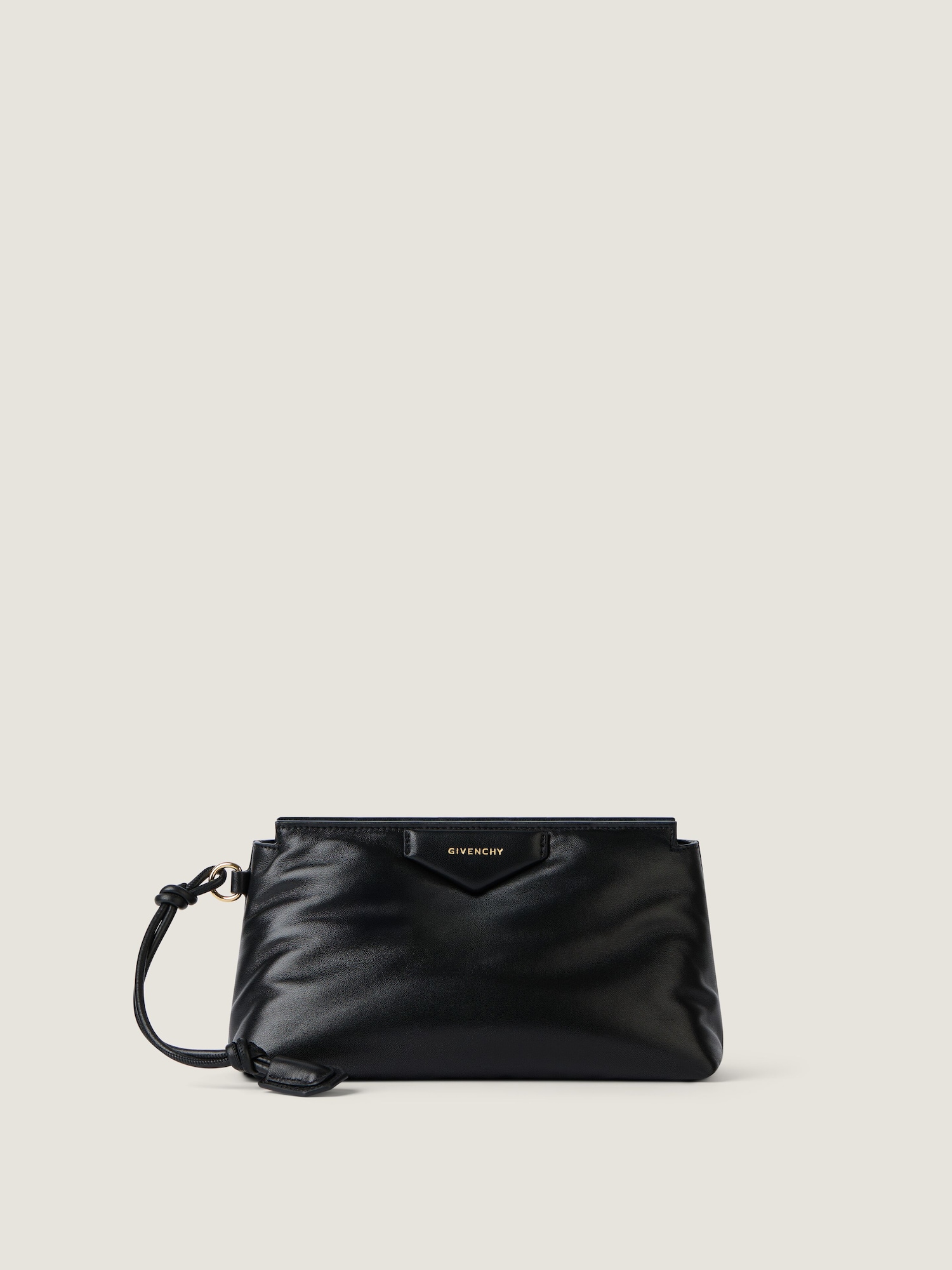
The 4G buckle on a small leather bag: four interlocked letters in brushed metal
The 4G buckle on a small leather bag: four interlocked letters in brushed metal. You see it on the metro, on a wrist at the café counter, carried by someone who may or may not know that Hubert de Givenchy opened his atelier in 1952 with eight million francs borrowed from friends. The bag costs less than a Chanel card holder. It carries the name. For many buyers, that is the entry point.
Givenchy is not a house built on bags. It is built on a single relationship between a couturier and an actress, and on the idea that elegance is a form of refusal. Refusal of excess. Refusal of the over-decorated. Hubert de Givenchy met Audrey Hepburn in 1953, expecting Katharine. He dressed her for Sabrina, for Breakfast at Tiffany's, for her life. The black column dress with the open back, the bateau neckline, the way a sleeve could end just above the wrist — this was the house vocabulary for three decades. Givenchy retired in 1995. The name has moved through seven creative directors since. The shape of the house has changed each time.
What Givenchy was
Hubert de Givenchy trained under Elsa Schiaparelli, worked at Lelong, learned structure before decoration. When he opened his own house, he showed separates — blouses you could pair with skirts, day clothes a woman might actually wear more than once. This was not common in couture. Bettina Graziani, his house model, wore a cotton shirting blouse with puffed sleeves and embroidery at the shoulder. Vogue called it the Bettina. It sold in the thousands.
The house made its name on restraint. A Givenchy coat had a clean shoulder line, a sleeve set without gathers, buttons that closed edge to edge. Hepburn wore his clothes because they did not announce themselves. The silhouette was the message. In 1988, Givenchy became the first couture house to hire a British designer when John Galliano took over ready-to-wear. Galliano lasted one collection. The house was not ready, or Galliano was not ready for the house. Alexander McQueen arrived in 1996. He stayed five years. He called it a learning experience. The work he made there — the tailored frock coats, the lace corsetry, the runway with models walking through water — was McQueen refracted through Givenchy codes, which is to say it was McQueen.
Riccardo Tisci arrived in 2005. He stayed twelve years. He brought tattoo motifs, Rottweiler graphics, heavy metal hardware, a darker romanticism than Givenchy had known. He also brought revenue. Under Tisci, ready-to-wear became the engine. The Antigona bag, introduced in 2010, is still the house's best-selling leather good. The Nightingale came a year later. Both names reference something delicate; both bags are structured, angular, built for daily carry. Tisci left in 2017. Clare Waight Keller took over. She designed the wedding dress Meghan Markle wore to marry Prince William's brother. The dress had a bateau neckline, long sleeves, no lace. It looked like a Givenchy from 1963. Waight Keller left in 2020.
Matthew Williams, founder of the brand Alyx and former creative consultant to Kanye West, was appointed in June 2020. He is still there. His Givenchy is louder than Hubert's, quieter than Tisci's. He uses hardware from his own brand — the rollercoaster buckle, industrial clasps — and he references the archive in ways that feel like sampling. A trench coat gets a harness detail. A shirt dress gets cut in bonded nylon. The house shows in Paris but speaks to a customer who may never go to Paris. Williams understands product. He worked at Louis Vuitton under Virgil Abloh. He knows what moves at wholesale.
Where to start now
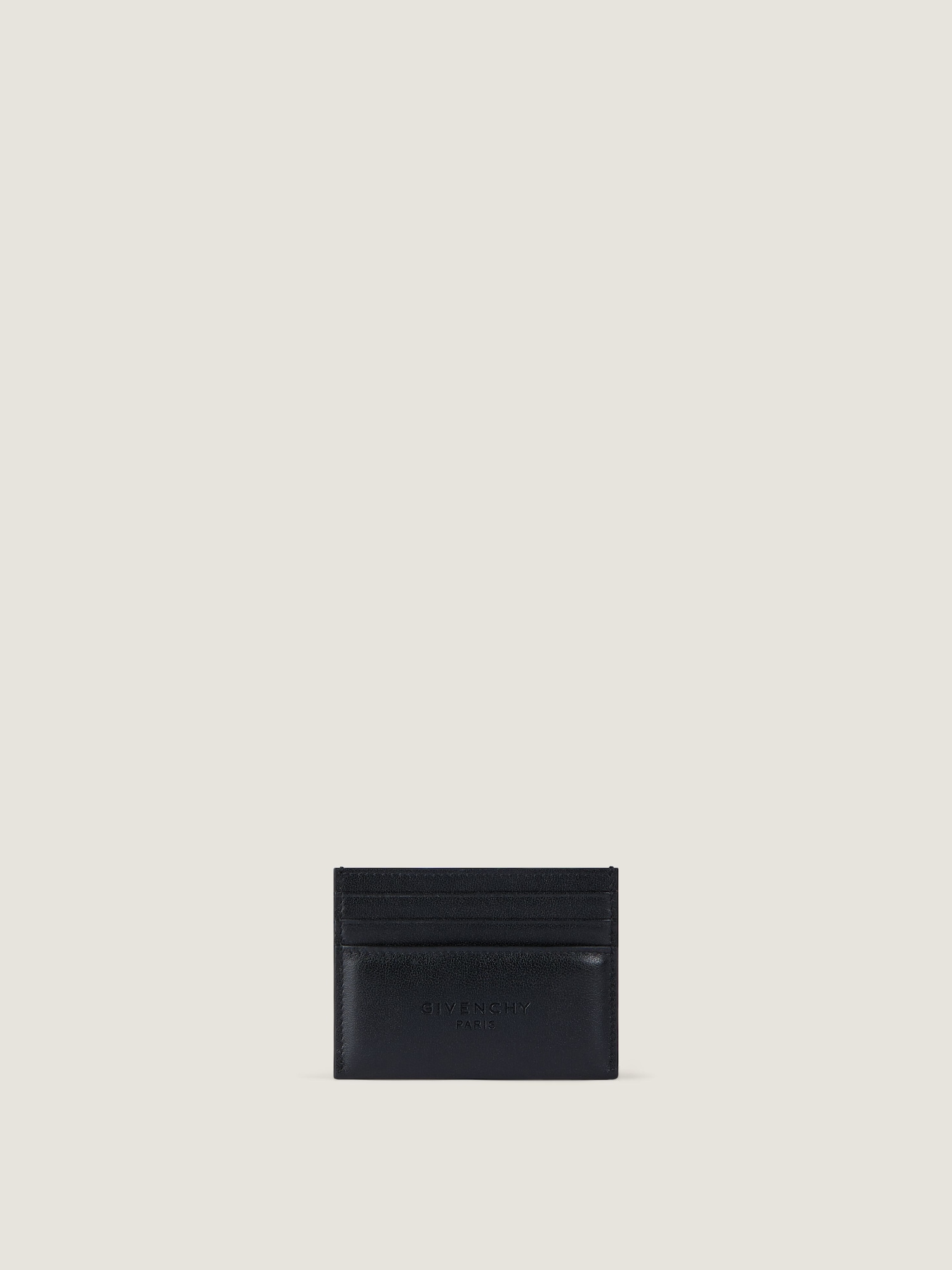
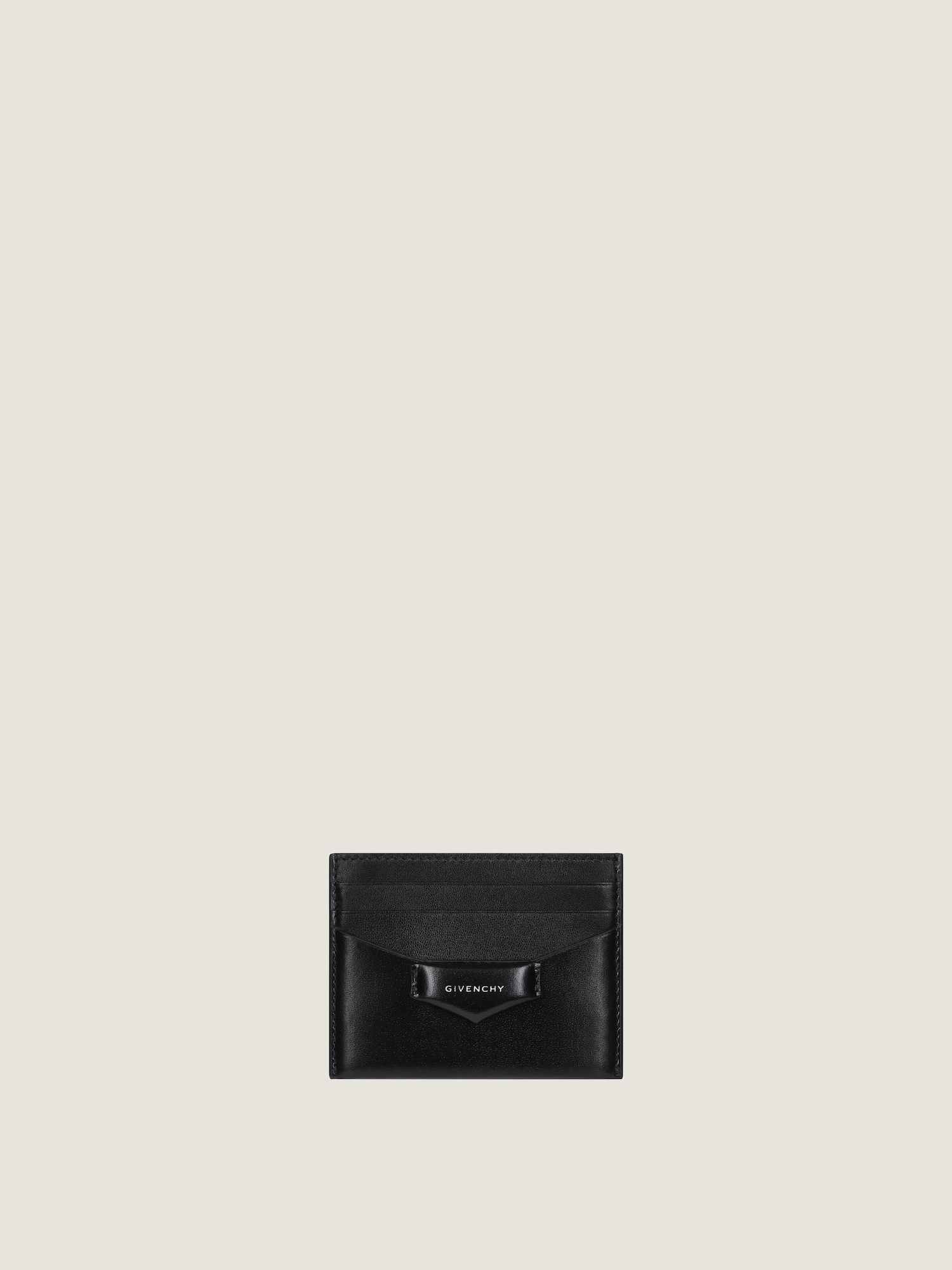
If you are looking at Givenchy for the first time, you are looking at bags and shoes. The ready-to-wear is priced in line with Balenciaga, Celine, Loewe — a knit sweater starts around $800, a tailored coat near $3,000. The bags start lower. A card holder in grained leather runs $250. The small 4G bag, the one you see carried crossbody on the street, is $1,100. The Antigona, still in production, starts at $2,200 for the small size in smooth calfskin. The medium runs $2,600. These are not inaccessible numbers if you are already shopping at this tier.
The 4G hardware is Williams's signature, and it is everywhere: on belt bags, on chain straps, stamped into leather, cast as a buckle. It registers as Givenchy to someone who has never seen a Givenchy runway. That is the point. A logo does not need to be large if it is consistent. Givenchy does not print its name across a bag front the way some houses do. The 4G is enough.
Shoes follow the same logic. The TK-360 sneaker, a chunky runner with a knit upper and exaggerated sole, retails for $595. The Shark Lock boot — a knee-high style with a padlock detail at the ankle — starts at $1,450. Both are recognisable. Both move. The house also makes a flat sandal with a single strap and a metal 4G ornament. It is $450. It looks like nothing until you see the buckle.
If you want something closer to the archive, look at the tailoring. Givenchy still makes a good blazer. The shoulders are built, not soft. The lapels are narrow. A single-breasted jacket in wool runs about $2,400. A double-breasted coat in wool-cashmere is closer to $4,000. These pieces do not carry hardware. They carry a shoulder line. That is an older language.
What you should know
Givenchy is owned by LVMH. It has been since 1988. That means access to the same ateliers, the same leather suppliers, the same production infrastructure as Dior, Celine, Loewe. It also means quarterly targets. A creative director at Givenchy is not only designing for the runway. He is designing for the floor, for the website, for the customer who buys two bags a year and never attends a fashion show.
Matthew Williams is designing for that customer. His shows reference club culture, streetwear, the internet, but the product is wearable. A Givenchy bag from 2024 does not require explanation. You do not need to know the reference to carry it. This is different from a house like Loewe, where Jonathan Anderson's work often asks you to consider the object as sculpture first, accessory second. Givenchy under Williams is accessory first.
That is not a criticism. It is a position. The house is not trying to be Loewe or The Row or Khaite. It is trying to be Givenchy, which at this moment means a house that honours its past without being trapped by it. The 4G is new. The Antigona is fourteen years old. Both sell. The customer who buys the 4G crossbody may never buy the tailored coat, and the customer who buys the coat may not recognise the 4G as Givenchy. The house holds both.
The last thing
There is a photograph from 1961: Audrey Hepburn in a Givenchy day dress, standing in front of a window, light coming through. The dress is sleeveless, A-line, hits just below the knee. No ornament. The photograph is in black and white, so you cannot see the colour, but you can see the line. That is what Givenchy was.
There is another image, from Matthew Williams's spring 2023 show: a model in a black leather trench, hardware at the waist, walking under blue light. The trench has the same A-line. The hardware is new. The house is both things now. You choose where you enter.