The Antigona bag arrived in 2010
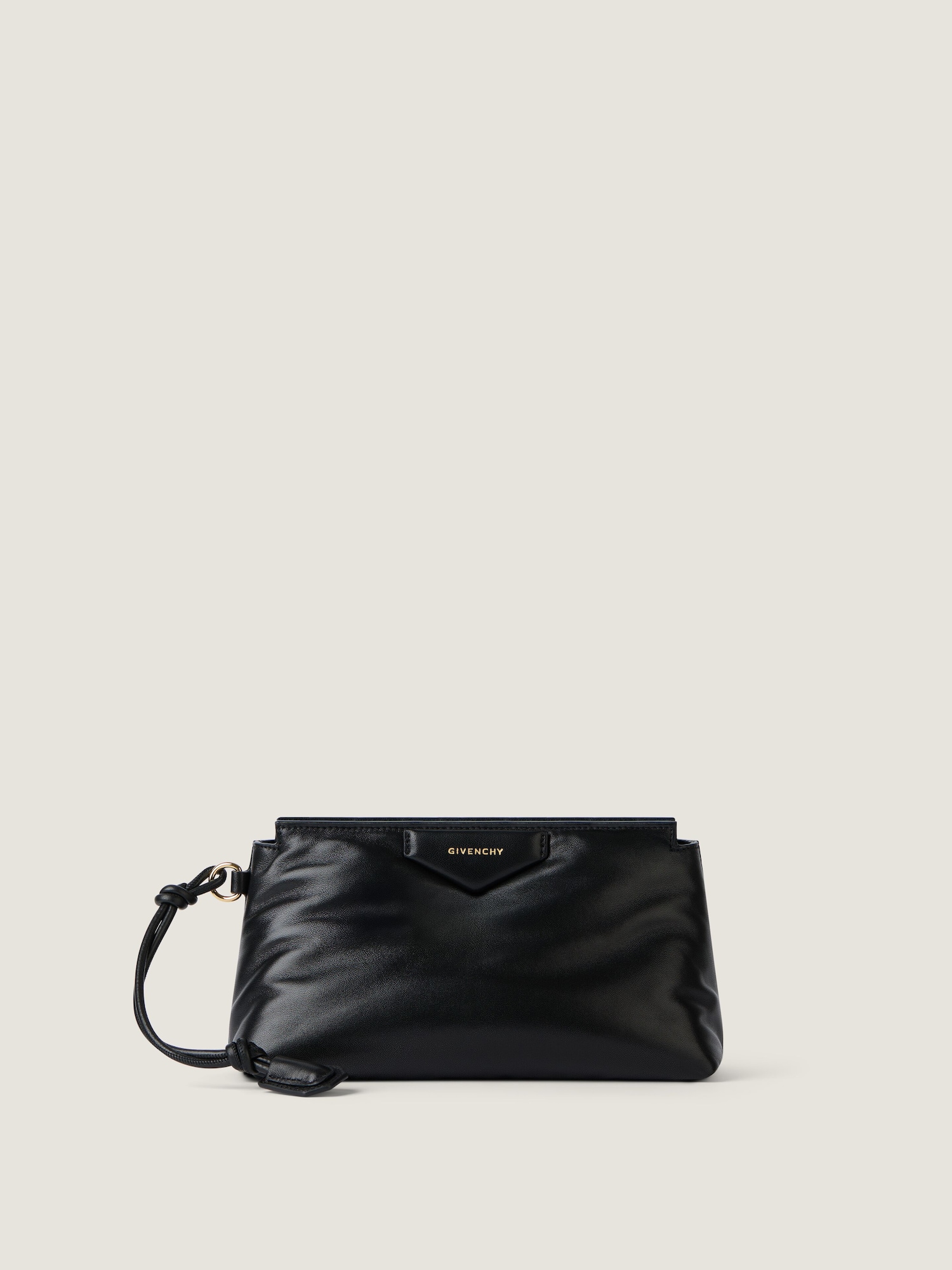
The Antigona bag arrived in 2010. Riccardo Tisci had been at Givenchy for five years, and the house needed a product that could move units without requiring a press release. The bag did exactly that. Structured, sharp-cornered, named for a Greek tragedy but sold on the strength of its silhouette. It became the kind of object women bought when they wanted something recognisably expensive that wasn't a Birkin. Fourteen years later, it still accounts for a meaningful portion of Givenchy's accessories revenue. That tells you something about the house's commercial logic. It also tells you something about the creative question it hasn't quite answered since Tisci left in 2017.
Hubert de Givenchy founded the maison in 1952, aged twenty-four, with backing from a textile manufacturer and an instinct for what American clients wanted from Paris. He had worked for Schiaparelli, absorbed her showmanship, then discarded it in favour of something quieter. His first collection, shown in a rented townhouse, featured separates—a radical idea when couture still meant gowns. Bettina Graziani opened the show in a white cotton shirt with exaggerated sleeves. Vogue called it the Bettina blouse. It sold out in a week.
Audrey Hepburn walked into the atelier in 1953. She was twenty-four, cast in Sabrina, and needed a wardrobe that could make a chauffeur's daughter look like someone who had spent a year in Paris. Givenchy dressed her for the film and for the next forty years. The relationship was professional, then personal, and always mutually reinforcing. She gave him a client who embodied his aesthetic. He gave her a uniform: the black sheath, the bateau neckline, the refusal of ornament. When people think of Givenchy, they are often thinking of Hepburn in Breakfast at Tiffany's, standing outside a jeweller's at dawn in a dress that cost more to make than most of the film's sets.
Hubert de Givenchy retired in 1995. LVMH had bought the house two years earlier, and the succession problem began immediately. John Galliano lasted seven months. Alexander McQueen lasted five years and produced work that had almost nothing to do with the house codes, which was possibly the point. Julien Macdonald followed. Then Tisci arrived in 2005, a Milanese designer with a background in draping and a vision of Givenchy that leaned hard into gothic severity. He brought tattoo motifs, Rottweilers, religious imagery, and a kind of dark glamour that had more to do with nightclubs than Hepburn. It worked. Tisci turned Givenchy into a brand that could speak to a younger customer without entirely alienating the old one. He also stabilised the ready-to-wear business and made the Antigona.
When Tisci left for Burberry, Clare Waight Keller took over. She was the first woman to lead Givenchy's artistic direction, and her tenure is now largely remembered for one dress: Meghan Markle's wedding gown, a bateau-neck silk cady sheath that referenced Hepburn without copying her. The dress was watched by 29 million people in the UK alone. It was also, in retrospect, the high point of Waight Keller's three years at the house. Her collections were competent, occasionally beautiful, but they didn't shift the commercial dial the way LVMH needed. She left in 2020.
Matthew Williams arrived from Alyx, a Los Angeles-based brand known for hardware, utility buckles, and a kind of streetwear rigour that felt closer to industrial design than fashion. He was also the creative consultant for Lady Gaga and a collaborator with Kanye West. His appointment signalled that Givenchy wanted to recapture some of Tisci's energy—younger, harder-edged, more attuned to celebrity and social media. Williams's first collection, shown in October 2020, featured padlocks, chain details, and a visual language borrowed from his own brand. The tailoring was sharp. The bags had hardware that looked like climbing equipment. The reception was mixed.
Three years in, Williams has clarified his vision somewhat. The collections still lean on hardware and a kind of utilitarian luxury, but there's more attention to the archive now. He has referenced Hubert de Givenchy's separates, brought back the Bettina blouse in updated form, and worked with the house's couture atelier to produce pieces that acknowledge the maison's history without being bound by it. The spring 2024 collection included a series of tailored jackets with exaggerated shoulders and nipped waists, a silhouette that could have come from the 1950s if you squinted, but rendered in technical fabrics and styled with cargo trousers. It was an attempt to reconcile the house's two identities: the refined, mid-century elegance that Hubert built, and the harder, more contemporary edge that LVMH believes will sell to a generation that didn't grow up watching Sabrina.
The challenge is that Givenchy sits in an uncomfortable position within LVMH's portfolio. It is not Dior, which has brand recognition and revenue that insulate it from creative risk. It is not Celine, which has Hedi Slimane and a clearly defined customer. It is not Loewe, which has Jonathan Anderson and critical cachet that translates, slowly, into commercial success. Givenchy has history, a famous logo, and the Antigona bag. It does not have a singular creative vision that people outside the industry can name. Williams is trying to build that, but the work is uneven. Some collections feel like Alyx with a bigger budget. Others feel like a designer wrestling with a legacy he respects but doesn't quite know how to inhabit.
The numbers are harder to read. LVMH does not break out Givenchy's revenue separately, folding it into the "Fashion and Leather Goods" division alongside Dior, Fendi, and Louis Vuitton. Industry estimates put Givenchy's annual revenue somewhere between €700 million and €1 billion, which is respectable but not transformative. The brand has fewer than 300 stores worldwide, compared to Dior's 500-plus. Accessories drive the business, as they do for most houses. Ready-to-wear gets the press, but handbags pay the rent.
What Givenchy has, still, is a kind of visual authority. The logo—four Gs in a square—reads immediately. The tailoring, when it's good, has a precision that feels French in the way people want French fashion to feel. The bags, even the ones that aren't the Antigona, have a structured elegance that photographs well and holds up under daily use. Williams has also leaned into beauty, which LVMH understands better than almost anyone. The beauty line, particularly fragrance, remains a significant revenue stream, and the recent campaigns have featured Ariana Grande and other celebrities who can move product without requiring a fashion-forward narrative.
The question is whether Givenchy can become more than the sum of its parts. It has a founder with a clear aesthetic. It has a defining relationship with Hepburn that still shapes how people think about the brand. It has a successful bag, a functioning beauty business, and a designer who is trying, with varying success, to build something new without discarding what came before. What it doesn't have, yet, is a reason for someone under thirty to choose Givenchy over Bottega Veneta, or The Row, or even Phoebe Philo's forthcoming line. That's the work Williams is doing now, and it's not clear if three years is long enough to do it.
The Atelier on Avenue George V
The haute couture atelier still operates on the second floor of Givenchy's Paris headquarters. There are fourteen petites mains, most of whom have been with the house for more than a decade. They work on private commissions, red carpet pieces, and the occasional couture show that Williams stages to maintain the house's official haute couture status. The atelier is not profitable. It exists because LVMH believes a French fashion house should have one, and because the skills practised there—hand-finishing, draping, embroidery—are part of what separates Givenchy from a brand that only makes handbags.
On a Tuesday afternoon in February, the atelier was finishing a gown for a client in Los Angeles. Black silk faille, structured bodice, a skirt that required thirty metres of fabric and a week of fittings. The première, a woman named Véronique who joined Givenchy in 1987, was adjusting the hem with pins so fine they were almost invisible. She had worked for Hubert de Givenchy directly, remembered his fittings, the way he would stand back and look at a garment for five minutes without speaking. Williams doesn't work that way. He moves faster, adjusts on the fly, trusts the atelier to interpret his sketches. Véronique didn't say whether she preferred one method to the other. She just pinned the hem, checked the fall, and moved on to the next piece.