The Aria show in April 2021 played out in a mirrored hall
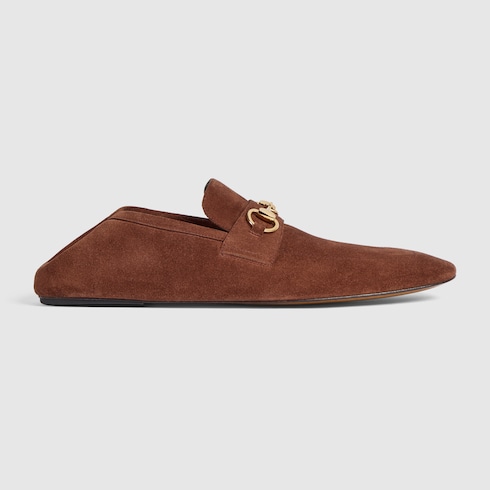
The Aria show in April 2021 played out in a mirrored hall. Alessandro Michele staged his centenary homage to the archive inside Savoy, the old cinema on Via Nino Bixio, and lined every surface with glass. Models walked through their own reflections. The clothes — an eclectic pile-up of horsebit loafers, Tom Ford-era bias cuts, and Michele's own magpie maximalism — became infinite. One could read it as a celebration. Or as a house looking at itself so intently it lost the horizon line.
Three years later, Gucci is no longer looking inward. The mirrors have been packed away. Sabato De Sarno arrived in January 2023 with a brief that, while never stated outright, reads clearly enough in the work: make Gucci legible again. Sell bags. Court a customer who may have aged out of Michele's more theatrical propositions. The question now is not whether the house has changed direction — it has — but whether that shift registers as strategy or as retreat.
The inheritance, and what it built
Guccio Gucci opened his leather-goods shop in Florence in 1921, a craftsman's concern that served the carriage trade and, soon enough, the early automobile set. The house moved into handbags and luggage because the clientele required them. The double-G monogram arrived in the 1930s, the horsebit hardware in the 1950s, the green-red-green webbing as a signature accent shortly after. These were not fashion statements. They were identifiers, marks of provenance in an era when such things mattered because they signalled both taste and access.
By the 1970s, Gucci had become a byword for a certain kind of international glamour — the kind photographed in airport lounges and on the decks of yachts. It had also become a family business in the most Italian sense: riven by feuds, expansion into licensing that diluted the name, and a drift toward logo-heavy products that sold briskly but earned little respect from the industry's gatekeepers. When Domenico De Sole and Tom Ford took over creative and business leadership in the 1990s, they inherited a house that was commercially successful and creatively adrift.
Ford's tenure, from 1994 to 2004, is now spoken of in the past tense as though it were a discrete historical episode. In many ways it was. He stripped the logo back, leaned into sex and a kind of lacquered, Studio 54-inflected sensuality, and turned Gucci into the most profitable luxury house of its moment. The velvet tuxedo, the satin shirt unbuttoned to the navel, the ad campaigns shot by Mario Testino — these were not subtle gestures. They worked. Revenue grew sixfold in Ford's first six years. When he and De Sole departed in 2004, they left behind a template: Gucci as a house that could be reinvented, decisively, by a designer with a point of view and the institutional backing to execute it.
The Michele era, and its limits
Alessandro Michele's appointment in 2015 surprised the industry less for who he was — he had spent twelve years in Gucci's accessories division — than for how quickly he moved. His first women's show, staged with a few weeks' notice, laid out a vision that felt like a rebuke to the minimalism then dominant. Pussy-bow blouses, embroidered brocade, clashing prints, Seventies-proportioned flares, fur-lined loafers worn with socks. It was arch, referential, unabashedly decorative. It also sold.
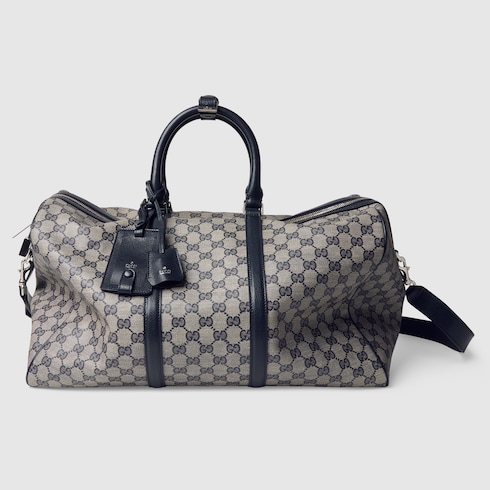
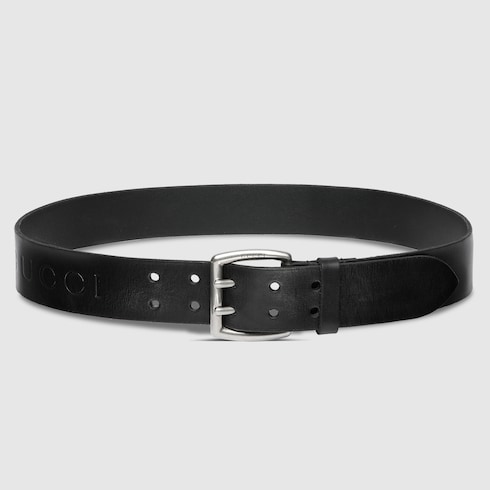
For a stretch of five or six years, Michele's Gucci became the industry's most-watched house. Revenue doubled between 2015 and 2019. The Dionysus bag, the Marmont, the Ace sneaker — these were not quiet successes. They moved units. Instagram, still in its aesthetic-accumulation phase, rewarded Michele's density of reference. A customer could buy into the vision incrementally: a logo belt, a pair of loafers, eventually a full look. The clothes read as costumes, in the best sense. You wore them to signal that you were in on the reference, or at least willing to play along.
But by 2021, the formula had begun to fray. The pandemic compressed the fashion calendar and exposed how much of Michele's output relied on the spectacle of the show, the layered narratives he built into each collection. Without that context, the clothes sometimes felt like elaborate in-jokes. Sales growth slowed, then stalled. In the fourth quarter of 2022, Gucci's revenue declined year-over-year for the first time in years. Kering, the parent group, began to signal that a change was under consideration. In November 2022, Michele departed. The official statement cited "a different vision." One suspects the vision in question involved handbag sales in the Asia-Pacific region.
De Sarno's Gucci, or the return to codes
Sabato De Sarno is not a household name, and Kering appears content to keep it that way. His background is in accessories and ready-to-wear at Prada and Valentino — serious houses, but not platforms that cultivate designer celebrity. His first show for Gucci, in September 2023, was titled "Gucci Ancora." Ancora: again, still, yet. The clothes were clean-lined, confident in their restraint. Tailoring in camel and charcoal. Dresses cut on the bias. The horsebit and the bamboo handle returned, not as ironic flourishes but as straightforward design elements. The palette leaned into rosso ancora, a particular shade of red drawn from the archive.
It was, by most measures, well-received. It was also, unmistakably, a course correction. Where Michele had treated Gucci's codes as a kind of raw material to be collaged and recontextualised, De Sarno restored them to their function as signifiers of the house itself. A bamboo-handle bag is once again a bamboo-handle bag. The risk, and it is a real one, is that clarity becomes blandness. Gucci now competes not with its own past but with Bottega Veneta, Loewe, The Row — houses that have staked their reputations on a kind of affluent understatement. It is a crowded field.
The numbers, so far, are mixed. Gucci's revenue in the first half of 2024 declined by nearly 20 per cent compared to the prior year, a figure Kering attributed to "transition." The handbag category, long the house's anchor, has softened. Part of this is macro: the Chinese luxury market, which drove much of the growth in the 2010s, has cooled. Part of it is internal. De Sarno's Gucci has yet to produce a breakout bag, the kind of object that generates its own demand regardless of runway context. The Blondie, a structured top-handle introduced in his first season, has sold steadily but not sensationally. The house is banking on longevity over virality, a reasonable wager but one that requires patience from shareholders not known for it.
What remains, and what's at stake
To walk into a Gucci boutique now is to encounter a house in the middle of an argument with itself. The Dionysus still sits in the window alongside the Blondie. Michele-era embroidered sneakers share shelf space with De Sarno's sleek loafers. The store design, a lush maximalism of velvet and brass, has not yet caught up to the new aesthetic. It will, presumably. Kering is rolling out updated interiors. But for now, the space itself is a kind of archive of the last decade's shifts — a reminder that reinvention, in luxury, is never as clean as the press release suggests.
Gucci's challenge is not creative bankruptcy. De Sarno is a competent designer with a clear point of view. The challenge is relevance in a market that has fragmented. The customer who bought into Michele's vision — younger, digitally native, drawn to fashion as a form of self-expression — may not be the customer who responds to De Sarno's tailoring. And the customer who wants tailoring has options, many of them from houses with less baggage and more consistent messaging. Gucci is, in this sense, a victim of its own success. It has been so many things to so many people that it risks meaning very little to anyone in particular.
There is a photograph from the Aria show, taken just as the lights came up. A model in a Tom Ford-style tuxedo stands facing her own reflection, one hand on her hip, the other holding a small bamboo-handle bag. The bag, unmistakably Gucci, is the only object in the frame that does not double. It is singular, specific, the thing itself. Whether that is enough — whether craft and history can hold against the churn of trend and the demands of quarterly earnings — is the question Gucci is now asking. The answer will not arrive in a single season. It will arrive, if it does, in the accumulated choices of customers who decide whether the house still speaks to them, or whether it has become a mirror reflecting nothing but its own past.