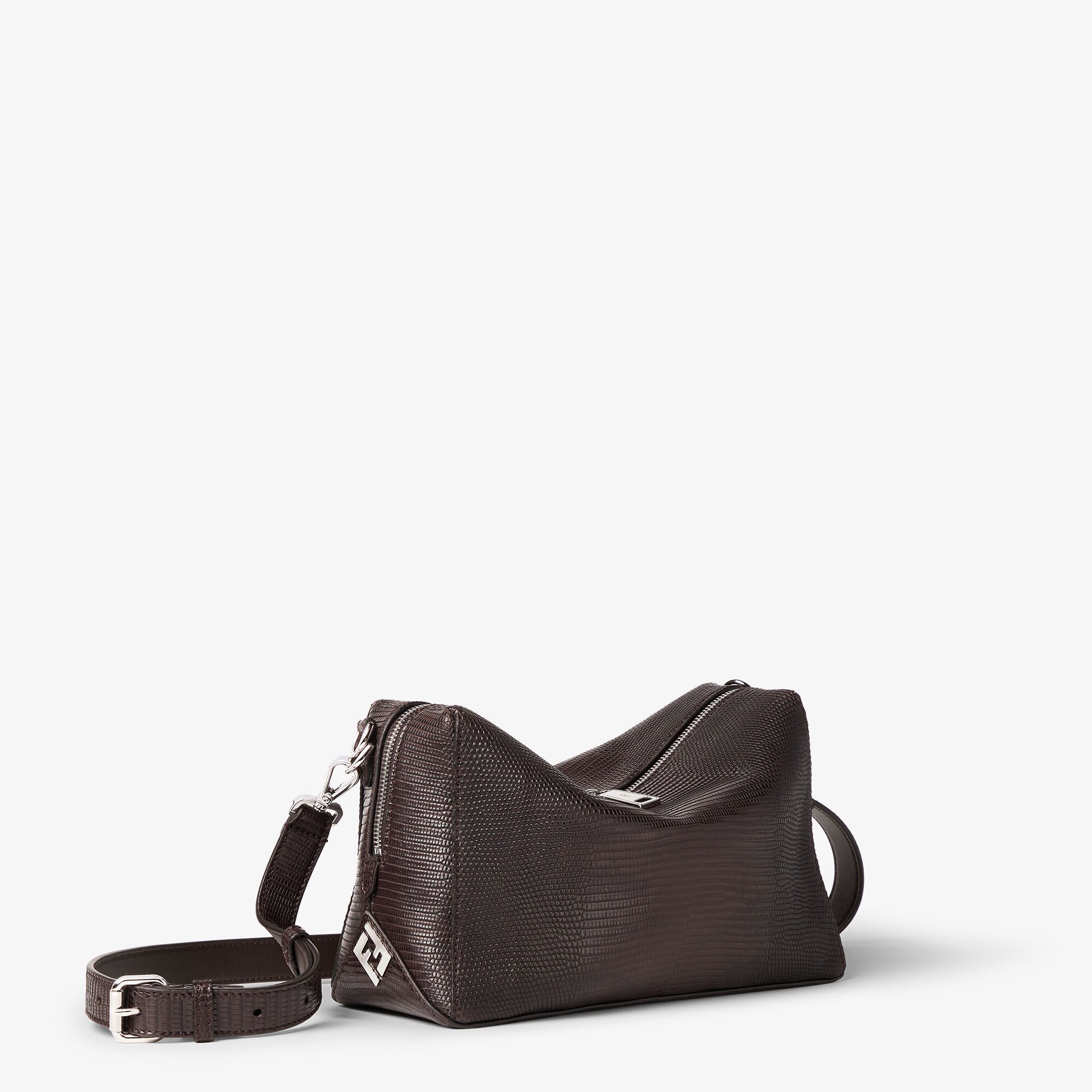
The Baguette weighs less than most hardbacks, but it changed the calculus of what a handbag could do
The Baguette weighs less than most hardbacks, but it changed the calculus of what a handbag could do. When Silvia Venturini Fendi introduced it in 1997, tucked under the arm like a loaf from the boulangerie, she wasn't aiming for revolution. She was solving a problem: women wanted something smaller than a tote, more playful than an evening clutch, and specific enough to signal intent. Twenty-seven years on, the shape has been reissued in sequins, shearling, python, and denim. It has appeared on Sex and the City and in museum vitrines. One suspects Silvia knew what she had.
Fendi remains, in many ways, a family operation scaled to industrial proportions. Founded in Rome in 1925 by Adele and Edoardo Fendi as a leather and fur atelier, the house passed through five daughters — Paola, Anna, Franca, Carla, Alda — who ran it jointly for decades. Karl Lagerfeld arrived in 1965, originally hired for fur, and stayed for fifty-four years. Silvia, daughter of Anna, joined in the 1990s and still helms accessories and menswear. The LVMH acquisition in 2001 brought capital and distribution, but the Roman character endures: tactile, irreverent, less solemn than its Parisian peers.
What Fendi does best
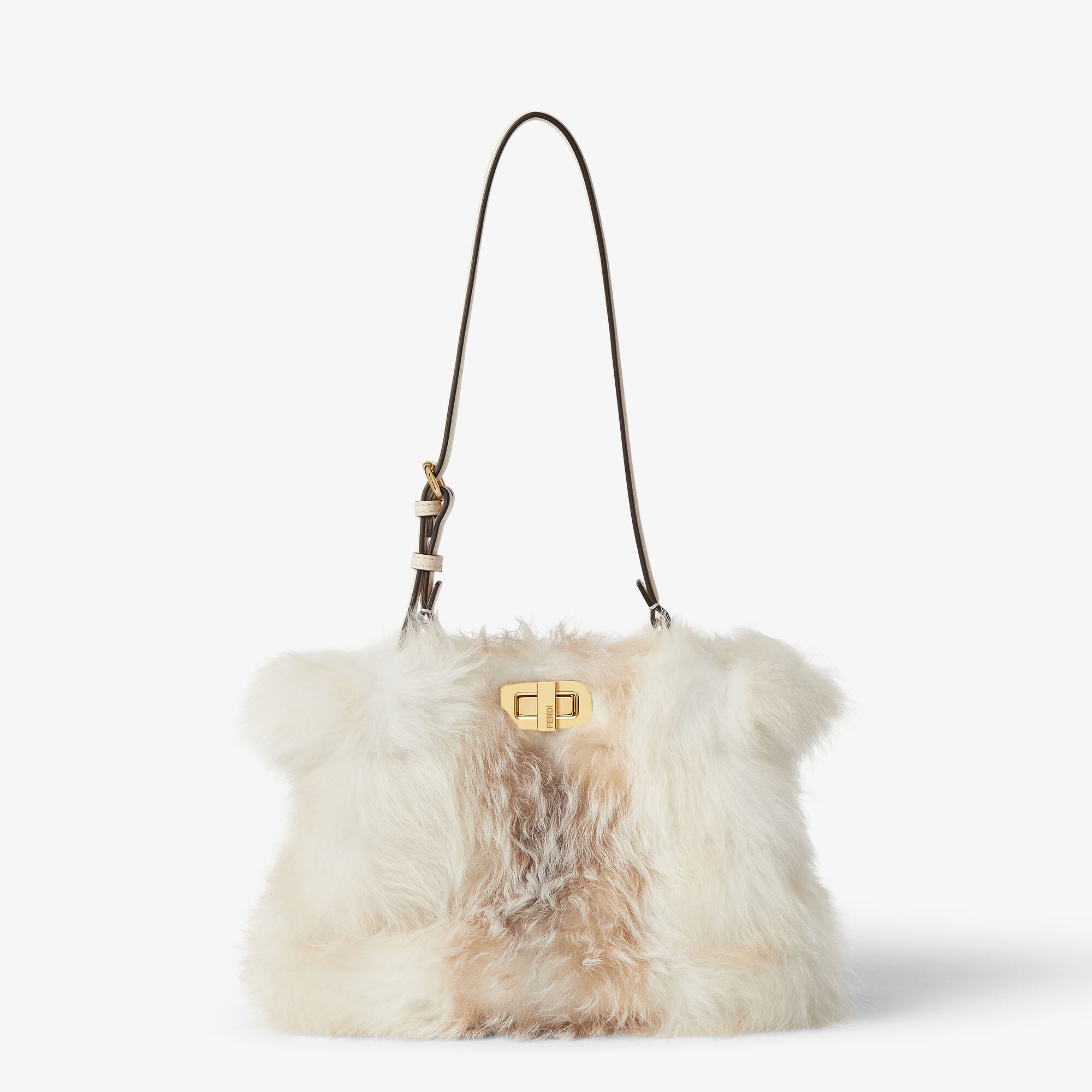
Fur and leather remain the twin poles. The house pioneered techniques that sound like kitchen prep — inlaying, intarsia, shearing mink to the hand of cashmere — and applied them at a scale that turned pelts into a language. Whether one finds fur morally tenable is a separate conversation; the craft itself is legible. In recent seasons, Fendi has leaned into shearling and treated lambskin as substitutes, with mixed results. The skill transfers, but the provocation dims.
Leather goods, by contrast, have only sharpened. The Peekaboo, introduced in 2008, remains the house's most architecturally considered bag: a structured frame that opens from the centre, revealing two compartments and a dividing panel. It reads as restrained until you notice the interior lining — often in a contrasting colour or an archival Zucca print, the double-F monogram that predates most logomania by thirty years. Prices begin around $5,200 for a medium Peekaboo in calfskin and climb past $8,000 for exotic skins. The Baguette, reissued in dozens of iterations each season, starts closer to $3,000 for canvas or nylon and reaches $6,500 in embellished leather. These aren't impulse buys, but they sit below Hermès and above Coach — a deliberate straddling of accessible luxury and atelier facture.
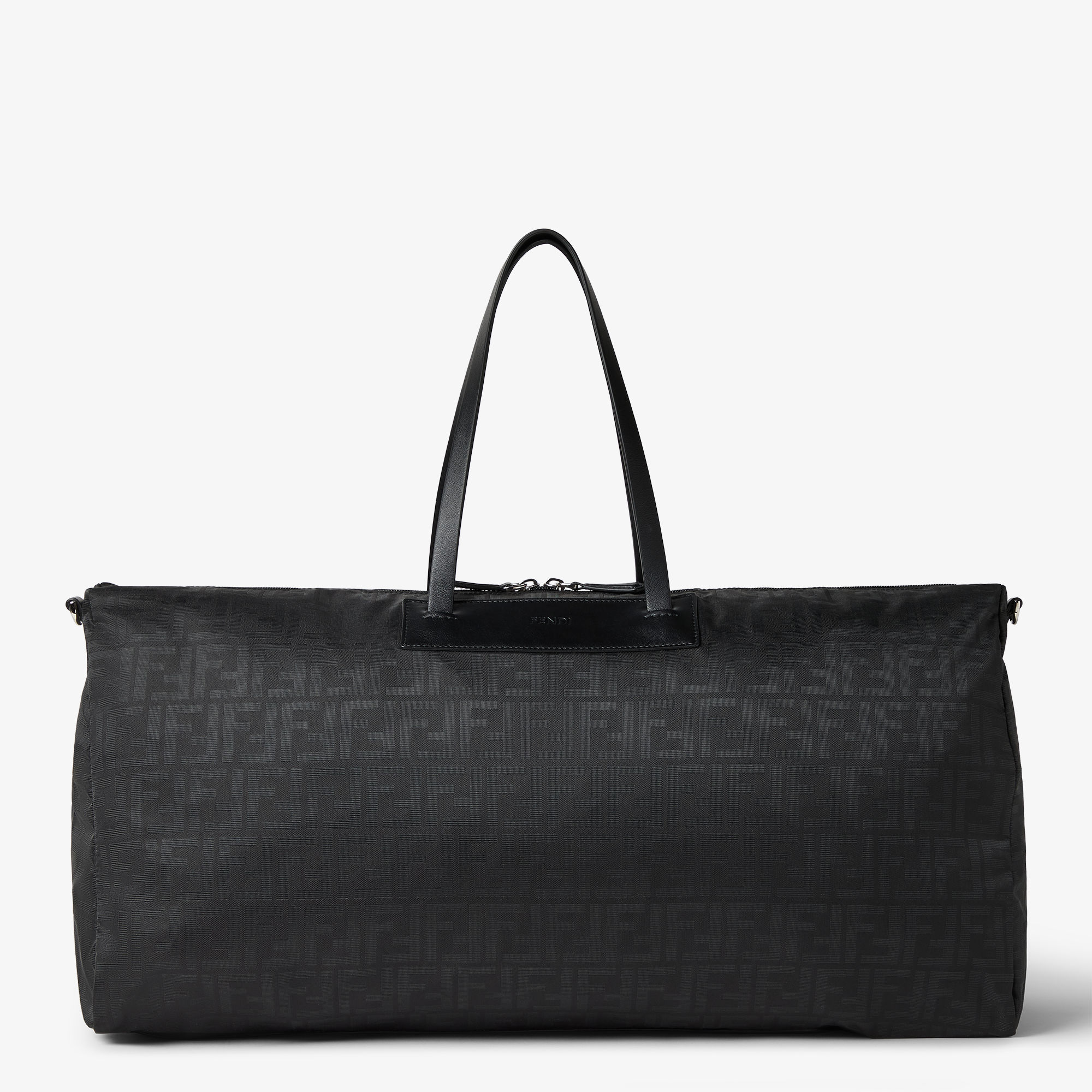
The Zucca monogram itself merits attention. Designed in the 1960s, it predates the Vuitton damier as a logo-as-textile move, and it's aged better than most. Fendi deploys it sparingly now, often as lining or in limited capsules, which has kept it from feeling ubiquitous. When it does appear — on a nylon Baguette, say, or as jacquard lining in a Peekaboo — it functions less as branding and more as a wink to those who know.
The Lagerfeld era and what followed
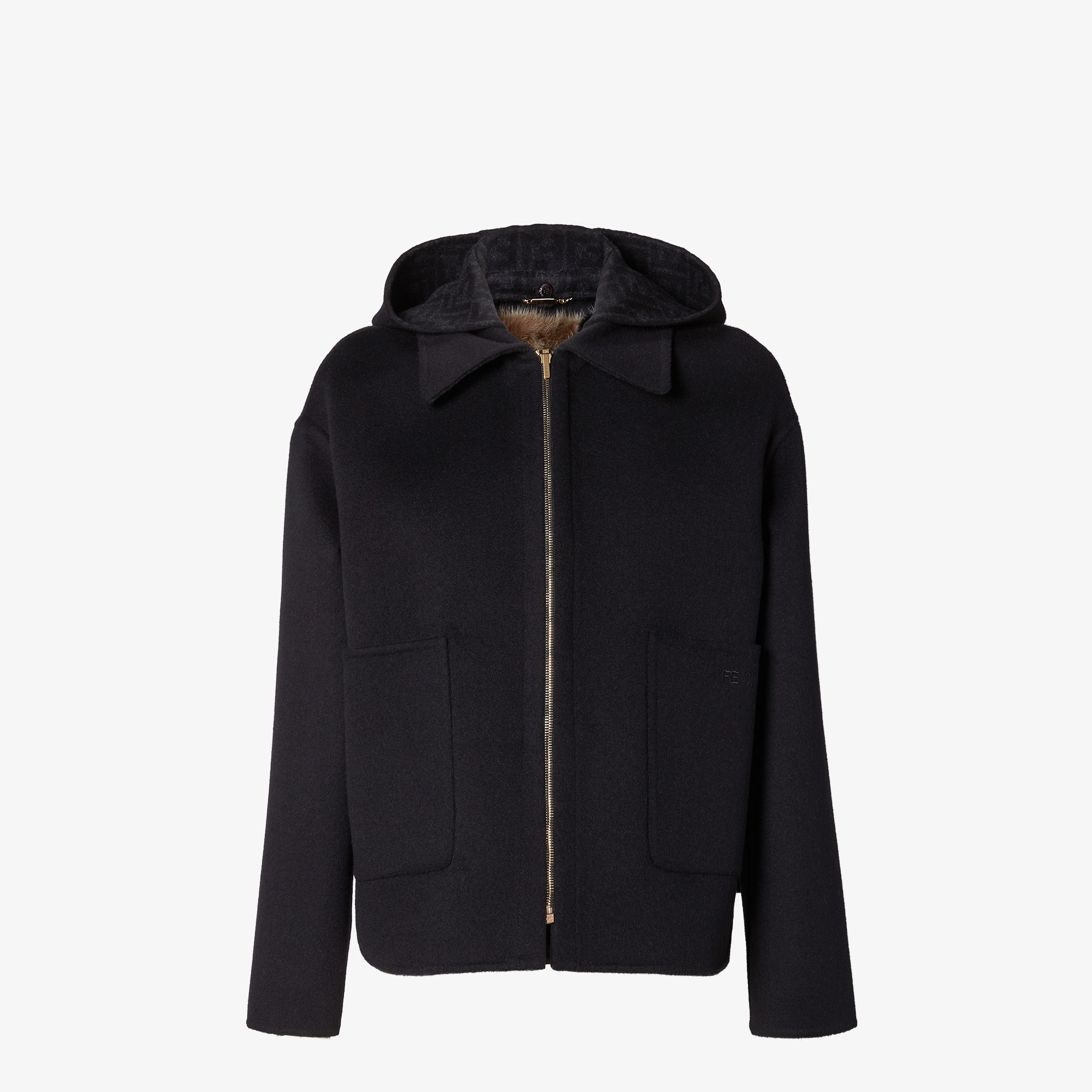
Lagerfeld's tenure at Fendi was quieter than his Chanel work, and perhaps more personal. He treated fur as a medium rather than a luxury signifier, dyeing it in acidic yellows and blues, layering it like fabric, cutting it into sweatshirt shapes. The Fall 2015 collection, shown in a purpose-built pavilion on the Via Cristoforo Colombo, featured shearling bombers and mink parkas that looked like sportswear until you touched them. It was playful in a way that haute fourrure rarely permits.
After his death in 2019, the house appointed Kim Jones as artistic director of womenswear, while Silvia Venturini Fendi continued with accessories and menswear. Jones, previously at Louis Vuitton Men's and Dior Men, brought a streetwear-inflected sensibility and a fondness for collaboration — see the Fendi x Versace "Fendace" swap in 2021, which generated headlines and little else of consequence. His ready-to-wear has been competent: high-waisted trousers, boxy blazers, logo knits that sell. But one doesn't look to Jones for the kind of material experimentation Lagerfeld pursued. The clothes are wearable, commercial, and — this is not a slight — designed to move product.
The accessories line, still under Silvia's direction, remains the sharper proposition. She has kept the Baguette relevant without resorting to gimmickry, introducing variations in scale (the Nano Baguette, small enough to hold a phone and little else) and material (raffia, sequins, shearling). The Peekaboo has likewise evolved: the Peekaboo ISeeU, with a mesh front panel, offers a lighter, more casual iteration. Prices for these newer styles hover between $2,800 and $5,500, depending on size and finish.
What to buy, and why
If you're entering Fendi for the first time, the question isn't whether to buy, but which object best suits your use and budget. The Baguette, in its classic medium size, is the most recognisable entry point — but it's also the most copied, which may or may not matter to you. A Peekaboo reads quieter and wears harder; the structure holds up under daily use, and the interior compartments make it more practical than its elegance suggests. Expect to pay $5,200 to $6,500 for a medium in smooth calfskin.
For something smaller, the Nano Baguette (around $1,800 to $2,200) functions as a crossbody or evening bag, though it's too small for much beyond keys and cards. The First, a top-handle style introduced in 2021, splits the difference: more structured than a Baguette, less formal than a Peekaboo, priced around $3,500 to $4,200. It hasn't yet accrued the cultural weight of its siblings, which may be an advantage if you'd rather not broadcast.
Fendi's small leather goods — cardholders, zip wallets, coin purses — start around $350 and climb to $800. They're well made, but you're paying a premium for the logo. A cardholder from Valextra or Ettinger will give you comparable leather and construction for less. That said, if you want the double-F, you want the double-F. Own the choice.
Ready-to-wear is harder to recommend without caveats. The tailoring is solid — wool trousers run $1,200 to $1,800, blazers $2,500 to $4,000 — but you're not getting the same atelier finish you'd find at Loro Piana or The Row. The knits, particularly the logo sweaters ($900 to $1,400), sell briskly, though they read young. If you're over thirty-five, consider whether a chest-high FENDI serves you or undermines you.
Where the house stands
Fendi occupies an odd position in the LVMH stable: profitable, recognisable, but not quite a pillar brand. It lacks the handbag dominance of Louis Vuitton, the couture prestige of Dior, the avant-garde credibility of Loewe under Jonathan Anderson. What it has instead is a specific Roman ease — less cerebral than Prada, less austere than Jil Sander, more tactile than Chanel. The house makes objects that feel good to hold, and it charges accordingly.
The risk, as with any heritage brand under conglomerate ownership, is that the pursuit of growth flattens what made it distinct. Fendi has so far avoided the worst of that — no diffusion line, no mass-market fragrances, no airport ubiquity. But the collaborations, the logo knits, the Fendace spectacle all point toward a brand testing how far it can stretch before something essential gives.
For now, the Baguette still tucks under the arm just so. The Peekaboo still opens with that particular mechanical click. Silvia is still in the studio. These are not small things.