The Burberry trench in the window at 121 Regent Street is not for sale
The Burberry trench in the window at 121 Regent Street is not for sale. It hangs on a form behind glass, sleeves empty, belt knotted with the precision of a museum mount. The gabardine is the colour called honey, which is neither beige nor tan but something between straw and wet sand. The coat has been in that window, or one like it, since 1912. What has changed is everything around it.
Thomas Burberry patented gabardine in 1879. The fabric was waterproof but breathable, woven tight enough to shed rain without the rubber coating that made other weatherproof cloth stiff and airless. He built a business on that innovation. Officers wore Burberry trenches in the First World War. Explorers took them to both poles. By the middle of the twentieth century, the coat had passed from functional object to cultural sign. It appeared on Hepburn, on Bogart, on every film character who needed to suggest competence or quiet wealth.
The house spent the next fifty years managing that legacy. Sometimes well, often not.
The long drift
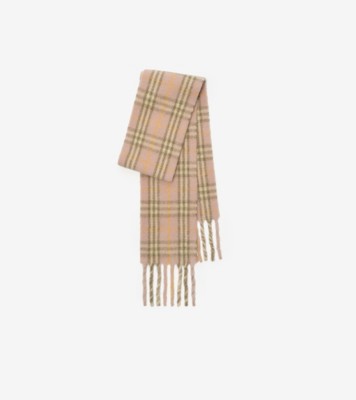
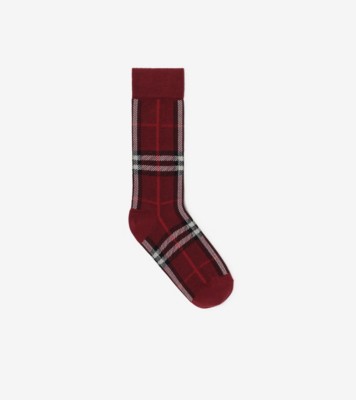
Burberry's trouble began with its own success. The check — camel, red, black, white — was originally a lining detail. In the 1990s it moved to the outside. Scarves, bags, hats, umbrellas. Then came the licenses. Burberry-branded dog leashes in Japan. Kilts for infants. A diffusion line sold in department stores at a steep discount. The check became shorthand not for heritage but for accessibility, and then for something worse. In Britain, the pattern became associated with a specific kind of conspicuous consumption, worn by football fans and teenagers in ways the brand had not intended and could not control. The word 'chav' entered the lexicon. Burberry was in it.
Christopher Bailey arrived as design director in 2001, was named creative director in 2004, and eventually took the CEO role as well in 2014. He cleaned the house. Pulled the licenses. Simplified the product. Invested in digital infrastructure early, streaming runway shows live in 2010 when most heritage houses still treated the internet as a temporary nuisance. Under Bailey, Burberry became a case study in brand rehabilitation. Revenue grew. The stock climbed. The trench remained central, but around it Bailey built a language of young British romance: ruffles, lace, skinny tailoring, boys in eyeliner. It worked until it didn't.
By 2017, growth had stalled. The market had moved. Gucci, under Alessandro Michele, was pulling in a younger customer with a more theatrical product. Burberry's clean minimalism looked polite. Bailey stepped down in 2018. The question became what a heritage house does when heritage stops being enough.
Riccardo Tisci's tenure
Riccardo Tisci came from Givenchy, where he had spent twelve years building a gothic, romantic vocabulary that sat somewhere between couture and streetwear. His first act at Burberry was to replace the equestrian knight logo with a modernist monogram designed by Peter Saville. The serif typeface and interlocking TB felt aggressive in its newness, a deliberate break. He kept the trench but sent it down the runway in vinyl, in patchwork, worn over hoodies and cargo pants. He brought in Gigi Hadid and Kendall Jenner. He hired Meghan Markle's wedding dress designer. He put the check on nylon backpacks and neon puffer jackets.
The work was competent. It looked like contemporary luxury. But it also looked like a dozen other houses trying to court the same customer. Tisci's Burberry was not without ideas — his exploration of Britishness through rave culture and soundsystem aesthetics had moments of clarity — but the execution often felt like a house chasing relevance rather than defining it. Sales improved in some categories, stumbled in others. The stock drifted. In September 2022, after four years, Tisci left by mutual agreement.
Daniel Lee's arrival
Daniel Lee was announced as chief creative officer in October 2022. He had made his name at Bottega Veneta, where in three years he turned the house into the industry's quietest juggernaut. His work there had been defined by material intelligence and a refusal of obvious gesture. Leather woven so fine it read as fabric. Proportions shifted just enough to feel new without announcing themselves. At Burberry, the question was whether that approach could scale to a house three times the size, with a customer base that expected both innovation and the comfort of recognition.
Lee's first collection for Burberry appeared in February 2023. The trench was there, but cut with a new shoulder line — less padding, more drape. He introduced a bag called the Knight, a soft hobo shape in grainy leather that felt like a direct answer to Bottega's Jodie. The check appeared, but reconfigured: blown up, fragmented, woven into knits rather than printed on nylon. The palette was cream, navy, deep brown. The silhouette leaned into ease. Wide trousers. Oversized outerwear. Knits that moved.
The collection was received as a correction. Not a revolution, but a steady hand. Lee was not trying to make Burberry unrecognizable. He was trying to make it desirable again, and he was doing it through the language he knows best: construction, material, and a kind of luxurious understatement that the market, after years of logo saturation, seemed ready to receive.
The numbers and the noise
Burberry's financial results tell a more complicated story. In the fiscal year ending April 2023, revenue was £2.8 billion, down three percent at constant exchange rates. Comparable store sales fell. The Asia-Pacific region, particularly China, underperformed as luxury spending slowed. In November 2023, the company issued a profit warning. The stock dropped eighteen percent in a single day.
Some of this is macro. The luxury market is contracting. Chinese consumers, who drove growth for a decade, are spending less. Aspirational customers are pulling back. But some of it is specific to Burberry. The house is caught between accessible luxury and true high-end, a position that was profitable in the 2010s but has become harder to defend. Brands below it — Coach, Michael Kors — offer similar product at lower prices. Brands above it — Hermès, Loro Piana — offer more convincing claims to exclusivity. Burberry sits in the middle, and the middle is shrinking.
Lee's work is too new to have moved the numbers yet. A creative director's influence on sales is neither immediate nor linear. But the early signs are mixed. The Knight bag has sold well. The trench, reworked, continues to perform. Ready-to-wear is softer. The question is whether Lee's vision — rigorous, material-focused, relatively quiet — can generate the kind of heat the market now demands. Luxury, in 2024, is increasingly driven by scarcity and spectacle. Burberry has scale. It has heritage. What it needs is desire.
What remains
There is a photograph from 1954: a woman in a Burberry trench stands on a train platform, one hand on her luggage, the other holding a cigarette. The coat is belted tight. Her posture is upright. She is not looking at the camera. The image is not selling anything. It is simply recording a moment when function and elegance were the same thing.
Burberry's task now is to find a version of that coherence for a market that no longer values the same things. Lee's approach — serious, craft-driven, resistant to hype — may be exactly what the house needs, or it may be a miscalculation. The answer will come not from the runway but from the cash registers, and not this season but over the next three years.
The trench is still in the window. The gabardine still sheds water. The question is whether that is enough, or whether enough has ever been the point.