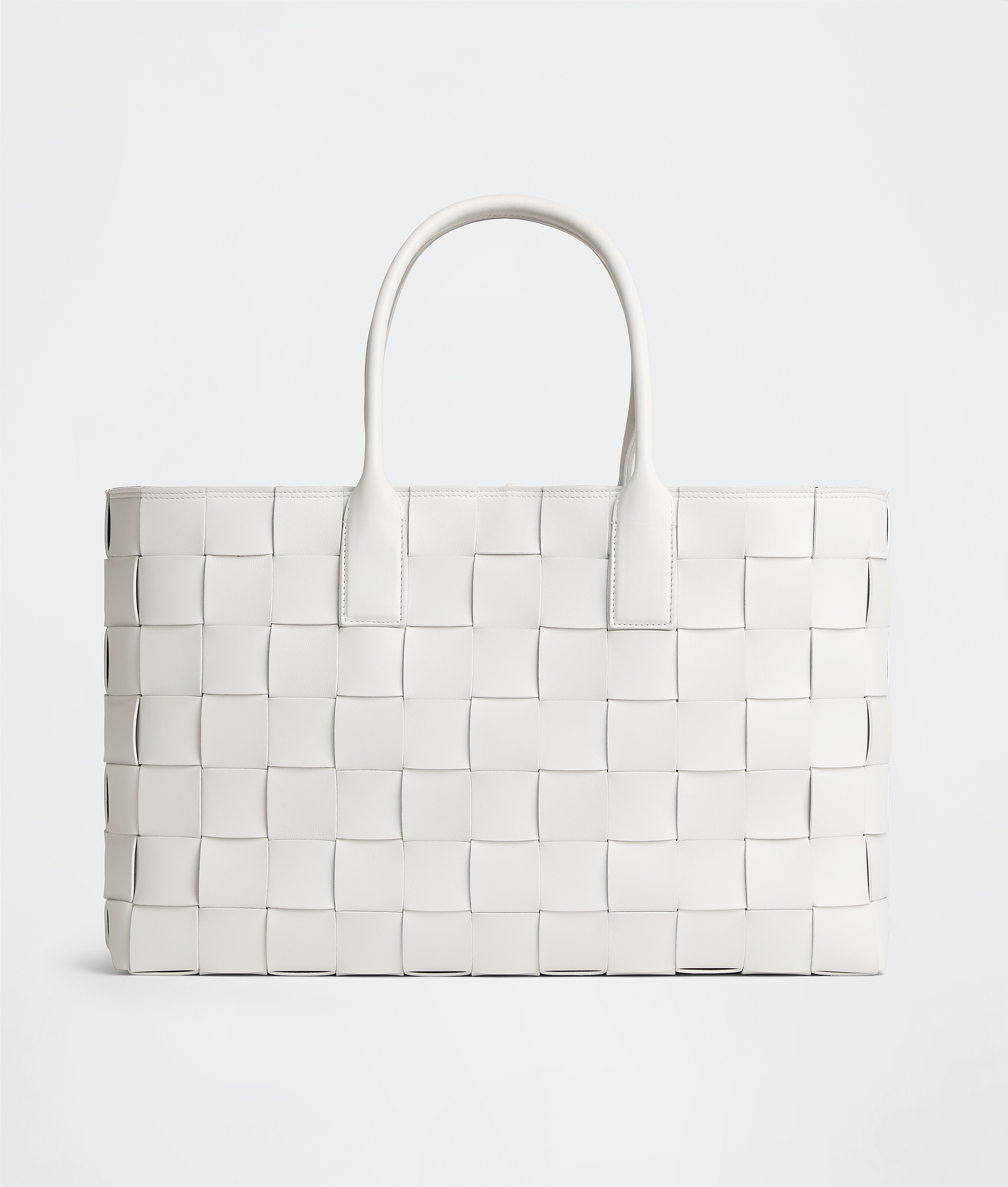
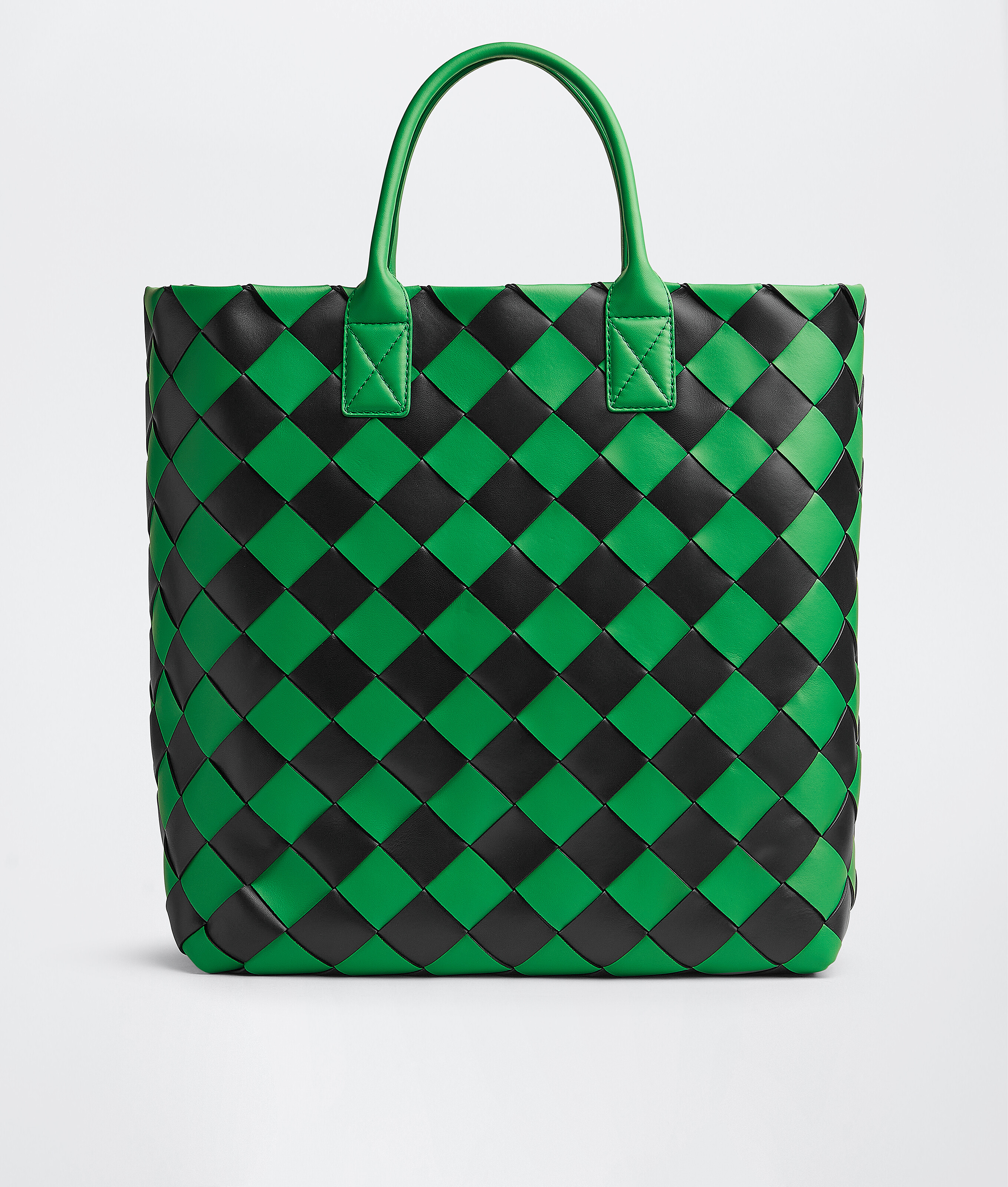
The Cabat doesn't close
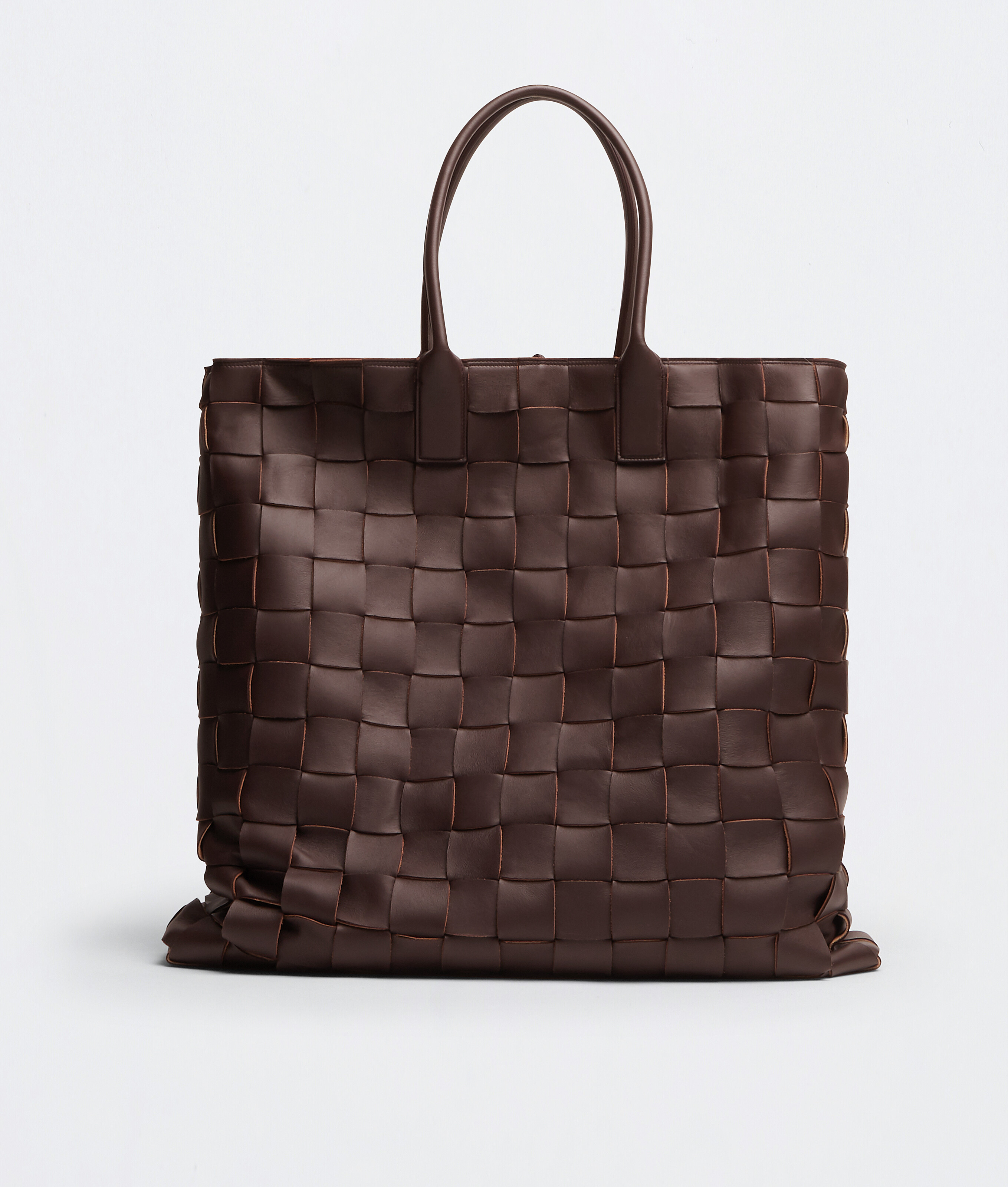
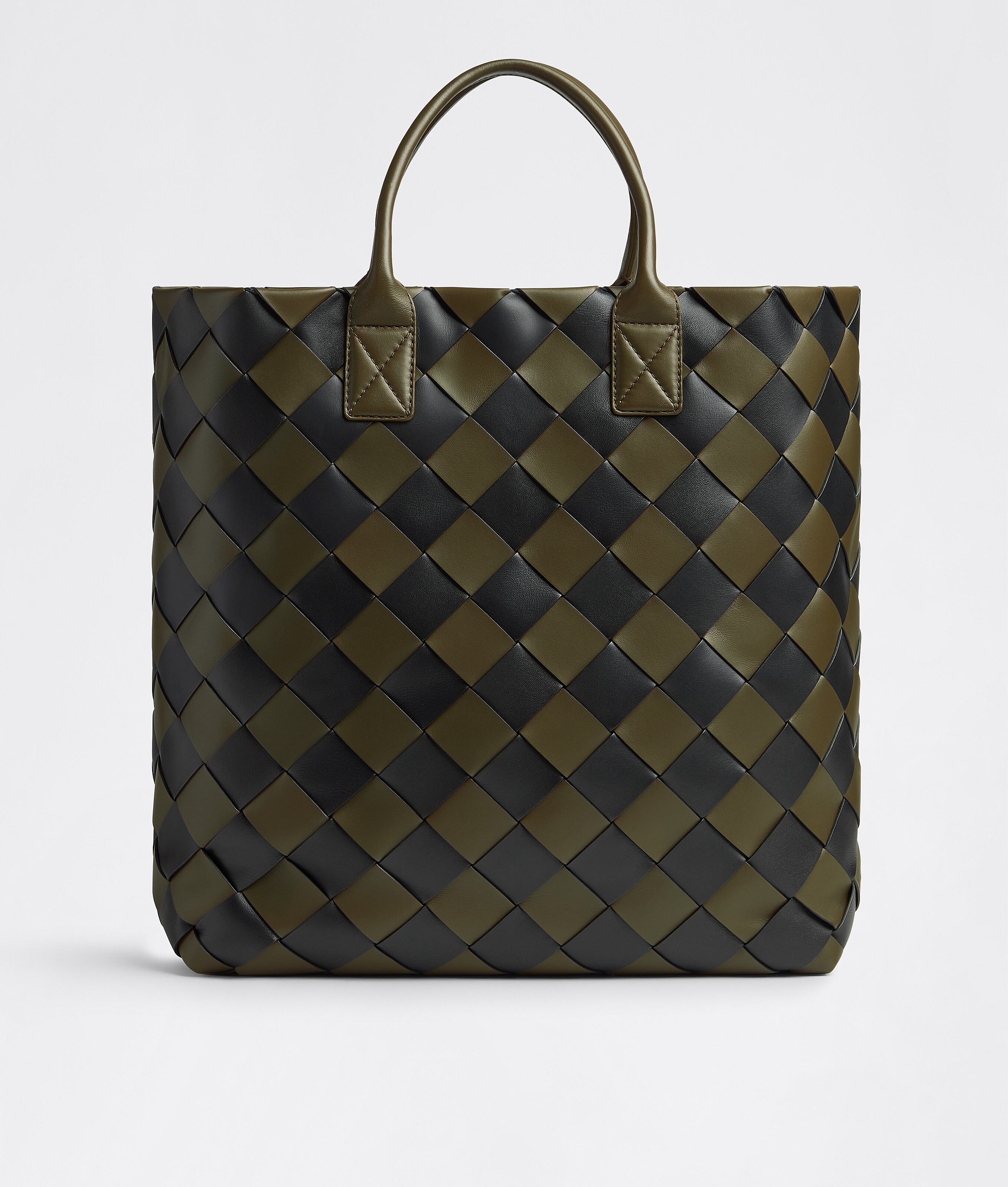
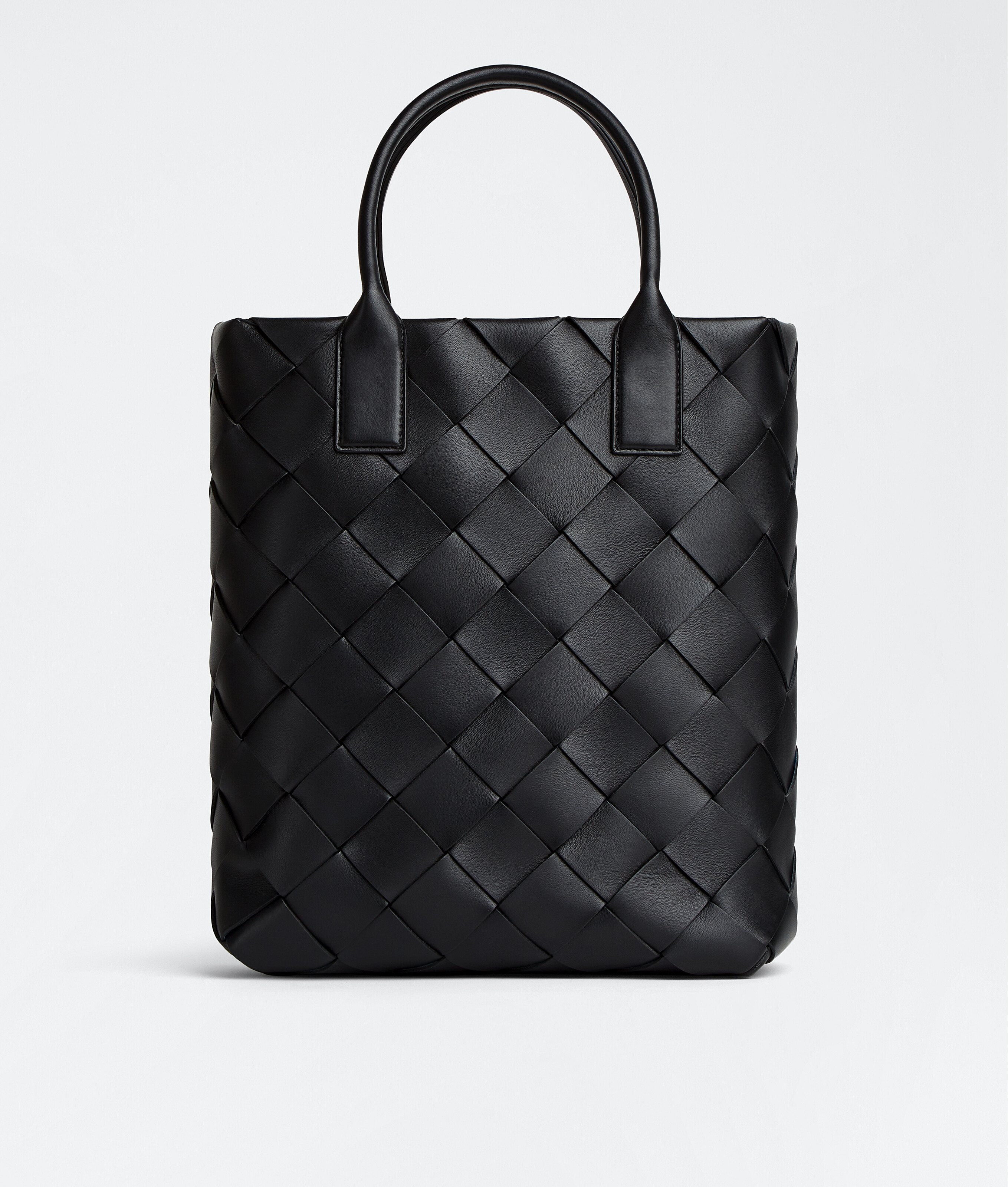
The Cabat doesn't close. It has no zipper, no clasp, no magnetic snap hidden under a flap. It sits open at the top like a basket, which is what it was designed to resemble. Two handles, intrecciato weave, and a shape that holds itself upright whether empty or full. It costs several thousand dollars, and you cannot seal it shut. That is the point.
Bottega Veneta has always worked this way. The house makes things that ask you to reconsider what luxury means. Not louder. Not covered in logos. Quieter, and built to a standard that makes explanation unnecessary.
The founding and the weave
The maison opened in Vicenza in 1966. Vicenza is leather country, an hour west of Venice, and the founders—Michele Taddei and Renzo Zengiaro—hired local artisans who already knew how to work with skin. The intrecciato weave came early. Narrow strips of leather, woven by hand in a pattern that strengthens the material and softens it at once. The technique is old. Bottega Veneta did not invent it. But the house refined it into a signature so distinct that the weave itself became the logo.
For decades, the brand operated without monograms. No BV stamped across the front of a bag. The only marking was a discreet label inside, and sometimes not even that. The work was meant to speak for itself. This was luxury as insider knowledge. If you knew, you knew. If you didn't, the bag looked expensive but unplaceable.
The intrecciato is still made by hand. A single Cabat takes two artisans approximately two days to complete. The leather is cut into strips, each one measured to ensure consistent width, then woven on a form that holds the shape as the structure takes. There is no fabric lining to hide mistakes. The interior is the same intrecciato as the exterior. You pay for the hours and the hands.
Tomas Maier and the quiet era
Tomas Maier arrived as creative director in 2001, and he stayed for seventeen years. That tenure is unusual in fashion, where creative directors rotate every three to five seasons. Maier's work was cumulative. He built a vocabulary season by season, and the vocabulary was about restraint.
He expanded the intrecciato into ready-to-wear. Woven leather jackets, woven leather skirts, knits that mimicked the weave in cashmere. He introduced the Knot clutch, a soft pillow of leather with a single twisted detail at the clasp, and the Veneta hobo, a slouched shoulder bag that became shorthand for a certain kind of downtempo elegance. Colours were often earthy—rust, moss, slate—but he also worked in brights that didn't read as loud. A cobalt blue that stayed matte. A yellow the colour of raw egg yolk.
Maier's Bottega Veneta was not minimal in the austere sense. The clothes had texture, weight, detail. But they were designed to recede into the wearer's life rather than announce themselves. This was the era when "when your own initials are enough" became the house's unofficial motto, a line that appeared in advertising and lodged itself in the cultural conversation. It was smug, but it was also accurate. The customer Maier designed for was not interested in being identified from across a room.
The prices during this period were high but legible. A Veneta hobo in the mid-2000s ran around USD 1,800. A Cabat was closer to USD 4,000, already an outlier. Ready-to-wear coats started near USD 3,000. Shoes—often woven loafers or low heels with intrecciato detail—landed between USD 600 and USD 900. This was expensive, but not stratospheric. The maison positioned itself as an alternative to the logo houses, not as an unapproachable monument.
Daniel Lee and the reset
Daniel Lee took over in 2018, and the house changed temperature. He kept the intrecciato but made it blockier, chunkier, more graphic. The Pouch arrived in his first collection—a clutch shaped like a gathered cloud, soft leather pulled tight with a single seam. It became the bag of 2019, copied and memed and carried by enough people that it registered as a phenomenon. Lee also introduced the Puddle boot, a square-toed rubber overshoe that looked like something between a galosh and a sculpture. It was absurd until it wasn't. Within six months it was sold out.
Lee's Bottega Veneta was still quiet, but it was a different kind of quiet. Less about discretion, more about tension. Oversized proportions. Leather so soft it looked like it might collapse. Colours that felt synthetic even when they weren't—electric green, chemical yellow, a pink that hovered near coral. The work was louder in form, quieter in branding. The house still used no logos. Lee removed the brand's name from its Instagram account and stopped tagging posts. The account became a grid of images with no explanation. This was called "social media erasure," and it worked as marketing because everyone wrote about it.
Prices climbed. The Pouch started at USD 1,800 for the small size and went up to USD 3,400 for the large. The Cassette, a padded shoulder bag with a quilted intrecciato pattern, launched at USD 2,800. Ready-to-wear coats pushed past USD 5,000. Shoes—now often featuring the house's new geometric hardware or exaggerated soles—started closer to USD 900 and ran up past USD 1,200. The Cabat, still made by hand in Vicenza, now costs over USD 7,000 depending on size and leather.
Lee left in 2021. Matthieu Blazy, who had been designing the leather goods under Lee, stepped into the role. His first collection was shown in February 2022, and the tone shifted again. Less graphic impact, more material investigation. Blazy is interested in how things are made. He showed jeans with the seams on the outside, leather treated to look like denim, knits constructed to mimic woven leather. The intrecciato appeared in new forms—flattened, stretched, turned inside out. The work felt like a conversation with the archive rather than a break from it.
What to buy and what it costs now
If you are entering Bottega Veneta now, start with small leather goods. The card case in intrecciato runs around USD 350. It is small enough to carry daily, well-made enough that it will not fall apart, and recognisable enough that it functions as an introduction to the house's language. The zip-around wallet, slightly larger, costs around USD 650. Both come in a wide range of colours. The maison releases seasonal shades, but the core palette—black, brown, cream, forest green—is always available.
The Cassette is the entry bag. It starts at USD 3,200 for the small size, which fits a phone, a wallet, and not much else. The medium, more practical, runs USD 3,800. The padding is soft but structured. The strap is adjustable. The bag works as a crossbody or a shoulder carry, and the shape is distinct without being loud. If you want something less structured, the Mini Jodie—a soft, gathered hobo with a knot detail at the strap—costs USD 2,400. It holds more than it looks like it should.
Shoes are harder to generalise. The Puddle boot, if you can find it, is around USD 1,000. The Tire boot, a newer style with a chunky lug sole and elastic panel, runs USD 1,400. Loafers in intrecciato leather start at USD 950. Heels, when Blazy makes them, tend to be low and sculptural. A woven mule with a curved heel costs around USD 1,100. These are not shoes you wear through rain and subway grates. They are shoes you wear when you are already thinking about what you are wearing.
Ready-to-wear is where the prices become prohibitive unless you are committed. A leather jacket in intrecciato weave costs upward of USD 8,000. A cashmere coat runs USD 4,500. Knits start around USD 1,200 for a simple crewneck, but the interesting pieces—those with unusual construction or woven details—push closer to USD 2,500. Trousers in leather or wool are around USD 1,800. Dresses range from USD 3,000 to USD 6,000 depending on material and complexity.
The Cabat remains the house's most expensive regular-production piece. The small version, which is not actually small, costs around USD 7,200. The medium is closer to USD 8,500. The large, which functions more as a weekend bag than a daily carry, runs over USD 10,000. It still doesn't close. It is still made by hand in Vicenza. It is still, in some stubborn way, the centre of what Bottega Veneta is.
What you are buying into
Bottega Veneta does not operate on hype cycles. The house does not collaborate with streetwear brands or release limited sneakers. It does not do logo play or ironic T-shirts. What it does is make leather goods and clothing to a technical standard that most other houses have abandoned or outsourced. The intrecciato is not a print. It is a process. The bags are heavy because the leather is thick and the weave is dense. The ready-to-wear is expensive because the construction is complicated and the materials are not synthetic.
This is a house for people who want to opt out of the conversation about what is trending. It is also a house that requires a certain level of commitment. You cannot buy one Bottega Veneta piece and expect it to integrate seamlessly into a wardrobe built on fast fashion or logo-heavy luxury. The clothes and bags ask you to slow down, to pay attention, to care about how something is made and not just how it looks in a photograph.
The woman at the café in Milan had a Cabat, dark brown, worn soft at the handles. It sat on the floor next to her chair, open at the top, a newspaper visible inside. She did not look at it. She did not adjust it. It was simply there, doing the work it was built to do.