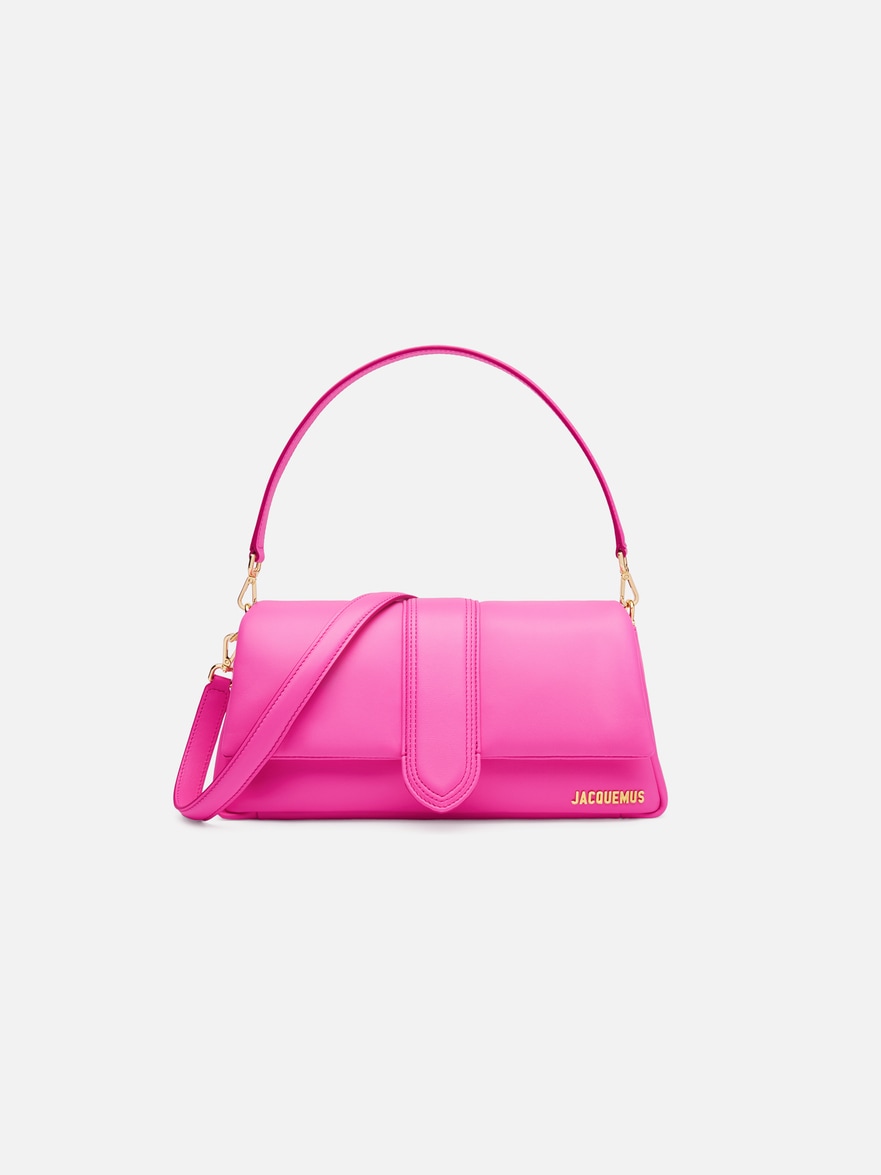
The Chiquito bag measured eleven centimetres across
The Chiquito bag measured eleven centimetres across. Not quite long enough to hold an iPhone 6 flat. Simon Porte Jacquemus showed it in January 2019, strung across models' hips like a talisman, and by March it was everywhere—not because anyone needed a bag that small, but because smallness itself had become the point. Jacquemus had spent seven years making clothes that looked like the south of France felt in August. Then he made an object so specific it could only mean one thing: he understood exactly what he was doing.
The house doesn't operate like most French labels. It never went through LVMH's incubator, never did the Kering fellowship, never softened its edges to fit the luxury apparatus. Jacquemus built itself by refusing the usual routes and then, once it had attention, by doubling down on everything the industry thought was too niche to scale.
2009–2013: Le Sud, Literally
Simon Porte Jacquemus founded the house at nineteen, six months after his mother died. The name came from her maiden name. The first collection, shown in a friend's apartment in 2009, featured straw hats the size of bicycle wheels and cotton dresses so simple they looked like they'd been made in an afternoon. Which some of them had been.
Early Jacquemus wasn't about technique. It was about a very particular nostalgic register: Provence as remembered by someone who left at eighteen and couldn't afford to go back. The silhouettes were borrowed—boxy linen shirts, wide-leg trousers, oversized knits—but the proportions were off in ways that felt deliberate. Sleeves pooled past the wrist. Hems dragged. Everything looked like it had been borrowed from an older sister who dressed for a life that moved slower than Paris allowed.
The palette stayed narrow: cream, ochre, faded blue, sun-bleached red. Stripes appeared often, always uneven, always looking like they'd been drawn by hand even when they hadn't. Jacquemus showed on minimal budgets—parks, rooftops, someone's courtyard—and the press came because the clothes photographed like a French film from 1985 that didn't actually exist.
By 2013, the house had a following but no infrastructure. Production was inconsistent. Stockists were few. Jacquemus was still considered too young, too regional, too tied to a single idea. What changed wasn't the idea. What changed was the clarity with which he could execute it.
2015–2020: The Proposition Sharpens
Spring/Summer 2016 marked the shift. Jacquemus moved the show to a wheatfield in Provence, an hour outside Paris. Guests took buses. Models walked a dirt path between golden rows, wearing asymmetric shirting, sculptural straw accessories, and those exaggerated hats that had become the house signature. It wasn't subtle. It was the least subtle thing you could do, which turned out to be the correct move.
The collection introduced what would become the house codes: one-shoulder tops, cut-out dresses that removed fabric in architectural ways, bags shaped like crescents or miniature totes. Jacquemus started designing objects that could function as logos without needing a logo. The Chiquito, the Bambino, the Le Grand Chiquito—each bag was a silhouette you could recognise from across a street. They weren't quiet. Quiet wasn't the strategy.
Bastien Daguzan joined as artistic director of image in 2016, and the house's visual language tightened. Campaigns became surreal domestic tableaux: a woman in a pink coat standing in an empty pool, a model holding a baguette the length of a car, oversized fruit, undersized bags, everything shot in the flat bright light of a summer afternoon. The images worked because they were specific enough to be ownable. No other brand could have made them.
The pricing sat just below the traditional luxury threshold—€350 for a logo tee, €590 for the Chiquito, €1,200 for a sculpted linen dress. Accessible for editorial stylists, attainable for a certain tier of consumer, and positioned in a way that let Jacquemus grow without losing the outsider posture that made it legible in the first place.
By 2019, the house was doing €100 million in revenue. Jacquemus had opened a store on rue de Castiglione, across from the Ritz. The Chiquito became the most-copied bag shape of the year. He staged a show on a lavender field in Valensole with a runway so long you couldn't see both ends at once, and the entire thing was designed to be consumed as content. Thirty seconds of video, a perfect square for Instagram, a house that understood it was building for a medium that hadn't existed when it started.
2021–Present: Scaling Without Softening
Jacquemus signed with LVMH-backed private equity in 2022, a minority stake that gave the house capital without operational control. The structure was deliberate: grow the business, keep the vision centralised, don't let anyone smooth out the edges.
The shows stayed theatrical. Spring 2023 happened on a salt flat in Utah, models walking a pink runway that stretched across white mineral crust under a pale sky. It looked like Mars. It looked like a screensaver. It looked like Jacquemus, which by then meant something specific: a house that used landscape as punctuation and colour as plot.
The product range expanded—menswear, beauty, homeware, collaborations with Nike—but the aesthetic contract held. A Jacquemus candle smells like fig and cedarwood. A Jacquemus Nike collaboration recolours the Air Humara in cream and sand. A Jacquemus dinner plate is terracotta with an off-centre logo. Everything still looks like it belongs in the same August afternoon, even when it's a running shoe.
The tension now isn't whether Jacquemus can grow. It's whether it can grow past the idea that made it. The house built itself on a very specific cultural position: French, young, sunlit, slightly ironic, accessible enough to feel democratic but designed well enough to justify the price. That position has room, but the room isn't infinite. At some point, nostalgia for a place becomes nostalgia for the brand's own early work, and the house has to decide whether it's willing to move past the field and the hat and the tiny bag.
For now, it hasn't had to choose. Jacquemus still operates like a house that believes in its own mythology, which is the only way the mythology continues to work. The shows are still events. The bags are still recognisable from across the room. The clothes still look like they were made for a version of summer that's slightly more golden than the one you actually had.
Simon Porte Jacquemus is thirty-three now. He's been running the house for half his life. In the most recent campaign, a model stands in an empty room holding a Le Bambino bag the colour of apricot skin. The light is warm. The walls are bare. She's wearing a white shirt, unbuttoned, and wide linen trousers. You've seen this image before, or something close to it. That's the point. The house isn't trying to surprise you. It's trying to make you remember something that didn't happen, and then sell you the object that makes the memory feel real.