The Chiquito bag was eleven centimetres wide
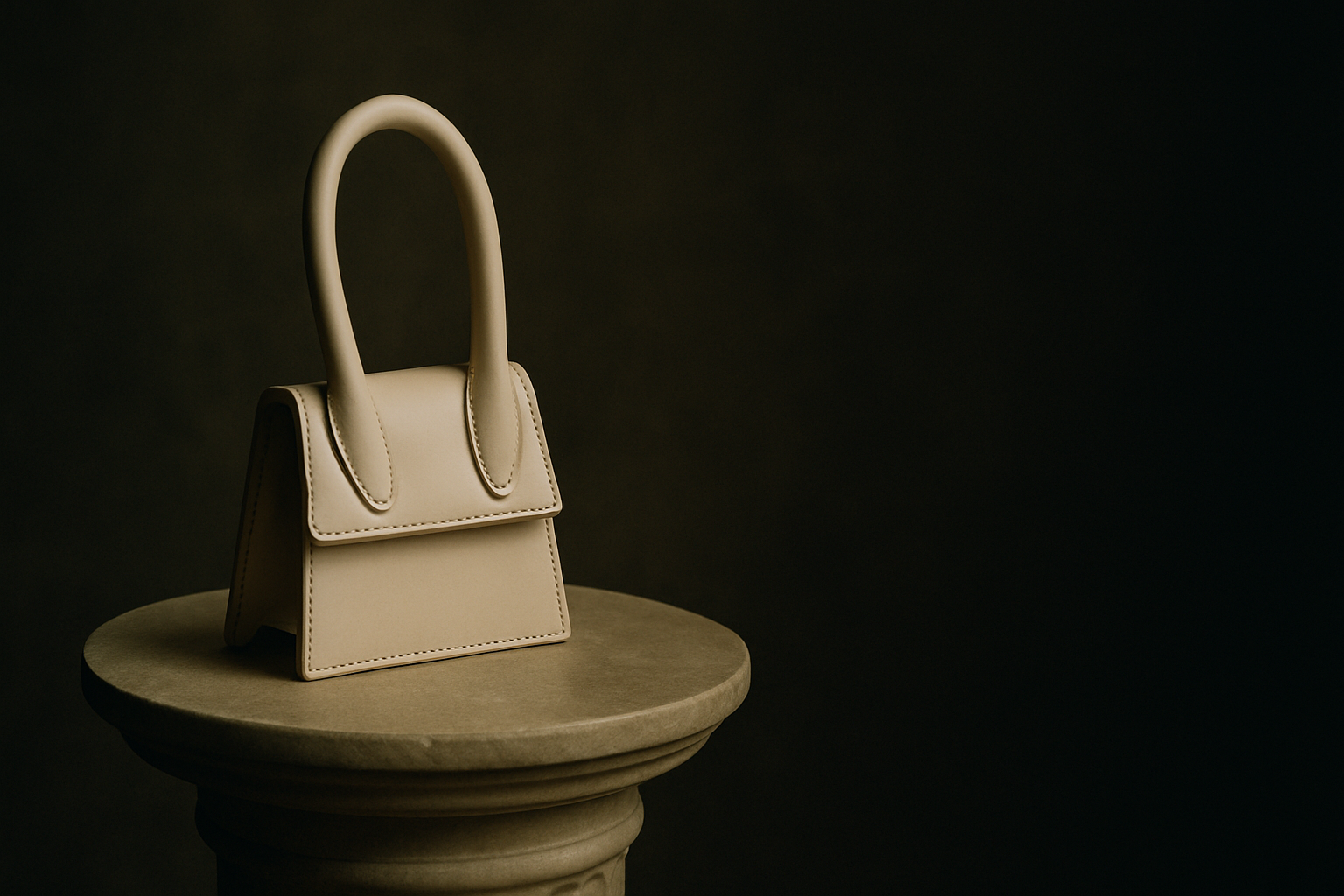
The Chiquito bag was eleven centimetres wide. Not eleven and a half. Eleven. It could hold a tube of lipstick, a folded banknote, and the sort of confidence that doesn't need the lipstick anyway. When it appeared in January 2018, the internet did what the internet does—memed it, mocked it, bought it. But the bag wasn't a joke. It was a thesis statement compressed into calf leather: Jacquemus understood that fashion moves fastest when it doesn't take itself seriously, and that a house can be both sincere and entirely in on it.
Simon Porte Jacquemus has spent fifteen years building a maison that shouldn't, by industry logic, exist. No LVMH backing in the early years. No Kering scaffolding. No Central Saint Martins degree or Dior atelier apprenticeship. What he had was a name—his mother's maiden name—and a vision of the South of France as not backdrop but subject. The clothes that followed were never about Provence as postcard. They were about what happens when you grow up in a place where light does half the work of dressing.
2009–2013: founding as refusal
Jacquemus launched in 2009 with a collection shown in a friend's apartment. He was eighteen. The clothes were raw-edged, unlined, often asymmetric in ways that felt like accidents you'd want to repeat. Early press called it naïve. The more useful word was unschooled. He hadn't learned what fashion was supposed to look like, so he made what he thought clothes could be: loose linen trousers, shirts cut like they'd been started then abandoned mid-seam, colours that registered as sun-faded even when new.
The first era was less about building a brand than refusing the terms of one. No logo. No monogram. No house codes you could trademark. The silhouette was the code—high-waisted, often cropped, always implying more body than it covered. By 2012, he was showing at Paris Fashion Week, but the work still felt like it belonged in a different room. While other young designers performed complexity, Jacquemus performed ease. A white poplin shirt with sleeves that didn't match. A yellow knit dress so simple it looked like you'd made it yourself, if you were better at making things than you are.
The maison's first commercial success wasn't a bag. It was a hat—the Le Chapeau Bomba, a wide-brimmed raffia style that photographed like a sun-drunk halo. It retailed for under €200 and sold faster than production could catch up. The hat did two things: it funded the next collection, and it proved that Jacquemus could make objects that moved outside the usual luxury channels. You didn't need to understand the references to want the hat. You just needed to want to look like you'd spent July in Arles.
2017–2020: scale as spectacle
The second era opened with a lavender field. In June 2019, Jacquemus staged his Spring/Summer 2020 show in Valensole, an hour north of Aix-en-Provence, with a runway laid through ten hectares of purple. The guests sat on hay bales. The models walked in straw hats and micro-bags and dresses the colour of wheat at three in the afternoon. The show was thirty minutes long and generated six months of content. It wasn't the first fashion show held outdoors, but it was the first to feel like the location was the collection.
By then, the house had sharpened its commercial instincts without losing the naïveté that made it legible. The bags got smaller and more specific: Le Chiquito, Le Petit Bambino, Le Grand Bambino (which was not grand—it was twenty-two centimetres). The shapes were almost sculptural, designed less for function than for the way they looked held in a hand or slung across a body in an iPhone photograph. Jacquemus understood that a bag doesn't have to be practical to be useful. It just has to be photographable.
The shows became events in the way that word used to mean something. A pink salt flat in Camargue. A wheat field in Provence. A Paris Métro car rented for thirty minutes and filled with models in logo knits and sculptural tailoring. Each one was optimised for the algorithm, but never felt algorithmic. The trick was that Jacquemus seemed genuinely delighted by his own ideas—a rare quality in an industry that professes passion but photographs like an audit.
The clothes themselves grew more controlled. The early rawness gave way to sharper tailoring, sculptural cutouts, knits that clung in ways that required engineering. He started working with denim, with leather, with fabrics that didn't read as summer-only. The palette stayed sunlit—cream, clay, lavender, coral—but the construction tightened. By 2020, Jacquemus was dressing not just the girls who wanted to look French, but the women who wanted to look like they'd figured something out.
2021–present: house codes as currency
The third era is harder to date because it's still unfolding, but it begins somewhere around the decision to make Le Bambino in eight colourways per season and the realisation that the bag had become more recognisable than the logo. Jacquemus now operates at a scale that would have been unthinkable in 2012. Standalone boutiques in Paris, London, Milan. Collaborations with Nike that sold out in four minutes. A menswear line that doesn't feel like an afterthought. Revenue crossed €150 million in 2022, and the house remains independent.
The shows are still spectacle—Spring 2023 was staged at the Château de Versailles, with a front row that included Pharrell and a closing look that was a white poplin shirt worn as a dress—but the spectacle now serves a system. Jacquemus has built a commercial engine sophisticated enough to support the fantasy. The bags are made in Italy, mostly in Tuscany, with the sort of leather finishing that doesn't announce itself but doesn't need to. The ready-to-wear is produced in Portugal and Tunisia, with lead times that allow the house to respond faster than most European competitors.
What hasn't changed is the fundamental proposition: these are clothes for a version of life that may not exist but feels more real than the one you're living. The off-the-shoulder linen shirt. The strapless poplin dress. The knit polo cropped just above the navel. They're not practical. They're not even, strictly speaking, flattering on most bodies. But they suggest a world in which you spend your afternoons doing nothing in particular, in very good light, and that suggestion is enough.
The most recent collections have introduced something new—or rather, something old made new. Tailoring. Jacquemus has always done tailoring, but now it's load-bearing. Blazers with exaggerated shoulders and nipped waists. Trousers cut high and wide. Coats that look like they were stolen from someone's father and then remade by someone who actually knows how to cut a coat. The effect is less Provence, more Paris, but the lightness remains. A grey wool blazer still feels like it weighs nothing.
The house now
Jacquemus is fifteen years old, which in fashion years is both very young and old enough to have a back catalogue. The house has moved from insurgent to incumbent without quite becoming institutional. It shows in Paris but doesn't feel Parisian. It sells globally but reads as local. The bags are everywhere, which is usually the moment a brand becomes too available to be desirable, except that Jacquemus keeps making the bags smaller or stranger or in a shade of green that shouldn't work but does.
There's a photograph from the Spring 2024 show: a model in a white shirt and cream trousers, standing in front of a backdrop painted to look like sky. The shirt is open to the sternum. The trousers are high-waisted and wide-legged and the exact colour of sand two hours after sunrise. She's holding nothing. Not even a Chiquito. The photograph looks like it was taken in 1973, or yesterday, or ten years from now. That's the work Jacquemus has been doing all along—not making clothes that last, but making clothes that feel like they've already lasted.