The corset dress from autumn/winter 1992 had thirty-seven hooks
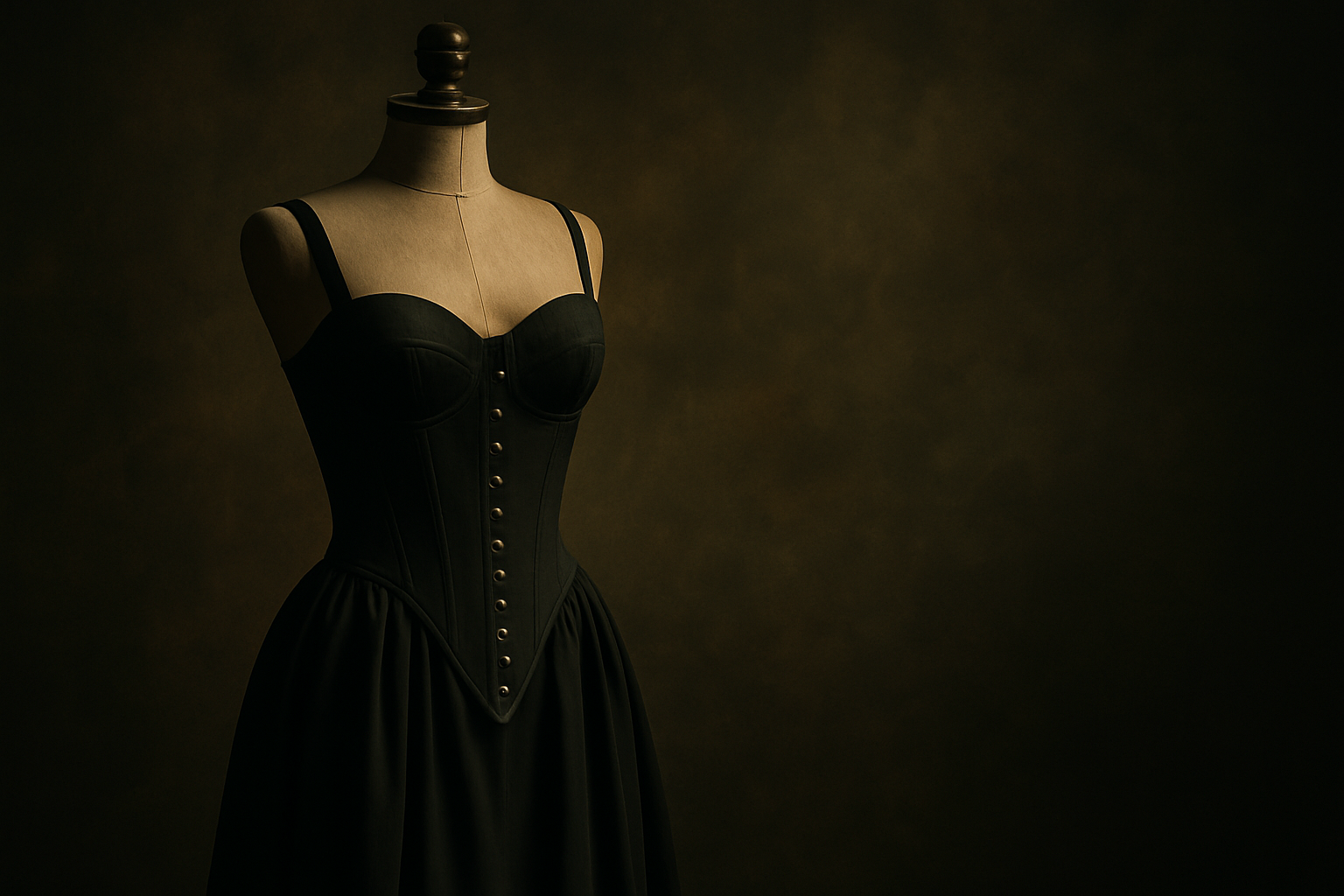
The corset dress from autumn/winter 1992 had thirty-seven hooks. Madonna wore it in the "Erotica" video, but the garment did not need her. The construction was Sicilian—structured like armour, finished like lingerie. Domenico Dolce had learned tailoring from his father's atelier in Polizzi Generosa. Stefano Gabbana understood how a camera reads cloth. Together they made a dress that announced the body and then refused to apologise for it.
That refusal has been the through-line for thirty-nine years.
Founding: Milan, 1985
Dolce & Gabbana presented their first collection as a consulting project for a showroom in Milan. The clothes were black, white, raw-edged. They did not sell. The designers worked in pieces—styling, consulting, pattern-making for other houses—until 1986, when they staged their own show during Milano Collezioni. The budget was minor. The vision was not.
Early collections borrowed from Italian neorealism and the iconography of widowhood. Black lace, high necklines, slips worn as outerwear. The silhouettes referenced the women both designers had grown up watching: grandmothers in mourning, mothers at Sunday Mass, aunts who kept their jewelry in wooden boxes. This was not nostalgia. It was documentation.
By 1987, the house had a manufacturing deal. By 1989, they were showing in Tokyo. The clothes remained rooted in a specific geography—Sicily, southern Italy, the Mediterranean as fact rather than fantasy. Fabrics came from Italian mills. Tailoring followed Neapolitan and Sicilian codes: high armholes, soft shoulders, trousers cut to break once at the ankle. The work was regional, and it was rigorous.
The Nineties: Spectacle and Structure
Spring/summer 1991 shifted the register. Dolce & Gabbana showed leopard print, gold brocade, corsetry that shaped the torso into an hourglass and then exaggerated it further. The models were not editorial thin. The clothes celebrated abundance—of fabric, of ornament, of flesh. This was the moment the house became legible to a global audience, and the moment it began to court controversy.
The corset became a signature. Not the Victorian undergarment but a Sicilian interpretation: boned, structured, often worn over a simple dress or with tailored trousers. The construction was exact. Each piece required hours of hand-finishing. The effect was theatrical, but the technique was couture-adjacent. Dolce & Gabbana did not have an haute couture atelier, but they worked as if they did.
Madonna wore the house throughout the early nineties. So did Isabella Rossellini, who became the face of the brand in 1991. The campaigns shot by Steven Meisel presented a version of Italian femininity that was unapologetic, knowing, and direct. The women in those images did not ask permission. They wore slips as dresses, bras as tops, and met the camera without hesitation.
This era also marked the beginning of the house's menswear line, launched officially in 1990. The tailoring drew from the same sources as the womenswear: Sicilian suiting, workwear, the clothes of fishermen and farmers translated into luxury fabrications. A linen suit cut like a labourer's jacket but finished in sea island cotton. A vest worn without a shirt, referencing both the dockworker and the dandy. The house understood that Italian masculinity contained multitudes, and the clothes made space for that.
By the mid-nineties, Dolce & Gabbana had become a commercial force. Licensing deals, diffusion lines, fragrance. The mainline collections remained rooted in the same vocabulary—corsetry, lace, tailoring, animal print—but the scale had changed. The house was no longer documenting a culture. It was exporting one.
The 2010s: Craft and Controversy
The collections from 2012 onward leaned into maximalism. Mosaics, Baroque churches, Sicilian cart paintings, majolica tiles—each season brought a new referent, and each referent was rendered in sequins, brocade, appliqué. The clothes were ornate to the point of defiance. Critics called them excessive. The house called them celebratory.
This was also the period when Dolce & Gabbana began working with Italian artisans in a more visible way. Collections featured hand-painted ceramics, intricate lacework from Burano, embroidery from small ateliers in Naples and Palermo. The autumn/winter 2013 collection included dresses with appliqué mosaics that took weeks to complete. The spring/summer 2016 show featured headphones decorated with Sicilian cart motifs and bags shaped like cassette players, all hand-painted by local craftspeople.
The intention was clear: to position the house as a custodian of Italian craft traditions. Whether that positioning was earnest or commercial depends on where you stand. The garments themselves were labour-intensive. The marketing was loud.
In 2018, the house faced significant backlash following a campaign video that was widely criticised as culturally insensitive. The fallout was immediate. Shows were cancelled. Retailers pulled product. The designers issued apologies, but the damage to the brand's reputation—particularly in China, a key market—was severe.
The controversy raised questions the house had avoided for years. Whose culture were they celebrating? Who was allowed to wear these references, and under what terms? Dolce & Gabbana had built a brand on specificity—Sicilian, Italian, Mediterranean—but the global expansion of that specificity had created friction. The house had always been unapologetic. Now that defiance read differently.
Now: Continuity and Succession
Domenico Dolce and Stefano Gabbana continue to design every collection. There is no creative director waiting in the wings, no announced succession plan. The house operates as it has since 1985: two designers, one vision, no intermediary.
Recent collections have returned to the foundational codes. Tailoring, corsetry, lace, black and white punctuated by bursts of colour. The autumn/winter 2023 show opened with a series of black suits—sharp, narrow, traditionally masculine—followed by dresses that recalled the early nineties. The references were internal. The house was speaking to itself.
There is a risk in that. Fashion rewards reinvention, or at least the appearance of it. Dolce & Gabbana have chosen consistency, and consistency can read as stagnation. But the clothes remain technically accomplished. A jacket from the most recent menswear collection is cut and finished with the same attention as one from 1995. The house has not abandoned its standards, even as the industry around it has shifted toward speed and volume.
The question is whether that is enough. Dolce & Gabbana built a brand on a specific vision of Italian identity, and that vision has not changed in nearly four decades. The world has. The tension between those two facts is the space the house now occupies.
A corset dress from the spring/summer 2024 collection has forty-one hooks. It is black, boned, finished by hand. The silhouette is nearly identical to the one from 1992. The fabric is different—lighter, more flexible—but the construction is the same. The dress does not need a celebrity to validate it. It walks into the room first, just as it did thirty-two years ago. That is not reinvention. That is the work of a house that knows what it is.