The double-G hardware on a 1970s shoulder bag sits heavier in the hand than one expects
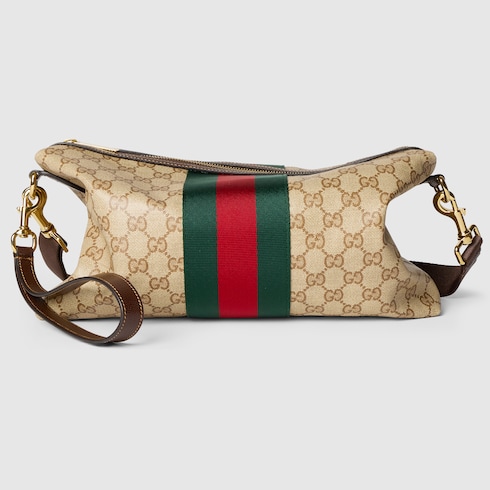
The double-G hardware on a 1970s shoulder bag sits heavier in the hand than one expects. Not ostentatious, exactly — the interlocking initials are smaller than memory suggests — but present. Unmistakable. That weight, one suspects, was the point. Gucci built its first century on the premise that a logo need not whisper if the craft underneath could justify the volume.
What follows is not an exhaustive chronicle. It is three moments, each of which reoriented the house and, in doing so, revealed what Gucci believed luxury could mean.
The saddler's son and the weight of a name
Guccio Gucci opened his first leather-goods workshop in Florence in 1921. The origin story is well-worn: porter at the Savoy in London, exposure to the travelling classes, return to Italy with an eye for what those classes carried. The narrative has been burnished smooth by repetition, but the objects themselves — early trunks, equestrian bits, pigskin luggage — remain specific. Gucci did not invent the luxury trunk. He made one that signalled its Florentine manufacture through material and construction, then marked it with his name in a way that made the name matter.
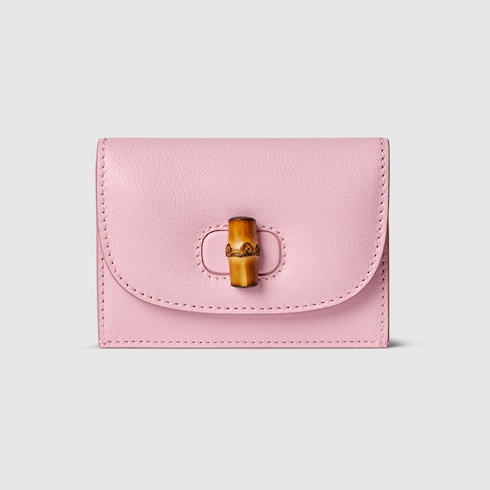
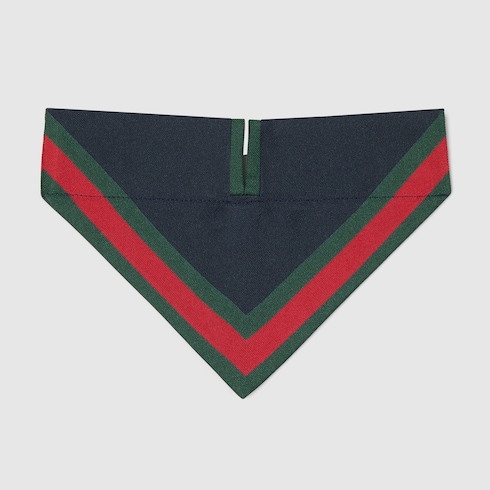
By the 1950s, the house had codified a vocabulary: bamboo handles on top-handle bags (a postwar material constraint turned signature), the red-and-green web stripe lifted from saddle girths, loafers with a metal snaffle bit across the vamp. These were not, strictly speaking, innovations. They were selections — elements drawn from the atelier's existing language and repeated until they became synonymous with the house itself. The genius, such as it was, lay in recognising which details could bear that repetition.
The double-G monogram arrived in the early 1960s, designed by Aldo Gucci, Guccio's son. It appeared on canvas, on hardware, on the interior linings of bags that cost what a month's rent cost. The logo did not apologise for itself. It was not discreet in the manner of, say, a Bottega Veneta intrecciato, which one had to know to recognise. The double-G announced. And for a particular customer in a particular moment — newly moneyed, internationally mobile, disinclined to old-world diffidence — that announcement was the appeal.
Tom Ford and the body as subject
By the mid-1990s, Gucci was in trouble. Family infighting, overextension, a product line that had lost coherence. The house had become synonymous with airport duty-free and logo-laden mediocrity. Enter Tom Ford in 1994, first as ready-to-wear designer, then as creative director. What he did next was not a restoration. It was a rewrite.
Ford's Gucci was about sex. Not innuendo — sex. The autumn 1995 collection featured low-slung velvet trousers, shirts unbuttoned past any pretence of modesty, a colour palette of burgundy and black and skin. The silhouette was narrow, explicit, unapologetic. The bamboo-handle bag remained, but now it sat against a body that Ford had reframed as the primary luxury object. The logo, still present, became secondary to the cut of a trouser or the plunge of a neckline.
One can argue that Ford saved Gucci. The numbers support it: revenue increased sevenfold during his tenure. But what he saved was not the house Guccio built. It was a new entity that borrowed the name and a few archival motifs, then used them as set dressing for a different conversation entirely. The conversation was about desire — how it looked, how it sold, how it could be monetised at scale.
The accessories followed suit. The Jackie bag, originally a 1960s hobo style, was re-issued in 1999 with a piston-lock closure and a body that curved to the hip. The Horsebit loafer became a stiletto. Everything gleamed. Everything fit like a second skin. And everything bore the double-G, now less a mark of Florentine craft than a signal that the wearer understood what Ford was selling.
It worked. For a decade, Gucci was the most talked-about house in fashion. Ford left in 2004, but the template he established — luxury as spectacle, the body as canvas, the logo as punctuation — persisted through his successors. Frida Giannini, who took over in 2006, softened the edges but kept the structure. The house was profitable, visible, and, one might say, a bit predictable.
Sabato and the return to making
Alessandro Michele's appointment in 2015 was a rupture. His first collection, shown with two weeks' notice, featured pussy-bow blouses, oversized glasses, embroidered bees, floral jacquard suiting in colours that had no business sitting beside one another. The models looked like they had raided a very particular grandmother's attic. The accessories — loafers with fur linings, top-handle bags encrusted with appliqué — were maximal in a way that defied Ford's sleek minimalism.
Michele's Gucci was about accumulation. More embroidery, more pattern, more references (Renaissance painting, 1970s album covers, Japanese street style, midcentury Hollywood). The double-G remained, but now it competed for attention with tigers, snakes, stars, and the phrase "L'Aveugle Par Amour" stitched across a leather jacket. The house became, in Michele's hands, a kind of visual novel — dense, referential, requiring close reading.
The commercial response was immediate. Revenue doubled under Michele's direction. But more telling was the shift in who bought Gucci and why. The customer was younger, more likely to wear a logo ironically than aspirationally, more interested in narrative than in status. Michele understood that luxury, for this cohort, was not about exclusivity. It was about belonging to a story.
Michele left in 2022. Sabato De Sarno, his successor, arrived with a different mandate. The spring 2024 collection, De Sarno's first, was a study in reduction. Clean lines, muted tones, a return to the body as subject but without Ford's overt sexuality. The Ancora bag, introduced that season, was a top-handle style in supple leather with a turn-lock closure. No embroidery. No appliqué. The double-G, present but quiet.
De Sarno has described his work as a return to "craft and sophistication." In interviews, he speaks of the atelier, of hand-finishing, of materials chosen for their hand rather than their visual impact. Whether this represents a genuine shift or simply a pendulum swing — maximalism to minimalism, Michele to anti-Michele — remains to be seen. What is clear is that Gucci, once again, is attempting to define what it means on its own terms.
What remains
There is a photograph, widely circulated, of Grace Kelly carrying a Gucci bamboo-handle bag in the 1960s. The bag is small, structured, held close to the body. Kelly is not performing. She is simply moving through the world with a well-made object in hand. One looks at that image now, after Ford and Michele and De Sarno, and sees not a relic but a question: what does Gucci want to be when the noise recedes?
The house has spent a century answering that question in different registers. Florentine craft. American glamour. Maximal storytelling. Refined restraint. Each era insisted it had found the essence of the house, and each, in turn, gave way to the next. Perhaps that is the essence — not a single answer but a willingness to ask the question again, loudly, every decade or so, and see what the customer says in return.