The first jeans came wrapped in brown paper, fastened with string, and sold through a single Stockholm shop in 1996
The first jeans came wrapped in brown paper, fastened with string, and sold through a single Stockholm shop in 1996. One hundred pairs. Raw denim, cut straight, given away to friends who happened to be photographers, stylists, DJs — people who moved through rooms that mattered. The jeans were called Acne, an acronym no one outside the founding circle bothered to decode. By the time the second run sold out, the name had stuck.
What followed was not a plan so much as a series of bets placed by people who had never worked in fashion and did not, at first, think of themselves as working in it now. Jonny Johansson, the creative director who has helmed Acne Studios since its inception, came from art school and graphic design. His early collections read less like seasonal offerings and more like experiments in how far one could stretch a silhouette before it stopped making sense. The house opened its first Paris showroom in 2006. By then it had moved well past denim, but the original instinct — make something specific, then see who shows up — remained intact.
Founding and the Tyranny of Cool
Acne Studios began as Acne Jeans, a subsidiary of the creative collective ACNE (Ambition to Create Novel Expressions). The collective produced advertising, film, and furniture; the jeans were, initially, a side project with no distribution strategy beyond word of mouth. The first pairs were given to one hundred people in Stockholm's creative class, a move that now reads as textbook viral marketing but at the time was closer to necessity. There was no budget for advertising. There was, however, a network.
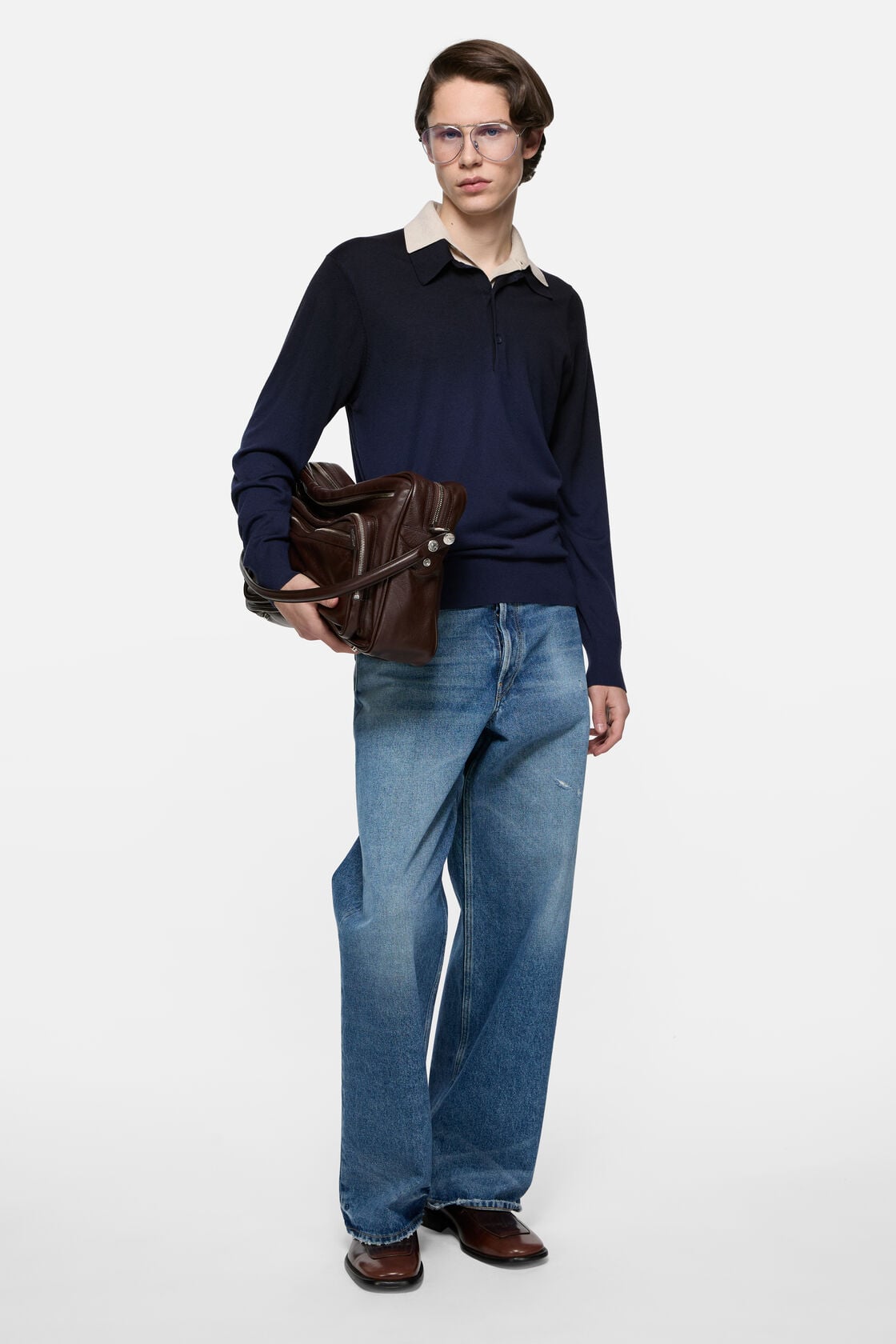
The jeans worked because they were plain. Not minimal in the precious, gallery-approved sense, but plain in the way a white T-shirt from a military surplus store is plain: functional, slightly off in proportion, better for it. The fit was straight-legged and high-waisted, a shape that ran counter to the low-slung bootcut denim dominating the late nineties. The fabric was untreated, the red tab stitched to the back pocket was a bright, unapologetic accent, and the whole package came without branding beyond a small leather patch at the waistband. Within two years, the jeans had become a signifier. You either knew or you didn't.
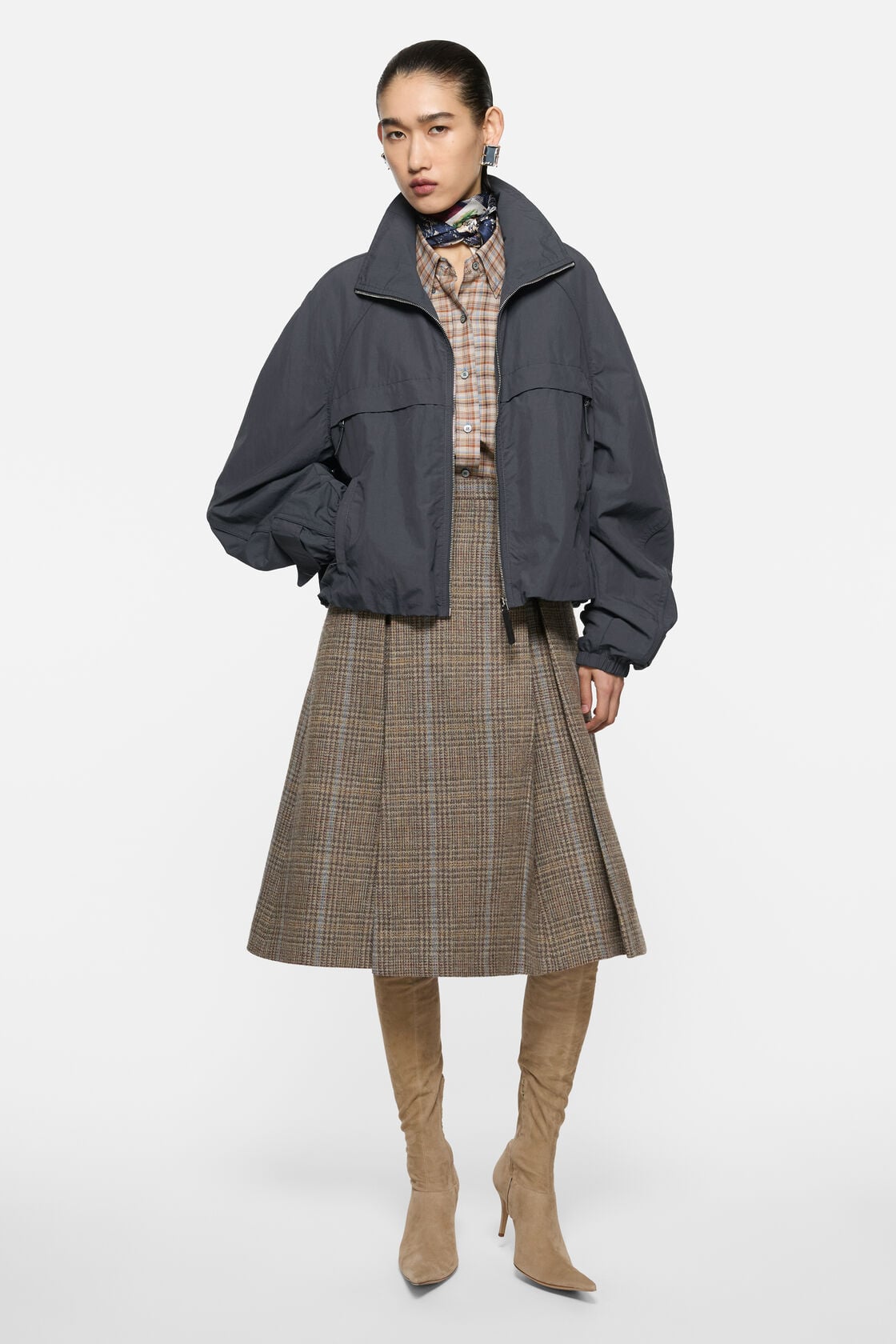
The house's first ready-to-wear collections, shown in Paris from 2006 onward, extended that logic. Johansson's early work leaned into oversized tailoring, washed-out colour palettes, and a studied lack of finish. Hems were left raw. Sleeves hung past the wrist. The models cast for the runway were often artists, musicians, or friends — people whose faces had not yet been flattened by repetition across casting boards. The effect was less polished than the prevailing Parisian mode, and that was the point. Acne Studios was not trying to compete with the grand maisons. It was offering an alternative to them, one rooted in a Scandinavian distrust of ornament and a belief that clothes should look like they had been worn before they were sold.
By 2010, the house had become a fixture on the Paris calendar. It had also become, in certain circles, a shorthand for a particular kind of downtown cool — the kind that required you to know which neighbourhood, which decade, which reference. That shorthand was both the house's strength and its ceiling.
The Middle Period: Scale and Softness
In 2012, Acne Studios began to shift. The collections retained their oversized proportions and muted tones, but the fabrics grew softer, the construction more deliberate. Johansson introduced mohair knits that pooled at the collarbone, shearling jackets cut with the hide facing out, and trousers in felted wool that moved like liquid. The house was still making clothes for people who understood the references, but the references had expanded. There was more Helmut Lang in the mix now, more Jil Sander, more attention paid to the weight and drape of a cloth.
The shift coincided with the house's expansion into Asia, where its aesthetic — neither overtly Scandinavian nor traditionally Parisian — found a receptive audience. Acne Studios opened stores in Tokyo, Seoul, and Hong Kong. It launched a fragrance. It hired a CEO from LVMH. The house was no longer a collective's side project; it was a business, one with investors and growth targets and a mandate to reach beyond the original one hundred pairs of jeans.
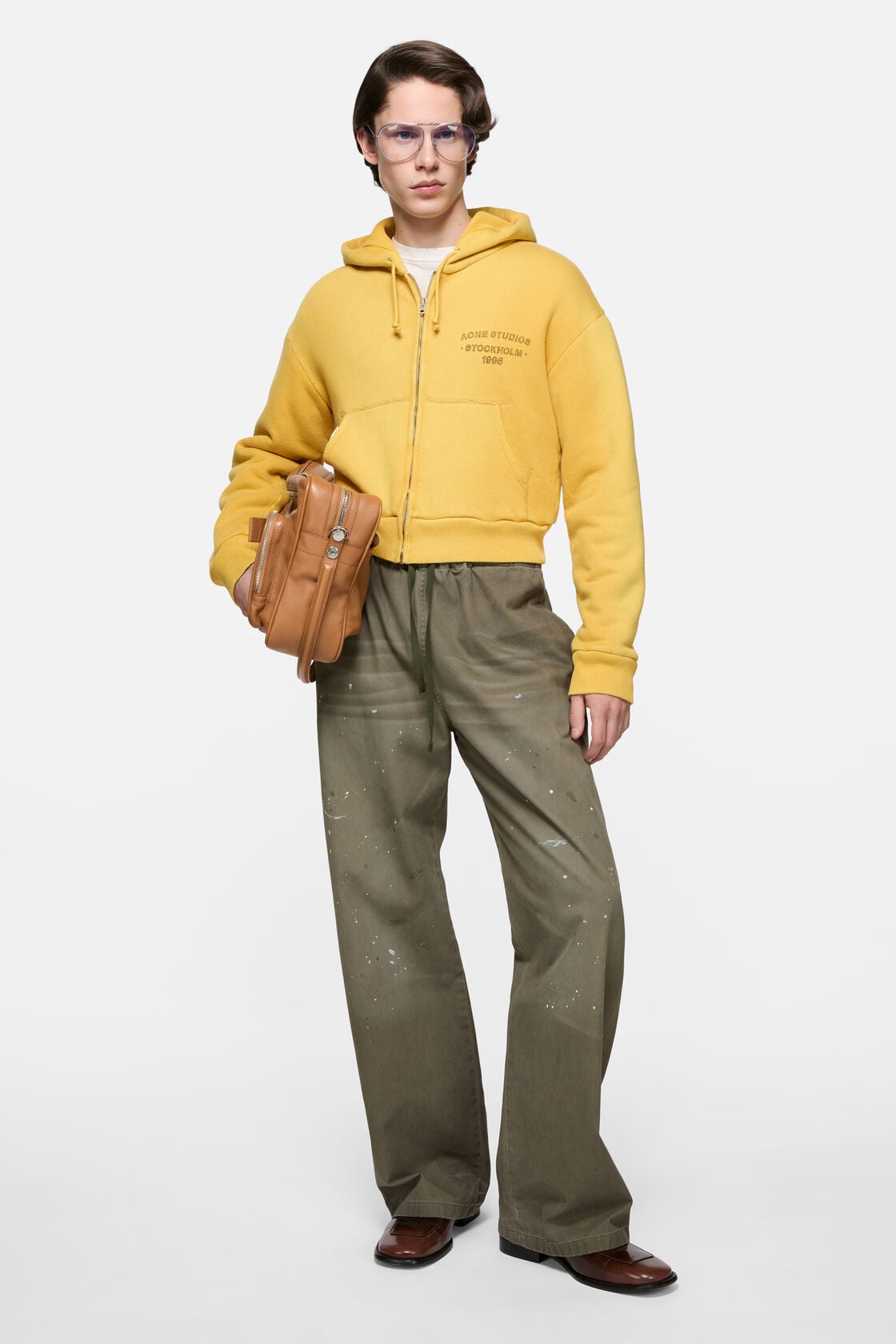
The clothes reflected that tension. On one hand, Johansson continued to design pieces that felt personal, almost idiosyncratic: a trench coat with sleeves that extended six inches past the fingertips, a sweater knit in a gradient that moved from cream to rust over the course of two feet. On the other, the house began producing more accessible pieces — leather jackets in classic cuts, straight-leg jeans in black and blue, logo sweatshirts that could be read from across a street. The latter sold. The former earned the reviews.
By 2015, Acne Studios had become what it had once positioned itself against: a recognisable brand, one whose aesthetic could be summarised in a sentence and whose logo — a sans-serif wordmark, introduced in 2010 — had become a marker of taste. The house had not compromised, exactly, but it had clarified. The early collections were open to interpretation. The middle-period work was easier to parse, and easier to sell.
The Present: Precision Without Coldness
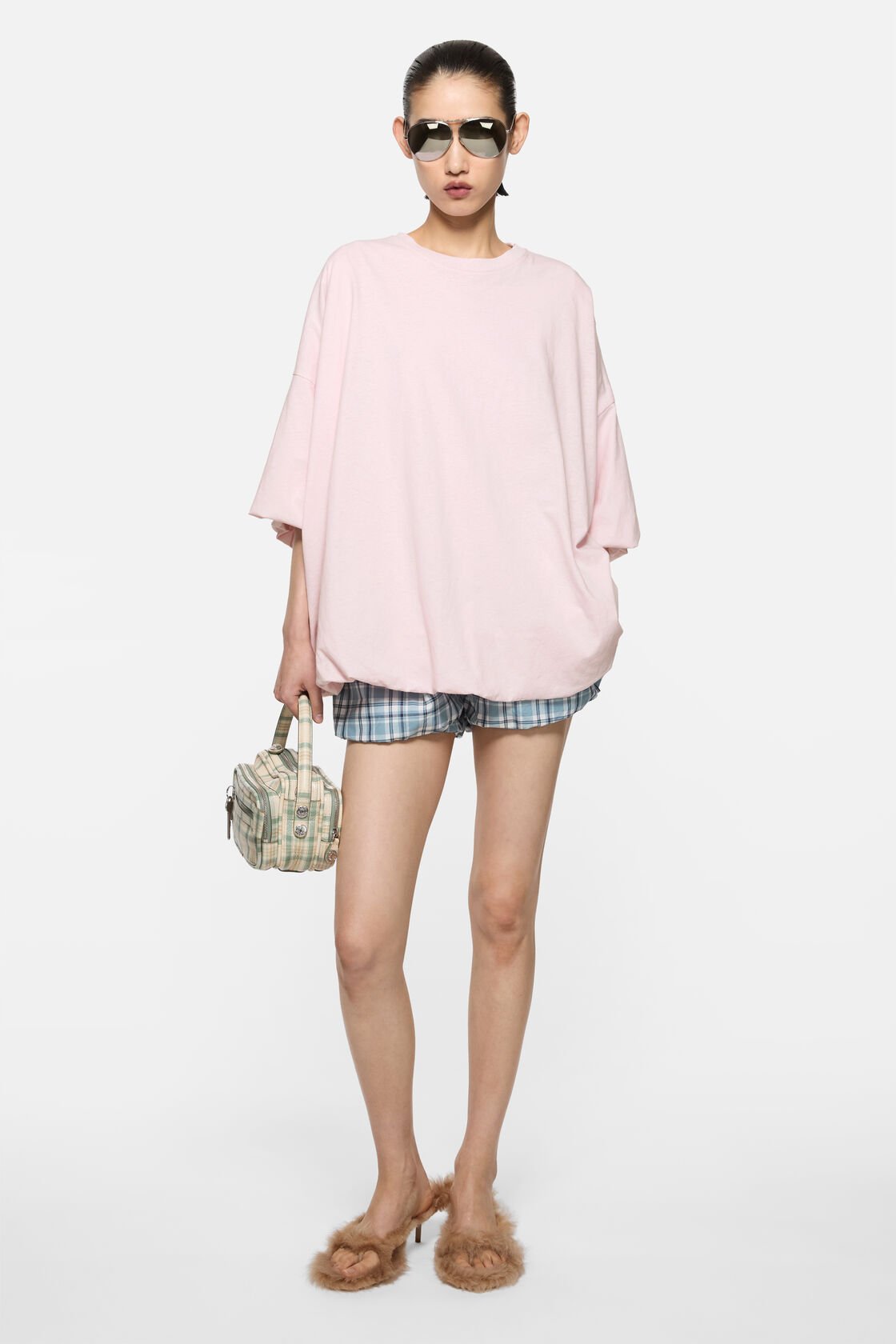
Johansson's recent collections have returned to the house's founding instinct, but with a sharper hand. The Spring/Summer 2024 show, held in a brutalist car park in Paris, featured models walking through puddles of standing water, their reflections doubling the silhouettes above. The clothes were precise: tailored blazers with exaggerated shoulders, slip dresses in washed silk, trousers cut so wide they read as skirts until the model turned. The palette was still muted — grey, navy, a particular shade of dusty pink that recurred across fifteen looks — but the construction was anything but loose. Every seam landed exactly where it needed to.
The house has also leaned into its archive, reissuing styles from the early collections and treating them not as nostalgia plays but as part of an ongoing conversation. The original Acne jean, now called the 1996, is still in production, still cut from raw denim, still sold with minimal branding. The leather jacket introduced in 2008 — a boxy, shearling-lined style that became one of the house's most copied pieces — has been reissued in four colourways, each treated to age faster than the original. The message is clear: Acne Studios is not interested in reinvention. It is interested in refinement.
The house's current position is unusual. It is large enough to operate on a global scale, with over fifty stores and distribution across every major market, but it has retained the sensibility of a much smaller operation. Johansson still designs every collection. The house still casts non-models for its campaigns. The stores still feel more like galleries than retail spaces, with concrete floors and minimal fixtures and a studied lack of signage. Whether this balance can hold as the house continues to grow is an open question.
What Remains
There is a photograph from the house's Spring/Summer 2023 campaign, shot by Torbjørn Rødland, that captures something essential about Acne Studios. A young woman stands in a field, wearing an oversized blazer and holding a bouquet of wildflowers. The blazer is grey, the flowers are purple, and the woman's expression is blank. She is not selling the clothes. She is simply wearing them, in a place that could be anywhere, at a time that could be any time. The image is neither warm nor cold. It simply is.
That, perhaps, is the house's greatest achievement: it has built a vocabulary that does not insist on itself. You can wear an Acne Studios piece and disappear into it, or you can wear it and be seen. The clothes do not decide for you. They leave room.