The first piece anyone remembers is the coat
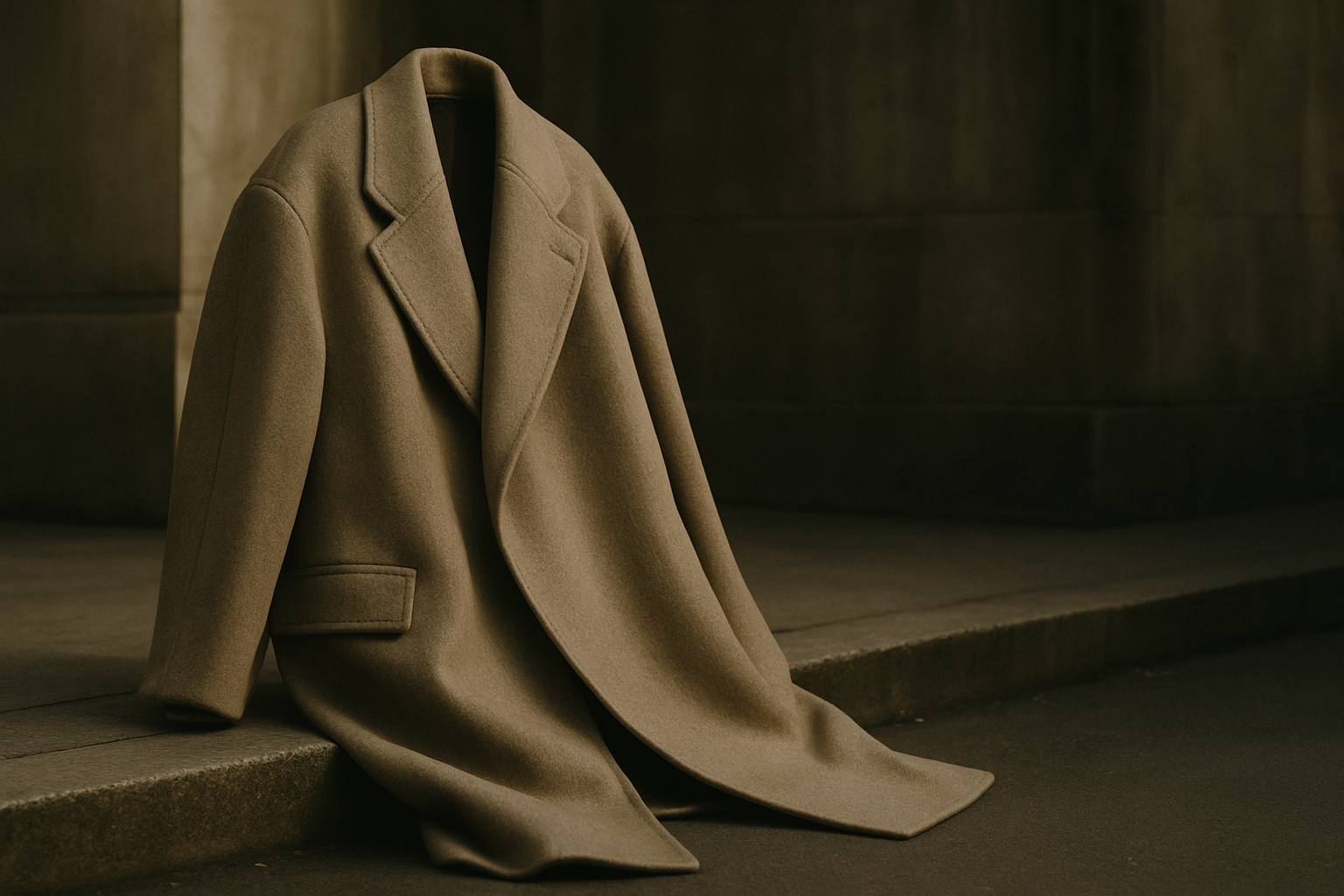
The first piece anyone remembers is the coat. Not from the runway but from the street, autumn 2011, photographed outside the Palais de Tokyo. Oversized, structured through the shoulder, falling in a single unbroken plane to mid-calf. No lapel. The closure was invisible—hidden snaps beneath a placket so flat it read as sculpture. The wearer, a gallerist whose name no longer matters, stood with her hands in the pockets. The coat did not move.
That coat was ZUZWA before ZUZWA had a flagship, before the name appeared in Vogue, before the waiting list. It was also the last thing Zofia Zuzwara made before the money came in.
2009–2013: A house built on refusal
Zofia Zuzwara founded the maison in Warsaw in 2009 with a single question: what if a garment had nothing to prove? She had trained in pattern-making at the Academy of Fine Arts, worked briefly for a German technical-wear manufacturer, and returned to Poland with no interest in Polish fashion as it was then understood. The early collections were shown in her studio, a former printworks in Praga. Fifteen looks. Invitation by word of mouth. No music.
The aesthetic was not minimal. Minimal suggests reduction toward an ideal. ZUZWA's early work was specific: heavy cotton twill, wool cavalry, selvedge denim in raw indigo. Every piece built around the shoulder and the way fabric falls from it under its own weight. Zuzwara cut with a tailor's precision but refused a tailor's shaping. No darts through the bust. No nipped waist. The silhouette was the silhouette of the cloth.
This was not a statement about gender. It was a statement about construction. Zuzwara had looked at menswear tailoring and decided that its logic—the way a jacket is engineered to suggest a body that does not exist—was irrelevant to her. She had also looked at the drapery of Yohji Yamamoto and decided she did not want poetry. She wanted geometry.
By 2013, the house had a wholesale account with Restir in Tokyo and a small production facility outside Łódź. The coat from 2011 was now in the permanent collection. It sold in three colourways: navy, charcoal, ecru. It still does.
2014–2019: Paris and the problem of scale
The move to Paris happened quietly. ZUZWA opened a showroom in the Marais in 2014, began showing during the official calendar in 2015. The collections grew—thirty looks, then forty—but the vocabulary did not. Trousers with a straight leg and a high waist. Shirts with a band collar. The coat, now in twelve iterations.
What changed was the audience. Buyers from Matches, from Net-a-Porter, from Lane Crawford. Editorial placements in System, in Another Magazine. The house was no longer operating in a margin. It was operating in a market, and markets require product.
Zuzwara's response was to expand not the range but the rigor. She introduced a second line, ZUZWA Atelier, which consisted of five pieces per season, each made to order in the Łódź workshop. The construction was traditional—hand-felled seams, canvas interlining, bound buttonholes—but the forms were ZUZWA's. A single-breasted coat with no front darts. A shirtdress with sleeves set so the armscye sat two centimetres lower than standard. These were not experiments. They were proofs.
The mainline, meanwhile, became more systematic. Zuzwara began working with Japanese mills—Collect, Nishiguchi—and the fabrics took on a different hand. Softer, denser, more expensive. The house added knitwear in 2017: crewnecks in merino, cardigans in a wool-cashmere blend, all with the same boxy cut and dropped shoulder. Nothing clung. Nothing draped. Everything stood.
By 2019, ZUZWA was stocked in twenty-six cities. The waiting list for Atelier pieces ran four months. Zuzwara gave few interviews, and when she did, she spoke about fabric weight and seam allowances. She did not speak about vision.
2020–present: Authorship after the founder
Zofia Zuzwara stepped back from design in late 2020. The announcement was brief: she would remain as creative consultant, but the studio would be led by Tomasz Lewandowski, who had been her head of atelier since 2016. There was no drama. Lewandowski had been cutting the Atelier line for four years. He knew the patterns as well as she did.
What he brought was a willingness to test the house codes without discarding them. His first collection, spring 2021, introduced colour—not as accent but as structure. A trench in rust linen. A blazer in slate cotton-silk. The cuts were identical to the previous season's, but the palette shifted the weight. Rust is warmer than navy. It asks the eye to linger.
He also brought back the dress. ZUZWA had made dresses in the early years—simple, tunic-like, always with sleeves—but they had disappeared from the mainline after 2015. Lewandowski's version was a shirt-dress in dense poplin, the body cut like a rectangle, the sleeve like a cylinder. It fastened with six buttons and fell to the ankle. It looked like nothing and it looked like ZUZWA.
The Atelier line under Lewandowski has become more ambitious. He works with a small group of artisans in Łódź—a woman who does hand-smocking, a man who constructs bound pockets with a seam allowance of two millimetres—and the pieces reflect that attention. A coat from the autumn 2023 Atelier collection required eleven hours of labour just for the collar, which was built in three layers and finished with a silk undercollar that would never be seen. Lewandowski has said in interviews that this is not about luxury. It is about the garment knowing what it is.
The house now operates from a small hôtel particulier near Rue de Turenne. The ground floor is the showroom. The first floor is the studio. Zuzwara comes in twice a week, mostly to review fabrics. Lewandowski works at a cutting table by the window, the same table Zuzwara used in Warsaw. The patterns are stored in flat drawers along the east wall, each one labeled by season and piece number. There are no sketches.
The coat, still
A friend who works in the ZUZWA archive—yes, there is now an archive—told me that the original 2011 coat pattern has been adjusted only once, in 2018, when the maison switched mills and the new fabric had a different weight. The adjustment was a quarter-centimetre at the shoulder seam. That is all.
I thought about this while standing in the showroom last November, holding the current season's version. Navy wool cavalry, 480 grams per square metre. The same invisible closure. The same pockets, set low enough that your hands rest naturally. I put it on. It did not move.