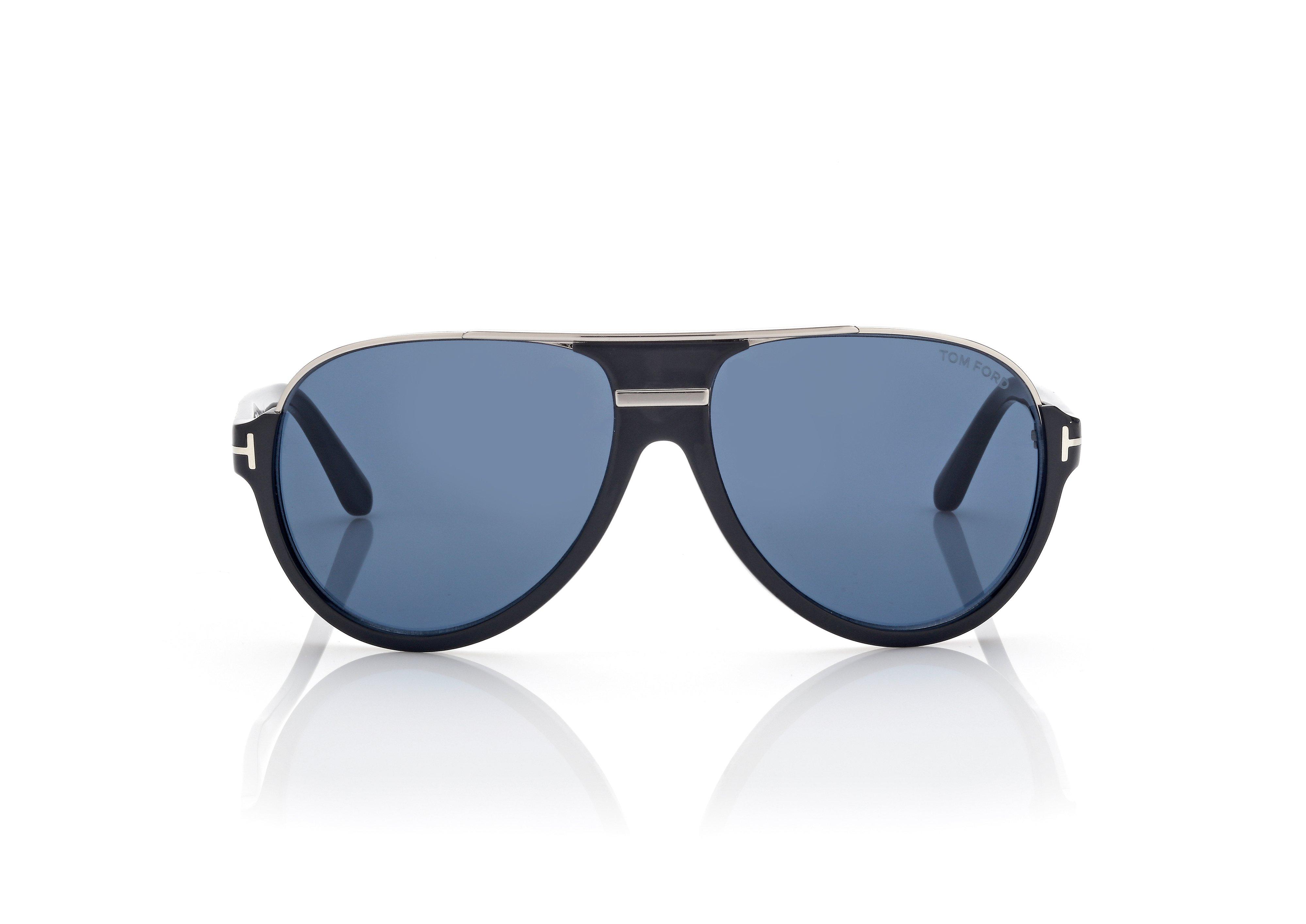
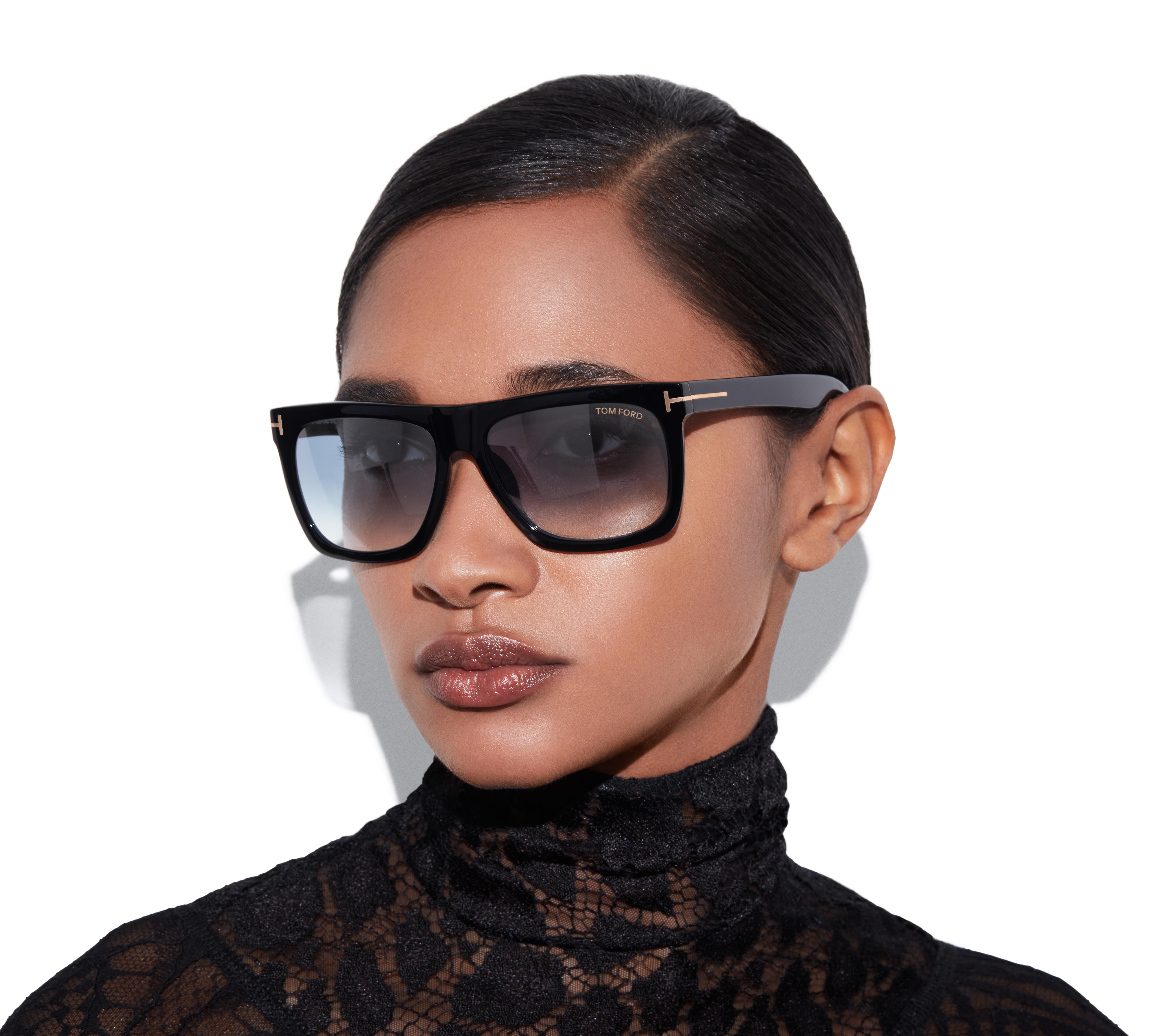
The first thing you notice in a Tom Ford boutique — Madison Avenue, Bond Street, wherever — is the scent
The first thing you notice in a Tom Ford boutique — Madison Avenue, Bond Street, wherever — is the scent. Not the fragrance counter, though that exists. The scent of the space itself: polished hardwood, leather upholstery, something faintly resinous that might be vetiver or might be the lacquer on the display cases. It is deliberate, of course. Everything here is deliberate. The question is whether you find that control seductive or suffocating.
Tom Ford, the brand, launched in 2005. Tom Ford, the man, had already spent a decade and a half remaking Gucci and then Yves Saint Laurent, turning the former from a near-bankrupt Florentine luggage concern into the most profitable luxury house in the world. He left in 2004, and within a year had his own name on the door. The early line was menswear and eyewear, both made in Italy, both pitched at the kind of customer who understood the difference between a fused and a floating canvas. Womenswear followed in 2010. Fragrance, cosmetics, and a significant licensing operation came after. The whole enterprise now operates under the Estée Lauder Companies umbrella, though the design studio remains Ford's.
What Ford brought from those Gucci years — the late-nineties moment when he put Georgina Grenville in a cutaway jersey dress and the fashion press lost its collective mind — was an understanding of sex as a commercial engine. Not sex in the leering, ad-campaign sense, though there was some of that. Sex as fit. As proportion. As the angle at which a lapel crosses the clavicle or a heel shifts the pelvis. He knows how clothes move on a body in motion, and he designs for that motion with a degree of precision that borders on the clinical.
The Tailoring
If you are starting anywhere with Tom Ford, start with a suit. Specifically, the O'Connor or the Shelton, the two cuts that anchor the men's tailoring line. The O'Connor is the narrower of the two: peak lapels, suppressed waist, trousers with a flat front and a trim leg. It is cut for a man who does not require a two-button stance to look taller. The Shelton is marginally easier — notch lapels, a touch more room through the chest — but still shaped with intent. Both are made in Switzerland by the same atelier that produces for Brioni, using Super 150s wool or finer, half-canvassed at minimum, fully canvassed if you are prepared to wait and pay.
Prices begin around $4,000 for a ready-to-wear two-piece and climb past $6,000 if you venture into evening fabrics or request alterations beyond the standard nip at the sleeve. Made-to-measure, which Ford offers through appointment, starts closer to $5,500 and rises from there depending on cloth and detail. You will spend less at Suitsupply. You will spend more at Caraceni. Tom Ford sits in the middle distance: industrially produced but finished by hand, designed with a point of view, sold in an environment that makes you feel as though you are doing something consequential by buying a suit.
The shirts, by contrast, are harder to justify. They run $500 to $700, which is Charvet territory, but they are made in Italy by a contractor, not in-house, and the difference shows in the collar construction. The mother-of-pearl buttons are nice. The Sea Island cotton is real. But one suspects you are paying as much for the logo at the chest as for the shirt itself.
Womenswear and the Zip-Front Dress
The women's line is smaller, more tightly edited, and organised around a handful of recurring gestures. The zip-front dress, for instance, which Ford has been making in various iterations since 2011. It is exactly what it sounds like: a sheath, often in stretch wool or jersey, with a metal zipper running from neckline to hem. Worn zipped to the throat, it reads as austere, almost clerical. Worn open to mid-sternum, it becomes something else entirely. This is Ford's method in microcosm — a single garment that contains its own opposite.
Prices for the zip-front dress hover around $2,500, sometimes more if the fabric involves silk or embellishment. You will also find it, or a close approximation, at Zara every third season, which tells you something about both the design's legibility and its limits. A Tom Ford dress is better made, certainly. The lining does not pucker. The zipper does not snag. But the idea itself is simple enough that it migrates downmarket without much loss.
The evening line is where the house justifies its price bracket. Bias-cut gowns in silk satin, often backless, sometimes with a halter neck that wraps and ties in ways that require either a patient friend or a degree in topology. These are red-carpet pieces, and they photograph accordingly: clean, graphic, unambiguous. They also start at $4,000 and rise quickly past $8,000, which positions them alongside Alaïa and above most of the contemporary market but still well short of haute couture.
Accessories: The Padlock and the Jennifer
Tom Ford's handbag line does not rival Hermès or Bottega Veneta in terms of atelier mystique, but it has produced two shapes that recur with enough frequency to constitute a signature. The first is the Padlock, a top-handle bag with a chunky turn-lock closure and a structured, almost boxy silhouette. It comes in several sizes, from a clutch-scale evening version to a tote large enough for a laptop. The leather is Italian, usually calf or chevro, and the hardware is weighty in a way that suggests permanence. Prices begin around $2,200 and climb past $4,000 depending on size and finish.
The second is the Jennifer, a shoulder bag named for Jennifer Aniston, who carried an early sample and thus became the house's accidental muse. It is softer than the Padlock, less structured, with a magnetic flap closure and a crossbody strap. The Jennifer has been reissued in various materials — crocodile, python, suede — but the most successful version remains the original smooth calfskin. It costs roughly $2,800, which is expensive without being astronomical, and it holds its value on the resale market better than most contemporary bags.
The shoes are a more complicated proposition. Ford's heels — particularly the pointed-toe pumps and the ankle-strap sandals — are well-constructed and undeniably flattering, but they are also unforgiving. The pitch is steep, the toe box narrow, the arch support minimal. If you have spent years in Manolos, you will adapt. If you have not, you may find yourself hobbling by the second hour. Prices range from $1,200 for a basic pump to $2,500 for embellished evening styles, which puts them in direct competition with Gianvito Rossi and Jimmy Choo. On balance, the latter two are more comfortable.
Fragrance and the Licensing Question
The fragrance line is where Tom Ford became a household name, or at least a department-store counter name. Launched in 2006 with Black Orchid — a dense, polarising scent built on black truffle, ylang-ylang, and patchouli — the collection now includes more than fifty expressions, split between the Signature line and the Private Blend. The Signature scents (Noir, Oud Wood, Tobacco Vanille) retail for $150 to $250 per 50ml and are widely available. The Private Blend offerings are more niche, more expensive, and sold primarily through Tom Ford boutiques and a handful of high-end retailers. A 50ml bottle of Fucking Fabulous, which is indeed called that, costs $330.
Are they good? Some are. Tobacco Vanille has a following among people who enjoy smelling like the inside of a humidor. Oud Wood is subtle enough to wear in an elevator. Black Orchid is not subtle at all, which is either its virtue or its flaw depending on your tolerance for projection. But the question of whether a fragrance is good is less interesting than the question of what it signals, and a Tom Ford fragrance signals disposable income and a degree of self-assurance. It is not a niche house. It is not artisanal. It is luxury as lifestyle, which is to say luxury as performance.
Where the House Stands Now
Tom Ford turned 63 this year and shows no signs of stepping back. He designs every collection himself, approves every campaign image, and maintains a level of creative control that is rare among designers who have sold to conglomerates. Whether this is sustainable in the long term is an open question. Succession planning at eponymous houses is notoriously fraught — see Halston, see Gianni Versace — and Ford has not publicly named a deputy or protégé.
In the meantime, the brand continues to do what it has always done: produce clothing and accessories that are expensive, well-made, and designed to make the wearer feel like the most attractive person in the room. This is not a small ambition. Nor is it an easy one to sustain across multiple categories and price points. But Ford has managed it for two decades now, and the work remains consistent in a way that suggests conviction rather than formula.
If you walk into a Tom Ford boutique today, you will find the same polished hardwood, the same leather upholstery, the same faint scent of vetiver or lacquer. You will also find a $5,000 suit that fits better than most and a $3,000 handbag that does what it is supposed to do without apology. Whether that constitutes value is a question each buyer must answer for themselves. But the offer, at least, is clear.