The first thing you notice in the archive room is the leather itself
The first thing you notice in the archive room is the leather itself. Not the weave — everyone talks about the weave — but the way a 1978 clutch sits in your hand. It has weight. The skin has been worked until it feels like something between suede and wax paper, and when you press your thumb into it, the surface holds the mark for a moment before releasing. This is not leather that announces itself. It does not squeak or creak. It barely reflects light.
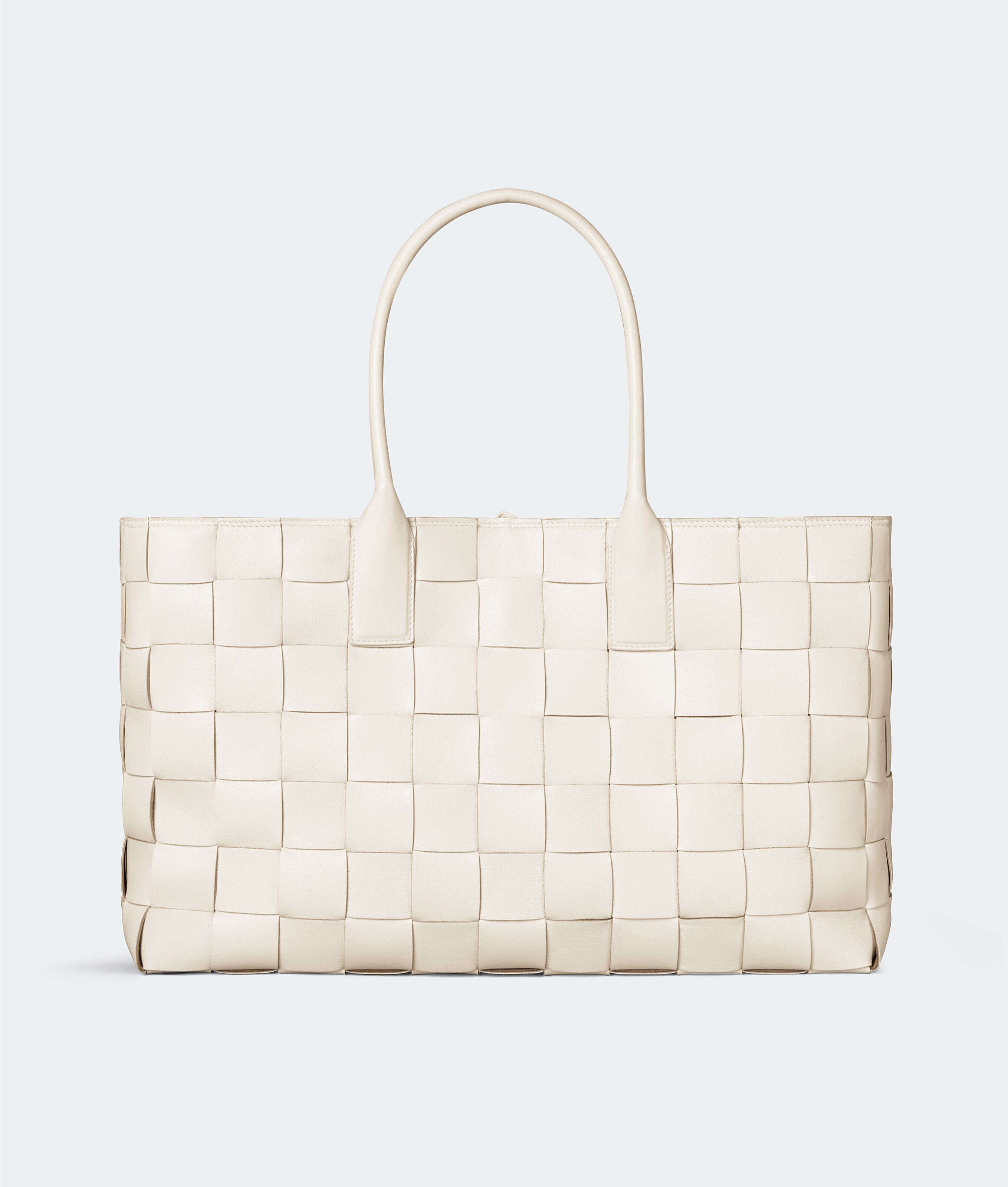
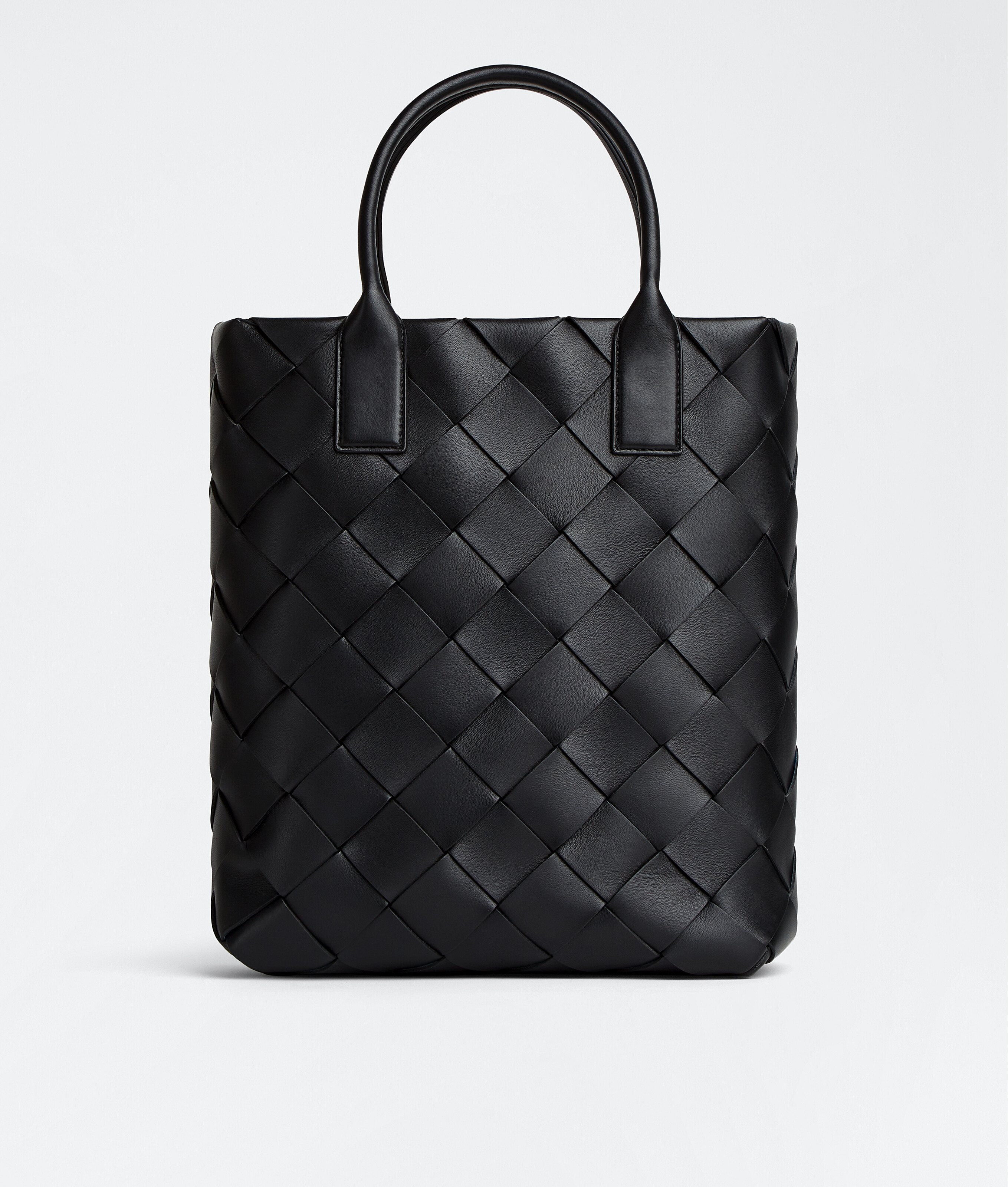
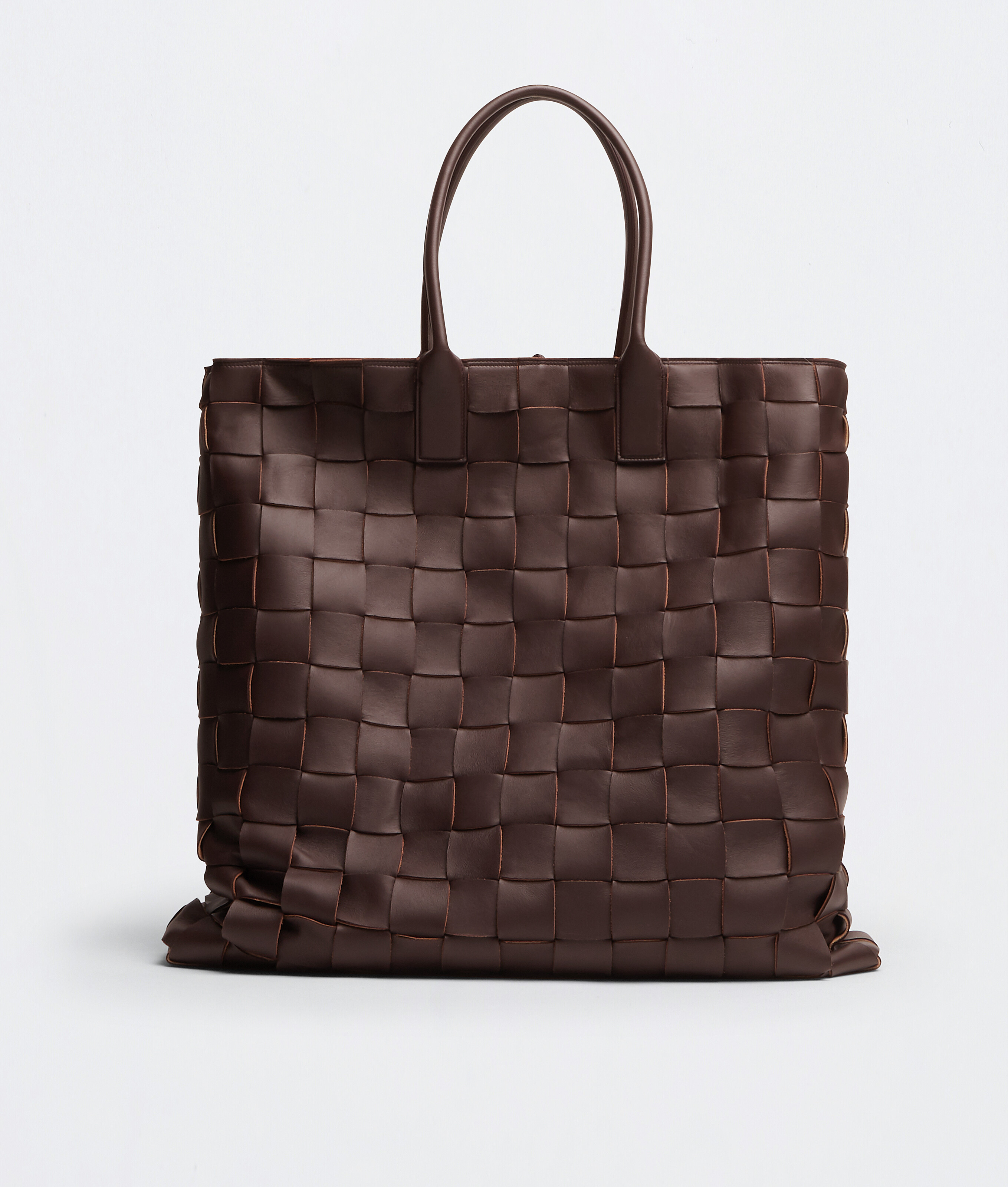
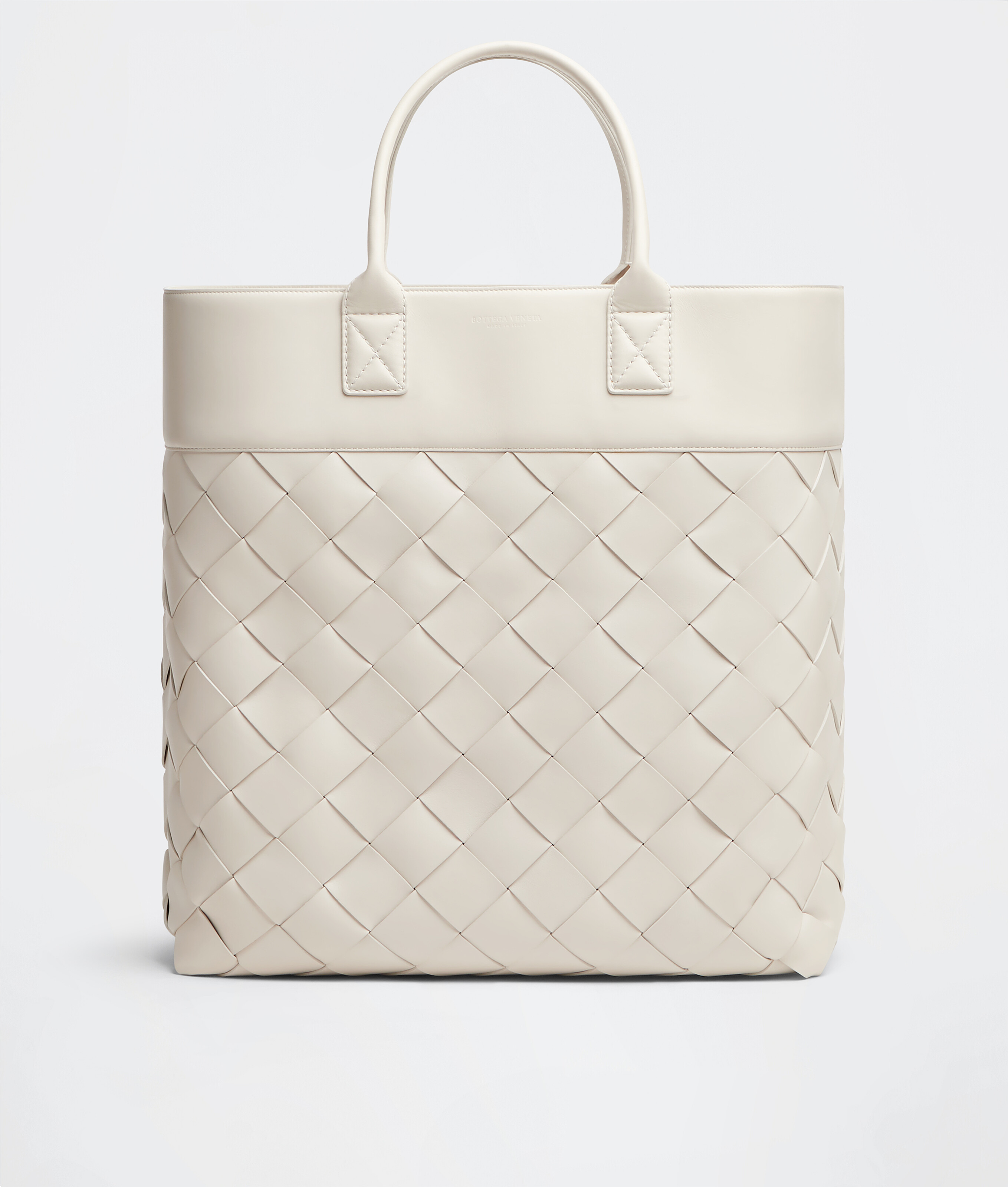
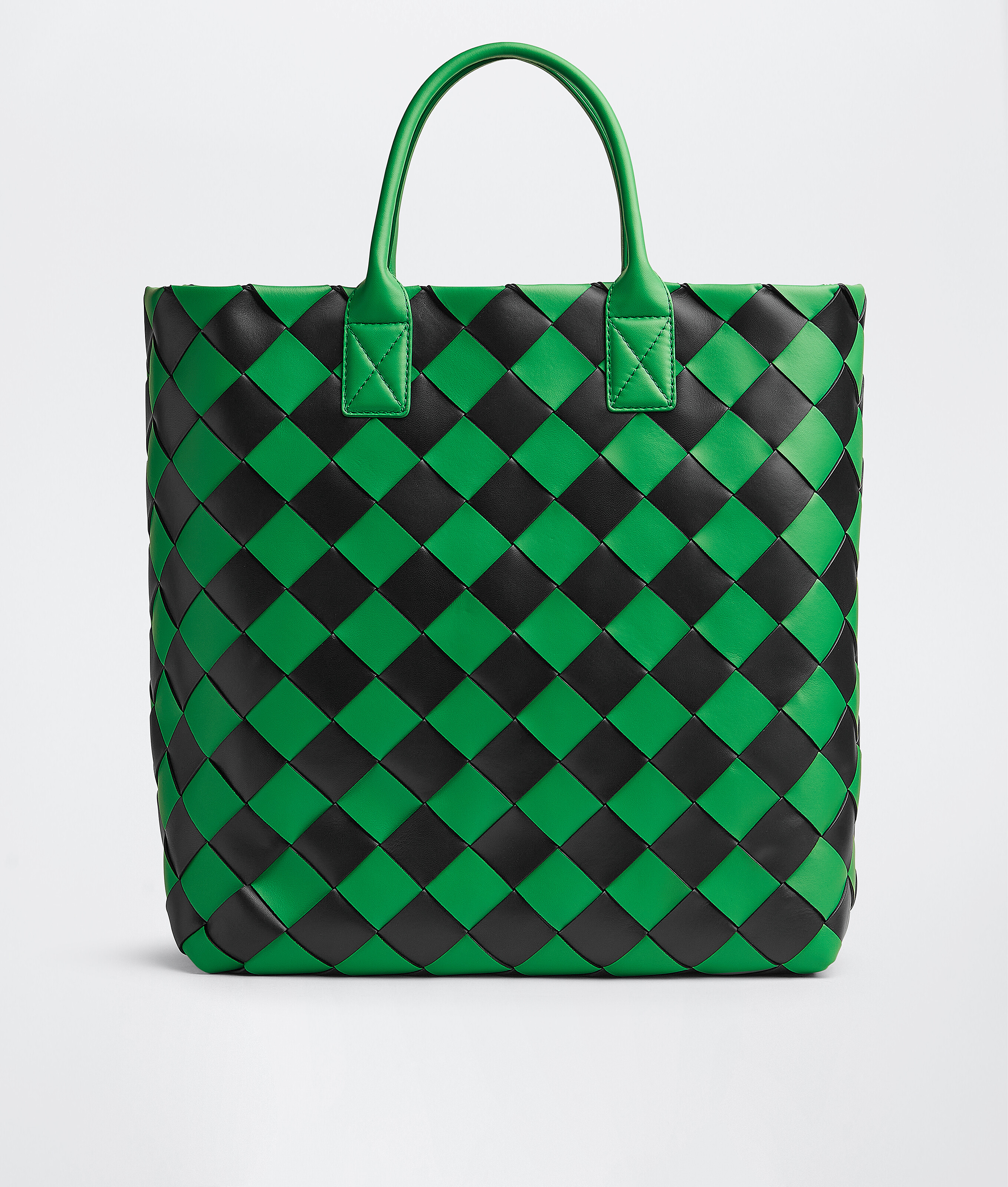
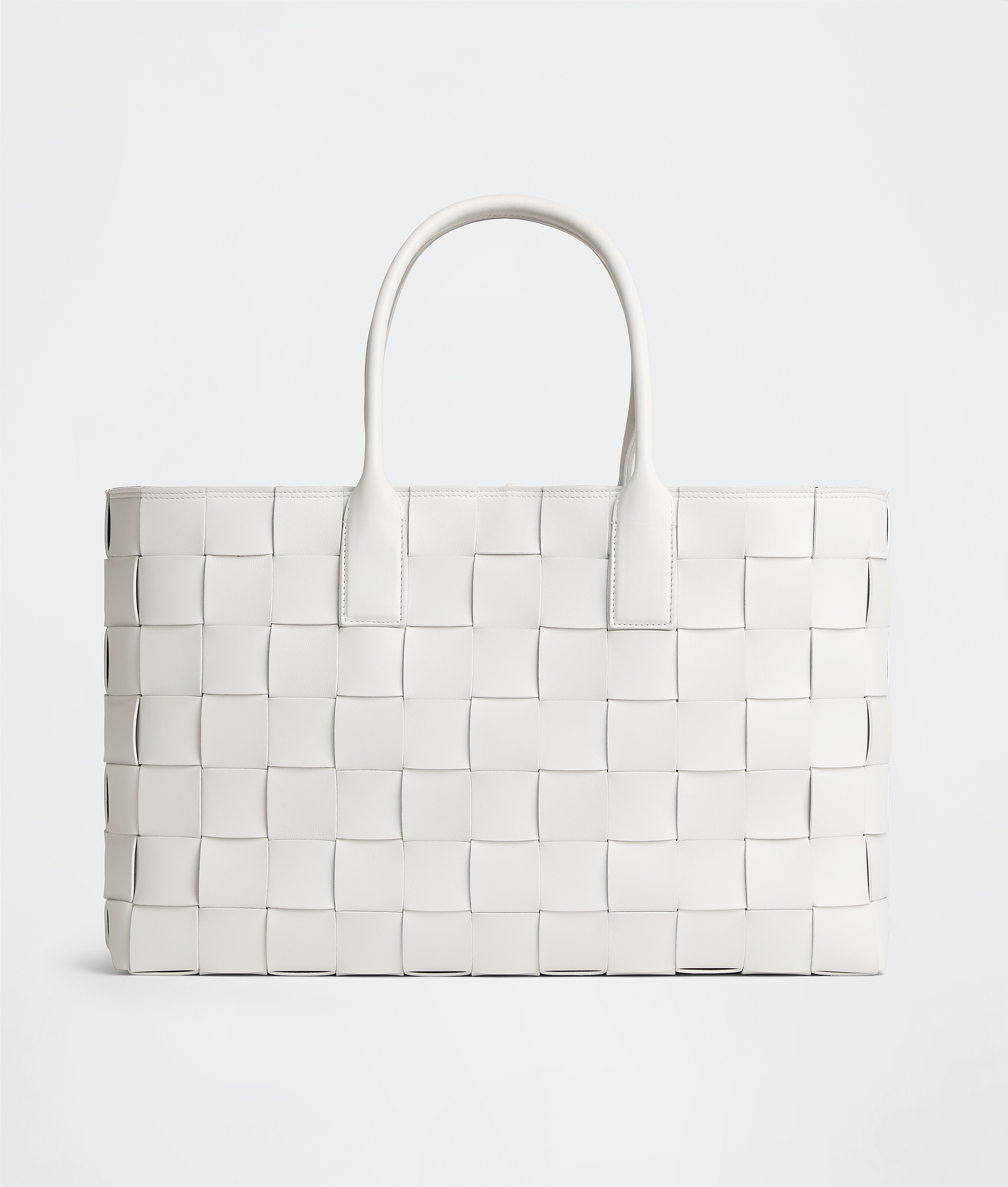
Bottega Veneta's codes are not hidden, but they do not perform. The intrecciato is famous now, overexposed in certain circles, but it was originally a structural solution. In the late 1960s, when Michele Taddei and Renzo Zengiaro founded the house in Vicenza, northern Italian leather workers were already expert at cutting, stitching, and burnishing edges. The woven technique was an inheritance from the Veneto's tradition of wicker and straw work — a way to make leather flexible without topstitching, to create a fabric from strips of skin. It was not branding. It was construction.
That distinction matters. A logo is applied. A code is built in.
The structure beneath the surface
The intrecciato became shorthand for the house, but it was never the only language Bottega Veneta spoke. Look at the pieces that do not weave. The Kalimero bag, introduced in the early 2000s, is a gathered pouch with a drawstring — no intrecciato, no hardware, just soft nappa pulled into a shape that collapses when empty. The Jodie, which arrived under Daniel Lee in 2019, uses a knotted handle and a single curved seam. Both bags rely on volume and drape, on the way treated leather moves when it is not held rigid by a frame.
This is a house that thinks about weight distribution. The Cabat, Bottega's largest and most expensive tote, has no lining. It is double-faced intrecciato, which means the interior is as finished as the exterior, and the bag's structure comes entirely from the density of the weave and the stiffness of the leather. It takes two artisans roughly 15 hours to complete one Cabat. The labour is invisible. You do not see stitches or glue. You see a vessel.
Bottega has always worked this way — through omission as much as addition. In the 1980s, when other European houses began heat-stamping logos onto every surface, Bottega's only mark was a small leather tag inside the bag, and even that was discreet. The American ad campaign from that era carried the line "When your own initials are enough." It was positioning, but it was also a technical claim. The bag did not need a logo because the construction was the signature.
Tomas Maier and the decade of reduction
When Tomas Maier became creative director in 2001, Bottega Veneta was in trouble. The house had been acquired by Gucci Group two years earlier, and it was struggling to locate itself in a market that had moved toward louder, more declarative luxury. Maier, a German designer trained in Paris, did not try to make Bottega louder. He made it quieter.
He expanded the colour palette — not into brights, but into shades that do not have simple names. Limestone. Dark barolo. A green he called moss that was nearly gray. He introduced new leathers: cervo, a deerskin with almost no grain; intarsia, a patchwork technique using tonal panels; nappa treated until it moved like jersey. He designed the Veneta bag, a slouched hobo with a magnetic closure and a single knotted detail on the strap. It became one of the house's best-sellers, and it has no intrecciato.
Maier's tenure, which lasted until 2018, is often framed as a restoration, but that is not quite accurate. He did not restore the house to a previous state. He articulated a set of principles that had been present but not codified. Bottega under Maier became a place where luxury was measured in hand, in the suppleness of a leather that had been tumbled for 18 hours, in the way a coat hung from the shoulder without pulling.
The clothes were as important as the bags, though they received less attention. Maier's tailoring was soft — unstructured blazers, trousers with a dropped rise, outerwear that draped rather than shaped. He used double-faced cashmere, bonded leather, and shearling worked until the wool side felt like fur. The pieces did not photograph well. They had to be worn, or at least touched, to register.
This was a commercial risk, and it worked. By the time Maier left, Bottega Veneta's revenue had grown nearly tenfold.
Daniel Lee and the return of form
Daniel Lee's arrival in 2018 was a break, but not a rupture. He kept the intrecciato and expanded it — into boots, into outerwear, into hard-shell bags that used the weave structurally, as a way to create dimension without adding bulk. He brought back hardware, but sparingly: the padded Cassette bag has a single logo-stamped clip, and the chain on the Jodie is fine enough that it reads as a drawn line rather than a piece of metal.
Lee's Bottega was more sculptural than Maier's. The Puddle boot, introduced in his first collection, has an exaggerated square toe that makes the foot look like it is standing in a pool of rubber. The Pouch, a clutch gathered into a dumpling shape, became one of the most copied bags of the past five years. Both pieces used volume as a tool — not decoration, but a way to change the body's silhouette.
He also worked with tension. The Stretch sandal, a slip-on mule with a single padded strap, holds the foot through pressure rather than structure. The Lug boot, a Chelsea with a tread sole that adds two inches of height, is both formal and utilitarian. These are not contradictions. They are doublings, the same technique Bottega has always used with leather — treating one material until it can perform two functions.
Lee left in 2021, and Matthieu Blazy, who had been his right hand, took over. The transition was nearly invisible. Blazy's first collection included a coat made from 50 leather scraps, each one a different shade of brown, pieced together in a gradient that moved from tan to espresso. It was intarsia taken to its limit, and it required the same level of craft as the intrecciato — not weaving, but fitting, matching the hand of each skin so the seams would lie flat.
What does not change
Bottega Veneta still does not print its name on the outside of its bags. It still finishes the interior of a Cabat as carefully as the exterior. It still treats leather until it feels like something other than leather — like fabric, like paper, like clay.
These are not small decisions. In a market where visibility is currency, where a logo can be read from across a street and translated into status, Bottega continues to build its signatures into the structure of the object. The weave is famous now, but it is still a construction technique first. The colour palette is specific, but it is still derived from the way dye saturates skin. The bags have shape, but that shape comes from the material, not from a frame hidden inside.
There is a sample in the Vicenza archive — a clutch from 1972, no intrecciato, just a folded rectangle of nappa with a single snap. The leather is oxblood, and it has aged into a colour that is nearly black at the edges and still red in the centre, where the fold has protected it from light. It is not a relevant piece. Bottega does not make bags like this anymore. But it is a clear piece. You can see in it the principle that still runs through the house: that luxury is a question of material first, and everything else follows.