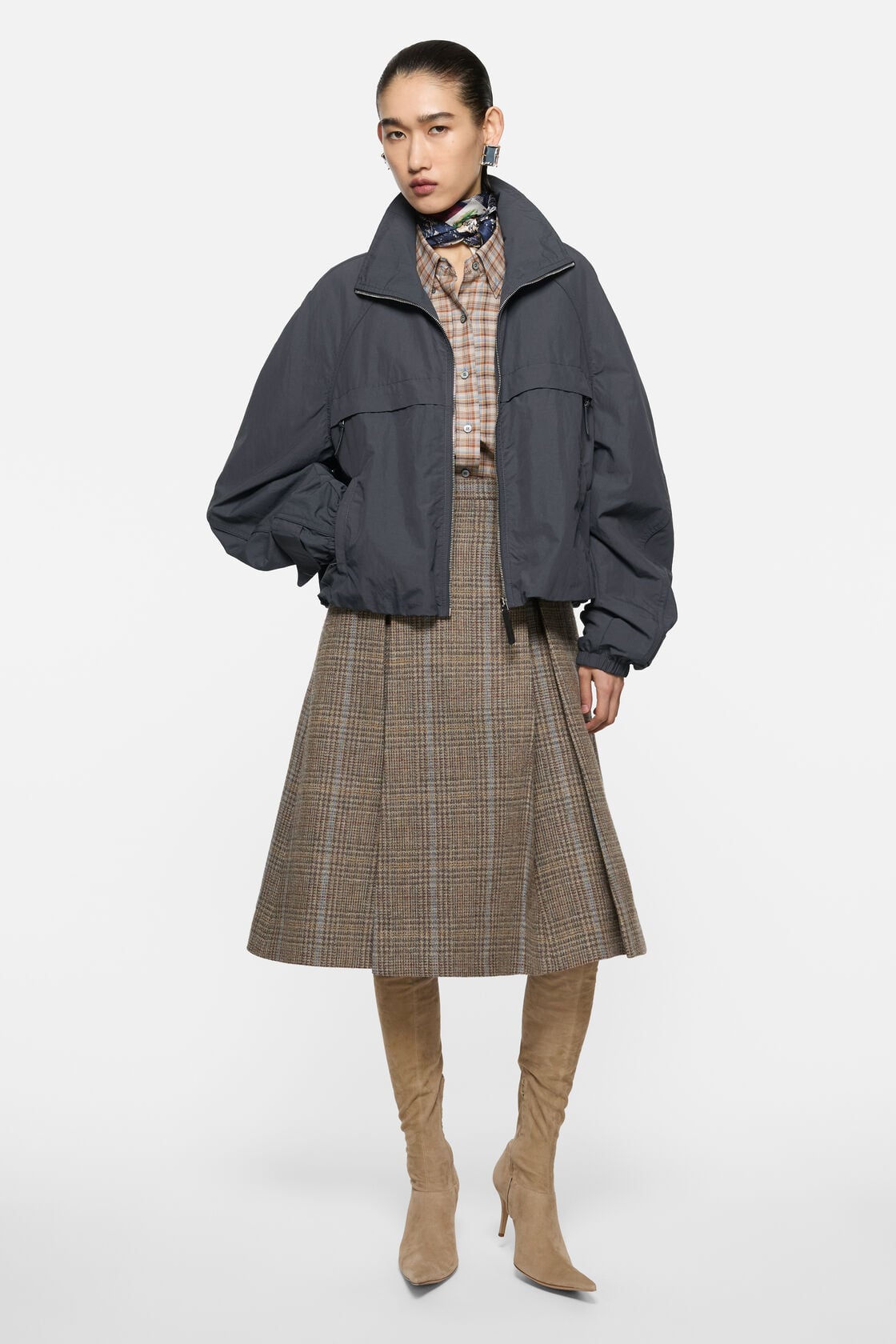
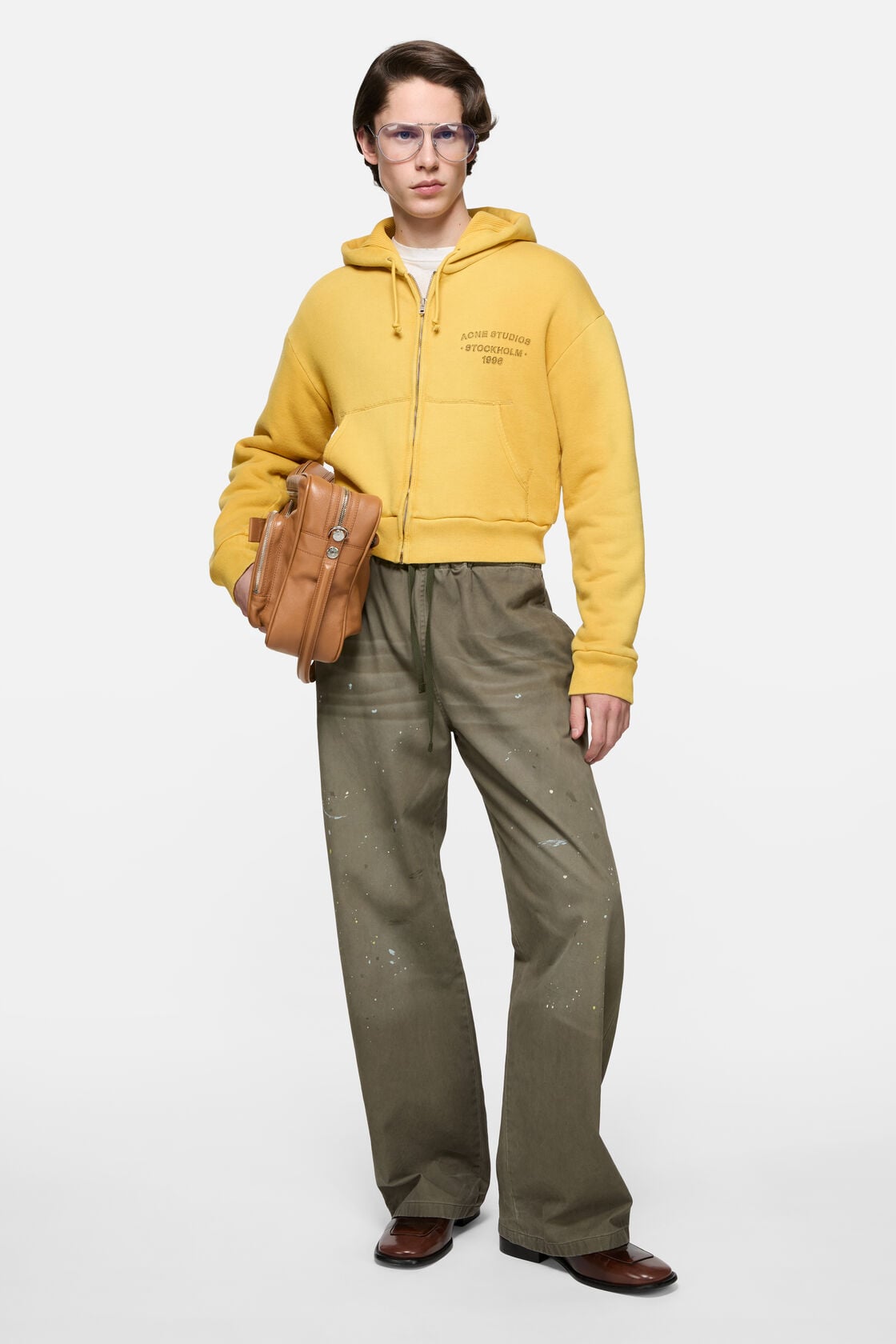
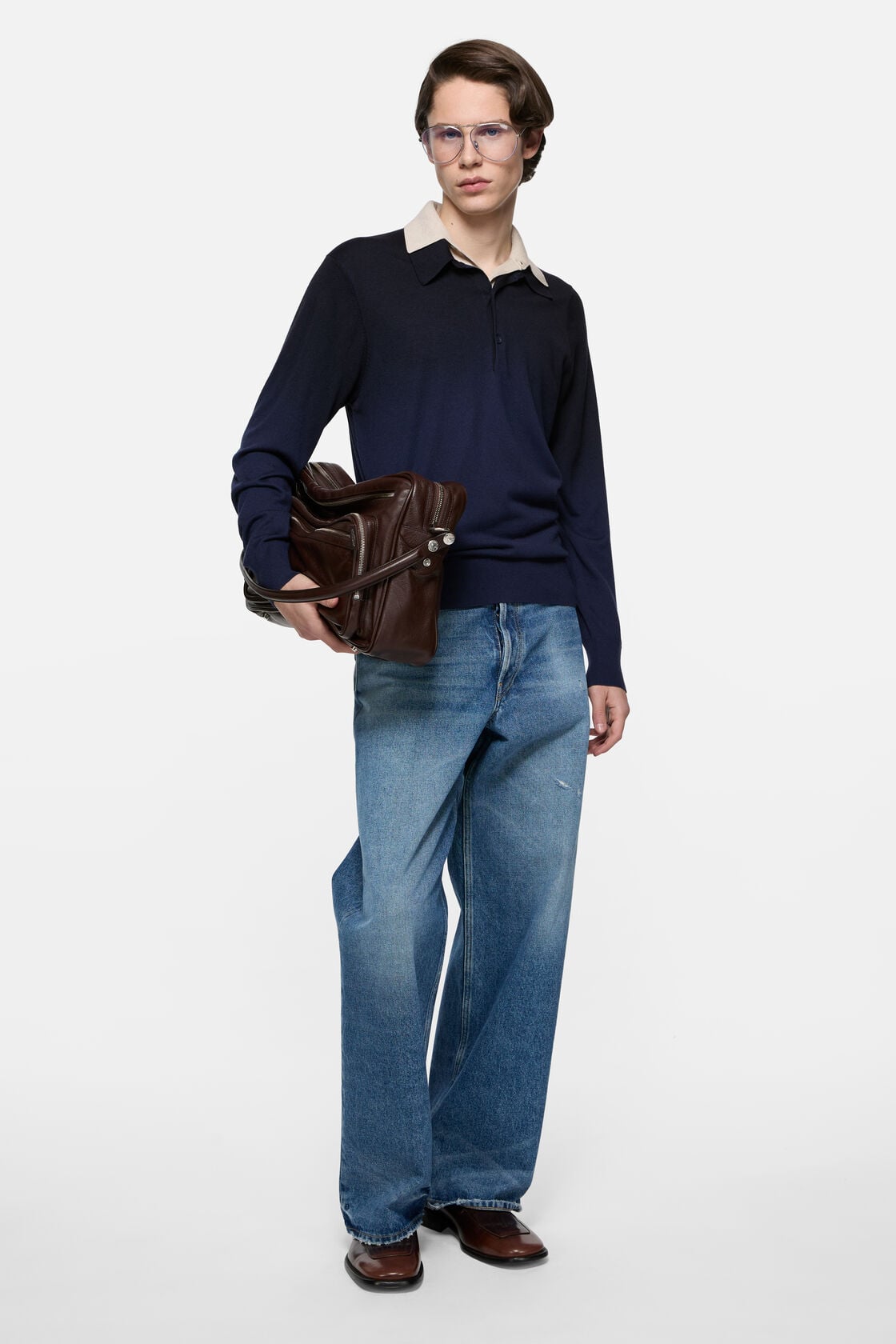
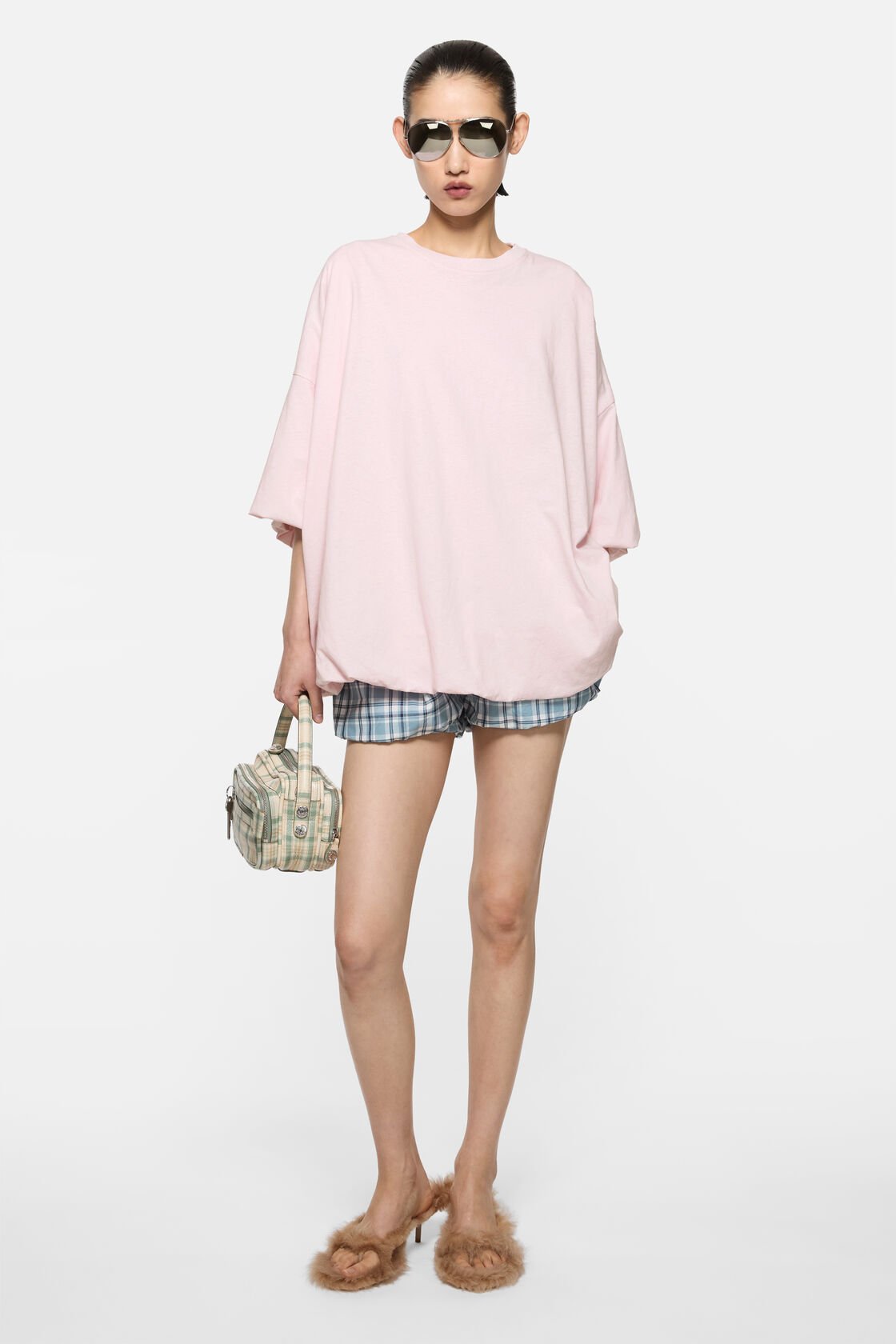
The grey melange sweatshirt you see on every third person in Södermalm didn't start as a sweatshirt
The grey melange sweatshirt you see on every third person in Södermalm didn't start as a sweatshirt. It started as a gift. Jonny Johansson printed a hundred pairs of raw denim jeans in 1996, gave them to friends, and the friends wore them enough that strangers began asking where to buy them. Acne — an acronym that stood for Ambition to Create Novel Expressions, which tells you everything about late-nineties Stockholm — became a studio, then a label, then a house that now moves close to half a billion euro annually. The sweatshirt came later. So did the scarves, the oversized coats, the Canada narrow-fit jeans that replaced the originals, and the Adriana sneakers that replaced Stan Smiths in the wardrobes of people who work in architecture offices and don't talk about their shoes.
If you're reading this to figure out what to buy first, the answer depends less on budget than on whether you understand what Acne does well and what it doesn't. The house builds around four or five silhouettes per category. It repeats them across seasons with fabric and colour swaps. It prizes fit over flourish. The tailoring doesn't look like tailoring until you're wearing it, and the knitwear photographs worse than it feels. This is not a house for people who need a piece to announce itself from across a room.
What Acne Studios actually is
Johansson never trained as a designer. He studied graphic design, worked in film, and came to garments sideways. That oblique entry shows. The house doesn't think in terms of heritage codes or atelier techniques. It thinks in terms of proportions, textiles, and a kind of Scandinavian pragmatism that mistakes itself for minimalism but is actually something more specific: a refusal to solve problems that don't exist.
The jeans that started it all — raw, rigid, tight through the thigh — set the template. Acne became known for pieces that required a short adjustment period. The first wear felt slightly wrong. The fifth wear felt correct. By the fiftieth, you couldn't imagine the garment cut any other way. That approach worked in denim, where stiffness softens into shape. It worked less well in tailoring, which the house has tried and retried for two decades without ever quite landing on a convincing answer. The coats, though — the coats work.
The double-breasted wool overcoat they've been making since the early 2010s remains the house's most legible piece. It's cut long, almost past the knee, with shoulders that sit just wide enough to create structure without bulk. The lapels are narrow. The waist is defined but not nipped. It's the coat you wear over a hoodie or a suit and it reads the same either way. Prices start around €1,100 and climb to €1,600 depending on fabric weight. That's expensive until you consider that most people who buy one wear it forty times a season for five years.
The things people actually buy
The Canada jeans — slim, mid-rise, leg that tapers without clinging — replaced the originals as the house's denim anchor in the mid-2000s. They run about €250. The fit is unforgiving in the way Acne fits tend to be unforgiving: they assume a specific body shape and don't apologise for it. Size up if you're between. The brand's size chart undershoots.
The Adriana sneakers, a low-profile lace-up in tumbled calf, became the house's accidental uniform shoe around 2018. They look like nothing, which is the point. They're not minimal in the Margiela sense — no deconstructed heel counter, no exposed stitching. They're minimal in the sense that they don't try to be anything other than a clean white sneaker that won't look dated in three years. Retail is €390. They last longer than Common Projects and cost less.
Knitwear is where Acne justifies the prices. A crewneck in extra-fine merino runs €350 to €450 depending on weight. The house uses Italian and Scottish mills — Zegna Baruffa, Todd & Duncan — and the difference is obvious if you've handled enough mid-tier cashmere to know what corner-cutting feels like. The gauge is fine but not delicate. The ribbing at the cuffs and hem holds tension without going limp after a season. Colours skew grey, navy, camel, and a particular shade of dusty pink that photographs as mauve but reads as neutral in person.
The face patch — that rectangular label stitched onto the left sleeve of certain sweatshirts and outerwear — started as an internal joke and became the house's only overt logo. It's either the reason you buy the piece or the reason you don't. There's no middle position.
What shifted under Johansson
Johansson is still creative director, still the only creative director the house has had, but the Acne of 2025 is not the Acne of 2010. The difference isn't in vision — it's in distribution. The brand was acquired in stages, first by a private equity group, then by a larger conglomerate. The stores multiplied. The price points crept up. The seasonal collections grew denser, with more SKUs and less coherence.
The shows, which used to feel like private viewings, now operate at the scale required to justify the wholesale accounts. That shift hasn't ruined the house, but it's made certain pieces feel less essential. The accessories line, for instance — small leather goods, card holders, crossbody bags — reads like category fill. The bags themselves, particularly the Musubi hobo with its knotted front, work as objects but don't carry the same inevitability as the coats or the denim.
The tailoring remains a question mark. The single-breasted wool blazer they've been iterating on for the past five years is almost there. The shoulders are right, the length is right, but the button stance sits half an inch too high and throws the whole thing off. It's a small miss, but in tailoring, small misses compound.
Where to start if you're starting now
If you're coming in with €400, buy the Canada jeans. If you're coming in with €1,000, buy the overcoat and wait for a sale on everything else. If you're coming in with €2,000, add the crewneck and the Adrianas and stop there. Acne is not a house you buy into all at once. It's a house you add to slowly, testing fit and fabric against your actual life, not the life you imagine having when you're looking at runway images on a Tuesday night.
The scarf — oversized, fringed, usually in a check or a colour-blocked stripe — is the piece that shows up most often in street-style archives. It's also the piece that's easiest to get wrong. It only works if you're already dressing in a way that makes sense with it. If you're not sure, you're not ready for the scarf.
Sample sales happen twice a year, Milan and Stockholm, sometimes Paris. Discounts run 40 to 60 percent. The good sizes go in the first hour. The less-good sizes sit because Acne's fit is unforgiving enough that a size off is a size you won't wear.
The piece that holds it
There's a photograph from 2004, not official campaign material, just a snapshot someone posted and reposted until it became reference. Johansson's wearing the original raw denim, a grey sweatshirt, and a black wool overcoat that's either the prototype for the one they still make or the same coat, worn enough that it's shaped to him. He's standing outside the studio in Östermalm, mid-winter, no scarf. The coat is unbuttoned. He looks cold but not bothered by it. That's the house. Not immune to discomfort, just not interested in solving for it.