The horsebit loafer sits in a vitrine at the Gucci Museo in Florence, behind glass that's been cleaned too many times
The horsebit loafer sits in a vitrine at the Gucci Museo in Florence, behind glass that's been cleaned too many times. The brass hasn't been polished since 1953. You can see where thumbs wore the metal down, where the leather creased at the vamp. It's a shoe that was designed to telegraph equestrian wealth to people who'd never owned a horse. It still does.
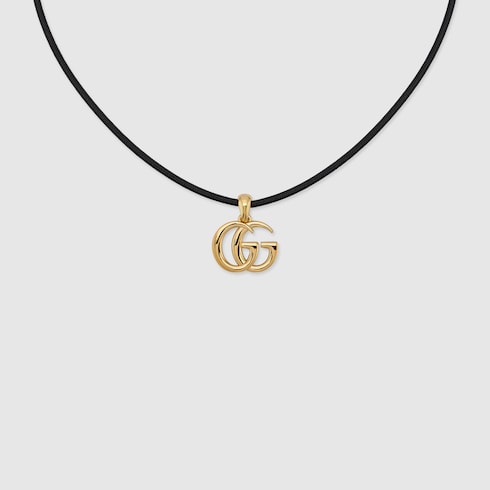
Gucci is not subtle. It has never tried to be. The house was founded in Florence in 1921 by Guccio Gucci, a porter at the Savoy in London who returned to Italy with a sharp sense of what rich people carried and how they wanted to be seen carrying it. Leather goods first—trunks, small cases, saddlery-adjacent accessories for a clientele that was post-agrarian but pre-ironic about it. The double-G logo came in 1933. The horsebit in 1953. The flora scarf, the bamboo-handle bag, the red-green-red webbing stripe—all before 1970, all still in production.
What you need to know is that Gucci has died twice and been revived both times by people who understood that the house's value was never in restraint. Tom Ford took over in 1994 when the brand was licensing its name onto keychains in airport duty-free. He made it carnal and specific: the 1995 velvet hip-huggers, the satin shirts unbuttoned past any reasonable stopping point, the ad campaigns that looked like evidence. By the time he left in 2004, Gucci was worth $4.3 billion. Frida Giannini followed for a decade of safer, more archival work. Then Alessandro Michele arrived in 2015, twenty-four hours before a menswear show with no collection, and turned the house into something stranger and more commercially successful than it had ever been.
The Michele Years and What They Left Behind
Michele's Gucci was magpie luxury. Renaissance embroidery next to Looney Tunes characters. Fur-lined loafers with no socks. Handbags covered in appliqué that looked like a craft-store explosion. It was deeply unstable tonally, which is why it worked. For seven years, Gucci was the house where fashion students and fiftysomething collectors and SoundCloud rappers all bought the same Dionysus bag. Revenue nearly doubled. Then it stopped doubling, and Michele was out.
Sabato De Sarno took the creative helm in January 2023. His first collection landed that September—a reset to something the press releases called "everyday luxury." Translated: fewer sequined bees, more cashmere rollnecks. The Ancora bag, his first signature piece, is a red top-handle in smooth calf with a bamboo-and-gold closure. It's pretty. It's also Gucci trying to remember how to do Gucci without pastiche, which is harder than it sounds when your entire catalogue is pastiche of yourself.
What to Buy and What It Costs
If you're walking into Gucci cold, start with the pieces the house has been making longer than most of its customers have been alive. The Horsebit 1953 loafer runs around $990. It's still made in Italy, still uses vegetable-tanned leather, still has the same brass bit that will tarnish if you don't wipe it down. The fit is narrow—size up if you're between. The Jackie 1961, reissued under Michele and kept under De Sarno, is the curved hobo bag with the piston closure. In smooth leather it's $2,800. In crocodile it's $38,000, which tells you something about how Gucci prices exotics versus everything else.
The Dionysus—a shoulder bag with a tiger-head closure—became the house's bestseller under Michele. Still in production, still $2,300 for the small size in GG Supreme canvas. The Marmont, with its quilted chevron and double-G hardware, is softer, priced around $1,980 for the small matelassé leather version. Both bags have aged into ubiquity, which matters or doesn't depending on whether you care about seeing your bag on someone else at the airport.
For entry-level access, the GG canvas belt starts at $550. The Ace sneakers—white leather with the house's web stripe—run $730. Both have been in steady production since 2015. Both look better six months in when the leather stops being so aggressively new.
The Leather and the Margins
Gucci's leather comes from the same tanneries that supply half the Florentine houses—mostly Tuscan calf, some French, all chrome or vegetable-tanned depending on the finish the design team specs. The house owns its atelier in Scandicci, just outside Florence, where about 60 percent of its leather goods are assembled. The rest is contracted to workshops within a fifty-kilometre radius. Quality control is tight but not Hermès-tight. You'll find loose stitching if you look for it. The hardware will scratch. The canvas will pill if you're not careful.
What you're paying for is not flawlessness. You're paying for the name and the distribution and the fact that Gucci moves enough volume to keep prices just accessible enough that aspiration doesn't tip into impossibility. A Marmont bag costs Gucci somewhere between $400 and $600 to produce, depending on whose margin analysis you believe. It retails for $1,980. The maths is not subtle.
Where the House Stands Now
Gucci's current problem is that it's trying to be quieter in a market that rewarded it for being loud. De Sarno's Ancora bag is well-made and considered and moves at about a third the velocity the Dionysus did in its first year. The ready-to-wear is cleaner, more wearable, less memeable. Kering, Gucci's parent company, reported that the house's revenue dropped 20 percent year-on-year in the first quarter of 2024. Some of that is China. Some of that is the post-Michele hangover. Some of that is that Gucci is trying to sell you a $3,200 cashmere sweater when you came in wanting a sequined tiger.
The house still does $10 billion in annual revenue. It still has 483 directly operated stores. It still makes a horsebit loafer better than almost anyone else. What it doesn't have right now is a clear answer to the question of what Gucci should feel like when it's not trying to be everything to everyone. De Sarno is methodical. He's building a wardrobe, not a spectacle. Whether that's what Gucci needs or what Gucci can afford to be is a question the house is working out in real time, in public, at full retail margins.
What You Should Know Before You Walk In
Gucci runs seasonal sample sales twice a year—once in Milan, once in New York. The Milan sale happens in a warehouse in Novate Milanese in January and July. Discounts run 50 to 70 percent. The line starts forming at 6 a.m. Bring cash, bring patience, bring a clear sense of what you're willing to compromise on. Most of what's there is two seasons old or flawed in some minor, irreparable way.
If you're buying at full price, buy in Europe if you can. A Marmont bag that costs $1,980 in New York runs €1,800 in Milan, which after VAT refund comes to about $1,650. Gucci does not negotiate. The sales staff are trained to be warm and accommodating right up until you ask for a discount, at which point they will smile and show you the door.
The best thing Gucci makes right now is probably the Blondie bag—a small shoulder style with a round interlocking-G clasp, introduced under De Sarno, priced at $2,500. It's not trying to be anything other than a very good handbag. For a house that's spent the last decade being everything else, that might be enough.
The horsebit loafer in the Florence museum is still there, still unworn, still behind glass. The current version is in the store two streets over. You can try it on. The brass will tarnish the same way.