The jeans came first
The jeans came first. Not as fashion, exactly — more as a birthday gift Jonny Johansson made for friends in 1996. Raw denim, cut straight, with a red stitch running down the outer seam. One hundred pairs. The fact that they sold, and kept selling, surprised him. The fact that they became a signifier — Stockholm cool, pre-Instagram, passed along by word of mouth — surprised him more. Acne Studios began there, in that gap between intention and reception.
The name itself was a tell. ACNE: Ambition to Create Novel Expressions. A backronym, admittedly, but one that encoded a certain restlessness. The studio — and Johansson used that word deliberately — was never going to be just a denim label. By 2006, the house had shown its first full ready-to-wear collection in Paris. The clothes bore little resemblance to what was moving through the Marais showrooms at the time. Johansson's silhouettes were neither minimal in the Antwerp sense nor conceptual in the Japanese mode. They were something else: clean-lined, yes, but shot through with an oddness that resisted easy placement. A boxy blazer with sleeves that stopped short of the wrist. A scarf so oversized it functioned as outerwear. Proportions that felt slightly off, in a way that made you look twice.
What Acne Studios understood, early and intuitively, was that Scandinavian design didn't have to mean restraint for its own sake. The house drew from the same vocabulary — muted palettes, architectural cuts, an attention to fabric weight — but it refused the severity. There was wit in the work. A pink shearling coat worn over grey wool trousers. A knit beanie that became, for a few seasons, as recognisable as any logo. The pieces didn't announce themselves, but they didn't disappear either. They occupied a middle register that felt, at the time, genuinely novel.
The Juergen Teller years
By the early 2010s, Acne Studios had become the rare house that could sell both a £300 sweater and a £1,200 leather jacket without seeming confused about its identity. Much of that coherence came down to image. Johansson's collaboration with Juergen Teller — ongoing, season after season — gave the brand a visual language that was unmistakably its own. Teller's photographs were anti-commercial in the best sense. Models stood in car parks, in suburban gardens, against beige wallpaper. The clothes were present but not precious. A shearling coat photographed in flat daylight. A pair of trousers on a body that wasn't trying to sell you anything.
The campaigns worked because they trusted the viewer. There was no narrative, no aspiration being peddled. Just garments, worn by people, in places. It was a radical move, in its way — to present luxury fashion as something ordinary, something you might encounter on a Tuesday. And it reinforced what the clothes themselves were doing: proposing that style could be both considered and casual, both expensive and unstudied.
During this period, Acne Studios also solidified its approach to materials. The house became known for its leather — not the high-gloss, structured kind that dominated Italian houses, but softer, more pliable skins that aged visibly. A biker jacket in washed lambskin that creased at the elbows. A bomber in suede so supple it moved like cloth. The pieces weren't precious, but they were particular. They required a certain confidence to wear, because they didn't do the work for you. You had to meet them halfway.
The accessories followed the same logic. The Jensen boot — a Chelsea with an exaggerated heel and a blunt toe — became a house signature not because it was beautiful in any conventional sense, but because it was specific. It said something. What it said, exactly, depended on who was wearing it. That openness, that refusal to dictate meaning, was central to Acne Studios' appeal. The house gave you tools, not instructions.
The expansion question
Growth, for a house like Acne Studios, is always a negotiation. In 2015, the Belgian investment firm Deveaux took a majority stake. The move allowed for retail expansion — more stores, wider distribution, entry into new categories — but it also raised the question every mid-sized house faces: how big can you get before you stop being what you were?
Acne Studios answered, in part, by staying close to its own vocabulary. The stores, designed in-house, retained a gallery-like austerity. Concrete floors, minimal fixtures, clothes hung with space around them. The product range expanded — eyewear, small leather goods, fragrance — but the additions felt like extensions rather than departures. A cardholder in grained leather. A candle in a ceramic vessel. Nothing that contradicted the house's established tone.
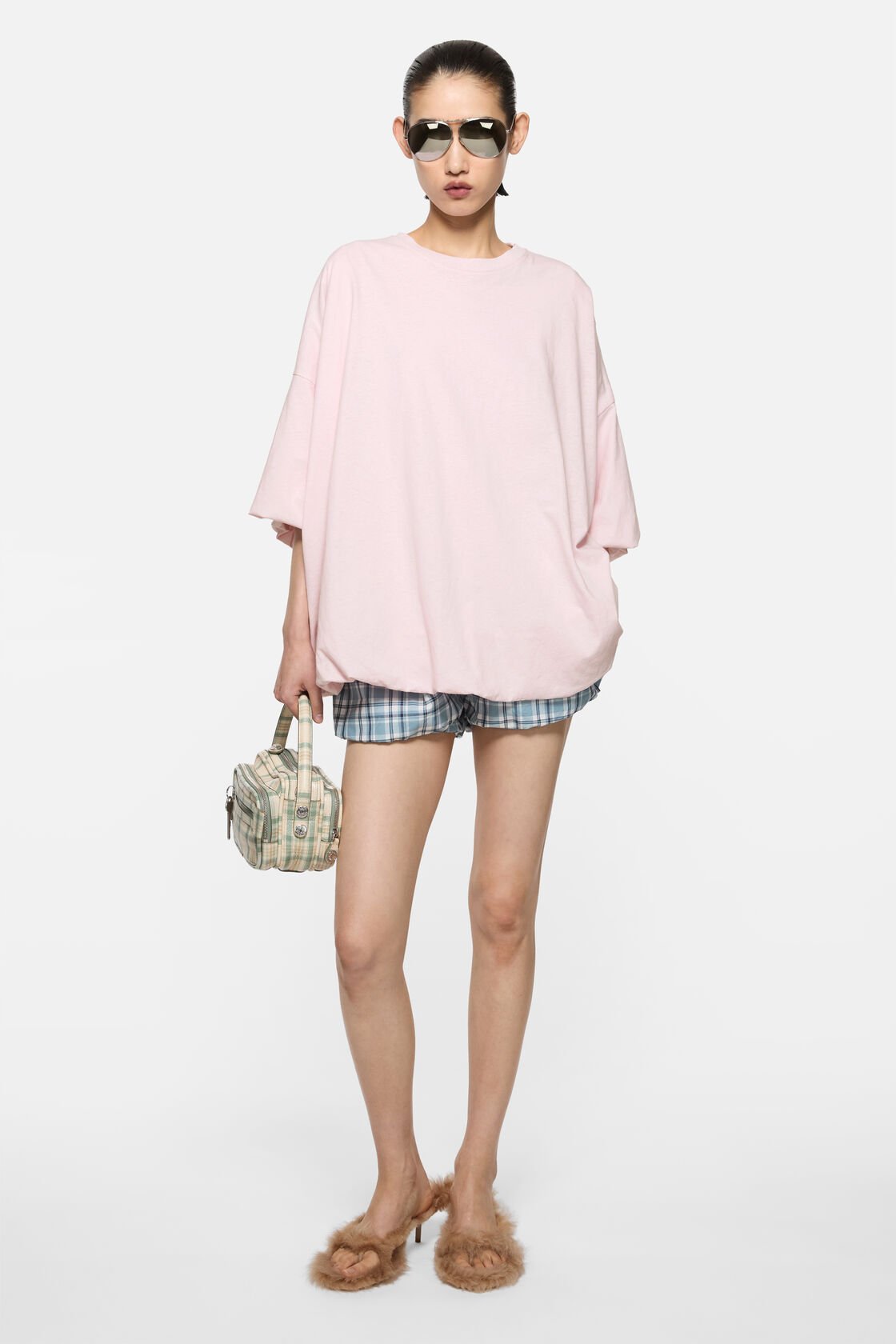
Johansson, still creative director, kept the collections moving without chasing trends. There were seasons that leaned into colour — a run of bubblegum pinks, acid greens, cobalt blues — and seasons that pulled back into grey and black. The silhouettes evolved, but slowly. A wider trouser leg. A longer coat. Adjustments, not reinventions. The house seemed to understand that its strength lay in consistency, in being a known quantity in a market increasingly driven by novelty.
That said, the work became less surprising. The early oddness — the sleeves that didn't quite reach, the scarves that overwhelmed — gave way to something more polished. The clothes were still well made, still distinct, but they no longer felt like they were asking a question. They had become, in some sense, an answer. Whether that's a loss or a maturation depends on what you value. The house gained stability. It may have traded some edge for it.
Where it stands
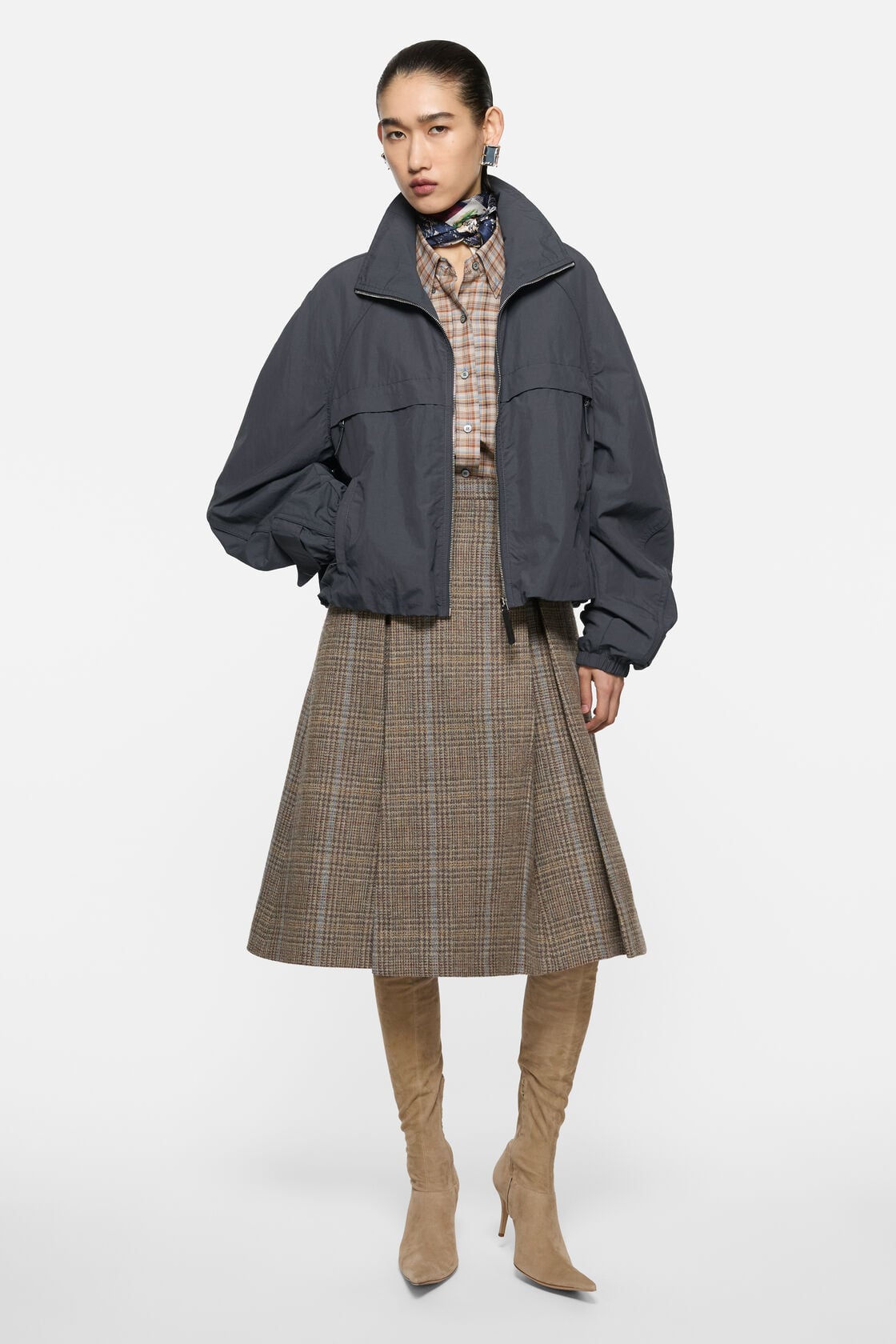
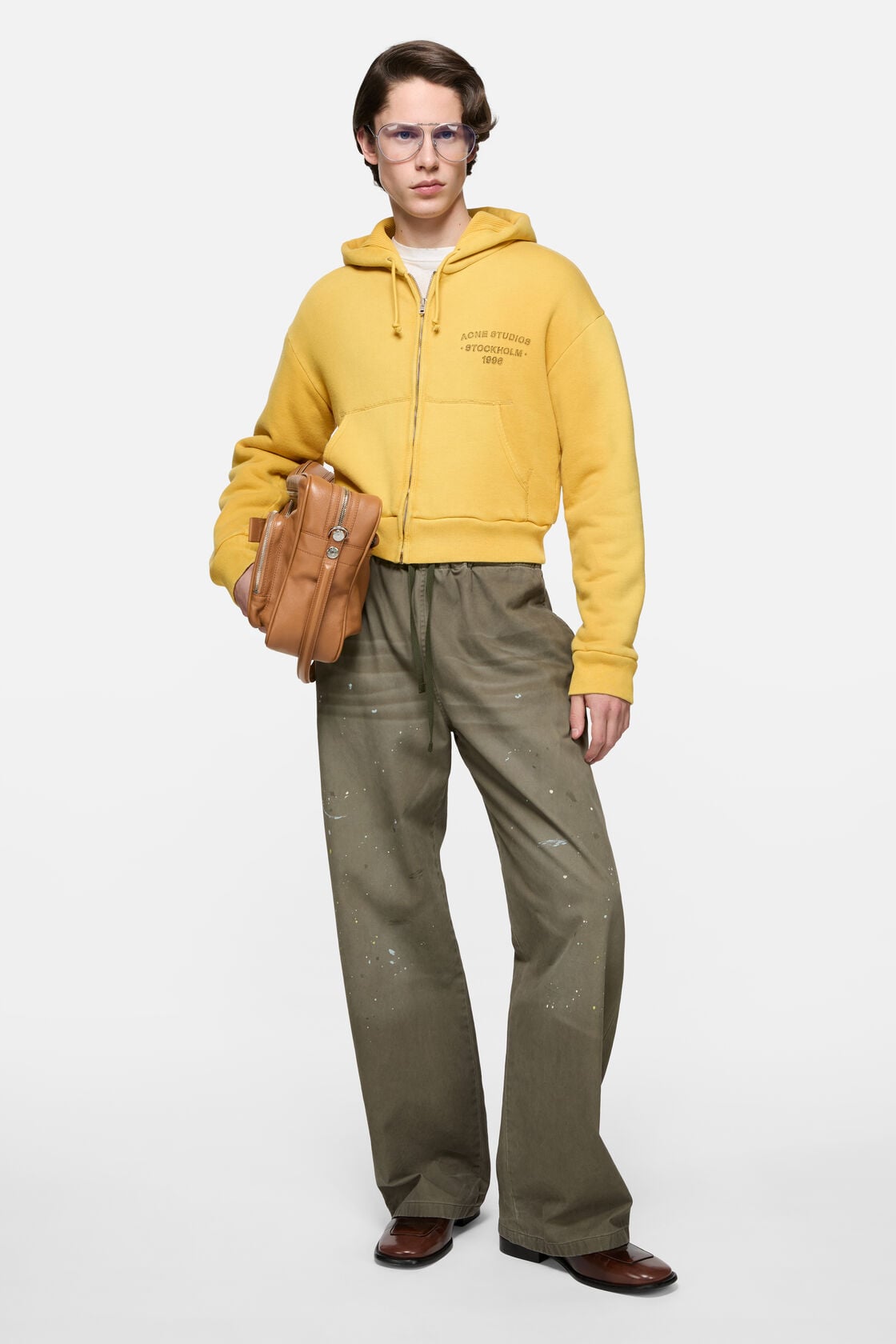
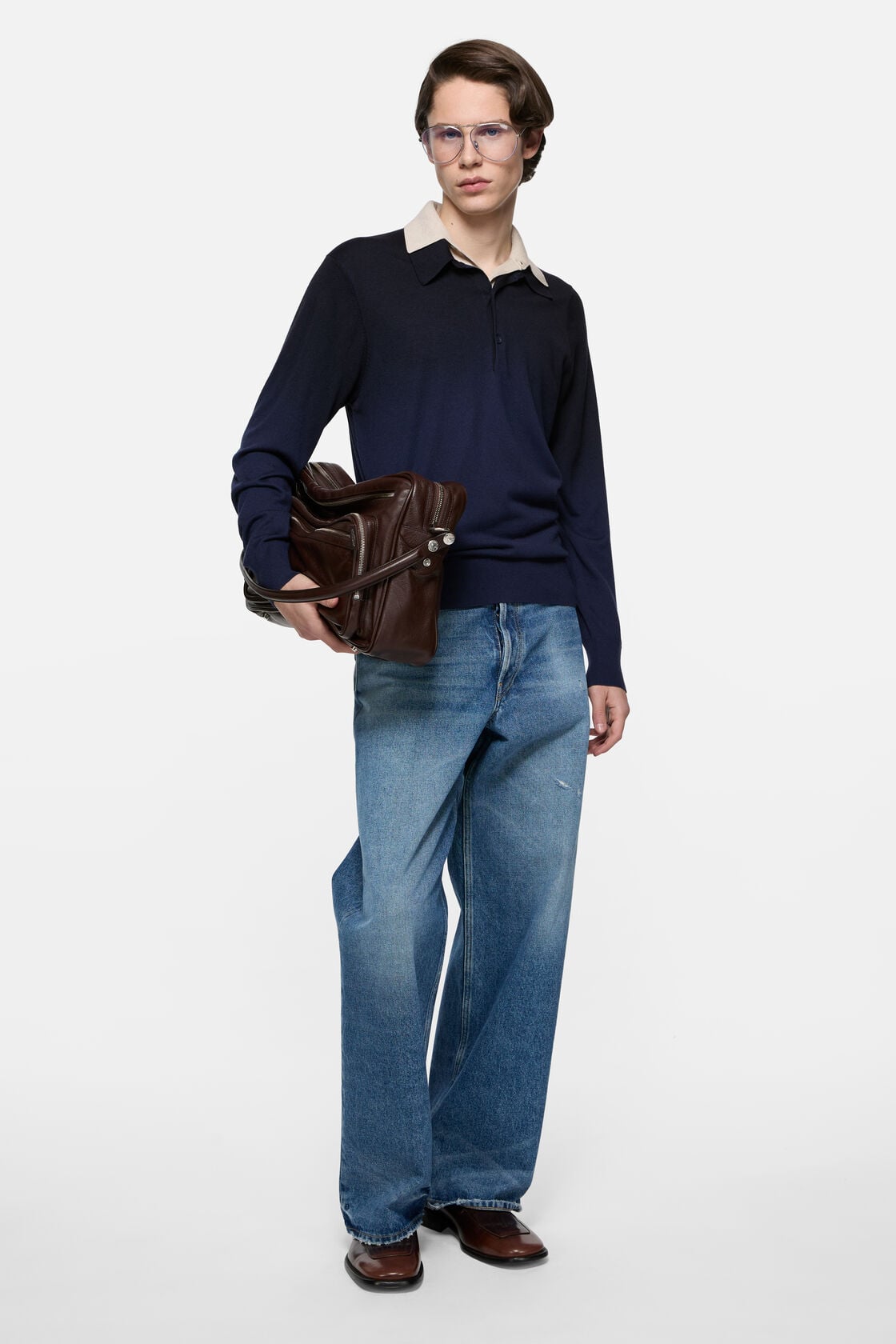
Acne Studios today is a house in possession of itself. It knows what it does well — clean cuts, quality materials, a certain Scandinavian obliqueness — and it does those things reliably. The collections don't shock, but they don't disappoint either. A recent show in Paris featured oversized tailoring in charcoal wool, shearling coats dyed in muted tones, denim treated to look worn-in from the first wear. Familiar territory, executed with care.
The challenge, one suspects, is relevance. Not commercial relevance — the house still moves product, still opens stores — but cultural relevance. Acne Studios was most compelling when it felt like a discovery, when wearing the clothes signalled that you knew something others didn't. Now that the house is established, now that the Jensen boot and the beanie and the Canada scarf are recognisable, the thrill of discovery is harder to manufacture. The clothes are good. They are, arguably, better made than they were fifteen years ago. But good isn't always enough.
Johansson has spoken, in interviews, about wanting to stay curious. About not repeating himself. The question is whether a house can remain curious once it has become an institution. Acne Studios isn't in danger of irrelevance — it has too much equity, too much craft, too loyal a customer base. But it may be in danger of being taken for granted. Of becoming the thing you buy when you want something well made and uncomplicated. There are worse fates. But for a house that began with a red-stitched jean and a backronym about novel expressions, it's worth asking whether comfort is the right destination.
The jeans, incidentally, are still in the line. Raw denim, straight cut, red outer seam. They cost more now. They fit the same.