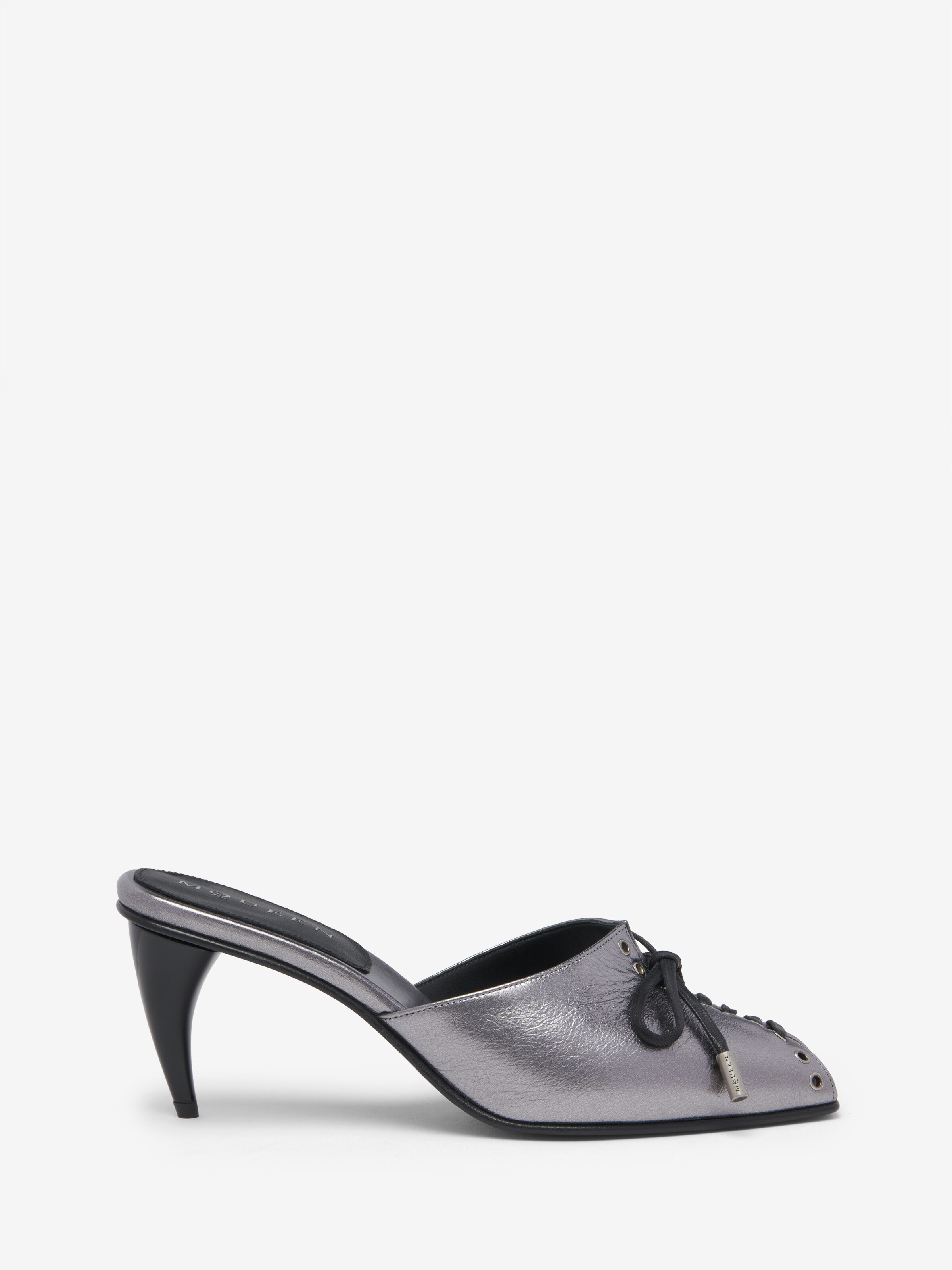
The lace-up boot from autumn/winter 2024 weighs more than it looks
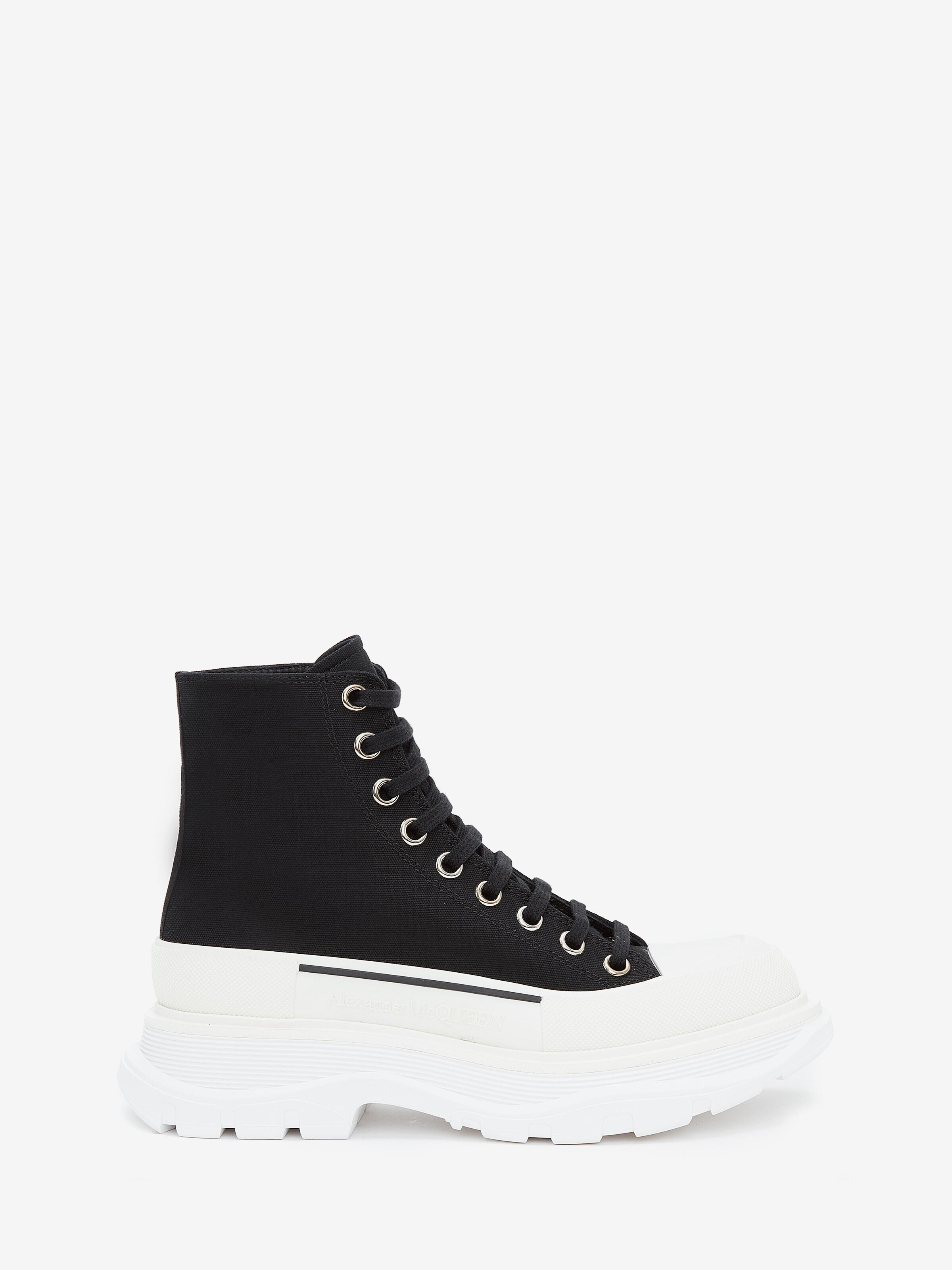
The lace-up boot from autumn/winter 2024 weighs more than it looks. The sole is stacked rubber, the shaft is canvas and leather, and the hardware runs all the way to the top. It is not a delicate object. When you see it on the runway, it reads as armour. When you hold it, it reads as architecture. This is still McQueen.
The house turns twenty-eight this year, which means it has existed longer without its founder than with him. Lee Alexander McQueen died in February 2010. Sarah Burton took over and ran the house for thirteen years. In October 2023, Kering announced Seán McGirr as creative director. He showed his first collection in March 2024. The question everyone asks is the same question they have asked since 2010: what is Alexander McQueen without Alexander McQueen?
The founding logic
McQueen opened his own label in 1992. He was twenty-three. The tailoring came from his training on Savile Row — he had cut for Anderson & Sheppard and Gieves & Hawkes. The provocation came from somewhere else. His graduate collection at Central Saint Martins was called Jack the Ripper Stalks His Victims. The garments had linings printed with his own hair and slides of Jack the Ripper crime scenes. This was not fashion as decoration. It was fashion as confrontation.
The shows that followed built a vocabulary: low-rise bumster trousers, razor-sharp tailoring, corsetry that restructured the body, and a recurring interest in violence, history, and the grotesque. Highland Rape in 1995. VOSS in 2001, where models were trapped in a mirrored cube. Plato's Atlantis in 2009, which was live-streamed and featured prints that suggested evolution in reverse. McQueen worked with emotion at high intensity. The clothes were technical, but the shows were theatre.
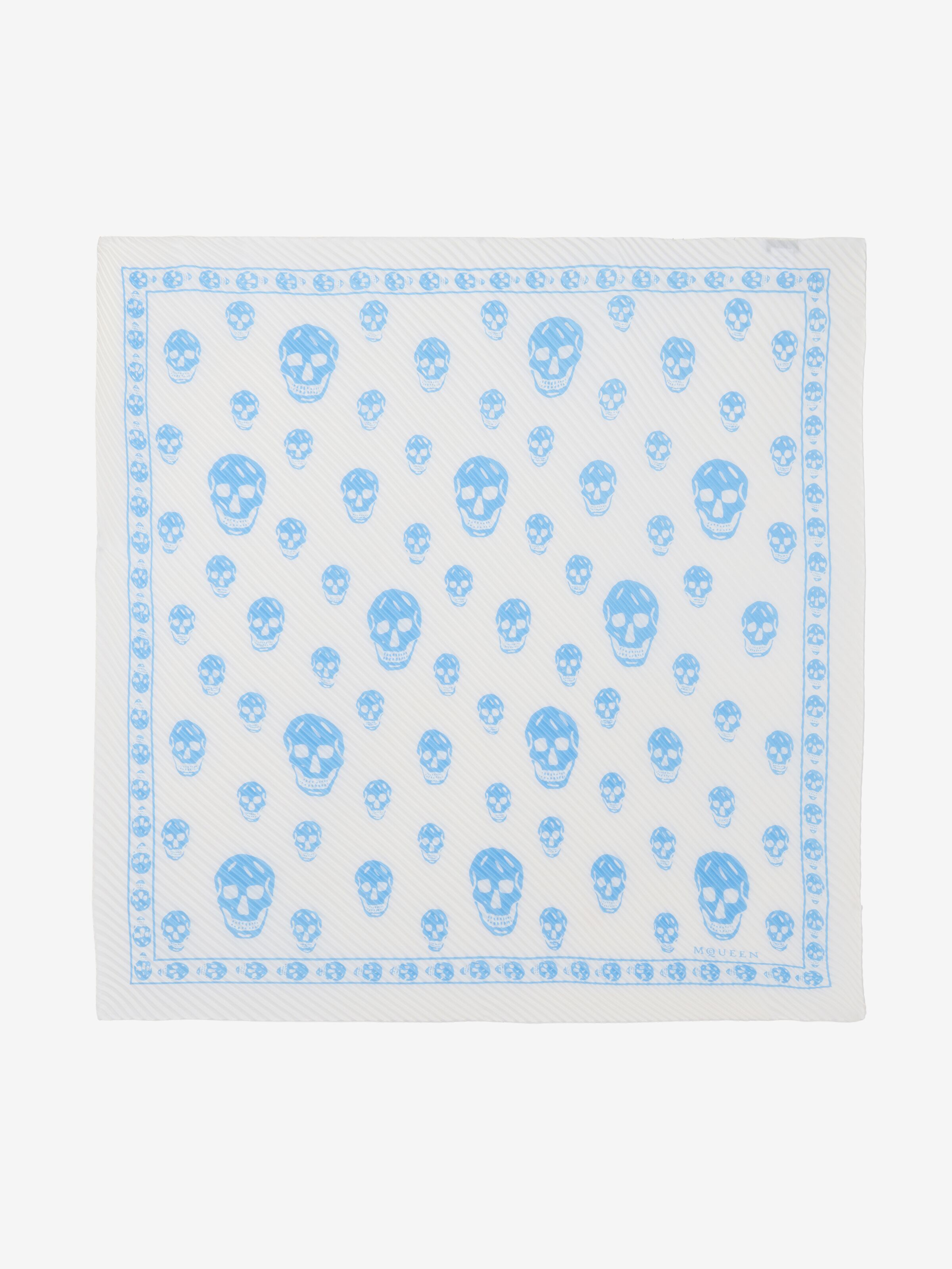
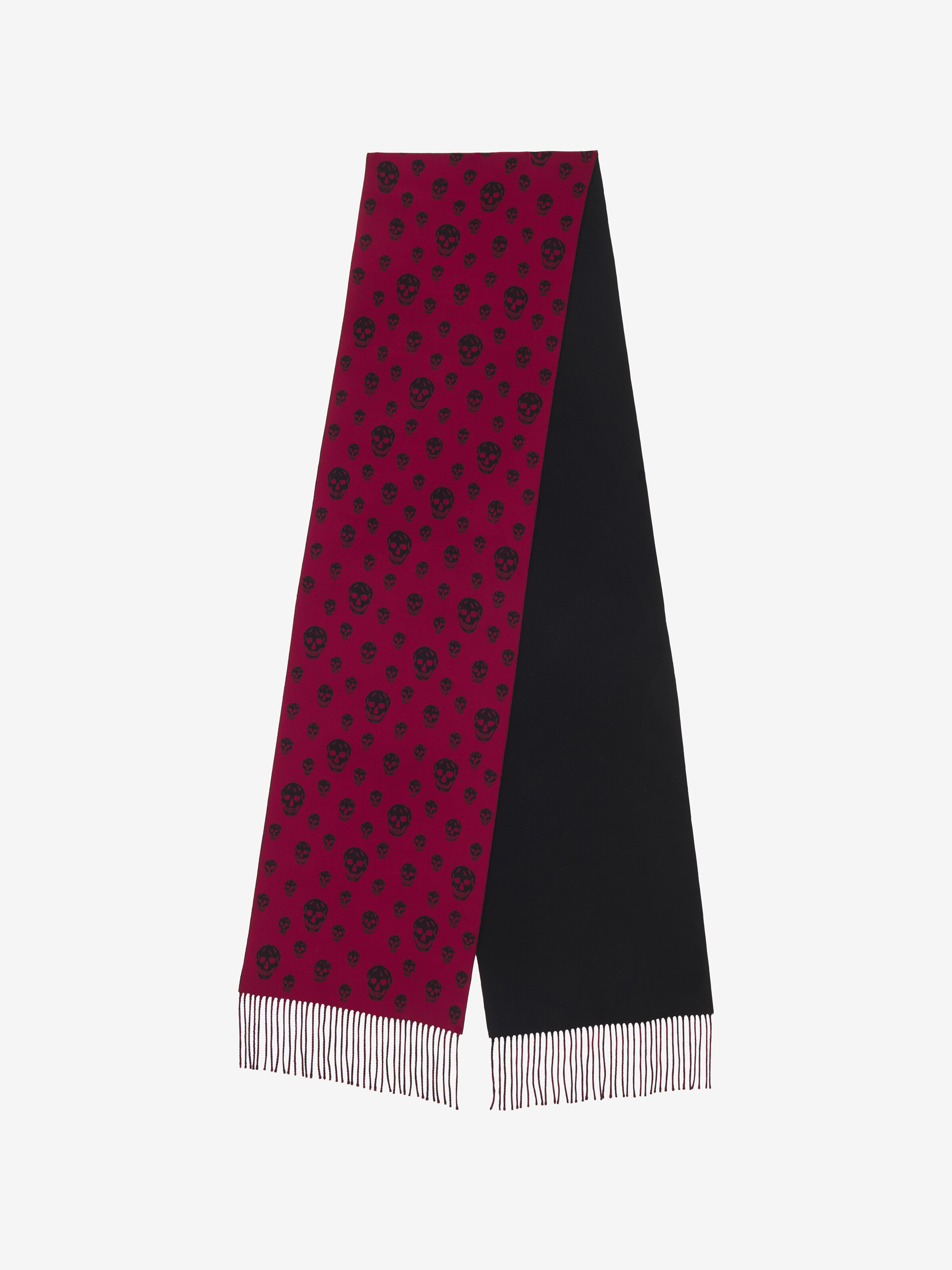
He also understood commerce. By the time Gucci Group acquired a stake in 1999, McQueen was already producing ready-to-wear and accessories. The skull scarf appeared in 2003 and became a bestseller. The Novak bag launched in 2008. These were not compromises. They were extensions of the same vision, made legible at scale.
The Burton era
Sarah Burton had worked with McQueen since 1996. She led womenswear design and understood the house codes — the tailoring, the embroidery, the way a sleeve should sit. When she took over as creative director, she did not try to replicate McQueen's intensity. She refined it.
Burton's McQueen was quieter. The tailoring remained sharp, but the silhouettes softened. She leaned into craft: hand-embroidered florals, featherwork, lace insets that required hundreds of hours. The 2011 collection, her first full solo outing, was called Angels and Demons. It was a tribute to McQueen, but it was also a declaration of her own direction. The clothes were romantic without being soft. The embroidery was meticulous. The palette moved away from black and red toward ivory, blush, and gold.
She also designed the wedding dress for Catherine Middleton in 2011. That commission brought visibility, but it also set a tone. Burton's McQueen became associated with a certain kind of elegance: controlled, detailed, elevated. The bumsters and the provocation receded. The tailoring and the embroidery came forward.
Sales grew. Kering does not break out McQueen's revenue separately, but analysts estimated the brand crossed €300 million in annual sales by the mid-2010s. The Knuckle clutch, introduced in 2010, became a signature accessory. The Curve bag followed. Burton expanded menswear and built out the accessories business. By the time she left in 2023, McQueen was a house with global distribution, strong leather goods, and a stable aesthetic.
It was also, in some readings, a house that had settled.
McGirr's arrival
Seán McGirr came from JW Anderson, where he had been head of design. He was not a household name. His appointment surprised the industry, which had expected a bigger name or an internal promotion. Kering framed the decision as a return to McQueen's roots: McGirr is Irish, like Burton, and trained in tailoring, like McQueen. He also brought an outside perspective.
His first collection for autumn/winter 2024 landed in March. The reviews were mixed. There were deconstructed trench coats, oversized outerwear, and a lot of tartan. The silhouettes were looser than Burton's. The embroidery was less prominent. McGirr cited McQueen's Highland Rape as a reference, but the collection did not feel violent. It felt like someone trying to access the archive without repeating it.
The spring/summer 2025 show, presented in September, was more confident. The tailoring was sharper. There were cut-out dresses with leather strapping, sheer panels, and a clearer point of view. McGirr seemed to be asking: what if McQueen's tailoring met a different kind of body, a different kind of movement? The clothes were less precious. The styling was harder. It was not a full reinvention, but it was a shift.
Sales are harder to read. Kering's Q3 2024 earnings showed overall revenue down across the group, with particular pressure in Asia-Pacific. McQueen is a smaller brand within the portfolio, and it does not move the needle the way Gucci or Bottega Veneta do. But accessories are still strong, and the house has maintained its distribution. The question is not whether McQueen is failing. The question is whether it can grow.
What the house holds now
Walk into the McQueen store on Old Bond Street and the space is dark. The floor is polished stone. The tailoring is on the left, the dresses on the right, and the accessories are at the back. The aesthetic is controlled. There is no chaos here, no blood, no mirrors. This is McQueen as luxury retail, which is what it has been for fifteen years.
McGirr is trying to bring some of the original tension back without alienating the customer base that Burton built. It is a difficult balance. The house cannot return to the provocation of the 1990s — that McQueen existed in a different market, with different economics. But it also cannot stay in the same register Burton established, because that register is complete. She said what she had to say.
The clothes now are searching. The tailoring is still there. The embroidery is less frequent but not gone. McGirr is adding hardware, straps, a certain bluntness. He is also working with the archive in a way that feels more citational than Burton's approach. She absorbed McQueen's language and spoke it in her own voice. McGirr is still learning the grammar.
The autumn/winter 2024 boot — the one with the stacked sole and the lace-up shaft — sits in that space. It is not a delicate object. It is not trying to be. It is heavy, deliberate, built to last. Whether that is enough depends on what you think a house is supposed to do. McQueen was a person, then a brand, and now it is a structure. The structure is sound. What moves inside it is still being determined.