The lock on a Tom Ford evening clutch does not announce itself
The lock on a Tom Ford evening clutch does not announce itself. It sits flush with the frame, bevelled at the edges, calibrated to meet the pad of your thumb without looking down. You will not find a monogram on the closure. You will find, if you pay attention, a satisfying mechanical click — the kind that suggests a machinist's tolerance rather than a designer's flourish. This is the tell.
Tom Ford, the house that carries the designer's name and none of his day-to-day hand since 2022, has always understood that luxury begins where branding ends. The paradox, of course, is that Ford himself became a brand while running Gucci, then YSL, then his own label from 2005 onward. But the work — the actual garments and accessories — often succeeded by what they withheld. A slim grosgrain ribbon at the inner waistband of a trouser. A sleeve lining in duchesse satin when cotton would have done. The refusal, until recently, to let a logo migrate from a discreet inner stamp to an outer surface.
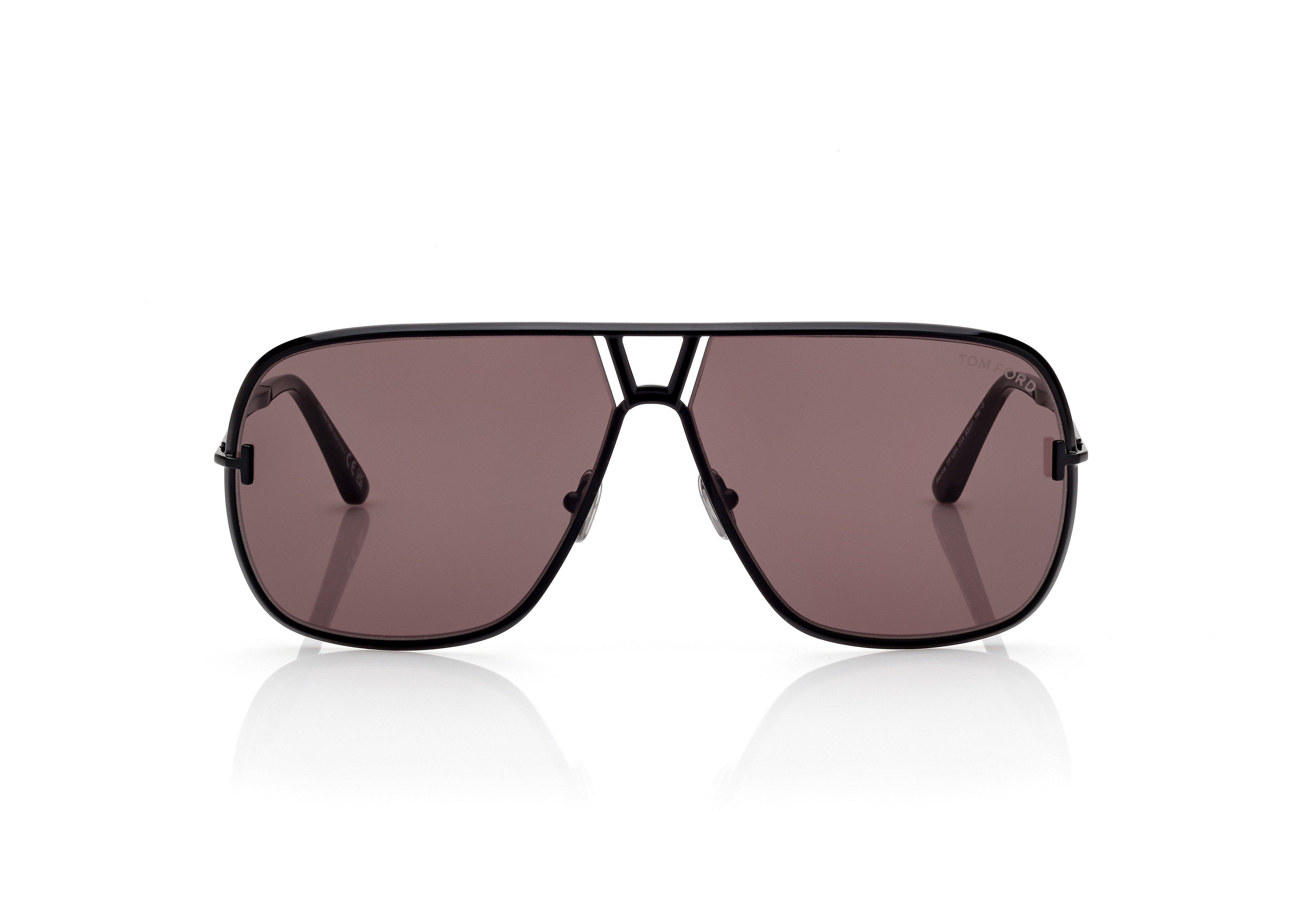
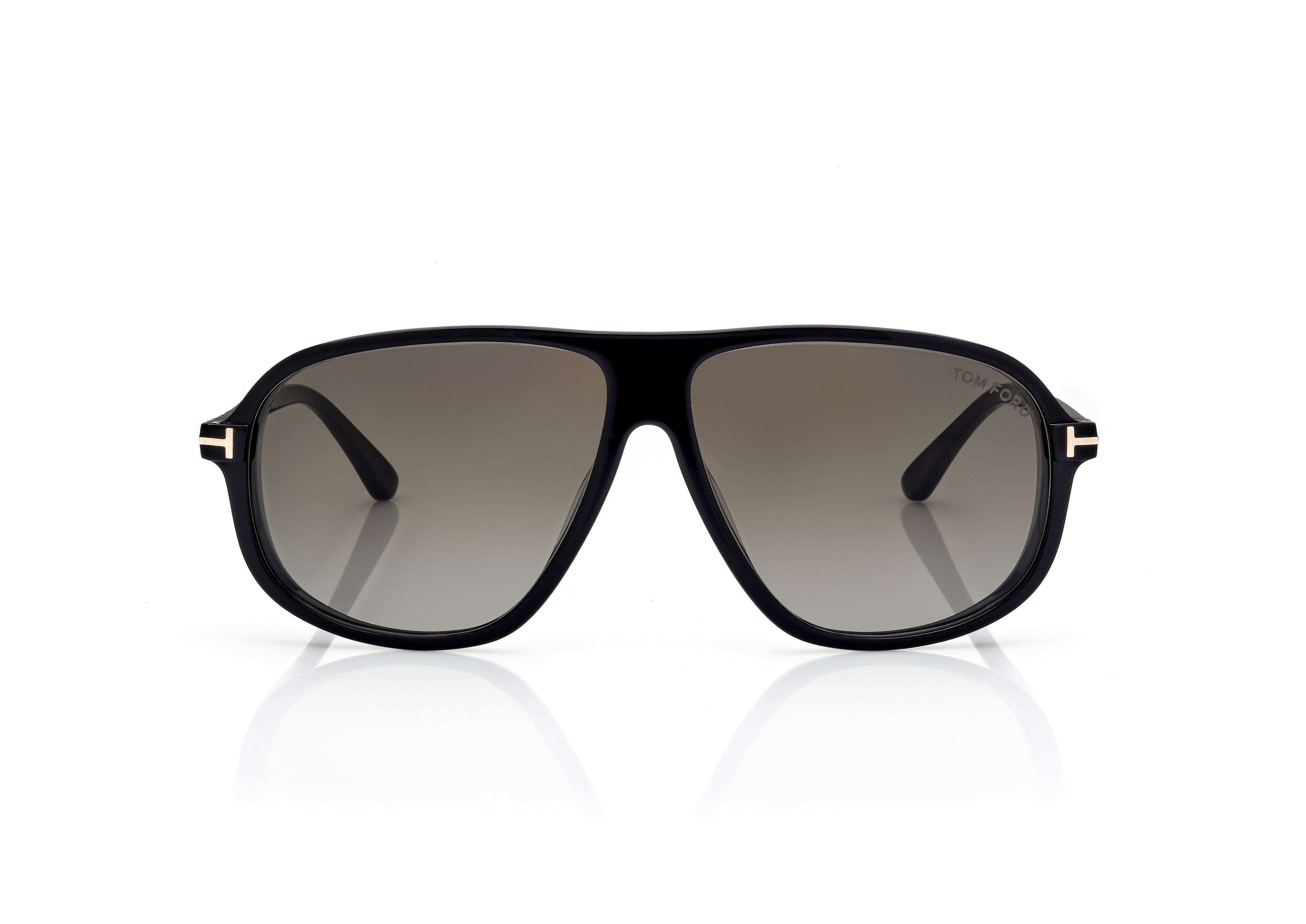
These are the codes that matter. Not the padlock bag, though it sold. Not the oversized sunglasses, though they became shorthand for a certain kind of downtown uniformity in the late 2000s. The overlooked signatures are structural, tactile, engineered to reward the wearer more than the onlooker.
The founding logic
Tom Ford the brand launched in 2005 with a menswear collection shown in New York, followed by womenswear in 2010 and beauty shortly after. The timing was unusual. Ford had left Gucci Group in 2004 after a decade and a half of near-total reinvention — first at Gucci, where he turned a near-bankrupt leather house into a cultural juggernaut, then at Yves Saint Laurent, where he did much the same with less unanimous applause. He was, by then, among the most famous designers alive. He was also contractually barred from using his own name in fashion until his non-compete clause expired.
When the house finally opened, it did so without the theatre that had defined his tenure elsewhere. No ad campaigns shot by Mario Testino in a Marrakech riad. No velvet suits on a runway built to look like a nightclub. Instead, Ford worked through private appointments in a Madison Avenue townhouse. Clients came by referral. The clothes were made to order. The aesthetic was not so much restrained as concentrated — every detail assigned a function, every function performed without余 commentary.
The first men's suits, cut in London and Milan, used a canvas interlining that required a week to set properly. The shoulder line was narrow, the lapel slim but never fashionably so; it tracked the collarbone and stopped. The trouser broke once, just above the shoe. These were not innovations. They were refinements of a mid-century silhouette, executed with the kind of facture you associate with Savile Row or the better Neapolitan workshops. What made them Ford's was the insistence that every seam, every dart, should resolve invisibly. The suit should look like it required no effort to make, and no thought to wear.
This was, one suspects, a deliberate rejection of the logomania he had helped create at Gucci. The double-G belt, the Bamboo bag, the Flora print — all of these were legible from across a room, which was the point. Tom Ford the house would work at a different distance. You had to be standing next to someone, or sitting across a dinner table, to register the quality of a mother-of-pearl shirt button or the way a jacket's silk lining moved independently of the shell.
The accessory vocabulary
Handbags arrived later, in 2010, and they carried none of the exuberance that had defined Ford's work elsewhere. The first styles — the Natalia, the Alix, the Jennifer — were named after women, not after hardware or a founding myth. The shapes were familiar: a structured top-handle, a soft shoulder bag, a box clutch. What distinguished them was a kind of material honesty. Calf leather was calf leather, not embossed to look like something rarer. Crocodile, when it appeared, was left matte, never glazed to a hard shine.
The house developed a signature closure around this time: a metal frame that doubled as a handle, with a turn-lock mechanism recessed into the body of the bag. It appeared on the Alix and later on the Icon, a top-handle style that became one of the house's few recurring bestsellers. The lock itself was engineered to sit flat, so the bag could rest on a table without tipping. The clasp required a quarter-turn, not a snap, which meant it opened silently. These are not the details that drive social media impressions. They are the details that make a bag worth carrying for a decade.
Ford also designed a line of small leather goods with an unusual feature: the interior was finished to the same standard as the exterior. A cardholder in black calf might have a lining in contrasting grey, but the edges would be burnished, the stitching would run at the same six-stitch-per-inch interval, and the logo — when it appeared — would be debossed, not printed. This approach is common in trunk-making, less so in accessories meant to be replaced seasonally. It suggested a client who might open a wallet in private and notice.
The Peter Hawkings era and after
Tom Ford stepped back from the house in 2022, around the time Estée Lauder Companies acquired the brand for $2.8 billion. Creative direction passed to Peter Hawkings, who had worked alongside Ford since the Gucci years and served as head of menswear at Tom Ford since 2019. The appointment made sense on paper: Hawkings knew the atelier, knew the codes, knew which details mattered and which were negotiable.
His first full collections, shown in 2023 and early 2024, held the line. The silhouettes remained narrow, the palette anchored in black, navy, chocolate, and cream. He introduced a new bag, the T Twist, with a gold-plated monogram closure that felt, for the house, almost declarative. But the construction stayed consistent: structured frames, recessed hardware, linings that extended the material language of the shell. Hawkings seemed to understand that Tom Ford's real signature was not a look but a threshold of finish.
That said, the house now operates at a scale that requires more than bespoke tailoring and private appointments. There are freestanding boutiques in two dozen cities. There are seasonal collections that must move through wholesale. There is a beauty line that accounts for the majority of revenue and trades, inevitably, on the Ford name and the associations it carries — sex, glamour, a certain kind of controlled excess. The question facing Hawkings, and facing the house, is whether the overlooked codes can survive that expansion. Whether a turn-lock clutch, engineered to click just so, can hold its own against the noise.
What persists
There is a fitting room on the second floor of the Tom Ford Madison Avenue flagship, and if you ask, they will bring you a jacket to try. Not to buy — this is still a made-to-order house for tailoring — but to understand the cut. The jacket will arrive on a wooden hanger, the sleeves stuffed with tissue to hold the shoulder shape. You will notice, when you slip it on, that the lining is cool against your shirt, because it is cut loose enough to allow air to move between the layers. You will notice that the lapel does not pull when you button the front, because the canvas has been shaped over a form and left to rest. You will notice, if you turn to the mirror, that the jacket does not announce itself. It simply fits.
This is the work. Not the runway image, not the ad campaign, not the logo worked into a buckle or a clasp. The work is in the tolerance, the lining, the quiet click of a lock meeting its plate. It is in the belief, increasingly uncommon, that a client might notice these things and find them worth paying for. Whether that belief can survive the logic of a publicly traded beauty conglomerate remains to be seen. For now, the jacket is still cut the same way. The lock still clicks. And if you know where to look, you can still find the codes that matter.