The Pistol boot arrived in 2006, and it still arrives every autumn
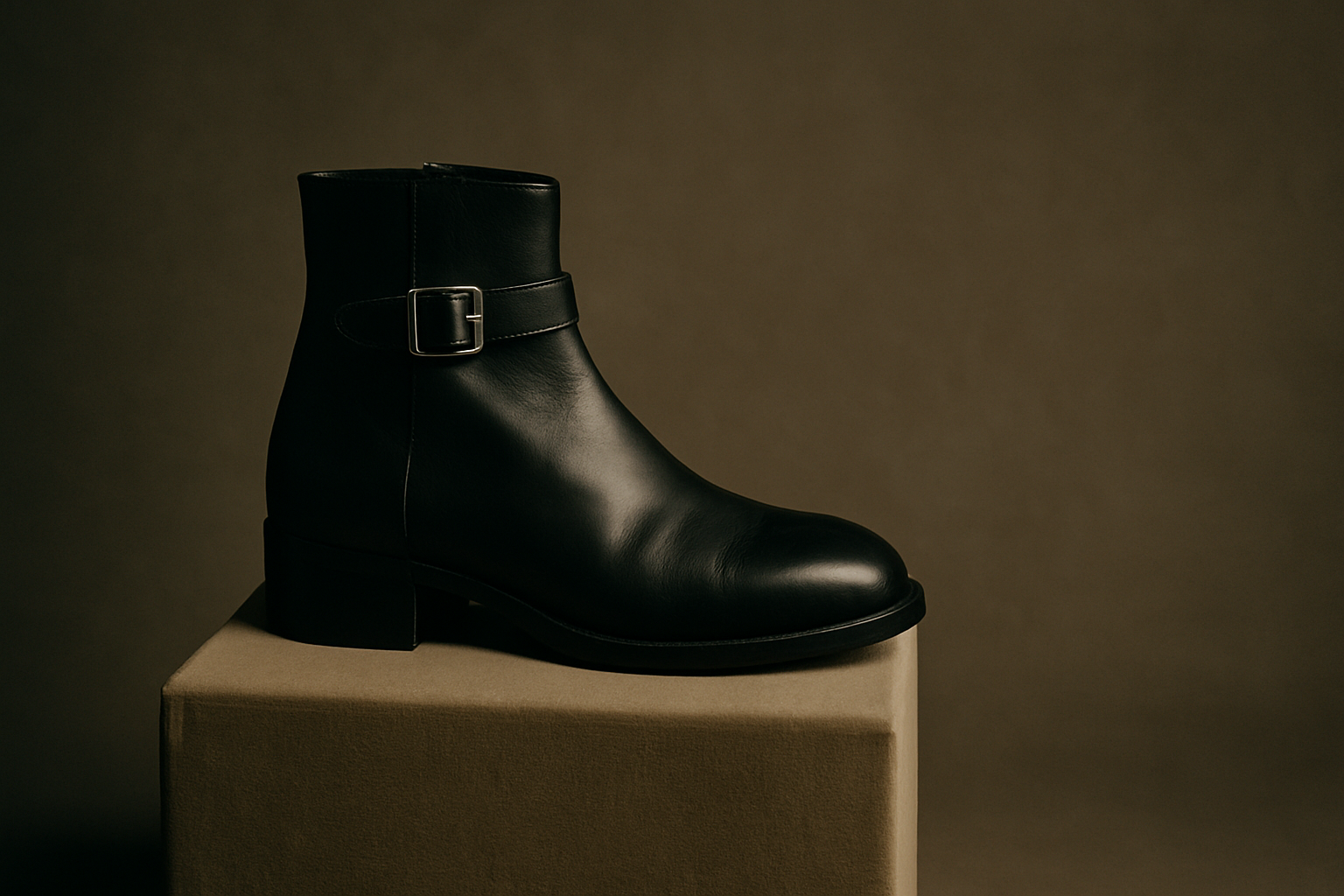
The Pistol boot arrived in 2006, and it still arrives every autumn. Black leather, ankle-height, a single strap with a silver buckle, and a toe that splits like a hoof. It is not subtle. It is also not a gimmick. Women wear them until the sole separates, then replace them with the same pair. That is unusual for a fashion house, and it tells you something about Acne Studios before you look at anything else.
The Swedish label was founded in 1996 by Jonny Johansson and three others as part of a creative collective called ACNE — an acronym for Ambition to Create Novel Expressions, which is the sort of name you come up with in the nineties and quietly stop explaining by the early 2000s. The first product was a run of raw denim jeans with red stitching, given away to friends in Stockholm. The jeans were good. People asked where to buy them. Johansson, who had studied at the city's Beckmans College of Design, started making more.
By 2000, Acne Studios had formalised into a fashion house. Johansson became creative director, a role he still holds. The early collections were spare, androgynous, and built on denim and knitwear rather than tailoring. The palette leaned grey, black, navy, with occasional flashes of cobalt or rust. The silhouette was narrow but not tight — trousers sat low, jackets cropped short, sleeves ended above the wrist. It was a look that worked in Södermalm and Shibuya and Shoreditch without announcing where it came from.
What set Acne Studios apart was not a signature print or a house code but a kind of restraint. Johansson designed clothes that felt considered rather than conceptual. A wool overcoat would have clean lines and no lapel, a sweater would be slightly oversized with ribbing at the cuffs, a leather jacket would be cut from lambskin so soft it moved like cloth. The details were there — a specific shade of grey, a particular weight of cotton — but they did not shout. The brand became known for pieces that lasted, both materially and aesthetically, which is not the same as being timeless. These were clothes that aged well because they were designed with wear in mind.
The defining era
Acne Studios hit its stride in the late 2000s and early 2010s. The Pistol boot became a fixture. The Jensen boot followed — Chelsea-style, elastic gussets, a slightly higher shaft. Both were made in Italy, both cost around £400, and both sold steadily for years. The brand expanded into outerwear, where it excelled. The Velocite leather jacket, introduced in 2010, was a biker cut from buttery lambskin, unlined, with minimal hardware. It draped rather than stood stiff. You could wear it over a T-shirt or a suit jacket, and it worked either way. It still does. Prices have climbed — the Velocite now starts at £1,800 — but the cut has not changed.
Knitwear became another anchor. Acne Studios produces wool sweaters in a weight that sits between fine-gauge and chunky, usually with a ribbed mock neck or a simple crew. The yarn is soft enough to wear against skin, heavy enough to hold its shape. The house also makes a merino cardigan with an oversized fit and deep pockets that has been in the line, with minor variations, since 2008. It costs around £350. People buy it, wear it for five years, then buy another.
The brand's tailoring, when it appeared, was deliberately loose. Trousers were wide-legged and pleated, blazers boxy and short. This was not Savile Row, and it was not trying to be. Johansson worked with softer fabrics — wool flannel, cotton drill — and avoided structure. The effect was casual, almost anti-formal, which suited the way people were beginning to dress in cities where a suit no longer meant anything specific.
Acne Studios opened stores in London, Paris, New York, Tokyo. The interiors were minimal — polished concrete, white walls, steel racks. The clothes hung with space between them. There were no logos on most pieces, just a small leather patch or a discreet label. The brand was not trying to be quiet, exactly, but it was not trying to be loud either.
Where it stands now
Johansson is still at the helm. That is rare for a brand of this scale — Acne Studios is now owned by a Belgian investment firm, but creative control has remained consistent. The collections still pivot on outerwear, denim, and knitwear. The palette has loosened slightly. Recent seasons have included more colour — olive, burgundy, pale pink — and more prints, though nothing garish. The silhouette has shifted wider. Trousers are fuller, coats longer, sweaters more voluminous. This tracks with broader trends, but Acne Studios has done it without lurching.
The price point has climbed. A wool overcoat that cost £600 in 2012 now runs closer to £900. The Velocite, as mentioned, is £1,800. Jeans start at £250. This is not unreasonable for a European brand producing in Italy and Portugal, but it does mean Acne Studios is no longer an entry-level choice. You are paying for fabric, construction, and a design language that has been refined over two decades. Whether that is worth it depends on how you wear clothes and how long you keep them.
What to buy first
If you are coming to Acne Studios now, start with the Jensen boot or the Pistol. Both are made from full-grain leather, both will last, and both have enough character to anchor an outfit without overwhelming it. The Jensen is more versatile. The Pistol is more distinct. Either will cost you around £450.
For outerwear, the Velocite is the obvious choice if you can afford it. If not, look at the brand's wool overcoats. The double-breasted styles are boxier and more casual than they sound. They work over jeans and a sweater, which is how most people will wear them. Expect to pay £800 to £1,000.
Knitwear is a safer entry point. The merino cardigan is £350 and will outlast cheaper alternatives by years. The ribbed mock-neck sweater is £280 and works under a jacket or on its own. Both are made in Italy, both are cut generously, and both will soften with wear without pilling.
Denim is where Acne Studios started, and it is still strong. The fit has loosened — most styles now are wide-legged or relaxed straight — but the fabric is substantial. Expect 13oz or 14oz denim, selvedge on some styles, and a long inseam that assumes you will have them hemmed. Prices start at £250. That is steep for jeans, but these are not jeans you will replace in two years.
Tailoring is trickier. Acne Studios makes excellent trousers — wide, pleated, usually in wool flannel or cotton twill — but the blazers are an acquired taste. They are short, boxy, and designed to be worn open. If you want a jacket that buttons and looks sharp, go elsewhere. If you want something that works over a T-shirt and looks considered, try the single-breasted wool styles. They start around £700.
Avoid the logo pieces unless you are certain. Acne Studios produces T-shirts and hoodies with the house name printed across the chest. They are fine, but they are not why you buy from this brand. The strength is in the pieces that do not announce themselves.
The long view
Johansson gave an interview in 2015 where he said he did not design for trends. That is easy to claim and hard to prove, but Acne Studios has come closer than most. The Pistol boot is eighteen years old. The Velocite is fourteen. The merino cardigan is sixteen. These are not archive pieces. They are current stock. You can walk into a store today and buy the same boot that was in the first lookbook.
That continuity is the point. Acne Studios is not a house built on reinvention. It is built on refinement. The clothes are better now than they were in 2006, but they are not radically different. The cuts are sharper, the fabrics heavier, the details more precise. But the underlying idea — clothes that work, that last, that do not demand attention — has not changed.
You will pay for that. But you will also wear it.