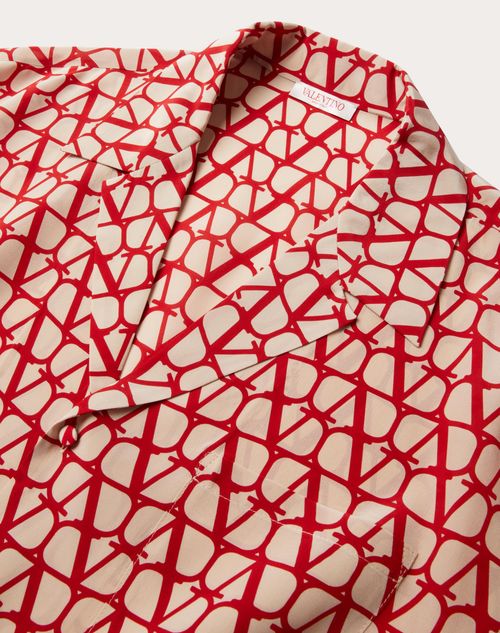
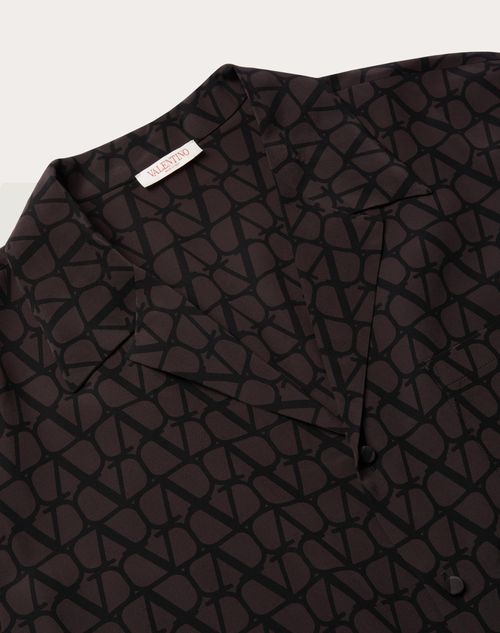
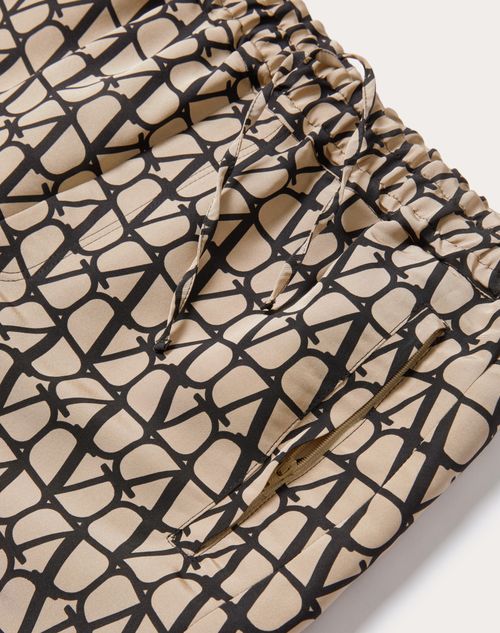
The red is not a metaphor
The red is not a metaphor. Valentino red—Rosso Valentino, Pantone 18-1662—was registered in 1959, the year after the house opened. It appears in evening gowns, in the lining of a blazer, in the sole of a flat. It is not symbolic. It is structural, the way a load-bearing wall is structural.
Valentino Garavani opened his atelier on Via Condotti in 1960 with business partner Giancarlo Giammetti. Rome, not Paris. The first collection showed to Italian buyers and a small press contingent. Within two years, Elizabeth Taylor wore Valentino to the Rome premiere of Spartacus. The house built its reputation on occasion dressing—gowns for women who attended things that required gowns—and on a specific kind of restraint. Embellishment, yes, but always in service of the body underneath. No garment louder than the person wearing it.
Valentino himself retired in 2008. Between then and 2016, the house moved through creative directors with varying degrees of friction: Alessandra Facchinetti for two years, Maria Grazia Chiuri and Pierpaolo Piccioli as a duo for eight, then Piccioli alone. That solo tenure—2016 to 2024—is the Valentino most shoppers encounter now in boutiques and on resale platforms. Piccioli leaned into colour, volume, and a kind of romantic maximalism. The PP era, as it's sometimes called. Tulle, ruffles, tonal dressing, Pantone pink. He moved the house toward a wider emotional register and a younger customer base.
In March 2024, Alessandro Michele took over as creative director. Michele had spent seven years at Gucci before an abrupt exit in 2022. His first Valentino collection debuted in September 2024 for spring 2025. The aesthetic is distinct: archival references, dense pattern, historical pastiche, a magpie sensibility. Lace over leather. Broderie anglaise with tailored trousers. The silhouette is often elongated, the styling dense. Early response has been polarised, which is typical for a directional shift of this scale.
What You're Buying Into
Valentino operates across three main categories: haute couture, ready-to-wear, and accessories. The couture is rarified and requires an appointment. Ready-to-wear is where most engagement happens. Accessories—particularly the Rockstud line and various iterations of structured top-handles—drive a significant portion of revenue.
Pricing is high-tier contemporary. A cotton poplin shirt starts near $900. A wool-blend coat runs $3,200 to $5,500. Evening gowns in silk or duchesse satin begin around $4,800 and climb quickly depending on construction. Bags range from $1,400 for a small crossbody to $4,500 for a top-handle in calfskin. Shoes—Rockstuds, mostly—fall between $900 and $1,600.
The Rockstud, introduced in 2010, is the house's most recognisable accessory. A pyramid stud applied to a shoe, a bag, a belt. It's been done in patent, in matte leather, in metallics, in cage formations and single-strap iterations. The stud itself is brass-toned or platinum-toned, never raw metal. It is ubiquitous in a way that some find reassuring and others find overexposed. Resale value holds relatively well for the shoe; less so for the bag, which saw saturation.
The VLogo—a graphic V rendered in gold-tone or silver-tone hardware—appeared more prominently under Piccioli. It sits at the centre of a belt, on the flap of a shoulder bag, as a closure on a pump. It is less aggressive than the Rockstud but still legible from across a room.
The Piccioli Catalogue
If you are shopping Valentino now, much of what you will encounter in-store or online was designed under Piccioli. This is not a liability. His work is wearable, often beautiful, and occasionally transcendent. The haute couture shows between 2019 and 2023 were some of the strongest in Paris. But the ready-to-wear can feel uneven. There are standout pieces—a wool crepe dress with a clean shoulder line, a double-breasted coat in camel—and there are pieces that lean too far into decoration without enough underlying structure.
What to look for: tailoring. Valentino's tailoring under Piccioli was precise. A blazer from this period will have a shaped waist, a strong shoulder, and a sleeve set that doesn't pull. The trousers are high-waisted, often with a wide leg, cut to sit just above the ankle bone when hemmed. These pieces hold their shape. They press well. They work in a wardrobe that requires formality.
What to approach with caution: the tulle. Piccioli loved tulle. Tulle gowns, tulle overlays, tulle skirts in midi and maxi lengths. Some of this is extraordinary. Much of it is difficult to wear outside of a specific occasion. Tulle requires care, volume, and a certain commitment to being perceived. If you do not want to be looked at, do not buy tulle.
The knitwear from this era is good. Cashmere sweaters in block colours, often oversized, sometimes with a subtle VLogo jacquard. These are not investment pieces in the sense of appreciating value, but they are well-made and they last.
The Michele Shift
Michele's first collection has not yet hit stores in full as of this writing. What has been released—pre-fall pieces, early spring deliveries—signals a sharp turn. The silhouette is longer. The styling is busier. There is lace where there was once clean cotton. There is print where there was once solid colour.
This is not inherently bad. Michele has a point of view, and that point of view has commercial precedent. His Gucci tenure proved he could move product. But it is a different house now. If you loved the Piccioli aesthetic—the monochrome dressing, the airy gowns, the restraint—you may not love what comes next.
If you are buying Valentino as an entry point into the house, consider waiting six months. Let the Michele collections settle. Let the sales associates learn the fit. Let the market reveal which pieces have legs. The first collection from a new designer is often more about establishing territory than about creating wardrobe foundations.
Where the House Stands
Valentino is owned by Mayhoola, a Qatar-based investment group, since 2012. The company is stable, well-capitalised, and patient. It does not need to chase trends for liquidity. That patience allows for creative risk, which is rare at this scale.
The Rome atelier still operates. Couture is still constructed there, mostly by hand. The ready-to-wear is produced in Italy, primarily in the Veneto and Marche regions. The leather goods are made in Tuscany. This is not unusual for a house of this tier, but it is worth noting. The supply chain is short. The quality control is high.
Valentino is not a disruptor. It is not trying to be. It is a house that makes clothing for people who need clothing for specific occasions: a wedding, a gala, a dinner where appearance matters. It does this well. It has done this for sixty years.
The question now is whether Michele's vision aligns with that function. His Gucci was about abundance, about referencing everything at once, about a kind of knowing irony. Valentino has historically been about clarity. One idea per garment. One gesture per look. The tension between those two approaches will define the next chapter.
A friend who works in the Rome atelier said recently that the seamstresses are learning new techniques. More appliqué. More layering. More handwork per piece. The hours per garment have increased. She said this neutrally, the way you'd report a change in weather. It is not good or bad. It is different. The red is still the same.