The skull is still there
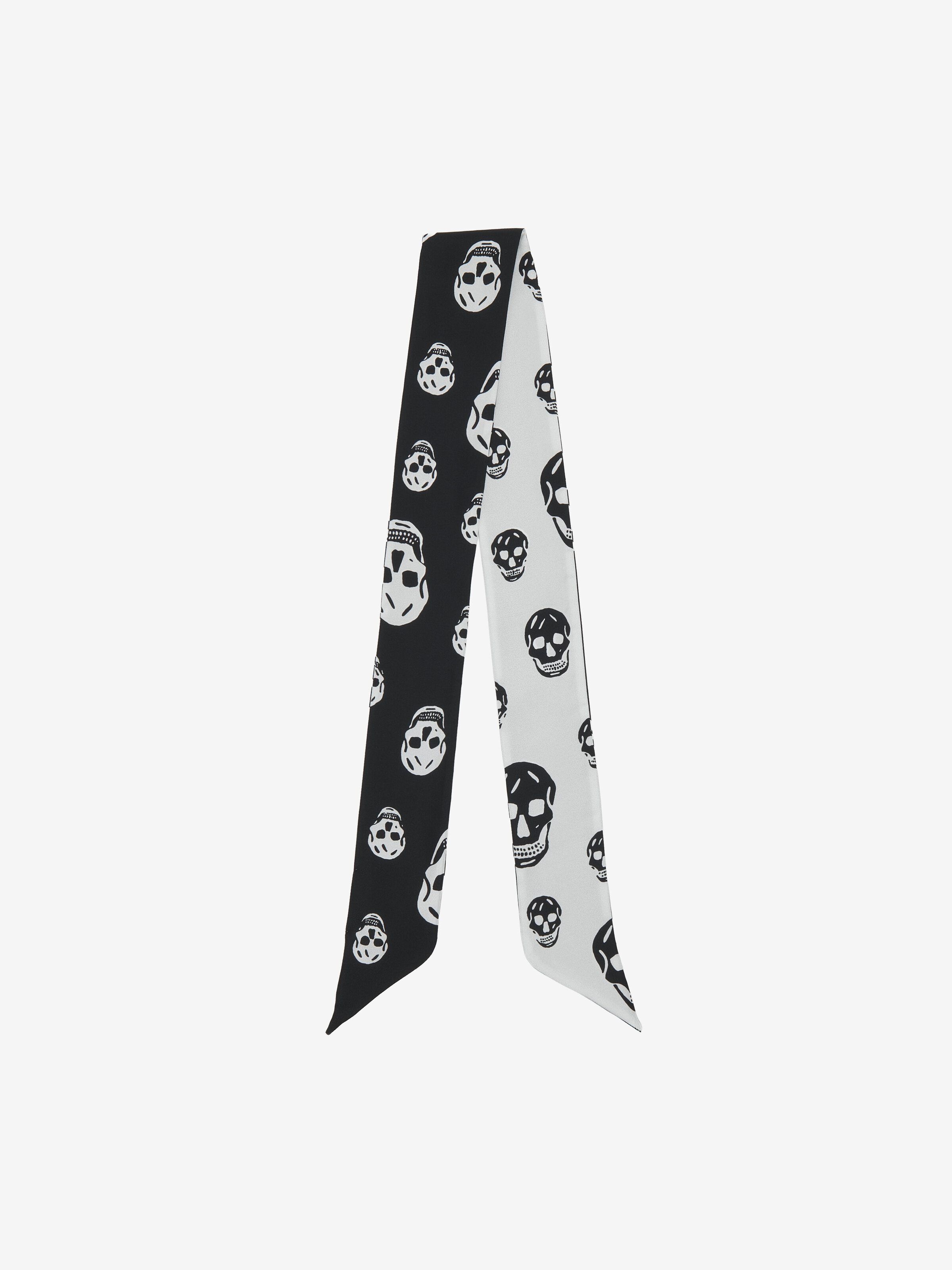
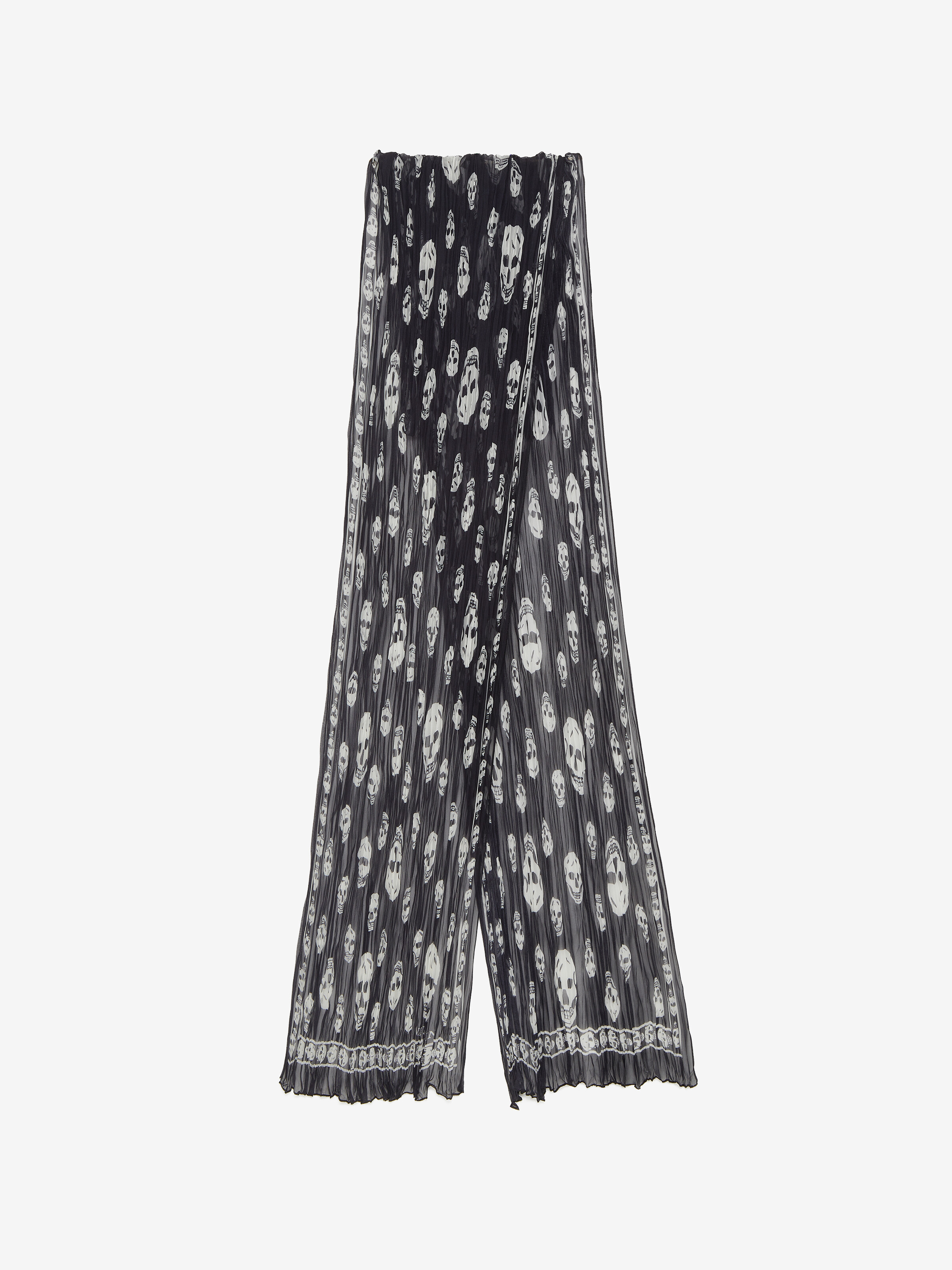
The skull is still there. Cast in silver, pressed into leather, embroidered on silk, rendered in crystal pavé. It appears on scarves, belt buckles, cufflinks, evening bags. The memento mori that Lee Alexander McQueen put on the runway in 1992 has become the house's most legible signature, which is both a triumph of branding and a reduction of what McQueen actually did. The skull was never the point. It was the frame around the point, which was mortality as a condition of making anything worth looking at.
Three eras define the arc of this house, and none of them are neat.
1992–2010: McQueen and the body as battlefield
Lee Alexander McQueen showed his graduate collection from Central Saint Martins in 1992. It was called Jack the Ripper Stalks His Victims. The garments had linings printed with human hair and locks sewn into the fabric. Isabella Blow bought the collection in full for three and a half thousand pounds. This is the origin story the house still references, but what matters is not the theatrics. It is that McQueen understood tailoring as a form of architectural violence. He cut trousers so low they required a pelvic tilt to stay on. He built corsets that reshaped the ribcage. He sent models down the runway in prosthetics, in antlers, in wings, and the clothes were never less important than the spectacle. They were the structure that made the spectacle legible.
The bumster trouser arrived in 1993. Hip bones became a new erogenous zone. By 1995, McQueen was showing Highland Rape, a collection that made English journalists uncomfortable in ways they struggled to articulate. The clothes were shredded, the models bruised with makeup, and McQueen said later he was talking about the rape of Scotland by England, not women by men. Both readings hold. His work operated on multiple registers simultaneously, which is why it has not aged into camp. Camp requires distance. McQueen never gave you distance.
In 1996, Givenchy hired him as creative director. He called the house "dead" in an interview. He stayed there for five years, hating most of it, learning how a French atelier worked. The technique he absorbed—particularly in tailoring and draping—fed directly back into his own line. By the time he left Givenchy in 2001, Alexander McQueen the house had become something else: a commercially viable operation backed by Gucci Group, showing in Paris, building a language that could support both ready-to-wear and haute conceptualism.
The shows from this period are the ones that enter the canon. VOSS, spring 2001, with the mirrored box and the moths. The Widows of Culloden, autumn 2006, with Kate Moss as a hologram. Plato's Atlantis, spring 2010, live-streamed before live-streaming was standard, the prints generated by an algorithm that imagined evolution in reverse. McQueen died six months after that show. He was forty years old. The house had to decide what it was without him.
2010–present: Burton and the inheritance problem
Sarah Burton had been working beside McQueen since 1996. She ran the womenswear atelier. She knew how the patterns were drafted, how the embroideries were developed with the house's primary atelier in London, how McQueen thought about a shoulder line. When she was named creative director in 2010, the appointment made structural sense. It also placed her in an impossible position: continue the vision of a designer whose vision was inseparable from his own psychology, or build something new and be accused of betrayal.
Burton did neither cleanly. She kept the tailoring. She kept the embroidery, which under her direction became even more intricate, often involving techniques pulled from historical dress. She kept the darkness, but she softened it. The clothes became more wearable, which is a word that functions as both praise and critique depending on who is speaking. A Burton-era McQueen gown can take six hundred hours to embroider. It will also have a concealed zip and a shape that does not require a corset. This is not a dilution. It is a translation.
The wedding dress Burton made for Catherine Middleton in 2011 is the most-viewed garment in the house's history. It was watched by two billion people. It was also profoundly conservative: long sleeves, lace appliqué, a silhouette that referenced Grace Kelly. McQueen himself would not have made that dress, but the technique required to construct it—particularly the lace, which was executed by the Royal School of Needlework—was consistent with the house's material standards. The dress secured Burton's position. It also narrowed the public's perception of what McQueen under Burton could be.
The collections since have worked within that narrowed frame. There is consistent excellence in the tailoring. The embroidery remains among the best produced by any house in Paris. The references are legible: medieval armour, Victorian mourning dress, the Scottish highlands, the structure of bones and wings. But the shows no longer feel like arguments. They feel like exhibitions of craft, which is a different thing.
Burton's McQueen is a house that honours its past by maintaining its technical standards. It is not a house that uses those standards to say something the past could not have anticipated. Whether that is a failure or a reasonable response to an unreasonable inheritance is still open.
What remains
The archive is in London. It holds more than five thousand garments, most of them from Lee Alexander McQueen's tenure. The house does not loan them out frequently. When it does, the garments tend to dominate whatever exhibition they enter. A McQueen piece has physical presence in a way that most fashion does not. The tailoring is aggressive. The embroidery has actual weight. Even the early pieces, the ones made with no budget, have a density of intention that reads across a room.
The current collection continues to sell. The skull scarf is a steady revenue stream. The Knuckle Clutch, introduced in 2009, is now a house icon in the same way the Tabi is for Margiela or the Baguette is for Fendi. The ready-to-wear moves product. The house is commercially stable, creatively consistent, and technically accomplished.
It is also, in some sense, a monument. The question is whether a monument can also be a living practice, or whether the fact of McQueen's death has turned the house into a site of preservation rather than provocation. Burton has spent fourteen years answering that question with her work. The clothes themselves are evidence, but evidence is not the same as argument.
The last look of Plato's Atlantis was a dress that appeared to be made of reptile skin, digitally printed, the model's shoes so high she moved like she was learning to walk in a new body. McQueen was thinking about what happens when the ice caps melt and humans return to the sea. He was also thinking about print technology, about how a photograph of a skin could become a second skin. The dress is in the archive now, behind glass. It still looks like it is moving.