The skull scarf sells
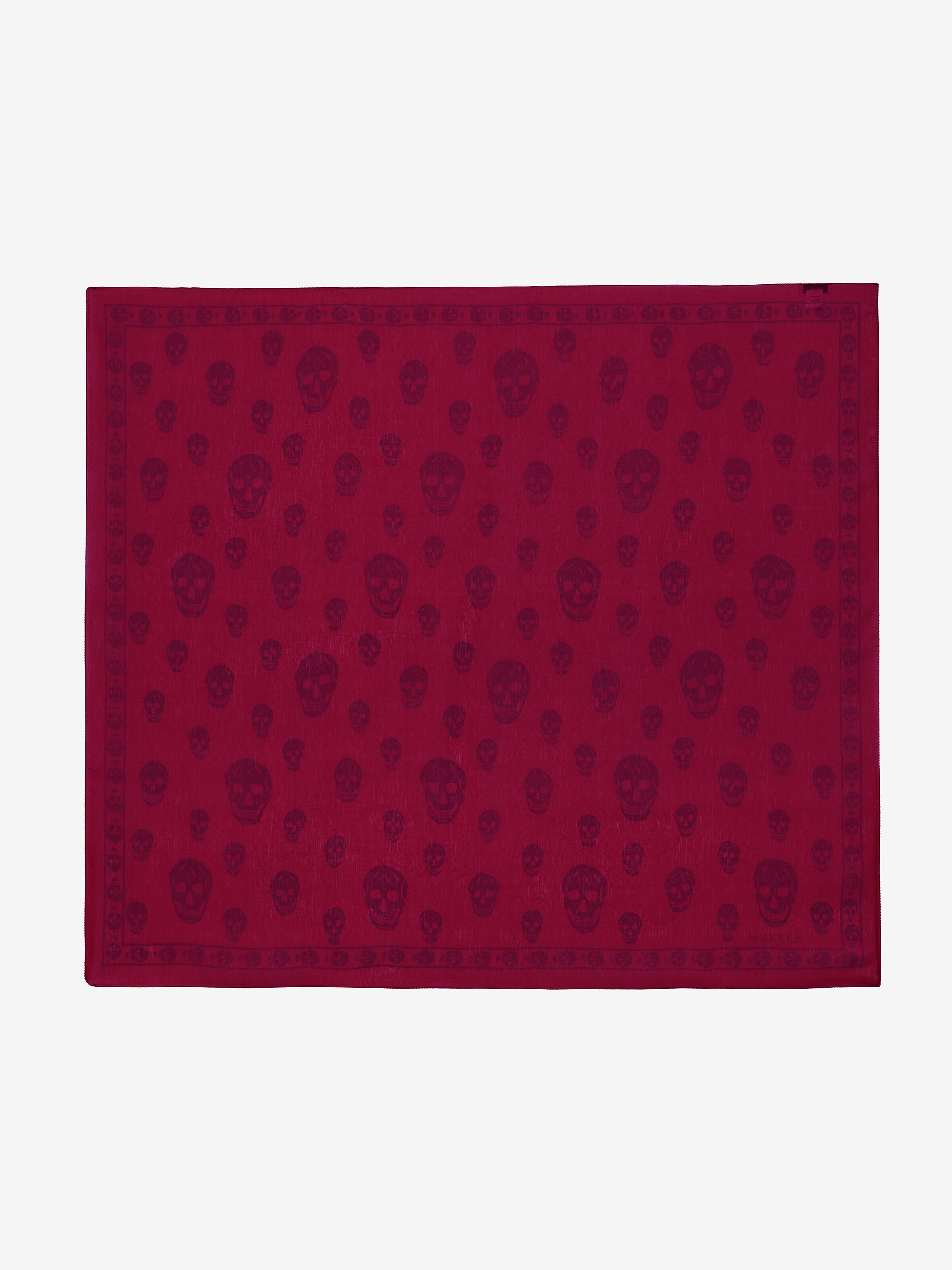
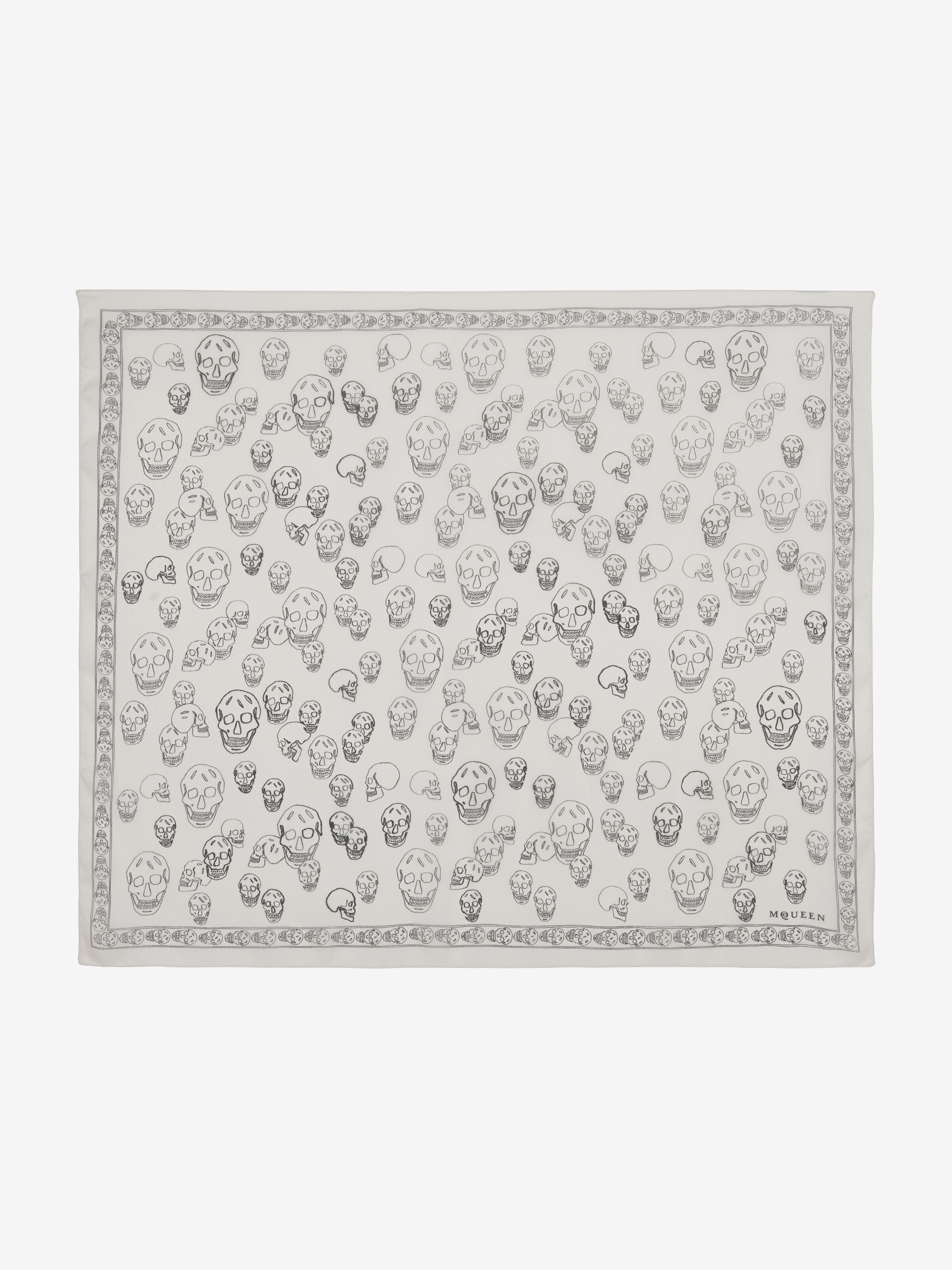
The skull scarf sells. It sells in airport duty-free, in department stores from Tokyo to Toronto, and on the resale platforms where it circulates like minor currency. Silk twill, roughly 130cm square, printed with one of Alexander McQueen's signature motifs—a human skull rendered in various states of baroque embellishment. You can buy one for around £300. You will see three on any given afternoon in Knightsbridge. This is the house's gateway object, the piece that moves volume and makes introductions. It is also, in its own way, an honest starting point. McQueen always understood that beauty and death share a border.
The founder and the myth
Lee Alexander McQueen left school at sixteen and went to Savile Row. He apprenticed at Anderson & Sheppard, then moved to Gieves & Hawkes, learning how a jacket should sit and where a seam belongs. This was not romantic. It was six days a week cutting cloth for men who would never know his name. But it gave him something most fashion designers lack: a technical foundation that could support almost any conceptual weight.
He studied at Central Saint Martins. His 1992 graduate collection, "Jack the Ripper Stalks His Victims," featured coats with red lining meant to evoke Victorian violence. It was bought in full by Isabella Blow, the stylist and editor who would become his champion, muse, and eventual tragedy. She paid in instalments. He was twenty-three.
What followed was a run of collections that remain, even now, difficult to contextualise within the broader industry. "Highland Rape" in 1995. "The Hunger" in 1996. "Voss" in 2001, with its mirrored cube and live moths. These were not fashion shows in the conventional sense. They were staged provocations, technically accomplished and emotionally unsparing. The tailoring was impeccable—those Savile Row years never left him—but it was deployed in service of narratives about power, violation, and the female body as both battlefield and monument.
He died in 2010, at forty, the day before his mother's funeral. The industry mourned. The work remained.
What Sarah Burton built
Sarah Burton had been at McQueen's side since 1996. She understood the atelier, the cut, the way a sleeve should move. When she took over as creative director after his death, the question was not whether she could design—she had been doing that, quietly, for years—but whether the house could survive the loss of its namesake without collapsing into pastiche or softening into something commercially safe but creatively inert.
She did neither. Burton's McQueen retained the house's technical rigour and its fascination with the body, but she introduced a different emotional register. Where Lee McQueen's work often felt like a wound being examined, Burton's felt like armour being carefully fitted. Her tailoring was sharp, her embroidery extraordinary—the wedding dress she made for Catherine Middleton in 2011 demonstrated that on a global stage—and her evening pieces combined structural ambition with a kind of restrained opulence.
She stayed for thirteen years. Long enough to establish that Alexander McQueen could exist as a living house, not a heritage brand trading on archive imagery. Long enough to build a vocabulary that honoured the founder's vision without imitating his voice. She left in 2023. Seán McGirr, formerly of JW Anderson, took the helm in October of that year.
The current house and where it stands
McGirr's first collections have been met with the kind of scrutiny that attends any major transition. He has leaned into McQueen's tailoring legacy—the cut remains sharp, the shoulders strong—but introduced a looser, more fluid approach to draping and a brighter, less funereal palette. Whether this constitutes a successful evolution or a dilution of the house codes is still being argued. The tailoring is competent. The embroidery, handled by the same atelier that worked under Burton, remains exceptional. The question is one of voice: can McQueen speak in a register that is neither Lee's gothic intensity nor Sarah's quiet strength, and still sound like itself?
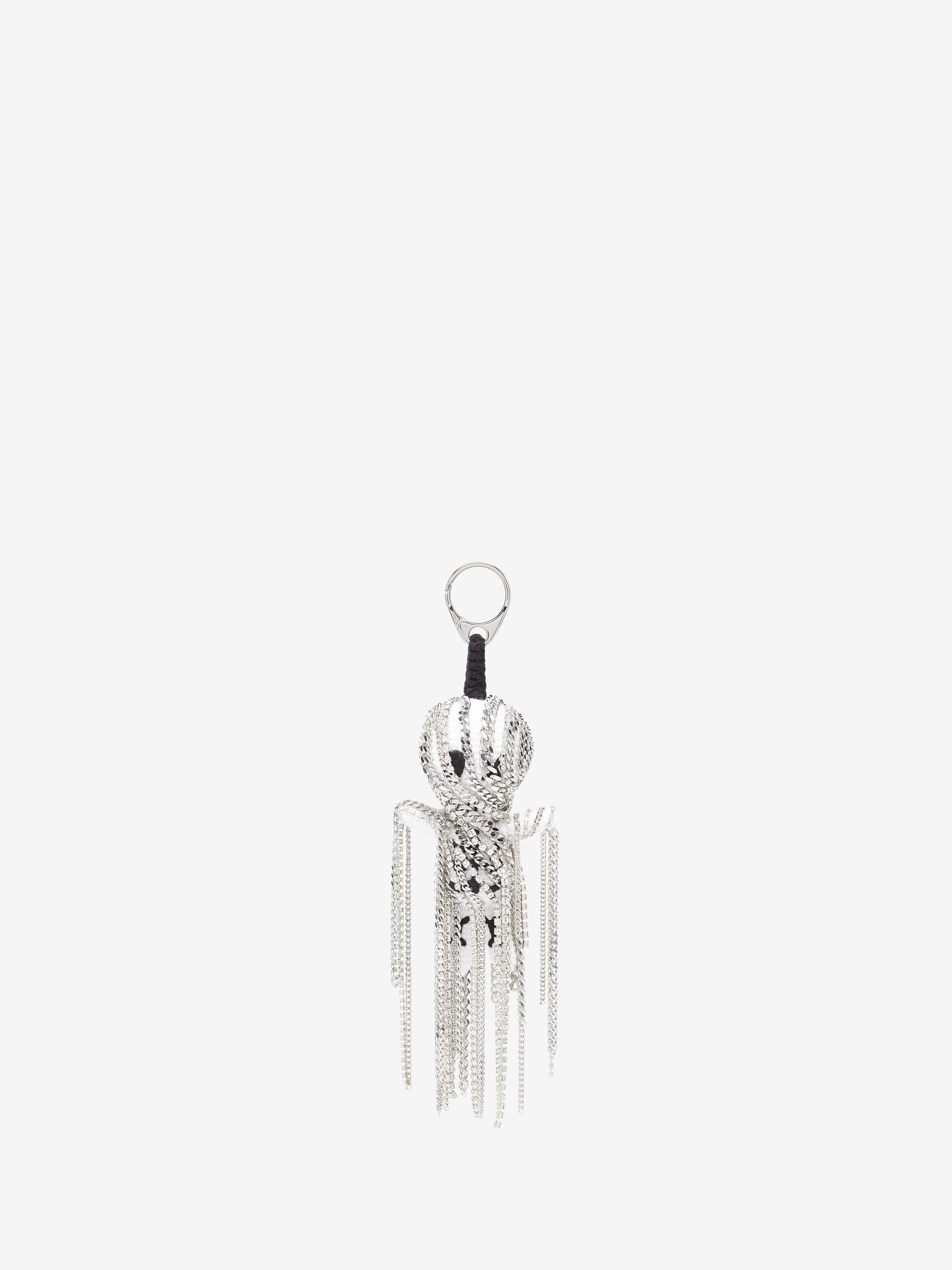
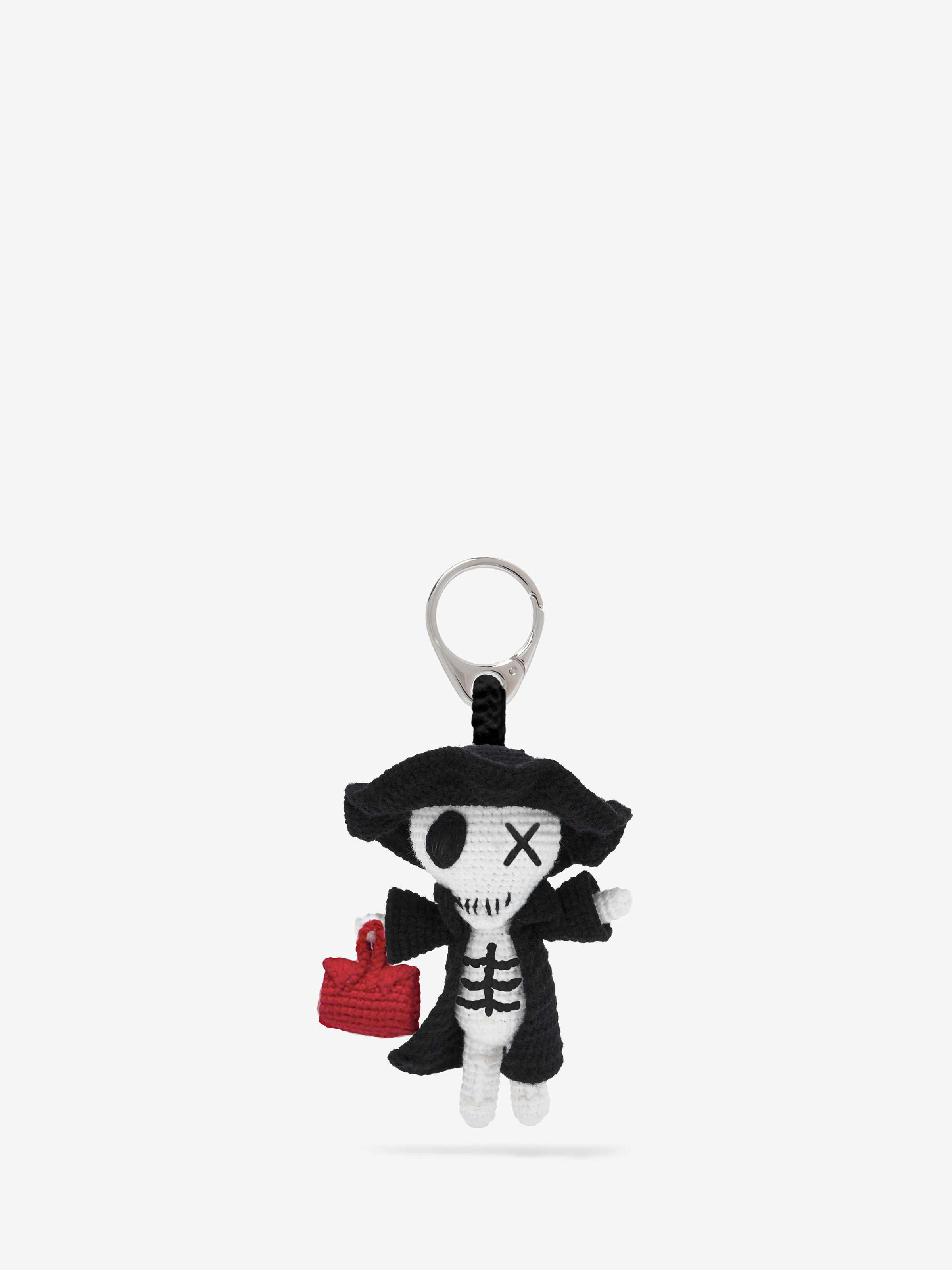
The market, at least, continues to respond. Alexander McQueen sits within the Kering portfolio alongside Gucci, Bottega Veneta, and Saint Laurent. It generates substantial revenue—estimates place it north of £500 million annually—and maintains a retail footprint that spans four continents. The skull motif, in particular, has proven endlessly adaptable. It appears on scarves, on card holders, on the knuckle clutch (a hard-shell box bag shaped like a row of brass knuckles, priced around £1,600), and on the Overseer sneaker, the house's most commercially successful footwear silhouette.
What to buy and what it costs
If you are coming to Alexander McQueen for the first time, the skull scarf is not a bad place to start. It is recognisable without being loud, well-made, and priced at a point—around £300—that feels like an entry rather than a commitment. The silk is good. The print will not fade if you treat it properly. You will see it everywhere, which is either a recommendation or a warning depending on your tolerance for ubiquity.
The Overseer sneaker runs between £400 and £550, depending on material and finish. It is a chunky, exaggerated silhouette with an oversized sole—part of the wave of maximalist footwear that has defined the past five years. The construction is solid. The leather is decent. It is not subtle.
For tailoring, expect to pay £1,800 to £2,500 for a jacket, more if it is part of the main runway line rather than a diffusion piece. The cut is sharp, the shoulder structured, the fabric typically a mid-weight worsted or a wool-silk blend. The house still employs cutters trained in the Savile Row tradition, and it shows in the way a McQueen jacket sits. If you know how a shoulder should balance, you will notice. If you do not, you will simply register that it looks correct in a way that is difficult to articulate.
Evening pieces and embroidered gowns occupy a different price stratum entirely. A runway dress with hand-embroidery can easily reach £10,000 or more. These are not starter purchases. They are the kind of garment you buy when you already know the house and have decided you want a piece of its technical capability in your wardrobe.
The knuckle clutch, mentioned earlier, is a statement object. It is also deeply impractical—metal hardware, minimal interior space, a shape that does not sit comfortably under the arm. But it is unmistakably McQueen, and it photographs well, which is half the point. Around £1,600 will get you the classic version in leather with brass detailing. It is not for everyone. It is not trying to be.
What you are actually buying
When you buy Alexander McQueen, you are buying a relationship to a specific idea of British fashion: technically accomplished, emotionally complex, willing to court discomfort in pursuit of a finished garment that does not look like anything else in the room. You are also buying into a house in transition, one that is still negotiating what it means to move forward without the two creative directors who defined its first three decades.
The tailoring remains exceptional. The embroidery is still handled by artisans who understand how thread should sit against silk. The skull motif, however overexposed, still carries a trace of the founder's fascination with mortality and ornament. Whether the house under McGirr will develop a voice as distinct as what came before is an open question. But the foundation is sound. The craft is there. And the pieces, when they work, still carry a charge that most fashion does not bother attempting.
A friend bought an embroidered evening jacket last year. Black wool, floral motif in silk thread across the back, cut like a Victorian riding coat. She wore it once, to a dinner that did not deserve it, and said it felt like wearing someone else's courage. That is not a bad description of what McQueen, at its best, can do. It is also not something you can get from a skull scarf. But you have to start somewhere.