The sleeve on an Acne Studios coat hits just above the wrist bone
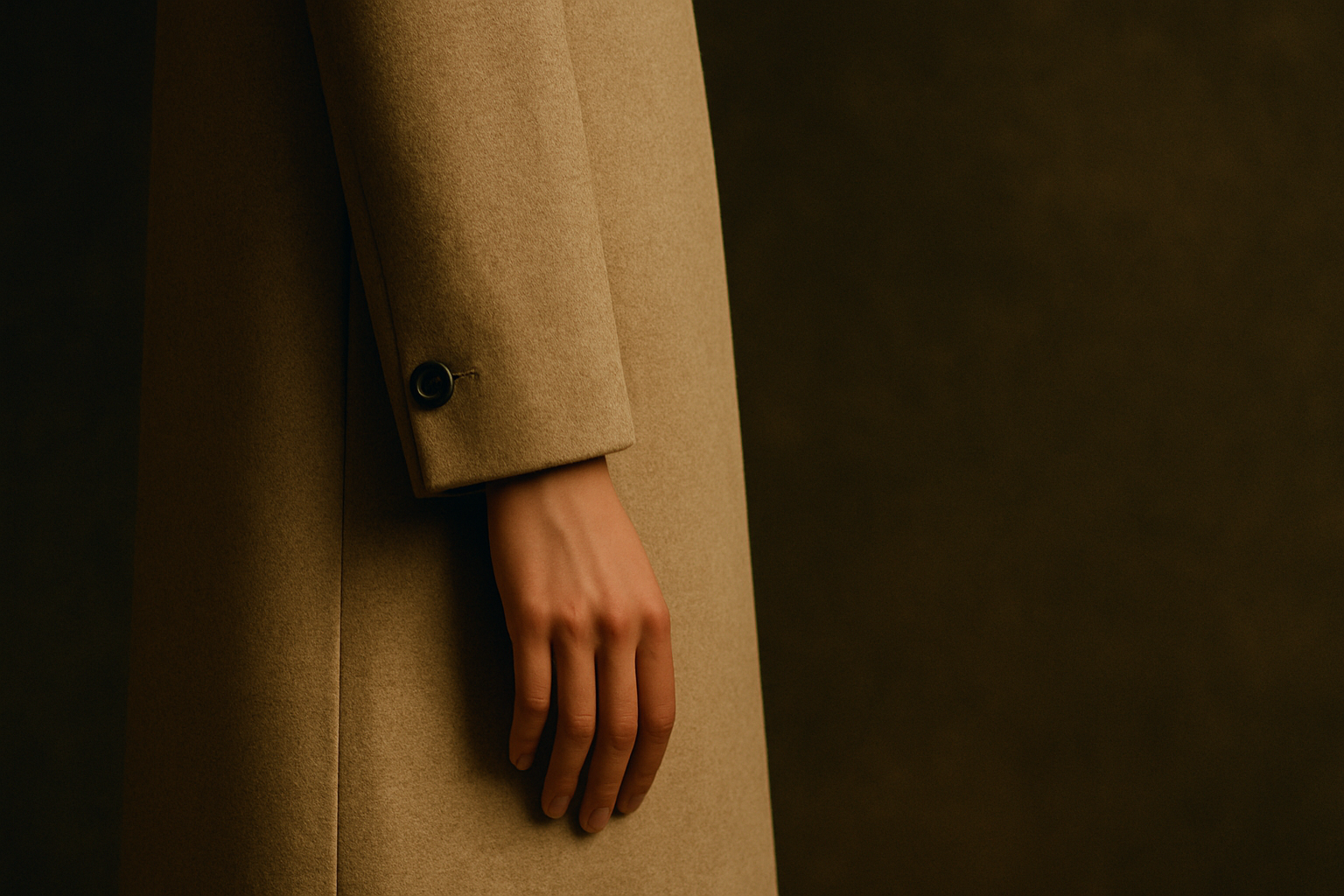
The sleeve on an Acne Studios coat hits just above the wrist bone. Not cropped, not full-length — somewhere that reads as intentional only after you've worn it twice. By the third wear, you realise the proportion is doing most of the work. The coat isn't. That's the tell.
Acne Studios has spent two decades embedding quiet codes into garments that most people credit to good taste rather than good design. The pink label sewn into the back neck. The off-centre button stance on a shirt. The way a trouser sits slightly lower than you'd choose yourself but somehow looks better than what you would have chosen. These aren't hero gestures. They're the furniture of a wardrobe that doesn't announce itself.
The house was never supposed to be a house. Jonny Johansson founded Acne — Ambition to Create Novel Expressions, a name that aged poorly but stuck — in 1996 as a creative collective in Stockholm. The first product was a run of 100 raw denim jeans with red stitching, given to friends. The jeans sold out by accident. Johansson, who had no formal training in fashion, started making more. By 2000, Acne was showing at Paris Fashion Week. By 2006, it had opened a flagship on Rue du Faubourg Saint-Honoré. The trajectory was fast, but the work never looked hurried.
What Johansson built was a vocabulary of near-misses. Tailoring that almost fit. Knitwear that almost matched. Colours that almost worked together. The aesthetic was studied awkwardness, which is harder to pull off than studied perfection. It required a level of control that looked like its opposite. The pink label — originally a placeholder from a ribbon supplier — became the only overt branding. Everything else was inference.
The Codes That Aren't Logos
Acne's recognisable pieces aren't bags or monograms. They're structural tics embedded in the cut. The Canada scarf, introduced in the mid-2000s, is oversized wool with fringed ends and a rectangle of colour that blocks across one end. It's a scarf that photographs well because it creates a shape, not because it carries a logo. You see it on stylists, editors, women who work in architecture. It's one of the few accessories that signals fluency without requiring explanation.
The Pistol boot, launched in 2007, is another. It's an ankle boot with a low Cuban heel and a sharp toe, cut close to the ankle but not tight. The leather is matte, usually black or taupe. The boot works because it doesn't try to be anything other than a boot. No hardware, no contrast stitching, no backstory about Scandinavian minimalism. It's a shape that makes sense under a wide trouser or over a skinny jean, which is rarer than it sounds.
Then there's the Jensen sneaker, a low-top leather sneaker that looks like what a Converse would be if it had been designed in Sweden instead of Massachusetts. The tongue sits flat, the toe is slightly squared, the sole is thin. It's not a statement sneaker. It's a sneaker that lets you make other statements.
These pieces share a logic: they establish proportion without announcing it. They're the opposite of an It bag. An It bag wants to be the reason you bought the outfit. These want to be the reason the outfit works.
What Johansson Actually Does
Johansson is still the creative director, which is unusual for a house that's been through private equity and is now owned by a Scottish investment firm. Most founders exit after the second sale. Johansson stayed, and the work hasn't smoothed out. If anything, it's gotten weirder.
Recent collections have leaned into exaggeration — sleeves that extend past the fingertips, trousers that puddle at the ankle, coats that hit mid-shin when they should hit the knee. The palette has shifted from dusty neutrals to blocks of lavender, mint, rust. The silhouettes are looser, but the precision hasn't slipped. A sleeve that's too long is still a sleeve that's been engineered to be too long in a specific way.
What hasn't changed is the refusal to make hero pieces. Acne shows don't build to a finale look. There's no wedding dress, no gala gown, no bag carried by a celebrity two weeks before the collection drops. The show ends when the models stop walking. The clothes are left to do their own work.
This approach has kept Acne adjacent to fashion rather than inside it. The house shows in Paris but doesn't feel Parisian. It's sold at Dover Street Market but doesn't feel like a streetwear brand. It's worn by people who work in fashion but isn't fashion-fashion. That's the zone Johansson has defended: just left of centre, where the codes are visible only to people who've learned to look for them.
The Retail Contradiction
Acne's stores are stark. White walls, blonde wood, concrete floors. The clothes hang on chrome rails with space between each piece. It's the kind of retail design that makes you feel like you're interrupting something. The staff are polite but not warm. You're not offered a tote bag. The experience is frictionless in a way that creates its own friction.
The contradiction is that Acne's clothes are easy to wear but hard to buy. The sizing runs large and inconsistent. A size 36 trouser in one season fits like a 38 in the next. The website doesn't over-explain. The product descriptions are brief, sometimes terse. You're expected to know what you're looking at.
This works for the customer who already knows. It alienates the customer who doesn't. Acne has never tried to fix that. The house has stayed small by choice, even as it's expanded into Asia and North America. The stores are in cities where people already understand the references. The wholesale partners are retailers who don't need the brand explained to them. It's a controlled burn.
Where the Codes Go Next
Johansson turned 54 this year. Acne is approaching 30. The question isn't whether the house will survive — it's already survived longer than most independent labels manage. The question is whether the codes still register.
The pink label still works. The Pistol boot still sells. The oversized tailoring still photographs well on the right body. But the context has shifted. Quiet luxury became a term, then a trend, then a cliché. Acne predated all of that, but now it's read through that lens. The house that invented studied awkwardness is being credited with studied restraint. It's not the same thing.
Johansson's response has been to push further into the awkwardness. The Spring 2024 collection included trousers with elasticated cuffs, shirts with sleeves that ballooned at the shoulder, coats that looked like they'd been borrowed from someone taller. The palette was soft — pale yellow, powder blue, cream — but the shapes were uncompromising. It was a collection that required you to meet it halfway.
That's the code that matters most. Acne has never dressed you. It's given you the tools to dress yourself, slightly wrong, in a way that looks more right than anything that fits.