The swing coat from Givenchy's autumn collection hangs in the Dover Street Market window like a question mark
The swing coat from Givenchy's autumn collection hangs in the Dover Street Market window like a question mark. Black wool, abbreviated sleeves, a collar that sits somewhere between Peter Pan and Edwardian. It is not quite couture, not quite ready-to-wear in the old sense. It is the sort of garment that makes you wonder what Givenchy is now, and whether the house knows.
Hubert de Givenchy opened his atelier in 1952 with eight million francs borrowed from friends and a conviction that elegance was a matter of subtraction. He was 25. His first collection, shown in a townhouse on rue Alfred de Vigny, included separates — blouses that could be worn with different skirts, a revolutionary idea when Dior was still corseting women into full looks. The press called them 'Bettina blouses' after the model who wore them. Givenchy called them practical. Audrey Hepburn, who met him the following year, called them perfect.
That partnership — Givenchy and Hepburn — became the house's founding myth. The little black dress from Breakfast at Tiffany's, the white column from Sabrina, the pink suit from Funny Face: these were not costumes but arguments. They proposed that a woman could be chic without suffering, that simplicity was not the same as plainness, that a good line mattered more than embellishment. Givenchy cut with a couturier's precision but a modernist's restraint. His tailoring was exact. His palette was narrow. His client list included the Duchess of Windsor, Jackie Kennedy, and Grace Kelly, women who understood that quiet clothes could speak loudly.
He retired in 1995, the same year LVMH bought the house. Since then, Givenchy has had seven creative directors in 28 years. Some left a mark. Most left a collection or two and moved on.
The Tisci decade
Riccardo Tisci's tenure, from 2005 to 2017, remains the house's most coherent modern chapter. He arrived when Givenchy was largely known for its fragrance counter and left it a credible player in ready-to-wear. His aesthetic — dark romanticism, religious iconography, rottweiler prints, sheer panels over skin — had little to do with Hubert de Givenchy's restraint, but it had a point of view. The Antigona bag, introduced in 2010, became a bestseller. The menswear, which leaned into streetwear before that was standard practice, found an audience. Tisci gave Givenchy a voice, even if it wasn't the founder's.
Clare Waight Keller followed in 2017. She was the house's first female creative director, a fact that mattered less than her work at Chloé, where she had proven herself capable of commercial elegance. Her Givenchy was softer than Tisci's, more concerned with tailoring and less with provocation. The Duchess of Sussex wore a Waight Keller gown to marry Prince Harry in 2018, a moment that should have been a turning point. It wasn't. The dress was widely discussed. The house's fortunes were not transformed. Waight Keller left in 2020.
Matthew Williams, appointed that same year, brought a different vocabulary. He had founded the streetwear label Alyx and consulted for Kanye West. His Givenchy leaned into hardware — padlocks, chains, industrial fastenings — and a kind of austere functionality. The clothes looked engineered. The shows were stark. The reviews were mixed. Some praised the modernity. Others noted that modernity without warmth is just coldness. Williams departed in December 2023 after three years.
The interregnum
Givenchy has been without a creative director since. The autumn 2024 collection, shown in March, was credited to the studio. It was competent. It included tailoring, evening wear, and a number of bags that looked like other bags. The spring 2025 collection, shown in September, followed a similar template. There were good coats. There were forgettable dresses. There was no narrative.
This is not unusual. Houses often tread water between appointments. But Givenchy has been treading water, in one form or another, since Tisci left. The question is not whether the next designer will be good — LVMH has resources, and resources usually find talent — but whether Givenchy still has a reason to exist beyond its back catalogue and its perfume business.
The numbers suggest uncertainty. Givenchy does not report standalone financials, but analysts estimate its revenue at around €700 million annually, a fraction of Dior or Louis Vuitton. The brand ranks in LVMH's second tier, alongside Loewe and Celine, but without their momentum. Loewe has Jonathan Anderson. Celine has Hedi Slimane. Givenchy has an interim studio and a legacy it can't quite reconcile with the present.
The boutique on Avenue George V remains elegant. The archive is extraordinary. The house still produces haute couture, though it is shown by appointment rather than on the calendar. But elegance and archives are not strategies. They are starting points.
What remains
There are houses that survive on their founder's vision, even decades after the founder has gone. Hermès is one. Chanel is another. Both have had creative directors who understood that their job was not to reinvent but to interpret, to find new expressions of an existing grammar. Givenchy has not found that interpreter, or perhaps it has not decided what grammar it wants spoken.
The house's strength, when it has one, is tailoring. Not the deconstructed kind, not the oversized kind, but the sort Hubert de Givenchy practiced: precise, architectural, concerned with how cloth falls and where seams sit. Waight Keller understood this. Williams did not. Tisci ignored it entirely and succeeded anyway, which suggests that Givenchy might be one of those rare houses that can sustain two simultaneous identities — one rooted in its past, one invented for its future. But that requires a designer capable of holding both, and those are not common.
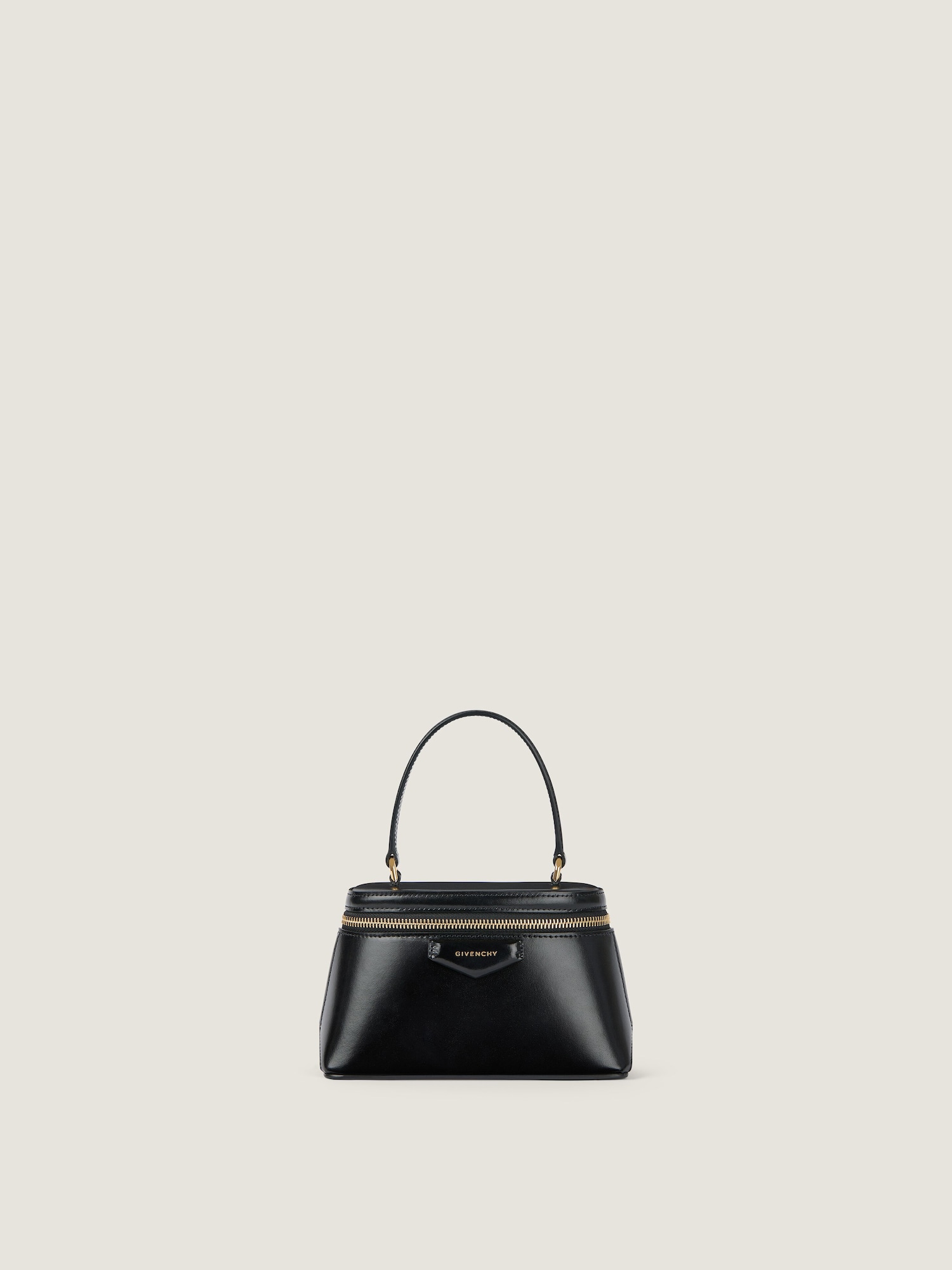
The accessories business is stable. The Antigona remains a seller. The newer bags — the Voyou, the G-Tote — have found modest audiences. The beauty line, particularly the fragrance L'Interdit, performs well. These are not small achievements. But they are not enough to make Givenchy feel necessary, the way Loewe feels necessary now, or the way Givenchy itself felt necessary in 1952.
In the Dover Street Market window, the swing coat is still hanging. It is a good coat. The sleeves are cut at an odd, appealing length. The collar frames the face without fussing over it. It would look right on a dozen different women, which is perhaps the problem. Givenchy, at its best, did not dress a dozen different women. It dressed one woman, perfectly, and let the rest of the world catch up.