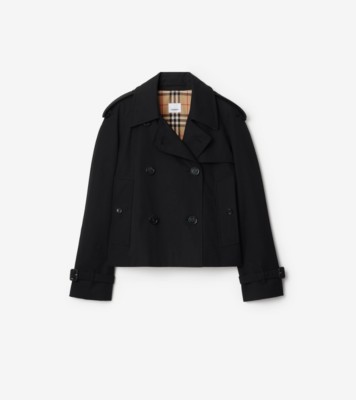
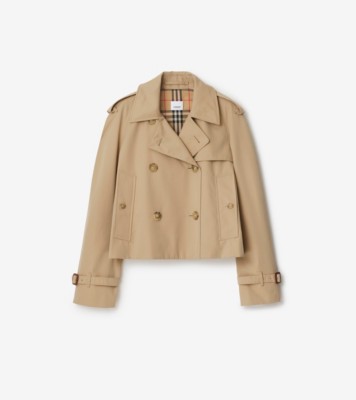
The trench coat at the Imperial War Museum in London hangs behind glass, khaki gabardine still stiff at the shoulders
The trench coat at the Imperial War Museum in London hangs behind glass, khaki gabardine still stiff at the shoulders. It is dated 1918. The label inside reads Burberry. The garment does not explain itself. It was made to repel rain and allow an officer to move through mud, and it did both. That clarity of purpose is the first thing to know about the house.
Thomas Burberry opened his draper's shop in Basingstoke in 1856, twenty-one years old. By 1879 he had patented gabardine, a tightly woven cotton that breathed but did not soak through. The weave was the innovation. Burberry coated yarn before weaving, not fabric after, which meant water ran off the surface while air passed between threads. The result was a cloth that worked.
The British War Office ordered officer coats in gabardine during the First World War. Burberry's version had D-rings for attaching equipment, epaulettes to denote rank, a storm shield across the right shoulder to redirect rain off a rifle, and a belt that could be cinched against cold. The design was not decorative. It was a list of solutions. After the war, men wore the same coat in cities because it worked there too. By 1920, the trench coat was no longer military issue. It was Burberry.
The house grew through function. Roald Amundsen wore Burberry gabardine to the South Pole in 1911. Ernest Shackleton ordered Burberry gear for his Antarctic expedition in 1914. The house outfitted early aviators, supplied the gabardine for the first flight over the Atlantic, and dressed climbers attempting Everest. Burberry did not sponsor adventure. It made the coat that allowed it.
The check and the expansion
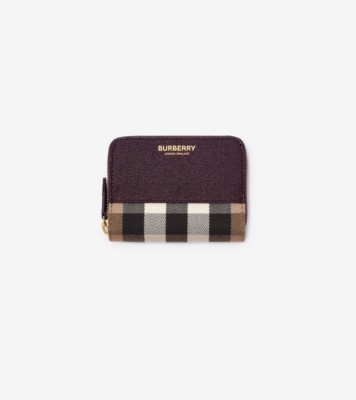
The Burberry check appeared as coat lining in the 1920s. Camel, red, black, and white in a repeating tartan grid. For decades it stayed inside the garment, visible only when a collar was turned up or a coat hung open. In 1967, the house began using the check on umbrellas, then scarves, then luggage. What had been a lining became a logo.
The check made Burberry recognisable at a distance, which was useful for licensing and catastrophic for exclusivity. By the 1990s, the pattern appeared on everything the house made and much it did not. Counterfeit Burberry moved through European markets faster than the real product. In Britain, the check became associated with a specific customer base—young, working-class, volatile—and the tabloids began calling it 'chav couture'. Burberry pulled the check from most of its line by 2004. What had been everywhere became rare again.
Christopher Bailey joined Burberry as design director in 2001, was named creative director in 2004, and became chief creative officer in 2009. He understood that the house had built its reputation on a single garment and then tried to extend that garment into a lifestyle. His work was to return to the coat.
Bailey's first major collection for Burberry Prorsum in 2002 featured trench coats in leather, in lace, in python, shortened to hip length or extended past the knee. The silhouette stayed legible. The fabrication changed. He brought back the check in small doses—a scarf lining, a cuff detail—so that its presence registered as intentional rather than inevitable. He cast Burberry campaigns with British actors and musicians who wore the trench coat as though it had always been theirs: Eddie Redmayne, Cara Delevingne, Romeo Beckham. The house's archive became its future.
Bailey also moved Burberry into digital distribution early. The brand livestreamed its runway shows in 2010, made collections available for purchase immediately after they walked, and built a social media presence that treated customers as insiders rather than aspirants. The strategy worked. Burberry's revenue grew from £715 million in 2002 to over £2.5 billion by 2014. The house was no longer a heritage brand trying to stay relevant. It was a commercial engine with a hundred and sixty years of material to draw from.
Riccardo Tisci and the reset
Riccardo Tisci arrived in 2018. His previous twelve years at Givenchy had been built on dark romanticism, couture technique, and a kind of austere glamour that did not obviously align with Burberry's British pragmatism. The appointment was a break.
Tisci's first move was to replace the equestrian knight logo—used since 1901—with a sans-serif monogram designed by Peter Saville. The interlocking TB referenced Thomas Burberry's initials. The typeface was modern, geometric, flat. The house's visual identity, which had leaned on heritage cues for decades, suddenly looked like a contemporary streetwear label.
The clothes followed the same logic. Tisci's debut collection in September 2018 featured oversized trench coats worn over logo-printed hoodies, tailored blazers cut with exaggerated shoulders, and chain-link bags that borrowed more from downtown New York than the English countryside. He kept the trench coat but surrounded it with pieces that appealed to a younger, more globally distributed customer. Collaboration followed: Tisci worked with Vivienne Westwood on a capsule collection, brought in Gigi Hadid and Kendall Jenner for campaigns, and leaned into the monogram print as hard as Bailey had pulled back from the check.
The work was commercially successful. Burberry's leather goods category, which had underperformed for years, grew under Tisci. The TB bag and the Lola became recognisable styles. But the tension between Burberry's history and Tisci's vision never fully resolved. The house was selling well. It was not clear what it was saying.
Tisci departed in 2022. Daniel Lee, formerly of Bottega Veneta, was named chief creative officer in October of that year. His first collection appeared in February 2023.
What remains
Lee's Burberry is quieter than Tisci's and more material than Bailey's. His first show opened with outerwear: trench coats in rubberised cotton, in waxed canvas, in bonded technical cloth. The shapes were familiar. The fabrications were new. Lee kept the silhouette and changed what it was made from, which is close to what Thomas Burberry did in 1879.
He also brought back the equestrian knight. The Saville monogram remains, but the archive logo now appears on bags, buttons, and campaign imagery. Lee is not choosing between old and new. He is using both, which suggests he understands that Burberry's tension is also its material.
The house today holds several things at once. It is a two-hundred-million-pound outerwear business. It is a leather goods category still building momentum against Loewe and Bottega Veneta. It is a British institution that has spent twenty years trying to mean something beyond Britain. It is also still the maker of a coat that works in rain.
There is a photograph from Lee's spring 2024 campaign. A model stands in a field outside London wearing a trench coat in rose-pink cotton gabardine. The belt is fastened. The collar is up. The hem stops just below the knee. It is immediately recognisable as Burberry, and it does not look like anything the house made five years ago. That is the work—holding the line while the line itself shifts.