The trench coat hanging in the Burberry flagship on Regent Street weighs exactly what it has always weighed
The trench coat hanging in the Burberry flagship on Regent Street weighs exactly what it has always weighed. The gabardine is still woven in Yorkshire. The storm shield still buttons at the throat. The customer who tries it on in January 2025 is performing the same gesture as the customer in 1955, in 1987, in 2003. This is both Burberry's asset and its problem.
Thomas Burberry opened his draper's shop in Basingstoke in 1856. By 1879 he had patented gabardine, a tightly woven cotton that repelled water without the weight of rubberised cloth. The fabric went to Antarctica with Shackleton, into the trenches of the First World War, onto the backs of RAF pilots. Burberry built a house on the back of a technical achievement, which is a different foundation than most luxury brands claim. The romance came later.
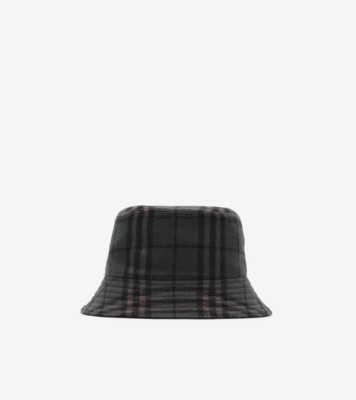
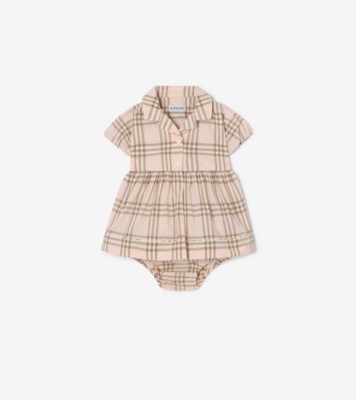
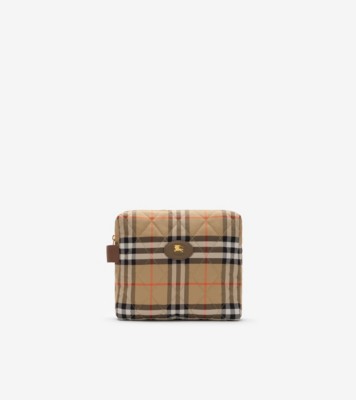
The trench coat became regulation issue for British officers in 1914. After the war, it stayed. Humphrey Bogart wore one in Casablanca. So did Audrey Hepburn in Breakfast at Tiffany's. The silhouette entered the lexicon not as fashion but as fact. By the 1960s, Burberry had also developed the camel, red, black, and white check that would become the house's other anchor. The check appeared first as a coat lining, then on umbrellas and scarves. It moved outward from function into ornament.
What happened next is well documented. Through the 1980s and 1990s, Burberry licensed the check aggressively. It appeared on everything: dog leashes, bikinis, baseball caps sold in duty-free shops and open-air markets across Europe and Asia. The brand became ubiquitous, then overexposed, then synonymous with a very specific stripe of British aspiration that curdled into caricature. By the late 1990s, the check had been adopted by football hooligans and became, in the British press, shorthand for a particular kind of class performance. The house that dressed explorers and officers had become the house that dressed chavs.
The Rose era
Christopher Bailey arrived as design director in 2001 and was named chief creative officer in 2009, then CEO in 2014. His work over fifteen years can be read as a sustained attempt to pull Burberry back from the edge of its own success. He restricted the check. He brought in photographers like Mario Testino and Alasdair McLellan. He cast Cara Delevingne and Eddie Redmayne and made the runway show an event, then a live-stream, then a see-now-buy-now experiment. He opened the archives and brought out the 1968 car coat, the 1980s puffer, the original officer's trench from 1912. He made heritage a verb.
The strategy worked, for a time. Revenue grew. The brand shed its hooligan associations and reclaimed its place in the luxury conversation. But Bailey's Burberry was also, increasingly, a house in conversation with its own past. Every collection seemed to ask the same question: what does it mean to be Burberry now? The answer kept circling back to the trench, the check, the archive. By the time Bailey stepped down in 2018, the house had become fluent in its own language but had not learned to speak a new one.
Tisci and the monogram
Riccardo Tisci arrived in March 2018. He came from Givenchy, where he had spent twelve years building a dark, romantic, streetwear-inflected vocabulary. At Burberry, he immediately commissioned Peter Saville to redesign the logo. The serif typeface was replaced with a sans-serif. The Equestrian Knight was redrawn. Tisci introduced a new monogram — TB, for Thomas Burberry — and printed it on everything. The move was legible: Burberry needed a new symbol, one without the baggage of the check.
The clothes that followed were less clear. Tisci showed oversized tailoring, logo-printed nylon, deconstructed trenches, and a recurring motif of chains and hardware. The first collection, for spring 2019, included a plastic rain mac printed with the new monogram and a trench coat with the sleeves removed and reattached at the shoulder with metal rings. It was an attempt to make Burberry speak the language of 2018 streetwear, but the grammar felt uncertain. The pieces that worked were the ones that stayed close to the house's existing strengths: a clean gabardine coat, a tailored blazer, a knit in the archive check.
Tisci's Burberry sold. The monogram bags moved. The sneakers moved. But the critical reception was mixed, and the financial results were uneven. In the fiscal year ending March 2020, revenue declined three per cent. The pandemic made assessment difficult, but by 2022 it was clear that Tisci's vision had not landed the way the house needed it to. He left in September 2022 after four and a half years.
Lee and the reset
Daniel Lee was announced as chief creative officer in October 2022. He had spent three years at Bottega Veneta, where he had turned the house into the quietest and most commercially successful story in luxury. At Burberry, he inherited a brand that had been in a state of reinvention for two decades.
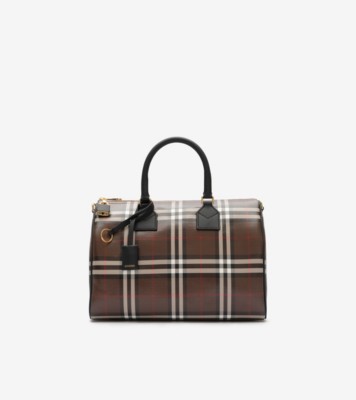
Lee's first collection, for spring 2023, showed in September 2022. It opened with a trench coat. The proportions were different — the shoulder dropped, the sleeve widened, the belt worn loose — but the garment was still, unmistakably, a trench. The collection that followed included tailored coats with exaggerated lapels, leather outerwear, and a new handbag called the Knight, named for the Equestrian Knight in the archive. The check appeared, but sparingly. The monogram did not.
Lee's approach has been to slow Burberry down. He has reduced the number of collections. He has focused on leather goods, which are higher margin and less trend-dependent than ready-to-wear. He has repositioned the brand upward, raising prices and pulling back from the accessible entry-level products that had been part of Bailey's and Tisci's strategies. The goal, as articulated by CEO Jonathan Akeroyd, is to make Burberry a true luxury player, not a bridge brand.
The results so far have been difficult. In the fiscal year ending March 2024, revenue fell eleven per cent. Comparable store sales dropped eighteen per cent in the final quarter. In July 2024, Akeroyd was replaced by Joshua Schulman, formerly of Michael Kors and Coach. In November, Burberry reported a six per cent decline in sales for the first half of the fiscal year. The company suspended its dividend. The share price, which had been above £25 in early 2023, fell below £7 by December 2024.
The trouble is not only internal. The luxury market has softened, particularly in China, which accounts for roughly forty per cent of global luxury sales. Aspirational consumers are pulling back. The middle tier of the luxury market — brands priced above contemporary but below Hermès and Chanel — is under pressure. Burberry sits in that middle, and the middle is contracting.
What remains
Schulman has signalled a shift. In his first earnings call, he said Burberry would refocus on its core: outerwear, scarves, the trench. He used the word "timeless," which is both accurate and telling. A house returns to timelessness when the present is not working.
Lee's second and third collections have continued the work of the first. The clothes are cleaner, more refined. The autumn 2024 show included a series of tailored coats in camel and navy, worn over narrow trousers and knee-high boots. The spring 2025 collection leaned into ease: soft trenches, unstructured blazers, wide trousers in cotton and linen. The check appeared as a scarf, a lining, a detail on a bag. It was there, but it was not the point.
Whether this is enough is not yet clear. Burberry has been here before — at the edge of its own identity, trying to decide whether to look forward or back. The trench coat is still in the window on Regent Street. It is still made in Yorkshire. A customer will still walk in, try it on, and buy it, because the garment does what it has always done. But a house cannot live on one coat forever, no matter how good the coat is.
There is a photograph from the spring 2025 campaign, shot by Tyrone Lebon. A model stands in a field in Yorkshire, wearing a trench and holding an umbrella. The sky is grey. The grass is wet. The image is so clean it is almost empty. It is an argument for reduction, for return, for the idea that Burberry is, at its centre, a house that makes a coat that keeps the rain out. Whether that is enough to build a future on is the question the house is asking now.