The trench coat hanging in the flagship on Regent Street weighs less than you expect
The trench coat hanging in the flagship on Regent Street weighs less than you expect. Gabardine, the fabric Thomas Burberry patented in 1879, is a tightly woven cotton that repels water without weight. Pick it up. The cloth has a particular hand—smooth, almost waxy, nothing like the rubberised canvas soldiers wore before Burberry gave them something better. This is the piece everyone knows. It is also, oddly, still the best place to start.
Burberry was founded in 1856 in Basingstoke by a twenty-one-year-old draper who understood that English weather required better solutions than oiled wool. Gabardine—breathable, weatherproof, durable—became the house signature before "signature" meant what it does now. Roald Amundsen wore it to the South Pole in 1911. The British Army issued it as officer kit in both world wars. By the 1920s, the trench coat had moved from the Somme to Mayfair, and Burberry had become the rare luxury house built on function rather than aspiration.
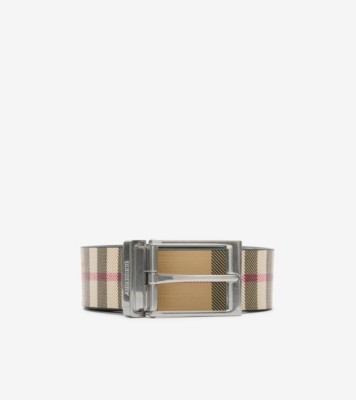
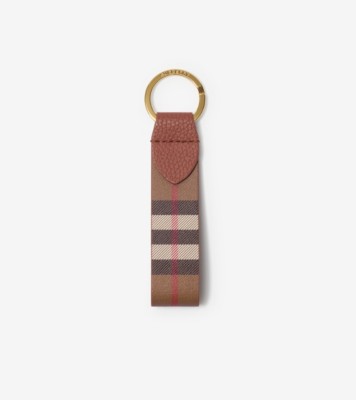
The check came later. Introduced as a lining in the 1920s, it didn't appear on the outside of garments until the 1960s. By the 1990s, it was everywhere—scarves, umbrellas, baseball caps, dog collars. The brand diluted itself through licensing, and the check became shorthand for a certain kind of Essex aspiration. Burberry spent the 2000s clawing back control, buying out licenses, hiring Christopher Bailey, and rebuilding around the trench and the gabardine rather than the print.
What defines the house now
Daniel Lee took over as chief creative officer in 2022, and the shift has been immediate. Lee, who made his name at Bottega Veneta, understands luxury as material and cut rather than logo. His first collection for Burberry leaned into outerwear—quilted nylon bombers, shearling aviators, waxed cotton field jackets—and reintroduced the Equestrian Knight, a logo from the archives that predates the check. The check itself has receded. It still appears, but as accent rather than anchor.
Lee's Burberry is less about heritage theatre and more about what the house actually does well: weather-resistant cloth, clean tailoring, and a particular kind of English pragmatism that doesn't apologise for being useful. The Knight bag, introduced in Lee's debut collection, is structured leather with a top handle and a logo clasp. It is not subtle. It is also not trying to be a Birkin. Prices start around $2,400, which puts it squarely in the accessible-luxury band—more than you'd spend on impulse, less than you'd need to join a waitlist for.
The trench remains the entry point. The Kensington, Burberry's mid-length heritage cut, starts at $2,090. The Chelsea, a shorter, slimmer version, runs $1,990. Both are made in England from the same gabardine Burberry has used for a century. The construction is straightforward: raglan sleeves, storm shield, throat latch, D-rings that once held a soldier's kit. You can still buy a trench with the classic check lining, or you can opt for solid beige, navy, or black if the tartan feels like too much signalling.
The pieces that matter
Beyond the trench, Burberry's strength is in outerwear that doesn't look like outerwear. The quilted nylon jacket Lee introduced in his first season is cut like a blazer but weighs almost nothing. It works over a suit or a T-shirt, and it packs flat. Retail is around $1,800, which is reasonable for a piece that replaces both a topcoat and a puffer. The waxed cotton field jacket, a reworking of a 1980s archive piece, is $2,200 and built to last fifteen years if you treat it properly.
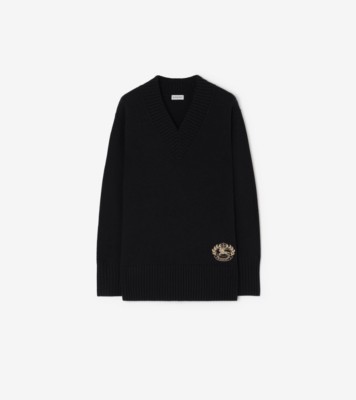
Knitwear is where the house has quietly excelled for decades. A merino crewneck runs $550, which is high but not absurd for twelve-gauge knit with reinforced shoulders. Cashmere starts at $890 for a plain crewneck, $1,200 for a rollneck. The quality is consistent—Italian yarn, Scottish mills, no pilling after a season. Lee has introduced Fair Isle patterns and cable knits that reference British country-house dressing without tipping into costume.
Tailoring at Burberry is correct but not exciting. A two-button worsted suit in navy or charcoal runs $2,400, which is fair for half-canvas construction and English cloth. The cut is modern—moderate shoulder, slight suppression, flat-front trousers—but it won't turn heads the way a Neapolitan suit will. If you need a reliable suit for work and want it from a house with name recognition, Burberry delivers. If you care deeply about shoulder expression or trouser drape, look elsewhere.
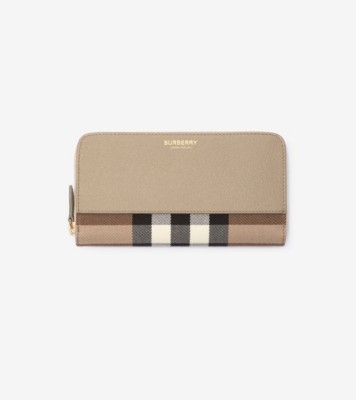
Accessories are where the house makes its margin and where the branding is loudest. The Knight bag is the current flagship, available in several sizes and leathers. The small crossbody starts at $1,690, the medium tote at $2,490. The leather is stiff Italian calfskin, and the hardware is chunky. It reads as Burberry from across a room, which is either the point or a dealbreaker depending on how you feel about visibility.
Scarves remain a volume driver. The classic check cashmere scarf is $550, which is $200 more than you'd pay for equivalent cashmere elsewhere but $200 less than Hermès. It is the piece people buy when they want something from Burberry but don't need a trench. The giant check, introduced in 2013, is still around and still sells despite looking like something a football hooligan would wear ironically.
Where the house stands
Burberry occupies an odd position in the luxury landscape. It is not quite a heritage tailoring house like Huntsman or Anderson & Sheppard. It is not quite a fashion house like Gucci or Saint Laurent. It is not quite an accessories-driven brand like Hermès or Bottega Veneta. It is, instead, a British institution that makes very good coats and has spent the past two decades figuring out what else it should be.
Lee's tenure suggests the answer is outerwear, leather goods, and a kind of refined utility that doesn't rely on the check. The trench is still the hero, but the supporting cast is stronger than it has been in years. The risk is that in moving away from the check, Burberry loses the immediate recognition that made it a global brand. The opportunity is that it becomes a house people buy from because the product is excellent, not because the logo is legible.
If you are buying your first piece, buy the trench. Not the Chelsea, which is too cropped to be useful in real weather, and not the Westminster, which is too long unless you are over six foot two. The Kensington, in honey gabardine, with the classic check lining. Wear it in October. Wear it in April. Wear it until the cuffs fray and the cotton softens and the coat stops being a Burberry trench and becomes simply the coat you reach for when it rains.