The white cotton poplin shirt sits in its garment bag, four white stitches at the back of the collar
The white cotton poplin shirt sits in its garment bag, four white stitches at the back of the collar. They're tacked through the label — deliberately visible, deliberately loose. You can cut them off. Most people don't. That tension, between anonymity and signal, is Maison Margiela in a single detail.
If you're circling the house for the first time, you're likely doing it because someone whose taste you trust wore the Tabi boot to dinner, or because you saw the numeric label system and wanted to know what Line 1 meant. Fair enough. Margiela rewards that kind of curiosity. It also punishes casual browsing. The house doesn't make it easy. There are no monograms, no house codes in the Chanel sense, and the price-to-recognition ratio is punishing if you're used to logos doing the work for you.
But if you want clothes that think differently about construction, that treat deconstruction as a method rather than a marketing term, Margiela is still the place. Here's what you need to know before you buy in.
The founding logic
Martin Margiela opened the maison in 1988 with Jenny Meirens. He had worked under Jean Paul Gaultier, learned pattern-cutting in Antwerp, and arrived in Paris with a set of ideas about what fashion could do if it stopped performing luxury and started examining it. Early collections featured garments made from army surplus, linings worn as outerwear, sleeves set in backwards. The Tabi boot — split-toe, based on a fifteenth-century Japanese sock — debuted in the first show and has been in production ever since.
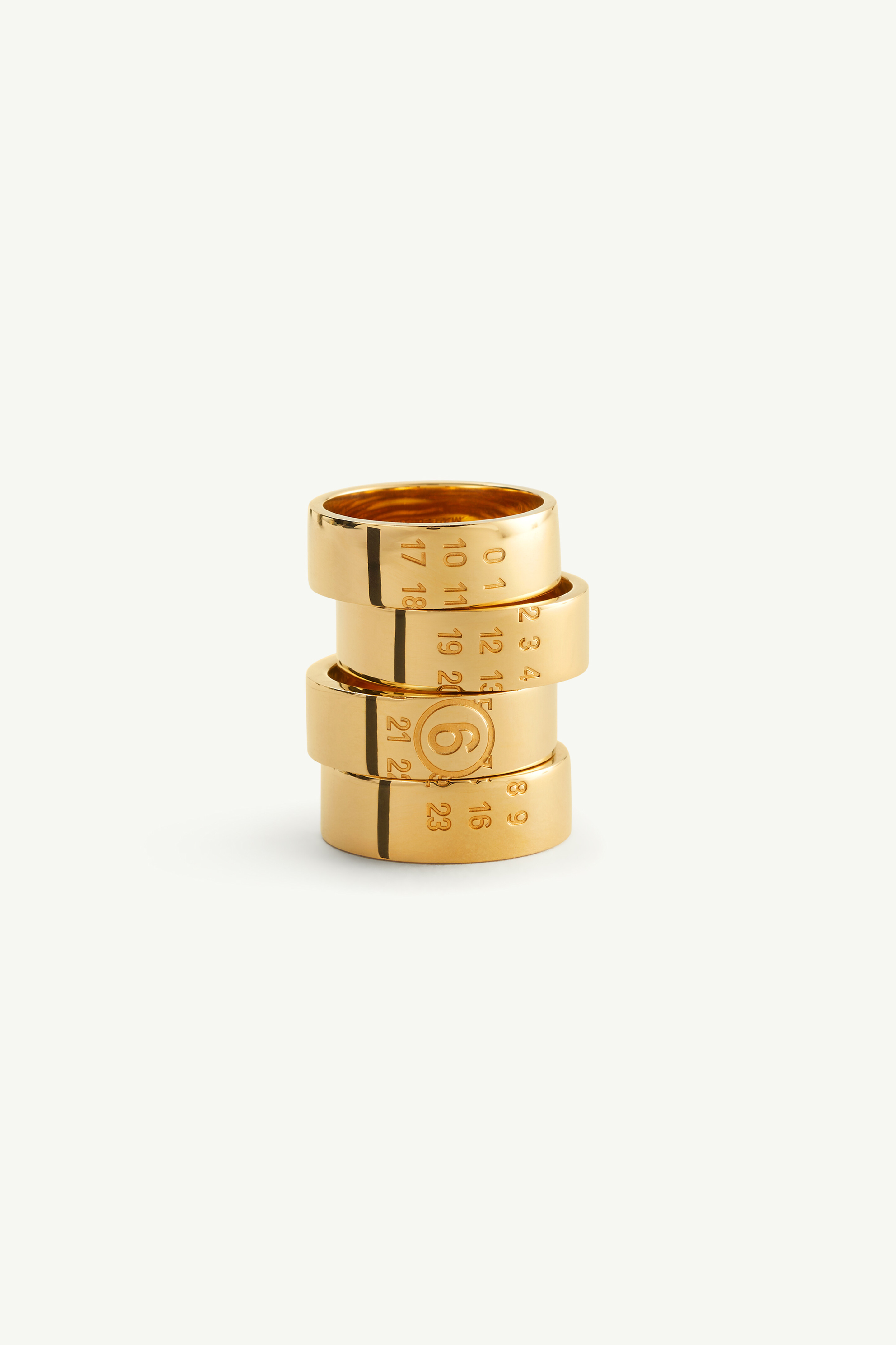
The house operated under a strict code of anonymity. No designer interviews. No photographs of Margiela himself. Press materials came without his name attached. Collections were shown in empty lots, metro stations, children's playgrounds. The clothes carried no visible branding except a white label stitched with four loose tacks and a numerical system: Line 1 for womenswear, Line 10 for menswear, Line 11 for accessories, and so on through fourteen categories.
This wasn't conceptual posturing. Margiela was working through a problem: if you remove the designer's face and the logo, what's left? The answer, in his case, was cut. The house became known for inside-out seams, exposed linings, garments that made their construction legible. A Margiela jacket from 1991 looks like a jacket that has been taken apart and reassembled with all its secrets showing. That's the point.
Margiela himself left in 2009. The house continued under a collective design team until 2014, when John Galliano took over as creative director. That shift changed the house's centre of gravity, but not its foundational ideas. The numerical system remains. So does the anonymity, though it now shares space with Galliano's more theatrical instincts.
What Galliano did
Galliano's first Margiela collection, shown in January 2015, was called 'Artisanal' — the house term for its couture-adjacent line. It featured coats built from deconstructed tailoring, dresses made by slashing and re-stitching vintage garments, and the same Tabi boots Margiela had shown twenty-seven years earlier. The collection worked because Galliano understood that Margiela's codes were methods, not museum pieces. He could push them into new shapes without dismantling the grammar.
What followed has been a long negotiation between Galliano's maximalism and Margiela's reductive logic. Some seasons land better than others. The Artisanal collections remain the house's most compelling output — one-offs and limited runs that treat garments as investigations rather than products. The ready-to-wear, particularly menswear, can feel caught between two impulses: the house's historical commitment to anonymity and Galliano's need to make a louder statement.
That said, Galliano has kept the house commercially viable without flattening it into accessibility. Margiela under his direction still doesn't make easy clothes. The Replica line — fragrances and sneakers that reference specific moments and places — has become the entry point for most buyers, but even that sits at a higher price than comparable offerings from other houses. You're paying for the method, not just the object.
Where to start
If you want to understand Margiela, buy the Tabi boot. It is the house's most enduring piece and its clearest statement of intent. The split toe is confrontational. It will not work with most of your trousers. It will change how you walk. That's the point. The boot exists to make you conscious of what you're wearing and how it relates to your body. It comes in leather, canvas, suede, and patent. The leather version in black runs around $1,100. It will last a decade if you resole it once.
The Replica sneaker is the other obvious entry point, though it's less conceptually dense. The line includes the GAT (German Army Trainer), the Painter, and several other styles that reference specific archetypes. They're well-made, they'll hold up, and they cost about half what the Tabi does. If you want Margiela without committing to the split toe, start here.
For clothing, the numeric system is your guide. Line 10 is menswear. Line 14 is men's outerwear. Line 11 is accessories. Each line has its own label, stitched with the four white tacks. The stitches are your authentication — if they're not there, or if they're sewn down tight, it's not Margiela.
The men's tailoring sits in an awkward place. It's technically accomplished, but it doesn't have the same charge as the house's more deconstructed pieces. A Margiela suit will run you north of $2,000, and unless you're committed to the house's particular approach to shoulder construction and lapel width, you might be better served elsewhere. The outerwear, on the other hand, is worth the entry price. The oversized wool coats, the reconstructed trench, the padded nylon jackets with exposed seams — these are pieces that make sense of the house's logic without requiring a thesis defence.
Avoid the logo-heavy pieces. Margiela has, in recent seasons, produced T-shirts and sweatshirts with large numerical prints and visible branding. They sell. They're also the least interesting thing the house makes. If you want a logo, buy a logo brand. If you want Margiela, buy something that couldn't come from anywhere else.
What you're paying for
Margiela is expensive in the way that all Paris-based houses are expensive, but the pricing doesn't track neatly with recognisability. A Tabi boot costs about the same as an entry-level Gucci loafer, but the Gucci loafer will be immediately legible to anyone who has spent ten minutes in a department store. The Tabi will be legible only to people who already know. That's a feature, not a bug, but it makes the value proposition harder to justify if you're used to luxury goods that announce themselves.
What you're buying is a specific approach to construction. Margiela garments are made to show their seams, their darts, their internal architecture. The house still produces a small Artisanal collection each season — one-offs and limited pieces that are closer to sculpture than ready-to-wear. Those pieces can run into five figures. The ready-to-wear is more accessible, but it's still built with the same attention to how a sleeve is set, how a hem is finished, how a garment sits when it's not being worn.
The house also maintains its own repair service. If you buy a Margiela piece and it needs alterations or repairs, you can send it back to the atelier. That's not standard practice in ready-to-wear, and it's worth factoring into the cost.
The house now
Margiela today is a strange hybrid. It's owned by the OTB Group, the Italian conglomerate that also holds Diesel and Jil Sander. It operates boutiques in major cities, sells through department stores and online retailers, and produces seasonal campaigns that are as polished as anything from Saint Laurent or Balenciaga. It is, in other words, a functioning commercial enterprise.
It's also still making clothes that ask you to think about what a sleeve is for, why a label goes where it goes, and whether a shoe needs to follow the shape of a foot or can propose a different shape entirely. That combination — commercial scale, conceptual rigour — is rare. Most houses pick one or the other.
If you're starting with Margiela, start with a piece that makes you slightly uncomfortable. The Tabi boot is the obvious choice, but a reconstructed shirt, an inside-out sweater, or a bag with the handles sewn on backwards will do the same work. The point is not to buy into a brand. The point is to buy into a method. Once you've done that, the four white stitches start to make sense. You can cut them off if you want. But you probably won't.