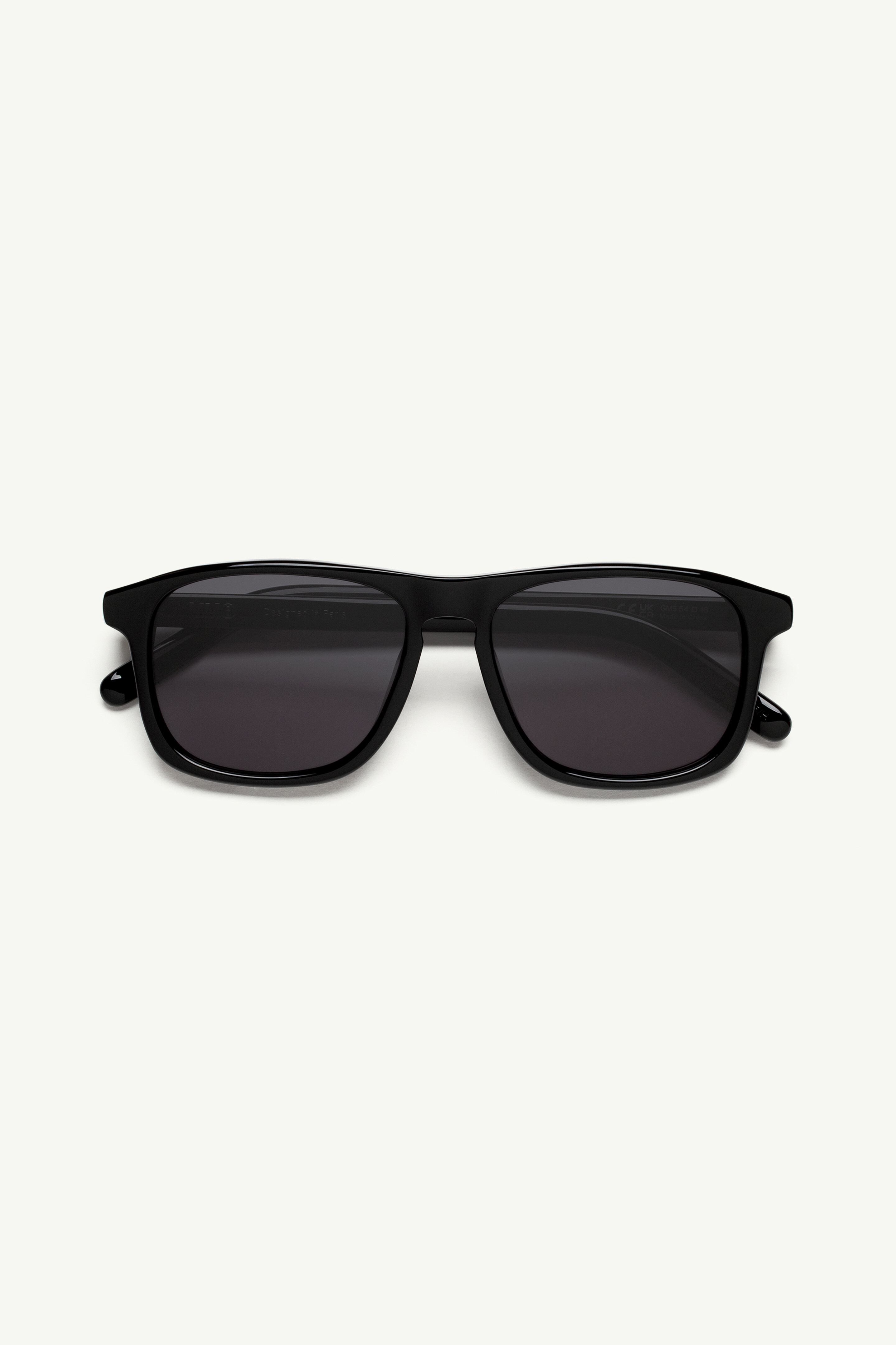
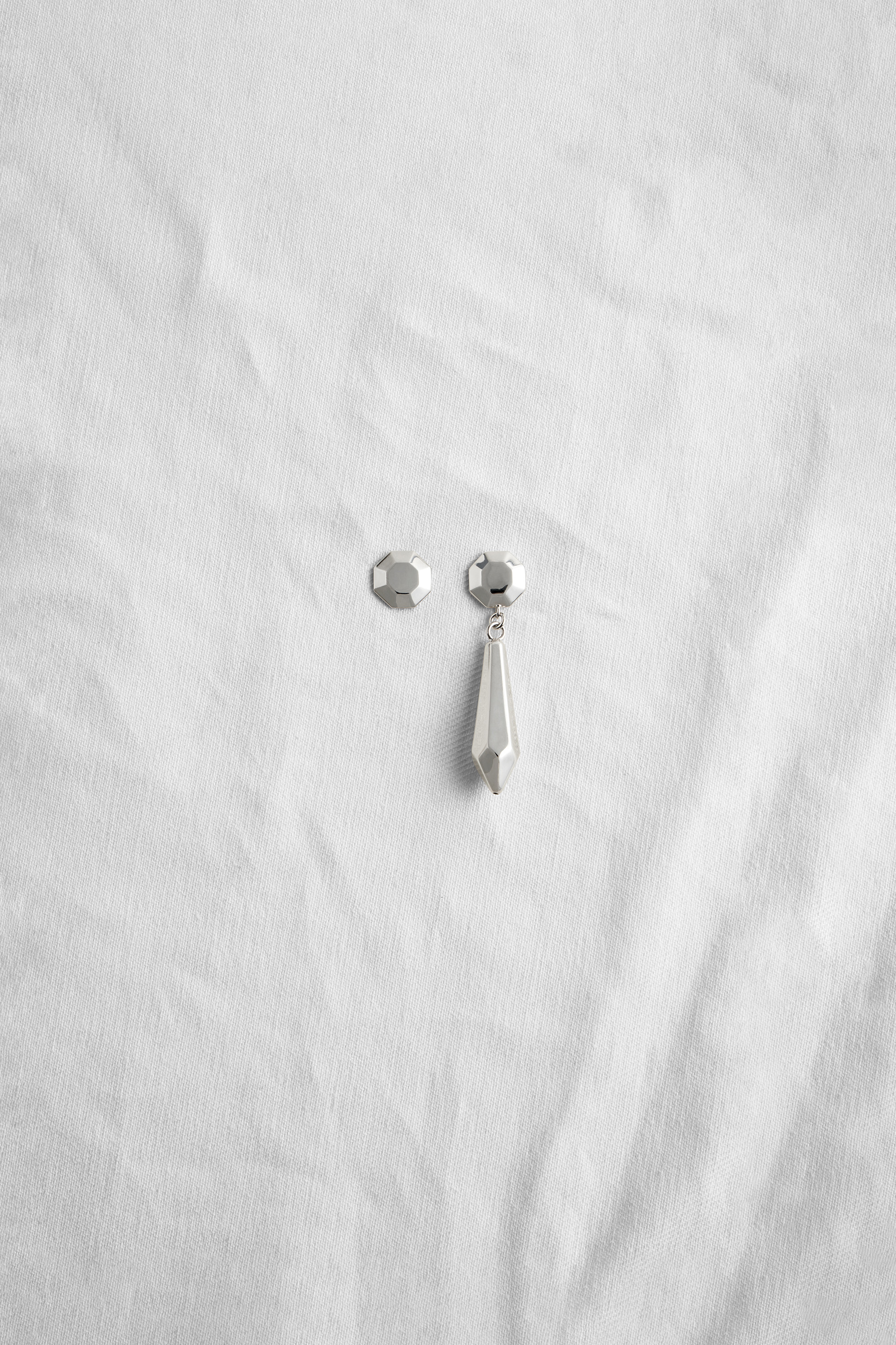
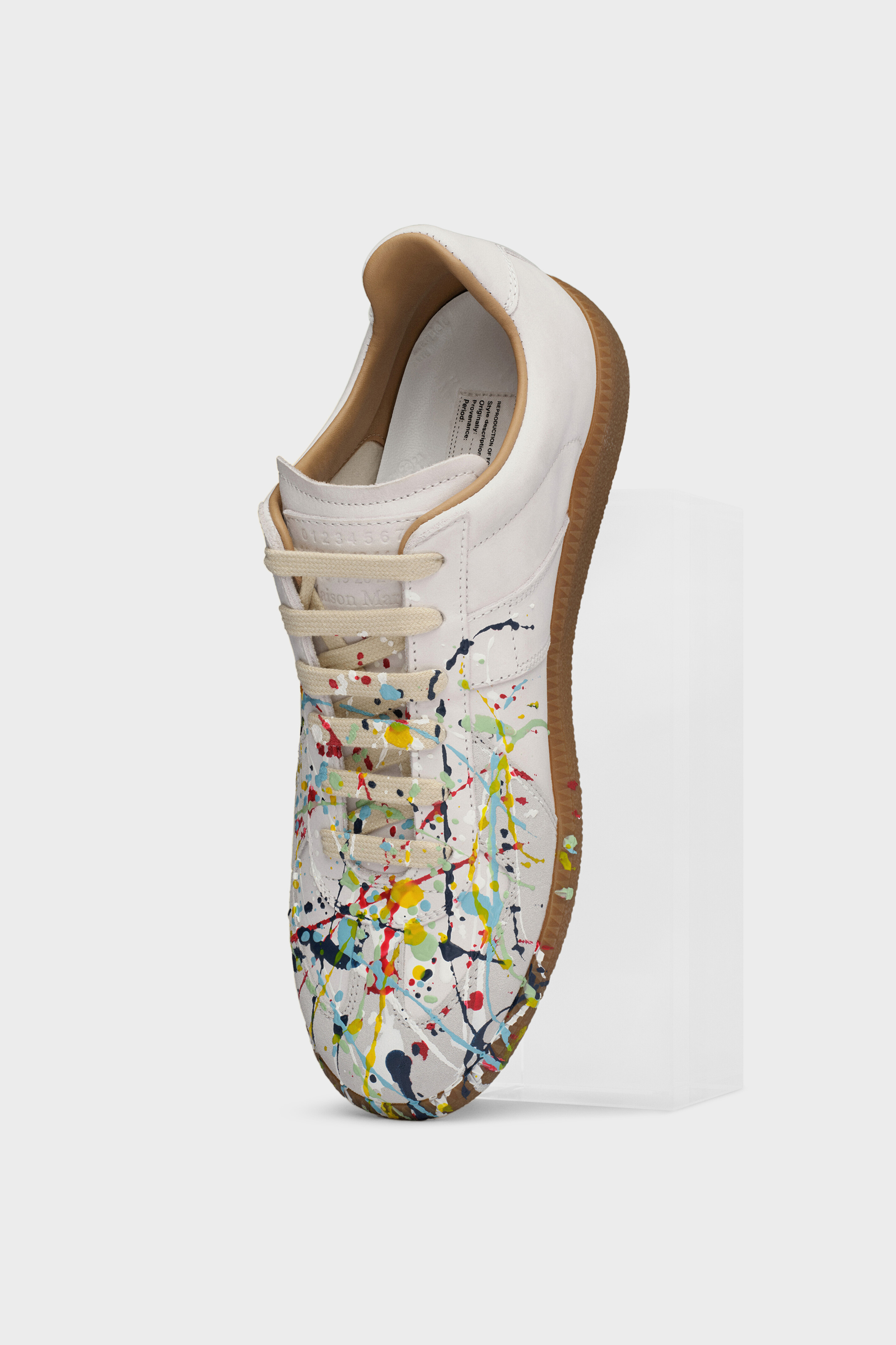
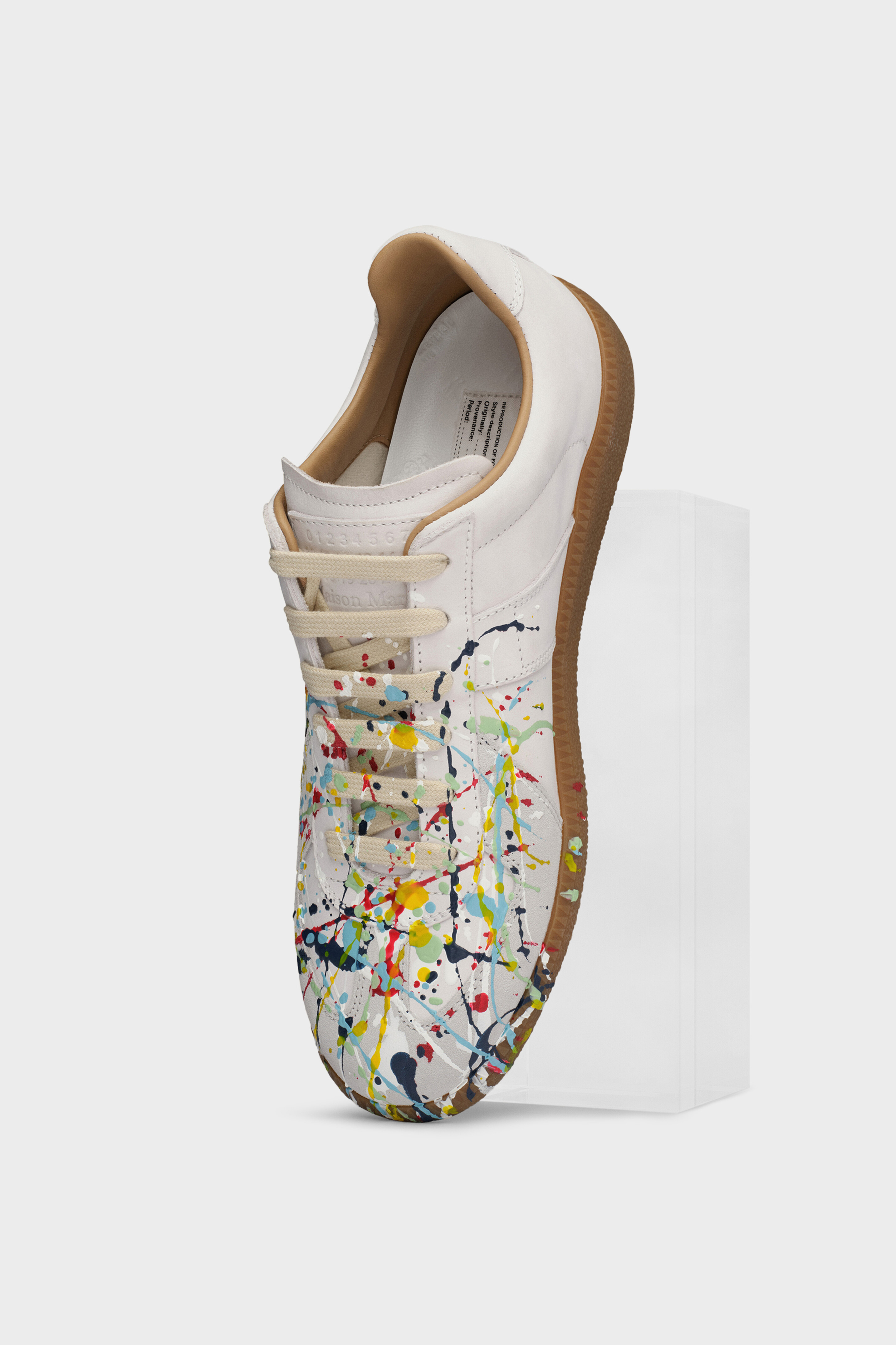
The white label has four stitches at each corner
The white label has four stitches at each corner. It sits at the back of the neck, blank, and the information — size, fabrication, country of origin — prints on a separate tag that you can remove. This is not modesty. It is a statement about what a garment is before it becomes a brand.
Martin Margiela introduced that label in 1988. It has remained in place through two subsequent creative directors, fifteen years without Margiela himself in the building, and the acquisition by the OTB Group. The stitches have not moved.
1988–2009: The Founding Proposition
Margiela opened the maison in Paris with Jenny Meirens. He had left Gaultier's studio the year before. The first collection showed in a children's playground in the 20th arrondissement, and the invitation was a photocopied map with a date and time. No logo. No house name on the front.
The garments that walked out that October were constructed from army surplus linings, dyed hospital blankets, and a men's sock repurposed as a sweater. This was not poverty. Margiela had access to suppliers. He chose to work with what was already in circulation. The Tabi boot — split-toe, referencing a fifteenth-century Japanese work shoe — appeared in that debut lineup and has been in production every season since.
What Margiela proposed was a reversal. Fashion had spent the 1980s inflating the logo, the persona, the designer as celebrity. He offered anonymity. He did not take a bow. Press materials listed no designer name, only "Maison Martin Margiela." Interviews were conducted by fax, in the collective first person. The atelier was in a former garage in the 10th, and the windows were papered over.
The work itself was forensic. Margiela and his team deconstructed tailoring to expose the canvas, the pad-stitching, the bones of a jacket. They turned linings outward. They left hems raw. A 1997 coat was assembled from fragments of vintage garments, each piece retaining its original seams and buttonholes, then stitched together into a new whole. The technique was called décortiqué — peeled, shelled.
This was not deconstruction for its own sake. It was an argument about how a garment holds meaning. Margiela removed the brand signature and replaced it with the signature of process. You could see how the sleeve attached. You could see the grain of the fabric, the direction of the weave. The clothes asked you to look at construction the way you might look at an X-ray.
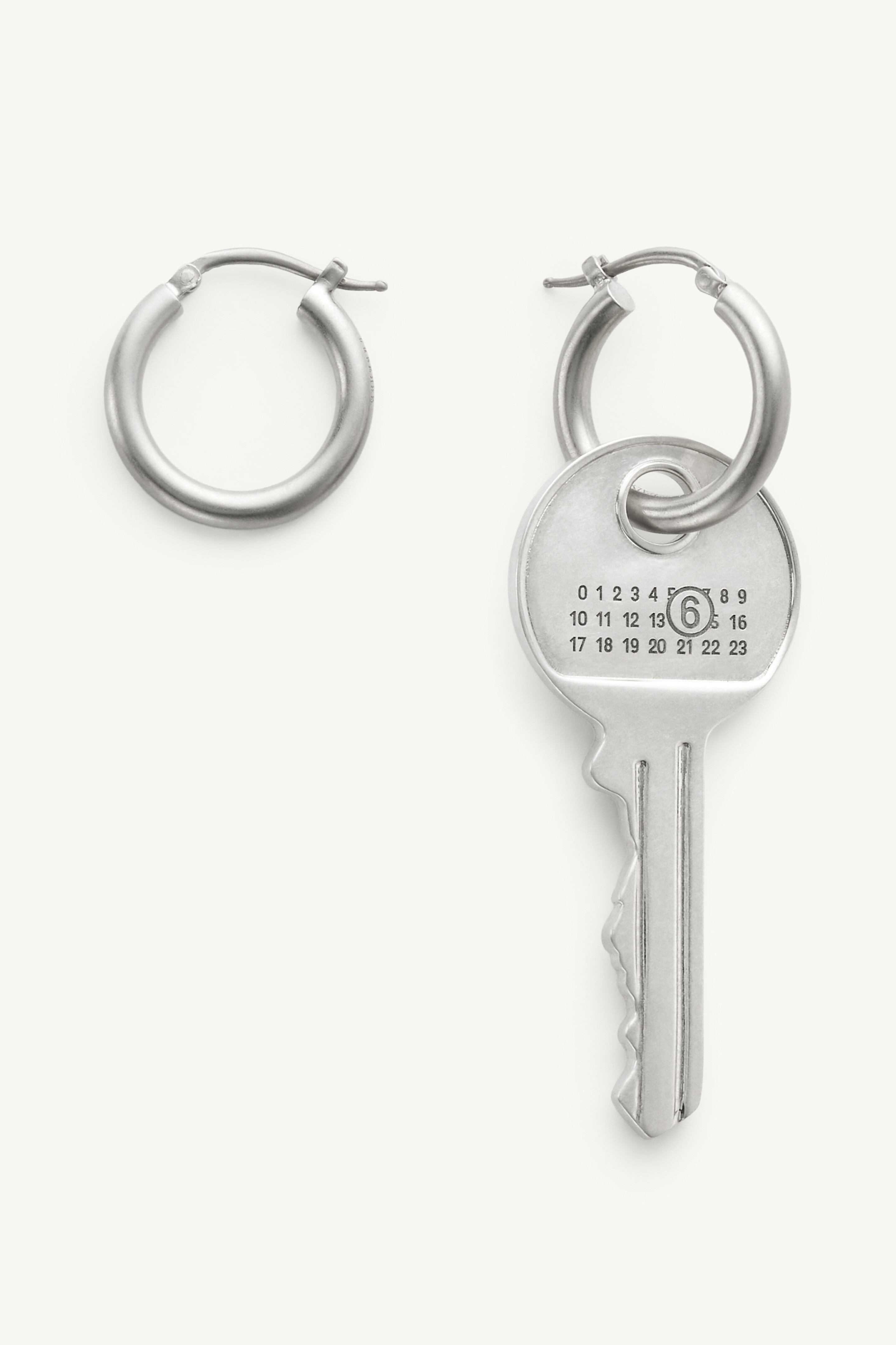
He also began numbering the collections. Not by season, but by category. Womenswear was line 1. Menswear was line 10. Accessories, line 11. Artisanal, a limited run of one-off reconstructed pieces, was line 0. The system was taxonomic. It positioned the maison as a working studio, not a personality cult.
Margiela himself left in 2009. He gave no interviews about his departure. The maison continued, still under his name, still with the white label. The next six years were a period of design by committee — skilled, but without a centre.
2014–Present: Galliano's Arrival and the Artisanal Turn
John Galliano was named creative director in October 2014. He had been out of the industry for three years following his dismissal from Dior. Margiela was the house that took him in, and the pairing was not obvious. Galliano had built his reputation on historical romance, on narrative, on spectacle. Margiela had built his on refusal.
But Galliano understood something about the house that many observers missed. Margiela's work was not minimal. It was maximal in reverse. The blank label was as deliberate as any logo. The exposed seam was as considered as any embroidery. Galliano leaned into that.
His first collection for Margiela, shown in January 2015, opened with a coat made from a deconstructed trench, its panels separated and reassembled at angles. The sleeves were detached and worn as separate pieces, held in place by the model's posture. It was Margiela's vocabulary, but the energy was different. Galliano brought heat.
He also brought the Artisanal line back to the centre. Under Margiela, line 0 had been a small capsule, shown on mannequins or in lookbooks. Galliano made it the lead act. His Artisanal collections became the house's couture — one-of-a-kind pieces that took the maison's techniques and pushed them past ready-to-wear into pure construction. A 2016 coat was assembled from shattered mirrors. A 2018 dress was built from layers of tulle, each layer hand-painted and distressed to look like aged fabric.
The work was labour-intensive. A single Artisanal piece could take 1,500 hours. Galliano reintroduced the atelier's hand as the primary tool, which had always been true at Margiela but had become quieter in the interim years. He also brought back the body. Margiela's early work often obscured the wearer — faces covered, proportions exaggerated. Galliano's Margiela fits close, reveals the figure, then disrupts it with a sleeve that balloons or a hem that fractures.
The Tabi remained. So did the white label. So did the numbered lines. But the house under Galliano became warmer, more theatrical. He began staging the shows as installations. A 2017 presentation took place in a former postal sorting office, with models walking through rooms filled with mannequins dressed in archival Margiela. The boundary between past and present collapsed. You could not tell which pieces were from 1995 and which were from that season.
Critics split on this. Some argued that Galliano had made Margiela into Galliano. Others noted that he had kept the house's systems intact while giving them a pulse. The clothes still questioned how a garment is made. They just did it louder.
The House Now
Margiela is now a house with two authors and no visible author. The maison does not use Galliano's name in its communications. Press releases and show notes refer only to "Maison Margiela." This is consistent with the house's founding principle, but it also creates a strange doubling. The work is clearly Galliano's — the silhouettes, the staging, the intensity — but the house insists on collective anonymity.
The Tabi has become the maison's most recognised object. It appears in collaborations with Reebok, in metallicised leather, in thigh-high iterations that function as both boot and sculpture. The split toe is now shorthand for Margiela, which is exactly what the original white label was designed to prevent. The house has become a brand in spite of itself.
But the tension is productive. Margiela's work asked what happens when you remove the designer's signature. Galliano's work asks what happens when you put it back but refuse to name it. The result is a house that operates in two directions at once — backward into its own archive, forward into spectacle.
There is a garment in the Margiela archive from 1996. It is a white cotton shirt, men's cut, with the collar removed and reattached upside down. The shirt still functions. The collar still fastens. But the gesture — small, precise, irreversible — changes how you see the whole thing. That is what the house does. It takes the familiar and re-stitches it, and you cannot unsee the seam.