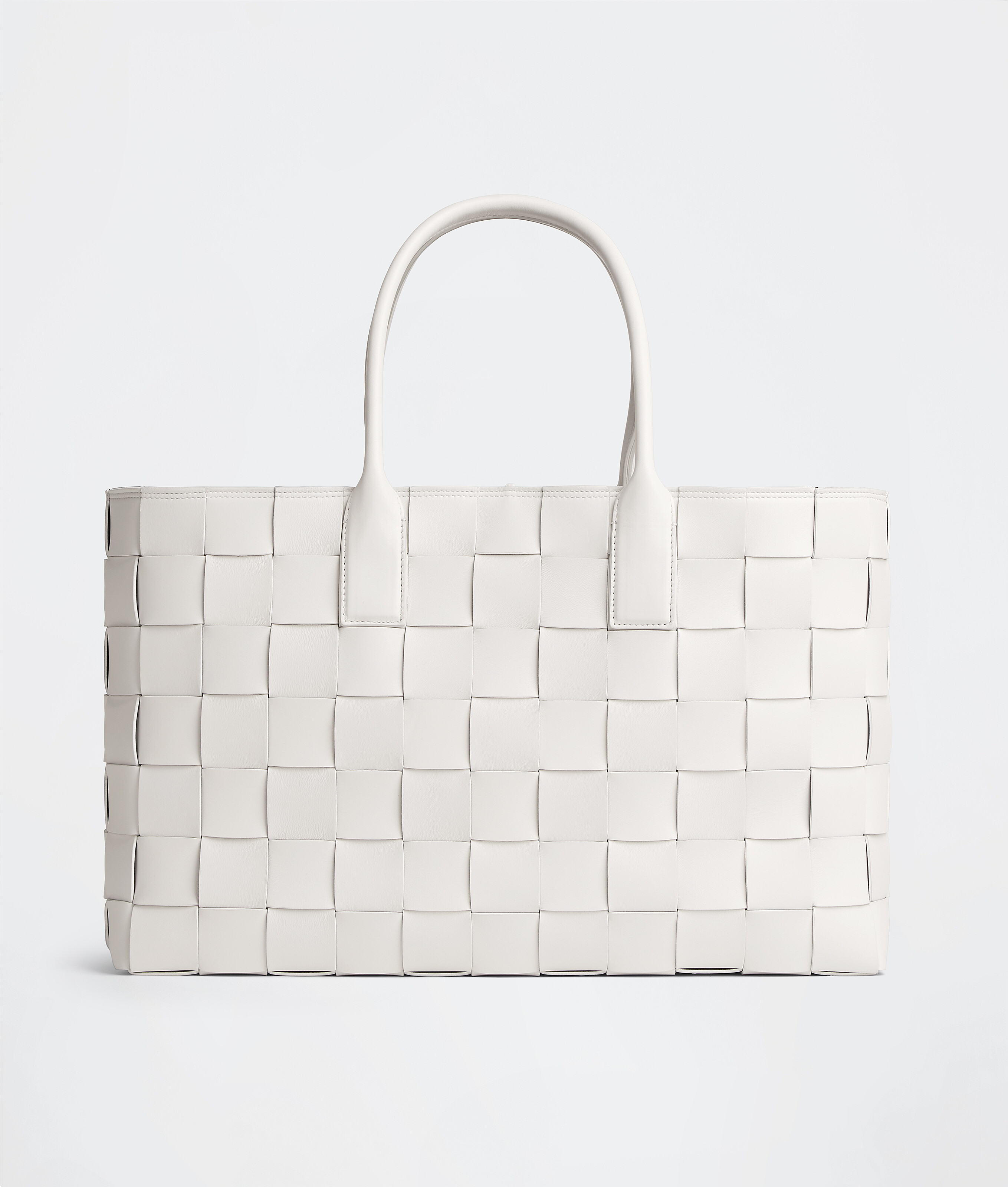
The zip pulls are leather-wrapped
The zip pulls are leather-wrapped. Not branded, not stamped — just a narrow tube of calfskin, hand-stitched along the seam, covering the metal tab. You only notice this when you are holding the bag, and even then, only if you are paying attention. Most people do not pay attention to zip pulls.
Bottega Veneta has built a house on the things most people do not pay attention to.
The intrecciato weave is the exception, the one code that announces itself. But the maison's quieter signatures — the ones that require proximity, or use, or both — form a more accurate portrait of what the house has been since Michele Taddei and Renzo Zengiaro founded it in Vicenza in 1966. These are not the gestures that sell handbags in airport windows. They are the details that make someone keep a bag for twenty years.
The construction that doesn't photograph
Bottega Veneta emerged from the Veneto leather tradition, which is less about ornament and more about engineering. The region's artisans worked in glove-making, upholstery, saddle construction — disciplines where a seam under tension is a structural problem, not a decorative opportunity. The intrecciato, introduced in the mid-1960s, solved two problems: it eliminated the need for external stitching on soft leather, and it distributed stress across the weave rather than along a single seam line. This is why vintage Bottega bags, even when the leather has softened past recognition, rarely split.
The house's approach to hardware follows the same logic. Bottega has used metal sparingly, and when metal appears, it is almost always covered or recessed. Magnetic closures instead of visible clasps. Zips set into the lining rather than exposed along an edge. Buckles wrapped in leather, sometimes dyed to match the body of the bag so precisely that the hardware reads as a tonal shift rather than a separate element. This is not minimalism for its own sake. It is a refusal to let metal become the loudest part of an object made from skin.
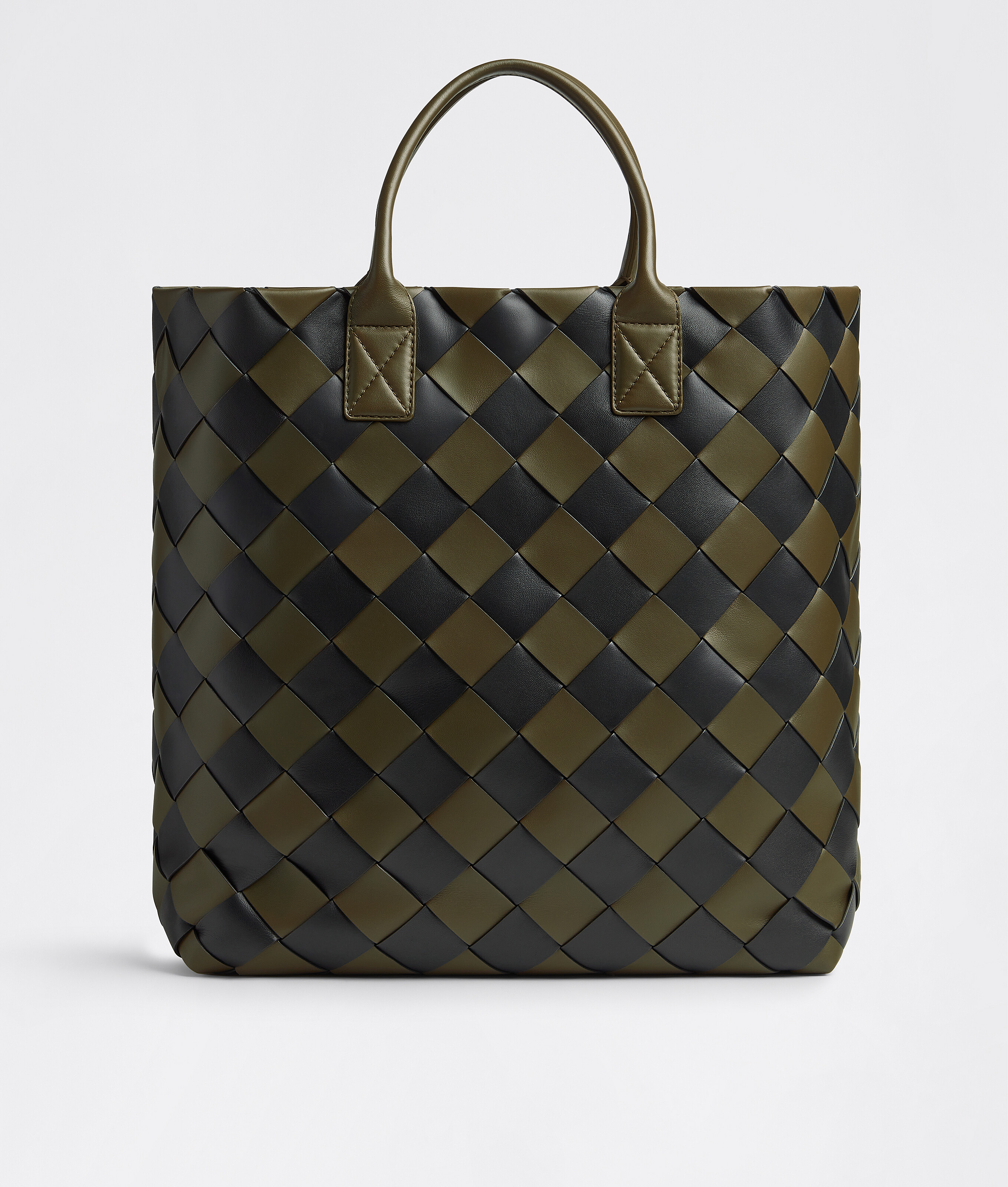
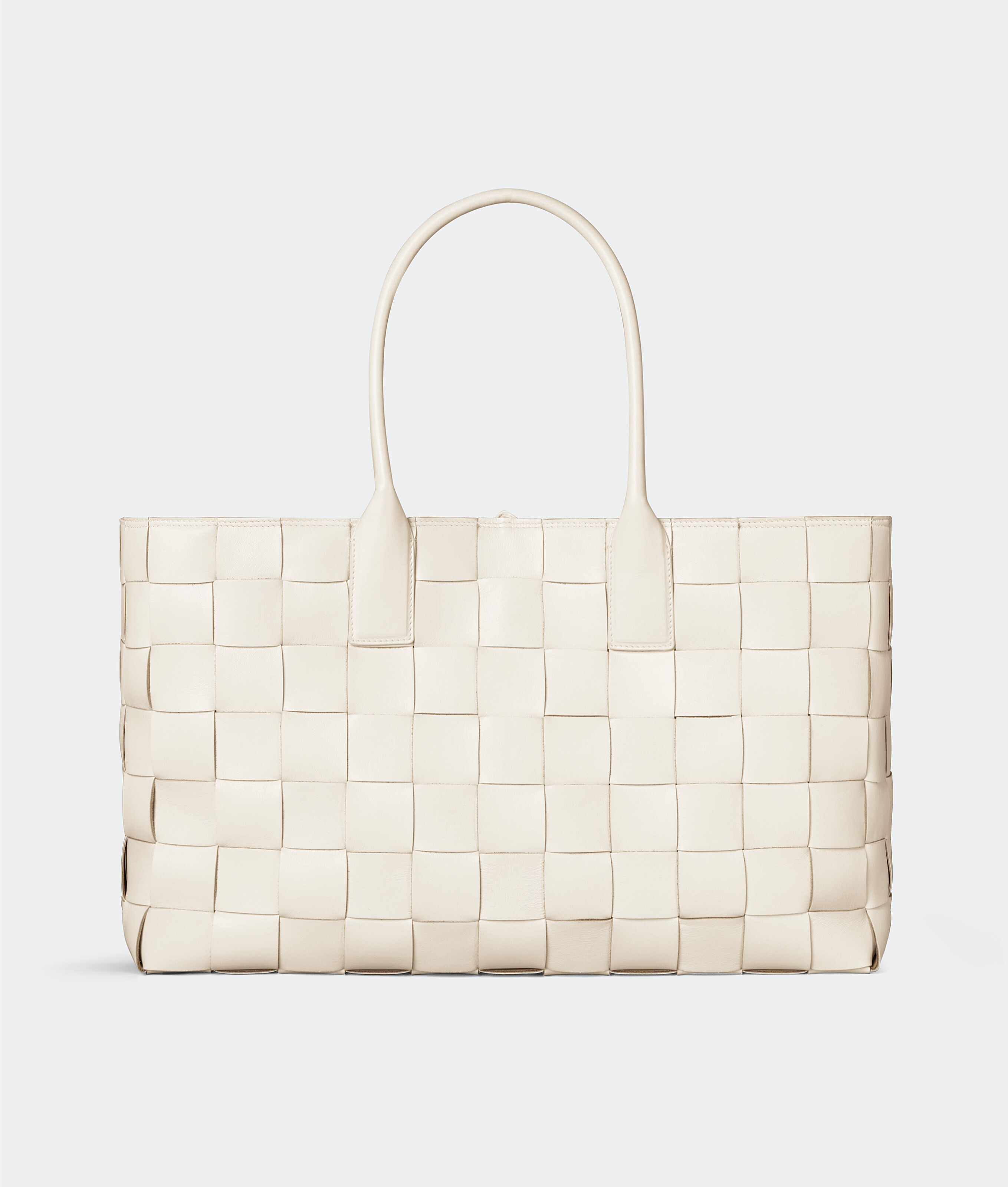
The Cabat, introduced in 2001, carries no hardware at all. No zip, no clasp, no feet. The bag holds its shape through internal structure — a cotton canvas base, leather walls that have been skived and laminated to stand upright without stiffening agents. The intrecciato on a Cabat is not decorative. It is the only thing holding the bag together. You cannot make one quickly. The maison has never tried.
Tomas Maier's 17 years
When Tomas Maier became creative director in 2001, Bottega Veneta was in receivership. The intrecciato had been licensed to manufacturers across Europe and Asia, and the weave — the house's central code — had become generic. Maier's first decision was to pull every license. His second was to stop putting logos on anything.
The "When your own initials are enough" campaign, launched in 2001, was not subtle. But the work behind the campaign was. Maier did not redesign the intrecciato. He tightened the quality threshold and expanded the palette. Bottega began working with leather in weights and tempers that other houses considered too difficult: nappa so fine it required a backing structure, calf that had been tumbled until the surface looked like stone. The weave stayed the same. The material range opened.
Maier also standardised construction details that most brands treat as negotiable. The depth of a bag's gusset. The width of a shoulder strap. The interior pocket placement, which in Bottega bags from the Maier era is almost always set against the back wall, not the side, so that the pocket does not distort the bag's silhouette when full. These are not the decisions that appear in look-books. They are the decisions that make a bag feel correct in the hand.
The Veneta hobo, introduced in 2005, became the house's quiet signature. No structure, no base, just intrecciato nappa with a knot closure and a single shoulder strap. The bag collapses when empty and swells when full, which means it never looks the same twice. It also means it does not photograph well, because a soft bag in editorial lighting looks like a soft bag, and nothing more. The Veneta sold anyway. It is still in production.
What Matthieu Blazy kept
When Matthieu Blazy succeeded Daniel Lee in 2021, the house was in a different place. Lee had introduced the Pouch, the Padded Cassette, the Tire boots — shapes that photographed clearly and moved at volume. Blazy, who had worked under Maier at Bottega and later at Céline under Phoebe Philo, did not reverse Lee's work. He complicated it.
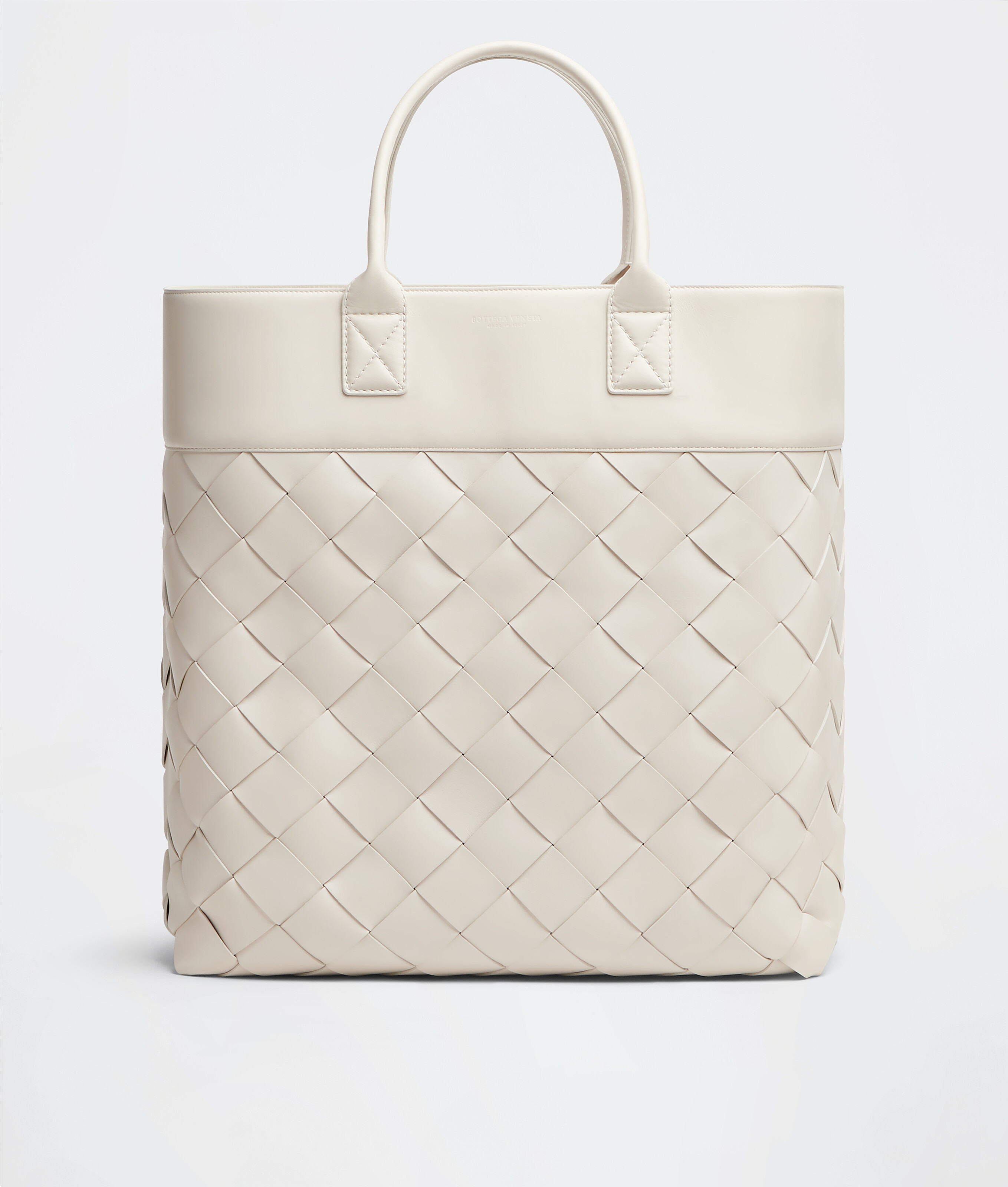
The intrecciato, under Blazy, has appeared in unexpected applications: woven leather trousers with a four-inch waistband, intrecciato denim that required the house to develop a new loom setting, bags where the weave runs vertically instead of horizontally, which changes how the leather stretches under weight. These are experiments, but they are experiments within a narrow range. Bottega does not do intrecciato in nylon. It does not do intrecciato in printed leather. The weave remains a structural technique, not a graphic.
Blazy has also brought back certain Maier-era details that had disappeared under Lee. The covered zip pull. The interior pocket against the back wall. The use of cotton canvas as an internal support rather than synthetic stiffeners, which means the bags break in rather than break down. And he has kept one of Bottega's least celebrated but most consistent codes: the house does not make bags with feet.
Feet — the small metal studs on the base of a handbag — protect the leather from pavement wear. Most luxury houses use them. Bottega does not, because feet require drilling through the leather and setting a metal post, which creates a point of failure. Instead, the house finishes the base with a leather panel that has been edge-painted and heat-sealed. The base will scuff. It will darken. It will not puncture.
The shoulder and the wrist
Bottega Veneta's approach to jewellery is consistent with its approach to bags: metal is present, but it does not dominate. The house's silver cuff, introduced under Maier and still in production, has no clasp. It is a single piece of silver, hand-formed and left open at the back, which means it flexes when you put it on. The interior is polished smooth so it does not catch on sleeve hems. The exterior is often left matte, sometimes oxidised, occasionally hammered. It does not look new for long.
The earrings follow the same principle. Bottega's most repeated earring shape is a simple hoop, but the hoop is never uniform in thickness. It tapers, or it flattens, or it twists along its length, which means the weight distribution shifts as you move. This is not visible in product photography. It is visible when someone is wearing the earring and turns their head.
The house's approach to ready-to-wear is harder to summarise, because the garments do not carry a single repeated code the way the bags do. But there are tendencies. Bottega cuts trousers with a flat front and a curved waistband, which sits lower at the sides than at the centre. The maison uses fewer darts than most tailoring houses, which means the garments follow the body's line without gripping it. And Bottega almost never uses topstitching on outerwear, even on denim, which is a choice that makes the seams less visible and the construction more labour-intensive.
What remains
A bag sits on a workbench in Montebello Vicentino, not far from where the house began. The intrecciato is complete, but the edges have not been finished. The artisan is using a heated tool to seal the leather along the top seam, a process that takes four minutes per bag and cannot be rushed. If the leather is sealed too quickly, it will crack. If it is sealed too slowly, it will not hold.
This is not the part of the process that appears in brand films. It is the part that determines whether the bag is still usable in 2035.