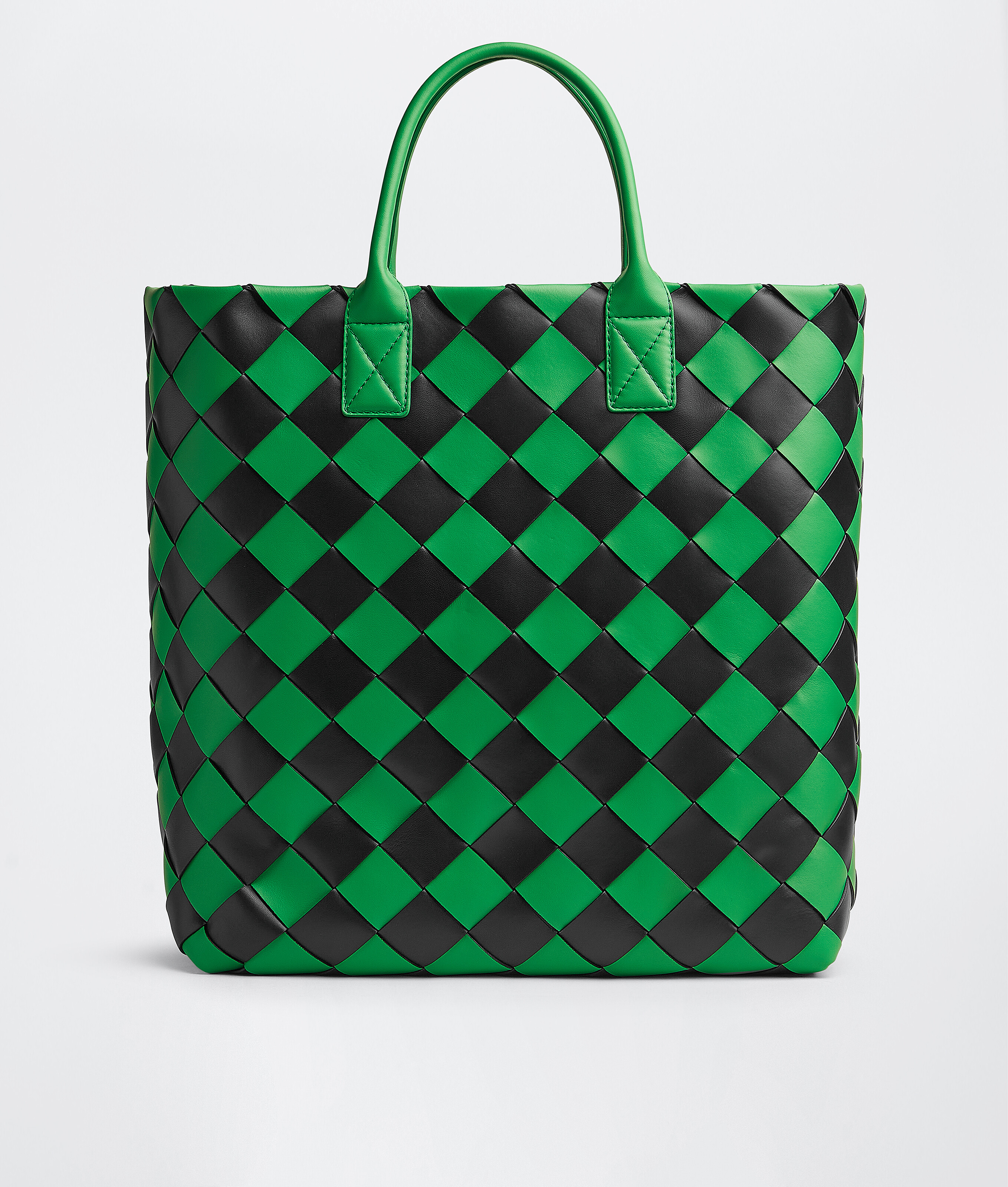
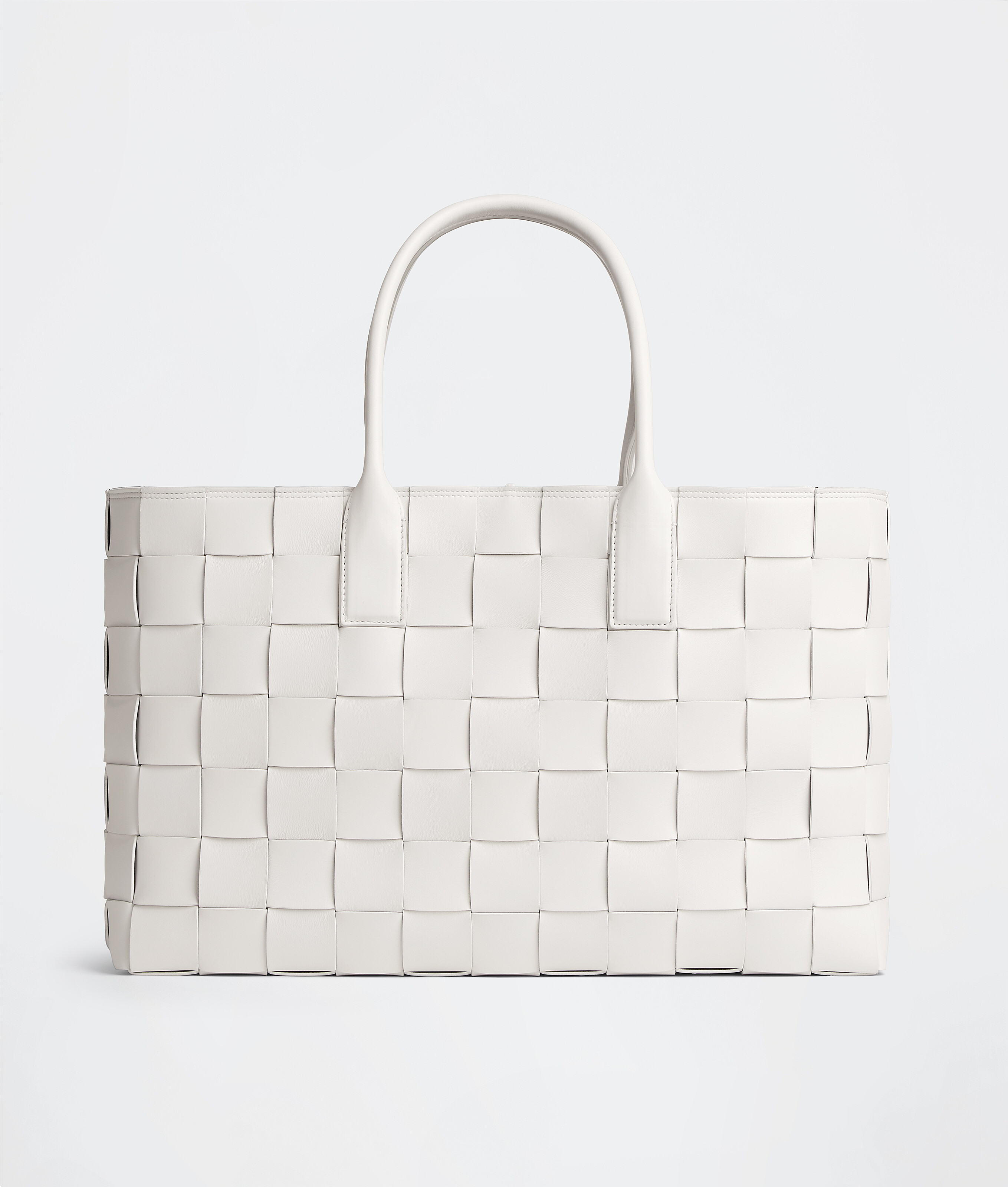
There is a photograph from 1978 of a woven leather clutch sitting on a marble table in Milan
There is a photograph from 1978 of a woven leather clutch sitting on a marble table in Milan. No logo. No hardware. Just intrecciato — the tight basket weave that became Bottega Veneta's signature — rendered in tobacco calfskin. The object looks expensive in a way that doesn't announce itself. It simply is.
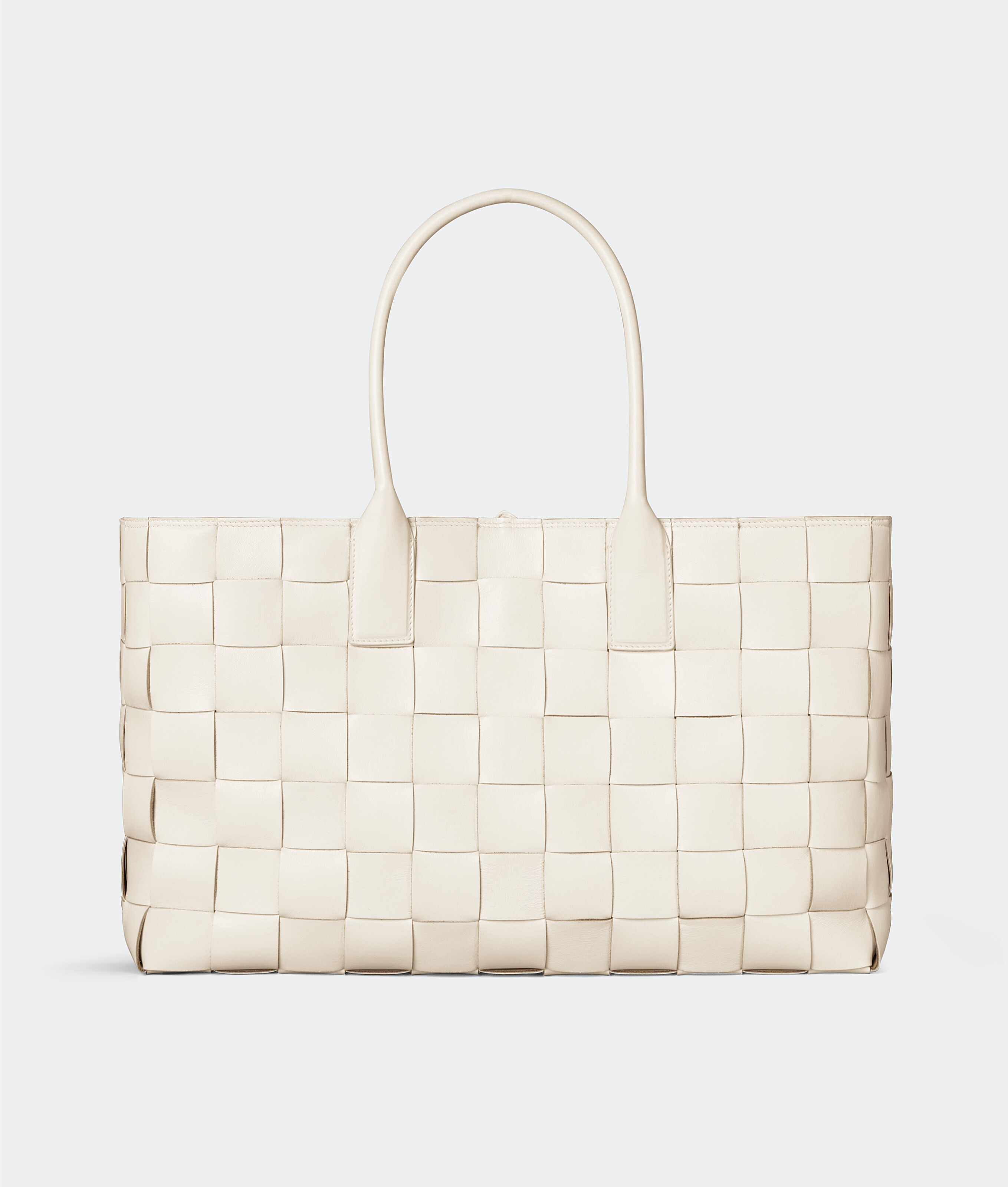
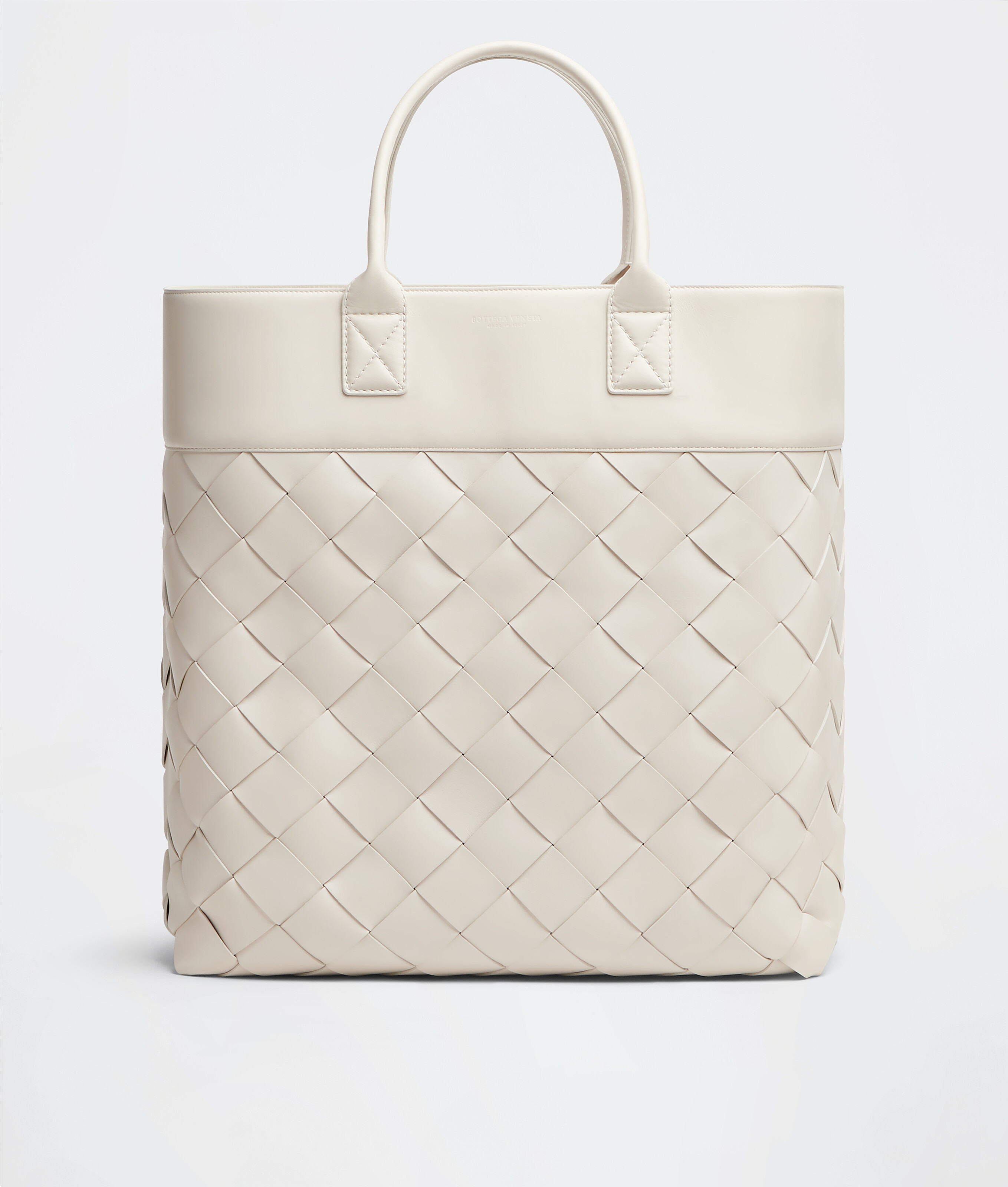
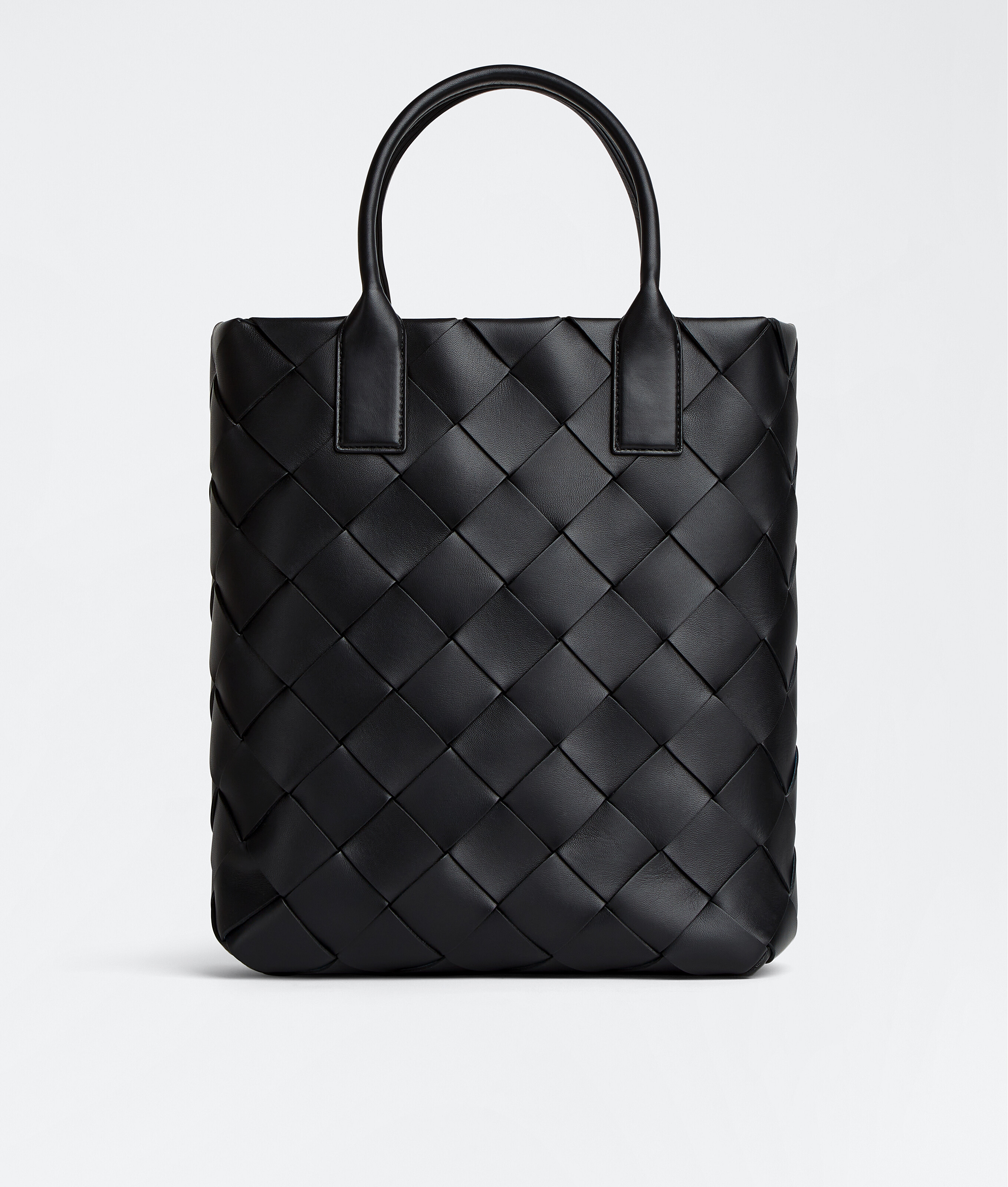
That photograph, archived somewhere in the maison's headquarters in Montebello Vicentino, captures the original proposition. Bottega Veneta was founded in 1966 by Michele Taddei and Renzo Zengiaro in the Veneto, a region already thick with leather workshops. The name translates to 'Venetian shop', which undersells the ambition but names the ethos: craft first, theatre second. The intrecciato weave emerged not as a branding exercise but as a structural solution. Woven leather is more supple than cut-and-stitched panels. It drapes differently. It also takes three times as long to make, which became the point.
By the mid-seventies, Bottega had developed a client base that valued exactly this kind of restraint. The bags carried no external logo because the weave itself was the signature. American Vogue called it "the handbag of the cognoscenti" in 1975, which sounds like puffery but was accurate. If you knew, you knew. If you didn't, the bag didn't care.
The Tomas Maier Era
Bottega Veneta was acquired by Gucci Group in 2001, at which point the house had spent two decades in what the industry politely calls 'transition'. Tom Ford, then Gucci's creative director, installed Tomas Maier — a German designer trained under Sonia Rykiel and Hermès — with a brief that amounted to: make this relevant again without destroying what made it matter in the first place.
Maier's first collection for Spring 2002 was shown not in Milan but in Bottega's Montebello atelier. Editors sat on wooden benches. Models walked between cutting tables. The clothes were almost aggressively plain: narrow trousers in washed cotton, unstructured blazers, flat sandals. The bags, however, were unmistakable. Maier had taken the intrecciato and stretched it across new silhouettes — the Veneta hobo, the Cabat tote — in colours that read as neutral until you saw them next to actual beige. Dark plum. Iron grey. A green the colour of lichen on wet stone.
The strategy was to position Bottega as the anti-logo house at exactly the moment when logomania was cresting. Maier's advertising featured no models, no styling, no aspiration. Just the bag, photographed like a still life. The tagline, when it eventually appeared, was "When your own initials are enough." It was smug, but it worked. By 2005, Bottega's revenue had quadrupled.
What Maier understood — and what kept him in the role for 17 years — was that Bottega's appeal had always been material, not conceptual. The intrecciato wasn't a logo you applied to products. It was a technique that required a certain quality of leather, a certain tension in the weave, a certain hand. You couldn't fake it, which meant you couldn't cheapen it. Maier expanded this logic across ready-to-wear: double-face cashmere coats with no visible seams, leather trousers that moved like wool, knitwear so fine it read as woven. The work was quiet, but it wasn't minimal. Minimal is an aesthetic. This was a method.
By the time Maier left in 2018, Bottega had become the house for clients who wanted to signal wealth without waving a flag. The Cabat — an unlined tote that took two artisans 15 hours to complete — retailed for over £3,000 and had a waiting list. It remains one of the few bags in production that cannot be made faster, no matter the demand.
Daniel Lee and the Pivot
Daniel Lee arrived in June 2018 from Celine, where he had worked under Phoebe Philo during her decade-long redefinition of the house. He was 32. His first Bottega collection, shown that September, opened with a model in a shirt and skirt so simple they looked like a uniform. Then came the bags.
The Pouch — a soft, gathered clutch with no structure and no closure — became the collection's calling card. It looked like the intrecciato had been inflated and then emptied of air. It was immediately divisive, which was the point. Lee wasn't interested in Maier's quiet refinement. He wanted tension. The clothes mixed couture techniques with streetwear silhouettes: a parka in shearling, square-toe boots that recalled both medieval footwear and Prada Sport, gold jewellery so chunky it bordered on armour.
What Lee did, essentially, was make Bottega covetable in a way it hadn't been since the seventies. Maier's Bottega was for people who already understood luxury. Lee's Bottega was for people who wanted to be seen understanding it. The Pouch became the bag of 2019, not because it was subtle but because it was legible. You could spot it across a restaurant. Celebrities carried it. It showed up on Instagram, which Maier's Bottega had largely avoided.
The pivot worked. Bottega's revenue grew 23% in 2019. Lee won Designer of the Year at the Fashion Awards. But the strategy was also precarious. Bottega's historical appeal had been its remove from fashion's churn. Lee made it part of the conversation again, which meant it was subject to the same fatigue that hits every brand once the newness wears off.
Lee left in November 2021. The reasons were never clarified. Kering, Bottega's parent company, issued a statement thanking him for his work. The Pouch remained in production.
Matthieu Blazy and the Return
Matthieu Blazy, who succeeded Lee, had been the house's design director under both Maier and Lee. He knew the atelier. He knew the archive. His first collection, for Fall 2022, felt like a correction without being a repudiation. The silhouettes were softer. The palette shifted back toward earth tones. The bags — including a new version of the Kalimero, a gathered hobo that predated the Pouch by a decade — referenced the house's own past rather than the market's present.
Blazy's Bottega is less about making a statement than about making things well. His Spring 2023 show included a leather trench coat constructed from 60 individual panels, each one hand-stitched. It looked simple until you understood the construction. A white poplin shirt was cut from a single piece of cloth, with no side seams. The intrecciato appeared not just on bags but on shoes, jewellery, even a leather mesh dress that moved like chainmail.
This is, in some sense, a return to the original proposition. Not the one from 1966, but the one from 2001: craft as the primary argument, fashion as the secondary effect. Whether that holds the market's attention remains open. Bottega is no longer the anti-logo house — it is simply a house that makes things a certain way, which is both its limitation and its strength.
There is a room in the Montebello atelier where new artisans learn the intrecciato. It takes six months to weave it correctly. The strips must be tensioned by hand. If you pull too hard, the leather warps. Too soft, and the weave sags. You cannot rush it. The room has been there since 1966. It is still in use.