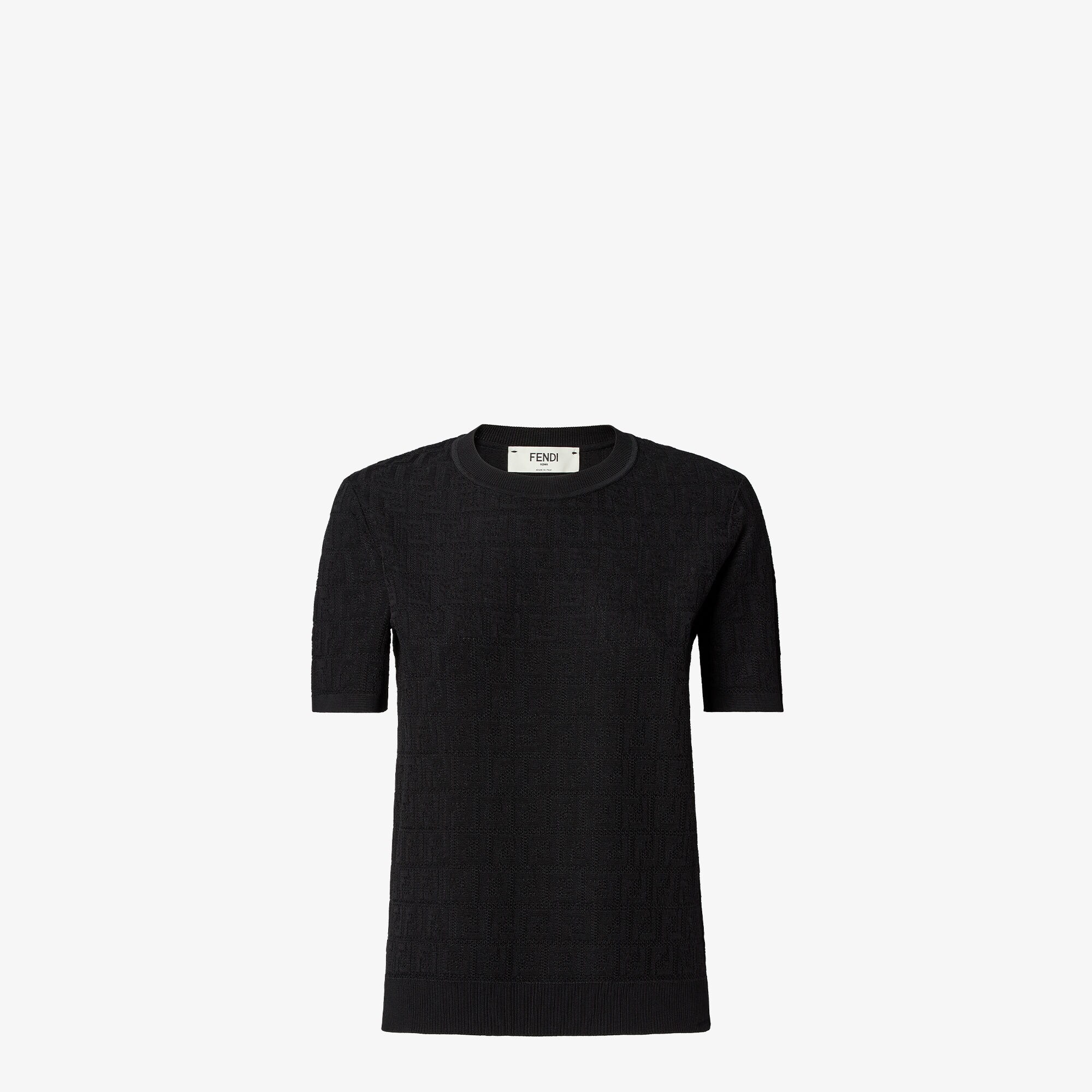
There's a fur coat hanging in the Fendi archives that Karl Lagerfeld slashed with a razor blade in 1965
There's a fur coat hanging in the Fendi archives that Karl Lagerfeld slashed with a razor blade in 1965. Not in a fit — methodically. He cut strips into sable, left them hanging by threads, then reassembled the pelt into something that moved like fabric. The technique was called inlaid fur, and it let women wear mink without looking like they'd married into shipping. That coat is still cited in every Fendi retrospective, usually with the word "revolutionary" attached. What it actually did was give the house permission to treat luxury materials the way other ateliers treated wool.
Fendi has always been a house built on permission — not asking for it, granting it. To treat fur like jersey. To put a logo on the outside. To let a man design for five families at once and still show up for fittings. The maison's shape has changed three times in the past sixty years, and each shift came when someone inside decided the rules no longer held.
The Founding Logic: Five Sisters and One Proposition
Adele Casagrande opened a leather and fur workshop on Via del Plebiscito in 1925. When she married Edoardo Fendi, the name changed, but the work didn't. They made fur coats the way Roman workshops had for decades — heavy, dark, built to last through inheritance. Their five daughters grew up in the atelier. By the time Paola, Anna, Franca, Carla, and Alda took over in the fifties, they'd learned every stage of production and had no interest in repeating their parents' model.
The decision to hire Lagerfeld in 1965 was Carla's. He was twenty-nine, unproven in fur, already juggling Chloé. The sisters wanted someone who didn't revere the material. Lagerfeld treated sable the way he treated tweed — as a surface to manipulate. He perforated it, wove it with leather, dyed it colours that didn't exist in nature. The inlaid fur technique became the house signature, but the broader shift was structural: Fendi stopped making heirlooms and started making clothes.
That same year, the double-F logo appeared. Lagerfeld sketched it on a napkin —Fun Fur, or so the story goes. It ran as a lining detail first, then crept outward. By the seventies, it was visible on buckles, clasps, the turn-lock of the first Baguette prototype. The logo's trajectory tells you what the house understood early: luxury doesn't need to hide.
The Silvia Era: A Bag That Didn't Apologise
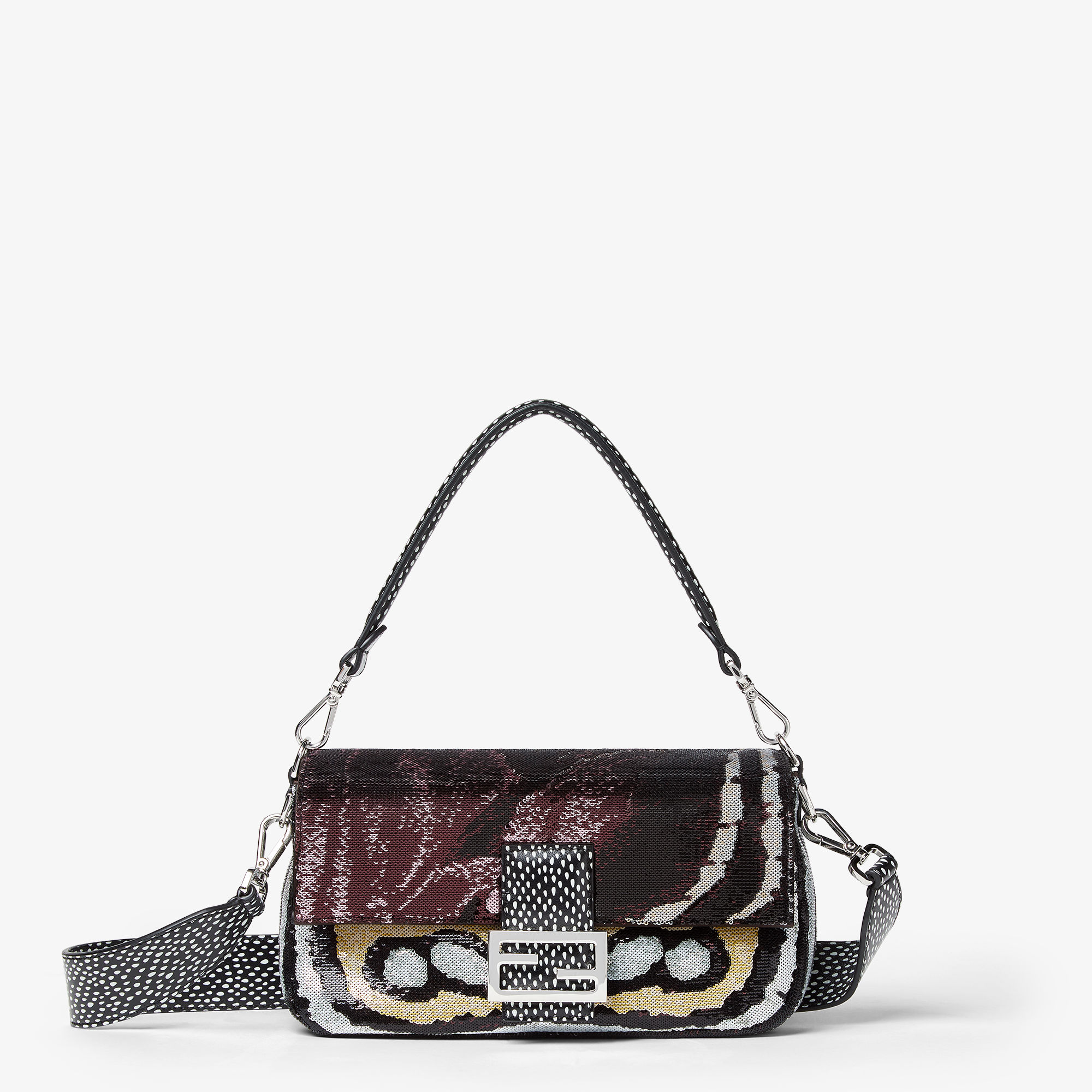
When Silvia Venturini Fendi designed the Baguette in 1997, she wasn't solving a problem. The it-bag format already existed. Handbags were already status objects. What didn't exist was a bag that treated logomania as a starting point rather than a compromise. The Baguette's double-F clasp sat front and centre, not tucked into a lining or embossed in tonal leather. The bag was small, impractical, meant to be carried underarm like a loaf of bread. It came in two hundred variations the first year. Sequins, denim, crocodile, terry cloth. The logic wasn't about refinement — it was about multiplication.
Silvia had been at Fendi since 1994, handling accessories while Lagerfeld ran ready-to-wear. The division made sense on paper. In practice, it meant the house had two creative centres operating on different calendars. Lagerfeld's runway collections leaned conceptual, referential, occasionally austere. Silvia's bags leaned into exactly what the market wanted before the market articulated it. The Baguette hit when Sex and the City was airing, when logomania was shifting from vulgar to viable, when women were buying bags as wardrobe rotation rather than decade-long investments. Fendi sold five hundred thousand units in the first five years.
The Peekaboo followed in 2008. Structured, double-compartment, designed to be opened from both sides. It was the Baguette's opposite — discreet, architectural, built for women who'd aged out of sequins but still wanted a bag that did something. The name came from the way the interior lining flashed when the bag opened. That detail — colour as surprise rather than surface — became the tell. If the Baguette was about visibility, the Peekaboo was about control.
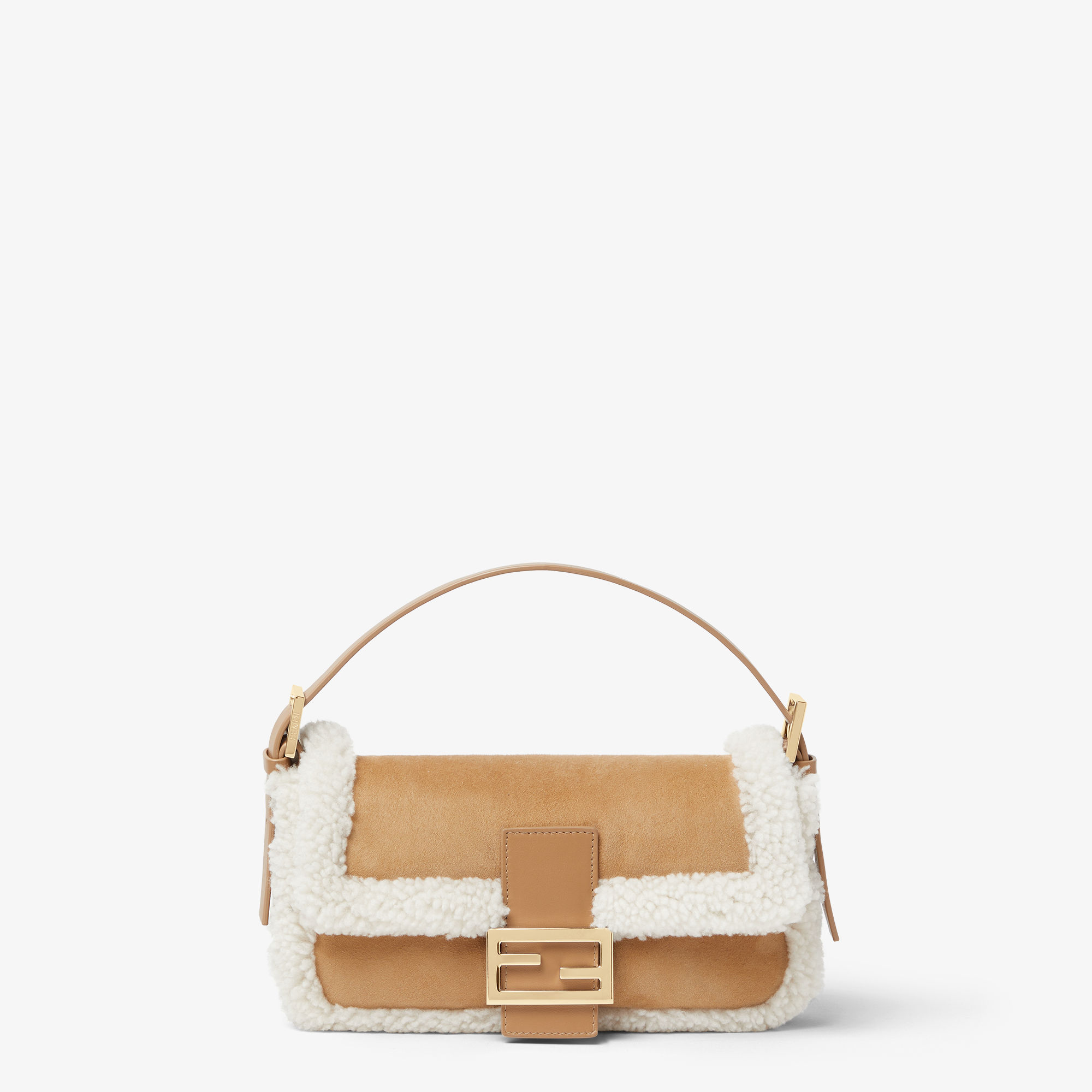
Silvia stayed in accessories when Kim Jones arrived in 2020. The arrangement is unusual but functional. Jones handles the runway and the codes; Silvia handles the objects that fund them. The Baguette's recent reissues — the 1997 silhouette in shearling, in Cuoio Romano, in hand-painted calf — are hers. So is the decision to keep the Peekaboo in production while other it-bags cycle out. Fendi's accessories line accounts for sixty percent of revenue. That's Silvia's doing, and it's what lets Jones operate without the pressure to make every runway collection commercially legible.
The Current Proposition: Jones and the Couture Margin
Kim Jones arrived at Fendi after four years at Dior Men and a stint at Louis Vuitton before that. He's a known quantity — commercially fluent, celebrity-friendly, capable of turning archive references into product without making it feel like homework. His first Fendi collection, shown in September 2020, opened with a sheer organza coat embroidered with the double-F logo in tonal thread. It was Lagerfeld's monogram, rendered in a technique Lagerfeld used for Chanel haute couture. The gesture was clear: this is a house that can do both.
Jones's Fendi leans harder into craft than his previous posts allowed. The atelier still employs furriers trained in the sixties. The leather workshop still uses vacchetta tanned in Tuscany, the same weight Adele Casagrande used in 1925. Jones hasn't tried to modernise those processes — he's used them as a framework for everything else. His second collection featured shearling coats cut like bomber jackets, intarsia fur treated like knitwear, leather trousers seamed with the precision of a tailor working in wool. The clothes looked contemporary, but the construction was pure atelier.
The couture line, relaunched in January 2021, made the strategy explicit. Fendi had shown haute couture once before, in 2017, as a tribute after Lagerfeld's death. Jones brought it back as an ongoing category. The first collection included a floor-length fur coat made from seventy individually dyed pelts, hand-stitched in a gradient from cream to charcoal. It took four hundred hours. It wasn't for sale. The point was to prove the house could still do the thing it was founded to do, even if nobody buys it anymore.
That's the tension Jones is working inside. Fendi's revenue comes from bags, small leather goods, and ready-to-wear that plays well in department stores. Its reputation comes from techniques most customers will never see in person. The couture collections function as brand architecture — they let the Peekaboo exist at a higher margin because the atelier that makes museum-grade fur also makes your handbag lining.
What Holds
Fendi operates out of the Palazzo della Civiltà Italiana now, the white travertine cube in EUR that Mussolini built and never finished. The building has been Fendi's headquarters since 2015, and it photographs like a manifesto — rational, monumental, vaguely unsettling. Inside, the atelier still uses the same wooden fur stretchers Adele Casagrande ordered in the twenties. They're stored in a basement workroom, next to a cutting table Lagerfeld had custom-built in 1967. When Jones needs a reference, he pulls from the archive. When Silvia needs a new Baguette colourway, she pulls from the same place.
The house has changed ownership three times — sold to Prada and Arnault in the nineties, fully acquired by LVMH in 2001. The family is still involved. Silvia is still there. The logo hasn't changed. What's held isn't consistency — Fendi has never been consistent. What's held is the understanding that luxury materials don't need reverence. They need someone willing to cut them open and see what's inside.