There's a fur coat in the Fendi archive with sleeves that unzip completely
There's a fur coat in the Fendi archive with sleeves that unzip completely. Not decoratively — functionally. Commissioned in 1965, it predates the modular wardrobe trend by three decades and the sustainability conversation by five. Karl Lagerfeld designed it during his first year with the house, when the five Fendi sisters hired him not to make them relevant but to make them modern. The coat still works. You can still wear it three ways, depending on the season or your tolerance for attention.
That's the tell. Fendi doesn't shift with the discourse. It authors it early, then lets everyone else catch up.
The sisters and the German
The house opened in 1925 as a leather and fur atelier on Via del Plebiscito. Adele and Edoardo Fendi ran it as a Roman workshop, and when Edoardo died young, Adele kept the business small and operational. Her five daughters — Paola, Anna, Franca, Carla, Alda — inherited not a brand but a trade. By the early sixties, they'd built it into something bigger without losing the workshop mentality. They cut and assembled in-house. They kept their suppliers close. And when they wanted to expand beyond fur, they hired Lagerfeld.
He was thirty-two. They gave him total creative control and no title. The arrangement lasted fifty-four years.
What Lagerfeld did first was technical. He treated fur like fabric — lighter, thinner, more supple than the stiff pelts the market expected. He intarsia'd mink with leather, perforated sable, wove strips of fox into knits. The work required new tanning methods and new construction. Fendi's artisans developed them in the Via del Plebiscito atelier, and Lagerfeld gave them problems to solve every season. The relationship was symbiotic in the least sentimental sense. He needed their hands. They needed his impatience.
The double-F logo came in 1965, the same year as the modular coat. Lagerfeld sketched it as an upside-down repeat — Fun Furs, or Fendi, depending on who you ask. Either way, it worked. By the seventies, the logo marked not just fur but a kind of Roman confidence that didn't announce itself. You either knew or you didn't.
The Baguette and what it meant
Silvia Venturini Fendi joined the house in 1994. Third generation, daughter of Anna, trained in accessories and leather. She'd worked in the atelier since she was a teenager, which meant she understood the technical side before she had to think about the commercial one. That's the order that matters.
The Baguette launched in 1997. Compact, short-strapped, designed to tuck under the arm the way a Parisian tucks a loaf of bread on the way home. The proportions were specific: twenty-six centimetres wide, deliberate about not being practical. It held a wallet, keys, lipstick. It didn't hold your life. That was the point.
What made it work wasn't the size. It was the editions. Silvia released the Baguette in hundreds of variations — embroidered, beaded, sequinned, crocodile, intarsia'd fur, denim, canvas. Some ran in the low thousands of units. Others were one-offs for specific clients or markets. The strategy was counter to everything the accessories market recommended at the time, which was: establish one icon, repeat it in three colourways, let the logo do the work.
Fendi did the opposite. The Baguette became recognisable not because it looked the same everywhere but because it didn't. The shape stayed. Everything else shifted. Customers started collecting them, not as investment but as variation. The bag entered the wardrobe as a category, not a piece.
By 1999, it was on Sex and the City. Carrie Bradshaw gets mugged in season three and tells the thief, "It's a Baguette." The line did more for Fendi's American retail than a decade of ad spend. Not because it explained the bag — because it assumed you already knew.
The Baguette is still in production. Silvia still designs it. The house releases new editions every season, and some of them sell out in forty-eight hours. Others sit. That unevenness is structural, not accidental. Fendi doesn't treat the Baguette like an archive piece. It treats it like a format.
The LVMH era and what it didn't change
LVMH took a majority stake in Fendi in 2001. Full acquisition came later, but the operational shift started then. The house moved into larger production facilities. Distribution expanded. The fur atelier stayed in Rome, but leather goods moved partially to Tuscany, where LVMH's other Italian houses had already built supply chains.
What didn't move: Silvia. She stayed as creative director of accessories and menswear. Lagerfeld stayed on ready-to-wear until his death in 2019. The continuity wasn't sentimental. It was structural. LVMH understood that Fendi's value sat in the atelier knowledge and the family oversight, and disrupting that would cost more than it returned.
When Lagerfeld died, the house didn't replace him immediately. Silvia took over as sole artistic director for a year, then Kim Jones joined in 2020 to lead womenswear and couture. Jones had come from Dior Men, where he'd rebuilt the tailoring line and brought in younger customers without alienating the old ones. At Fendi, he's done something similar but quieter.
His first collection leaned into the archive — not as reference but as material. He pulled Lagerfeld sketches from the eighties, reworked them with current proportions, and sent them out in fabrics the original designs never specified. The gesture was specific. He wasn't reviving Lagerfeld. He was continuing a conversation Lagerfeld had started with the sisters in 1965.
Jones's Fendi is softer than his Dior was. The tailoring is lighter, the palette more muted. He uses organza and tulle the way Lagerfeld used fur — structurally, not decoratively. The clothes don't announce themselves. They also don't recede. That balance is harder than it looks.
Where it stands
Fendi operates now as a house with two creative directors and no visible friction. Silvia runs accessories, menswear, and the children's line. Jones runs womenswear and couture. They don't co-design. They share a studio and an atelier, and the work reads as coherent because the technical language is the same.
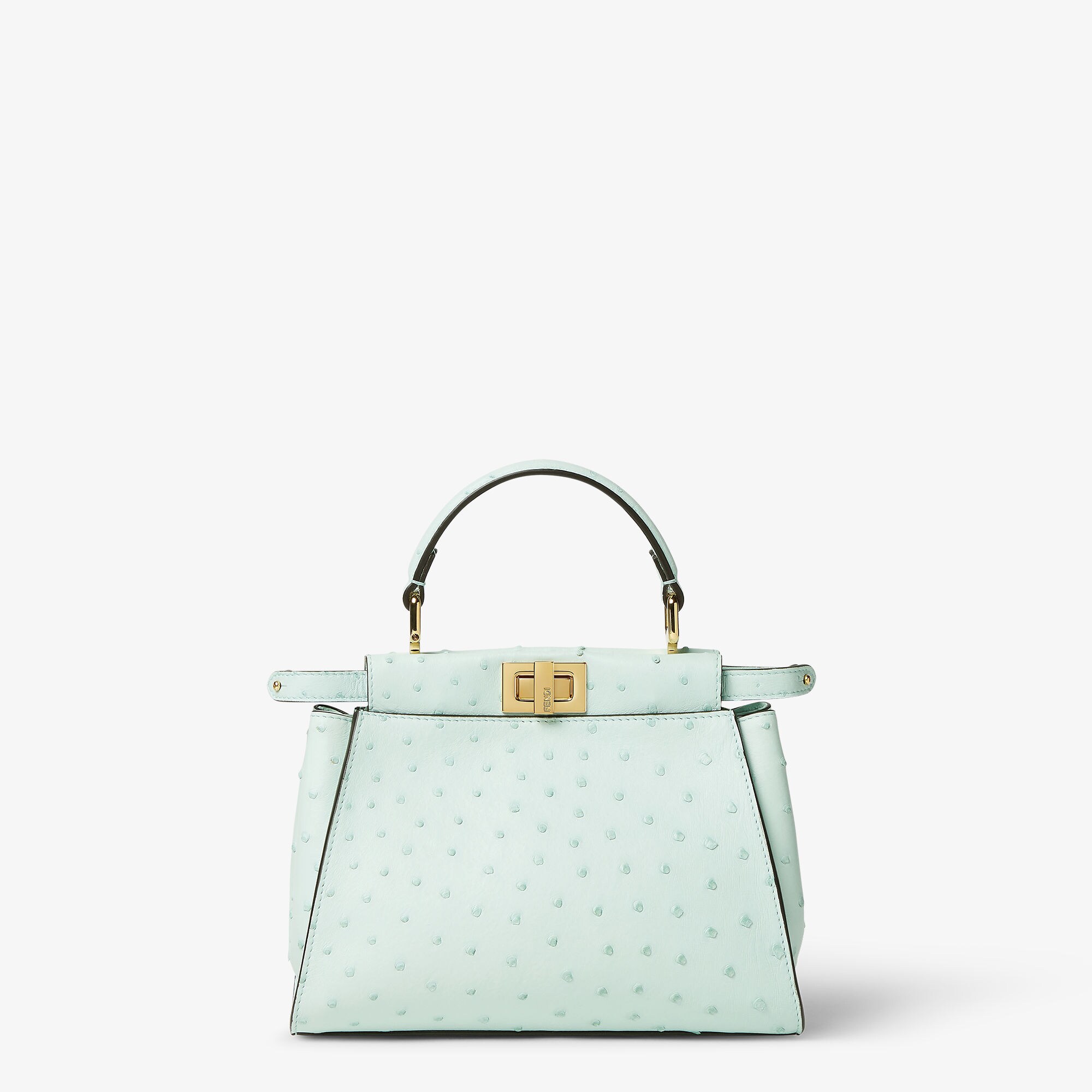
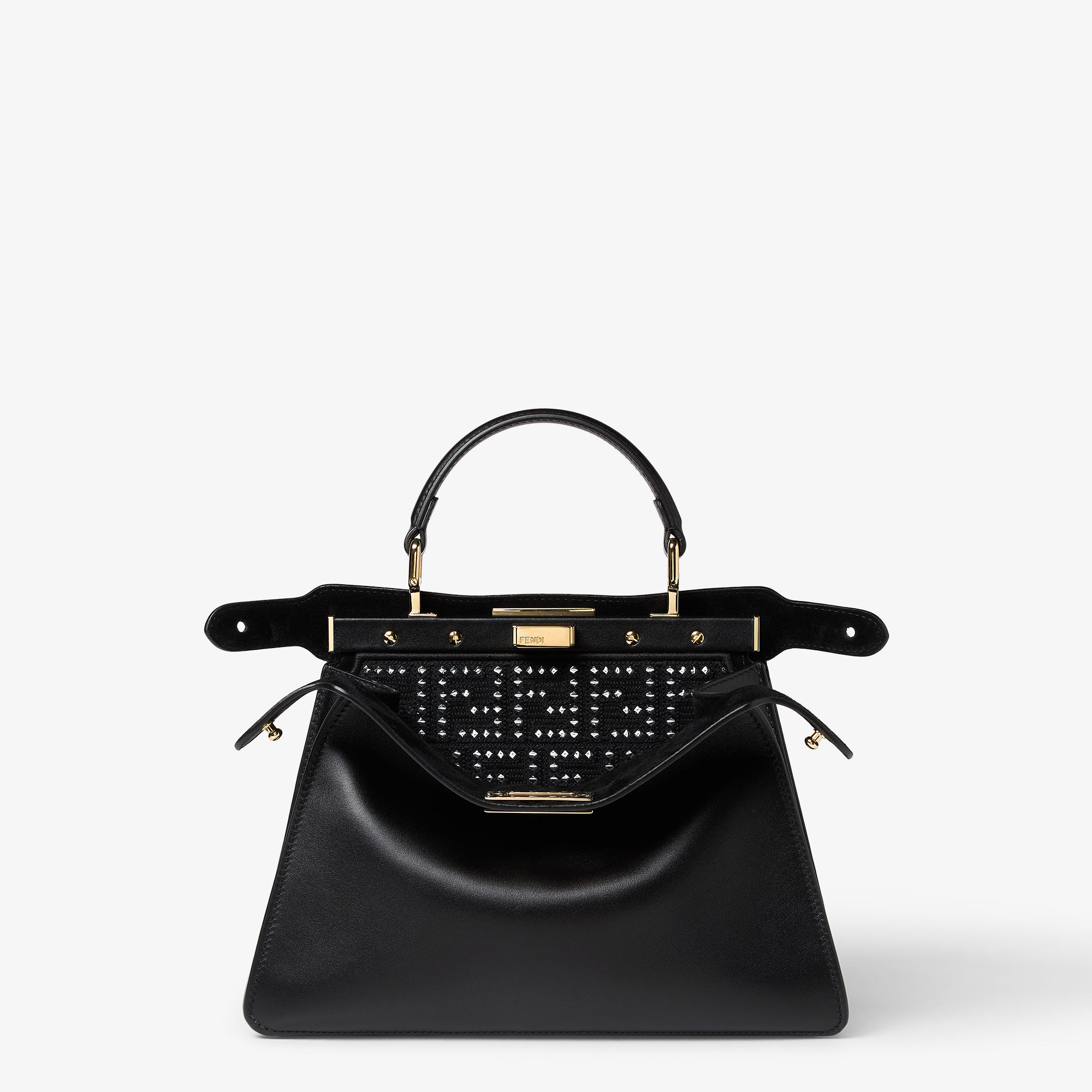
The Peekaboo, which Silvia designed in 2008, is now the house's second-biggest seller after the Baguette. It's structured, top-handled, designed to open from both sides. The name is literal. The bag shows what's inside when you carry it. Some customers find that stressful. Others line the interior in contrasting leather and treat the glimpse as part of the design.
Fendi still produces fur, though the volume has dropped by half since 2015. The atelier still operates in Rome. The house hasn't announced a fur phase-out, which puts it at odds with most of the European luxury market. The decision is commercial and ideological in equal measure. Fendi's technical reputation was built on fur. Walking away from that would mean walking away from fifty years of atelier knowledge and the artisans who hold it.
The tension is unresolved, and the house isn't pretending otherwise.
There's a photograph from 2019, taken a few weeks after Lagerfeld died. Silvia is in the atelier, bent over a cutting table with one of the senior leather workers. They're solving a construction problem on a new Peekaboo variation — the frame won't sit flat when the bag is overfilled. She's sketching directly onto the prototype with a fabric pen. He's already pulling the stitching to rebuild the interior panel.
The photograph wasn't staged. A reporter was there for an interview and caught it between questions. What it shows is what the house has always been: a place where the person in charge still works with her hands, and the work still matters more than the explanation.