There's a photograph from 1953: Audrey Hepburn in a black sheath, arms bare, cigarette holder tilted upward
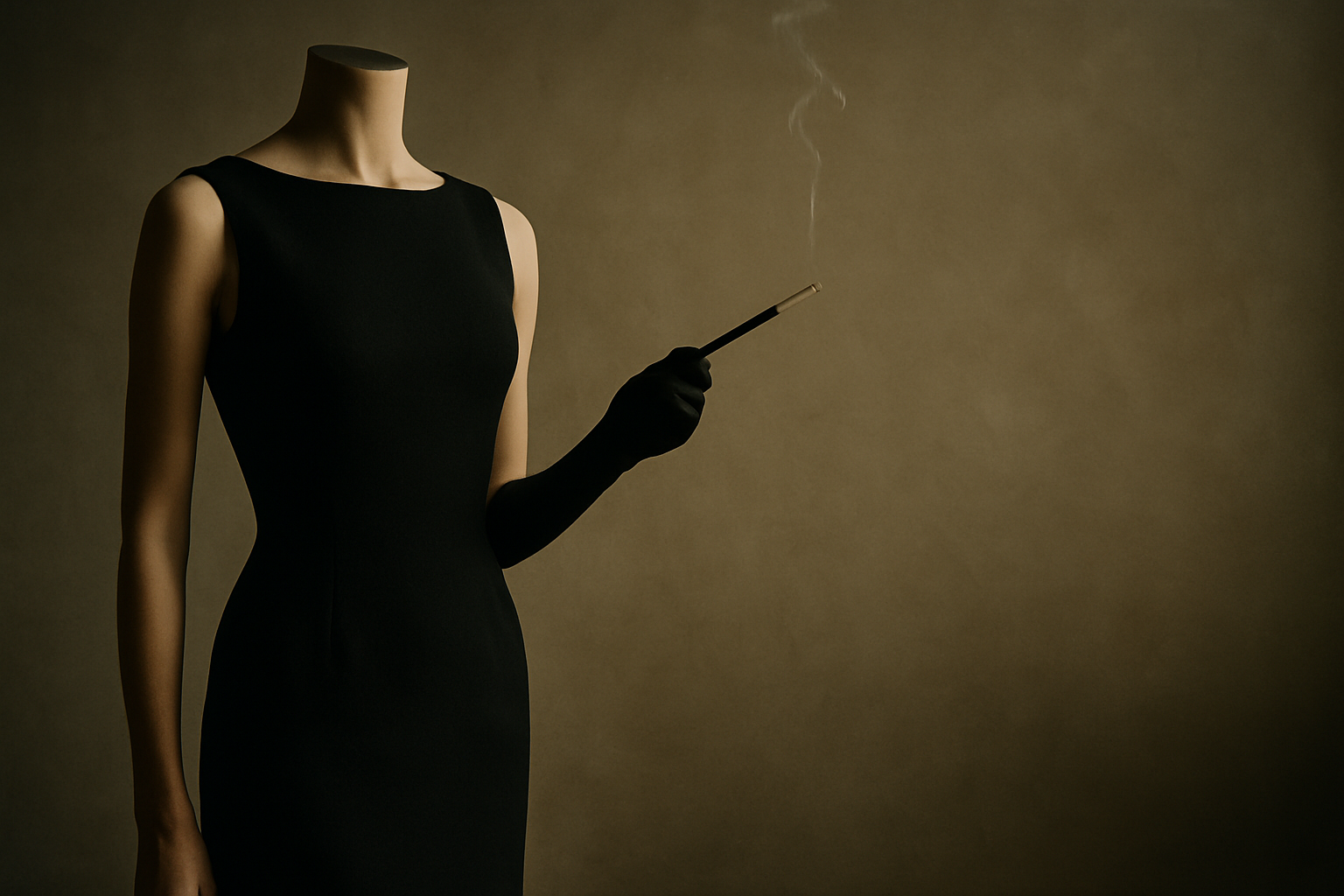
There's a photograph from 1953: Audrey Hepburn in a black sheath, arms bare, cigarette holder tilted upward. The dress is Givenchy. So is the posture. She looks like someone who has never stood in a queue or carried her own luggage. That image—more than any runway, more than any campaign—became the house's calling card for half a century. Elegance as armour. Simplicity as a kind of aristocracy.
But Givenchy has been many things since Hubert de Givenchy opened his atelier on rue Alfred de Vigny in 1952. It has been a couture house for women who lunched at Le Grand Véfour. It has been a laboratory for McQueen's gothic romanticism and Tisci's street-Catholic hybrids. It has been, more recently, a house trying to remember what it was before it became a logo on a sweatshirt. Three eras tell the story: the founder's reign, the Tisci decade, and the Williams reset. Each one a different answer to the same question—what does Givenchy mean when it isn't dressing Hepburn?
The founder's house, 1952–1995
Hubert de Givenchy was 25 when he struck out alone. He'd worked for Schiaparelli, learned structure under Balenciaga, and decided that French couture had grown too fussy. His first collection—'Separates'—offered blouses you could buy off the rack and skirts cut in cotton shirting. This was heresy in 1952. Couture was supposed to be unapproachable. Givenchy made it wearable.
Then Hepburn walked in. She wanted something simple for Sabrina. Givenchy gave her a bateau neckline, a narrow waist, a skirt that ended mid-calf. The dress did nothing and everything. It made her neck longer, her shoulders broader, her presence undeniable. She wore his clothes for the next forty years. He dressed her for films, for premieres, for her wedding. The relationship was symbiotic: she gave him a muse, he gave her a silhouette.
But the house was never just Hepburn. Givenchy understood fabric. His day dresses were often cut in wool crêpe or silk gazar—materials with enough body to hold a line without stiffening into sculpture. His evening gowns leaned on organza and faille, fabrics that moved but didn't cling. He worked in a narrow palette: black, white, ivory, occasionally a sharp red. The effect was monastic. You noticed the woman, not the dress, which was the entire point.
By the 1980s, that restraint felt dated. Couture was Lacroix's pouf skirts and Mugler's shoulders. Givenchy kept cutting the same clean lines, the same bateau necks, the same A-line skirts. He retired in 1995. The house had been sold to LVMH three years earlier. His final show was full of white gowns and standing ovations. No one knew what came next.
The Tisci decade, 2005–2017
Riccardo Tisci arrived at Givenchy in 2005 with a Central Saint Martins degree and no couture experience. He was 31. The house had cycled through four designers in ten years. Nothing had stuck. Tisci's first collection was dark, romantic, vaguely ecclesiastical—models in lace and leather, crucifixes swinging from belts, faces painted to look bruised. It had nothing to do with Hepburn. It had everything to do with what Givenchy could be if it stopped trying to be 1957.
Tisci's great insight was that elegance didn't have to mean restraint. His women wore sheer blouses over boned corsets, tailored trousers with harness details, gowns that looked like they'd been dipped in oil. He mixed couture technique with streetwear silhouettes: rottweiler-print T-shirts next to hand-embroidered gowns, high-tops under evening trousers. It shouldn't have worked. It worked because he committed fully. There was no hedging, no wink at the camera. He believed in his vision, and so did his audience.
By 2010, Givenchy was dressing Kanye, Rihanna, Kim Kardashian. The logo—a sans-serif four-letter block—appeared on sweatshirts, caps, slides. Tisci didn't invent logo fashion, but he made it feel like a choice rather than a concession. You wore the Givenchy sweatshirt because you wanted people to know, but also because it was cut well and the cotton was heavy and it looked correct with tailored trousers.
His couture was less visible but more ambitious. He worked with lacemakers in Calais, embroiderers in India, leather specialists in Italy. A single gown might take 1,200 hours. He showed these pieces alongside the T-shirts and the sneakers, refusing to separate high and low. The message was clear: Givenchy could do both, and doing both was the point.
Tisci left in 2017. His final show was in New York, at Pier 26, with a gospel choir and a front row that included Naomi Campbell, Cate Blanchett, and half of the Kardashian-Jenner family. It felt less like a fashion show than a state funeral. The house he inherited had been adrift. The house he left was one of LVMH's most profitable brands.
The Williams era, 2020–present
Clare Waight Keller came first, in 2017, and gave Givenchy a kind of measured modernism: clean lines, good tailoring, nothing that would frighten the board. She designed Meghan Markle's wedding dress—a bateau neckline, long sleeves, no lace. It looked like a Givenchy dress from 1965, which was probably the idea. She left in 2020. The house needed something else.
Matthew Williams arrived from Alyx, his own label, where he'd built a reputation for technical sportswear and heavy-duty hardware. He'd worked with Kanye, consulted for Louis Vuitton, collaborated with Moncler. His first Givenchy collection leaned hard into his background: utility vests with carabiner closures, leather trousers with bondage straps, logo-printed nylon that looked like it came from a parachute factory. The silhouettes were sharp, the materials were expensive, the attitude was uncompromising.
It was also, in places, a bit humourless. Williams is a serious designer—he thinks about ergonomics, about how a strap distributes weight, about whether a zipper pull can double as a bottle opener. But Givenchy, even under Tisci, always had a sense of play. Williams's work can feel engineered rather than imagined. The clothes are impressive. They don't always seduce.
His recent collections have softened slightly. There are more dresses, more draping, more colour. He's brought in archival references—a nod to Hubert's 1968 space-age collection here, a reworked bateau neckline there. The accessories are strong: the Antigona bag, relaunched with new hardware, has become a quiet bestseller. The menswear is sharper than the women's, which makes sense given Williams's background. He understands how a man wants to move through a room.
The question now is whether Givenchy can be both a couture house and a streetwear brand, whether it can honour Hubert's legacy without being trapped by it, whether it can mean something specific in a market that rewards the general. Williams is trying. He's installed new ateliers, hired new petites mains, committed to showing couture twice a year. The work is there. The identity is still forming.
What remains
There's a dress in the Givenchy archive—black wool crêpe, bateau neckline, three-quarter sleeves, hem just below the knee. It was made in 1958. You could wear it tomorrow and no one would place it. That's the house at its best: clothes that don't announce their decade, that work because the proportions are correct and the fabric is good and the woman wearing them looks like herself, only more so.
Givenchy has spent 70 years trying to repeat that trick. Sometimes it succeeds. Sometimes it makes T-shirts. Both are fine. Both are necessary. The house endures not because it has found a single answer but because it keeps asking the question. Hubert knew what elegance looked like in 1958. Tisci knew what it looked like in 2010. Williams is still figuring out what it looks like now. The work continues. The atelier is still on rue Alfred de Vigny. The dresses still hang in the archive, waiting.