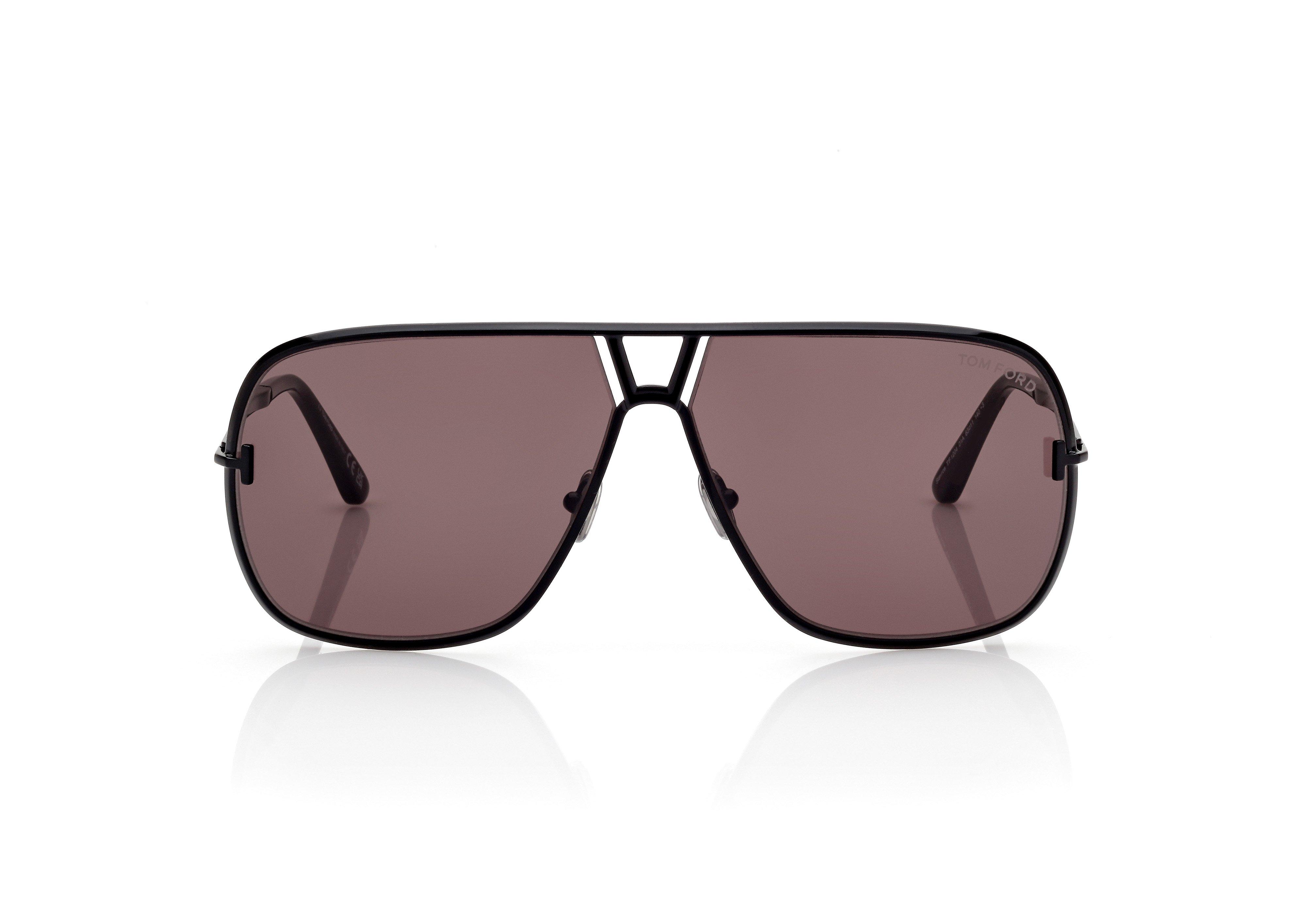
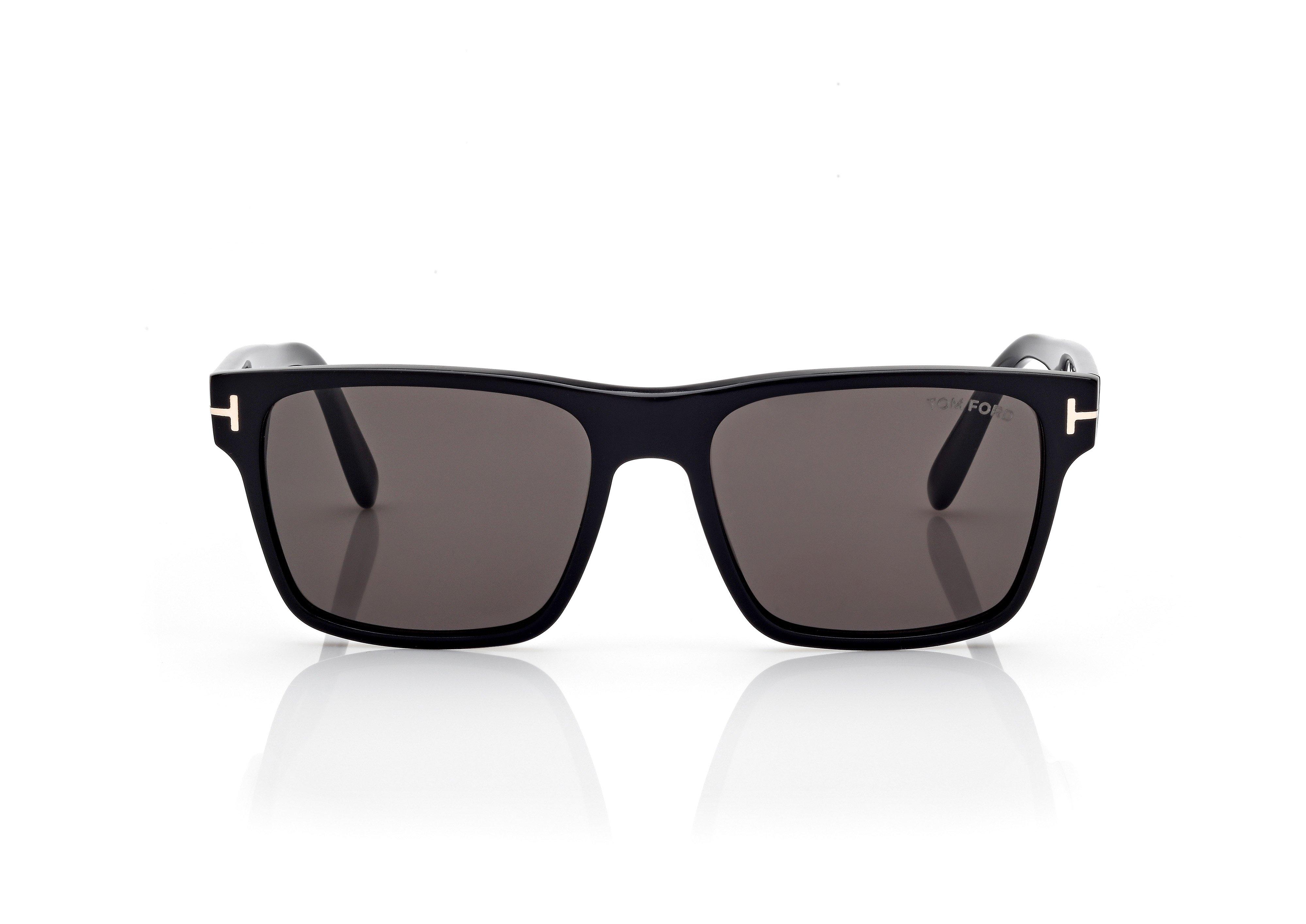
Tom Ford: a house, in brief
The velvet jacket Tom Ford wore to the 2004 Oscars — midnight blue, peak lapel, single-button, cut so close it looked like upholstery — wasn't from his own label. It was from the Gucci archive, from his own tenure there. He'd left the house six months earlier. The jacket was a full stop dressed as an homage.
That's the shape of Tom Ford: the gesture that looks generous but clarifies ownership. For two decades, the name has moved across three distinct configurations — saviour, auteur, luxury conglomerate asset — and each one redefined what the house could mean. Not what fashion could mean. What this house, under this name, was willing to prioritise.
The Gucci Years as Prelude
Tom Ford didn't launch Tom Ford first. He launched Tom Ford by rebuilding someone else's house, then making sure you knew who'd done it. When he joined Gucci in 1990 as chief women's ready-to-wear designer, the Florentine brand was fraying: over-licensed, under-directed, suffocating in logo'd canvas it could no longer control. By 1994, he was creative director. By 1995, he'd shown the collection that turned Gucci from heritage liability into sex object.
Velvet hipsters in jewel tones. Satin shirts unbuttoned past the point of plausible deniability. A white jersey dress, 1996, cut on the bias with a horse-bit detail that landed just south of the sternum. The pieces weren't subtle, but they weren't careless either. Ford understood the difference between provocation and tackiness, and he understood it in millimetres. The cut was exact. The styling was pornographic only if you weren't paying attention to the tailoring.
What Ford did at Gucci — and later at Yves Saint Laurent, after the 1999 acquisition — was reframe luxury as desirability rather than deference. You didn't buy Gucci because your mother did. You bought it because the ad made you feel something the rest of the market had forgotten how to trigger. By the time Ford and CEO Domenico De Sole left in 2004, Gucci Group's value had increased nearly tenfold. The industry didn't just notice. It restructured around the precedent.
2005: The Eponymous House and the Menswear Thesis
Tom Ford the brand launched in 2005 with a menswear collection shown in New York, not Milan. The decision wasn't geographic accident. Ford had spent fifteen years inside the Italian system; he knew its strengths and its gossip apparatus. Launching in New York meant launching on his terms, in a market that still treated tailoring as special occasion rather than weekly uniform.
The first collection centered on a two-button notch-lapel suit in sharkskin wool, cut with a suppressed waist and trousers that sat just low enough to elongate the leg line without reading costume. It wasn't revolutionary. It was correct. Ford's menswear wasn't about innovation; it was about control. He'd watched American men dress badly in good cloth for decades. The line's proposition was simple: we will make this easier, and you will look like you've thought about it without having to.
The tailoring came out of the Ermenegildo Zegna facilities in Switzerland. The leather was Italian. The aesthetic was mid-century Hollywood as remembered by someone who understood how those suits actually worked. Peak lapels on evening wear, never on business suits. Shirt collars cut to work with or without a tie. Trousers hemmed to break once, lightly, at the shoe.
By 2010, Ford had added womenswear. The clothes looked like his Gucci work if you weren't paying attention, but the construction was different. Heavier. More internal structure, less reliance on the body to animate the garment. A gold lamé column gown from the spring 2011 collection required boning through the bodice and a weighted hem to keep the liquid drape from collapsing into cling. It was engineered like armour, worn like skin.
What Ford built in that first decade was a house that worked backward from image. The advertising came first — he shot it himself, cast it himself, art-directed every surface — and the product confirmed what the image promised. It's the inverse of how most designers operate. Most design the coat, then figure out how to photograph it. Ford designed the photograph, then built a coat capable of delivering it.
The Estée Lauder Acquisition and the Fragrance Fulcrum
In 2006, a year after launching the brand, Ford sold the beauty division to Estée Lauder. The deal was structured as a long-term licensing agreement, but functionally it was a sale: Lauder controlled production, distribution, marketing budget. Ford retained creative approval. The first fragrance, Black Orchid, launched that same year. By 2022, Tom Ford Beauty was generating over a billion dollars annually. The fashion division, by comparison, hovered somewhere around the $300 million mark.
This is the part of the Tom Ford story that doesn't fit neatly into the designer-as-auteur narrative the industry prefers. The house became profitable not through clothing but through fragrance, not through runway but through retail counters at Sephora and Nordstrom. Black Orchid, Tobacco Vanish, Fucking Fabulous — the names did half the work, but the juice was legitimate. Perfumer Yann Vasnier built scents that smelled expensive in the specific way Ford's tailoring looked expensive: dense, unapologetic, designed for people who'd already tried everything else.
The fashion operation remained small by conglomerate standards. Fewer than 100 freestanding stores globally. No diffusion line, no logo'd canvas, no attempt to scale past the threshold where margin begins to compromise make. Ford had watched Gucci nearly collapse under its own licensing in the early 90s. He wasn't going to repeat the mistake with his own name.
But the fragrance success created a structural tension. The brand was making serious money, which meant it was now a serious acquisition target. In 2022, Estée Lauder bought the entire Tom Ford brand — fashion, beauty, accessories, eyewear — for $2.8 billion. Ford stayed on as creative director through 2023, then stepped back. The house, for the first time, would continue without him.
After Tom: The Haider Ackermann Appointment
In February 2023, Tom Ford showed his final collection. It was tight, controlled, entirely in character: sharp tuxedos, liquid jersey, a gold sequined gown that caught light like a threat. No farewell speech. No sentiment. He'd built the house, sold it at the top of the market, and left before anyone could ask him to compromise.
The question wasn't whether the house would continue — Lauder hadn't spent $2.8 billion for a nameplate — but what it would become without the man who'd treated his own name as both product and brand position. In October 2024, the house appointed Haider Ackermann as creative director. The choice was unexpected, and precise.
Ackermann had spent two decades building a reputation for draped tailoring and a kind of melancholic elegance that doesn't photograph as well as it wears. His own label never scaled past insider cult status, but his work at Berluti and in various consulting roles proved he could operate inside a commercial structure without sanding off his point of view. He's not Tom Ford. He's not trying to be.
The first Ackermann collection for Tom Ford won't show until 2025. What's already clear is that the house is attempting something most legacy brands don't survive: a transition from founder-synonymous to creatively autonomous. Ford built a brand that looked like him, sounded like him, reflected his specific understanding of desirability. Ackermann has to build a brand that can reference that history without being trapped inside it.
It's a narrower path than it sounds. Too faithful, and the work becomes tribute act. Too divergent, and the house loses the aesthetic equity that justified the $2.8 billion price. Ackermann's task is to find the space between those poles — to make clothes that feel like Tom Ford without requiring Tom Ford to have made them.
The velvet jacket from the 2004 Oscars is still in Ford's personal archive. He's mentioned it in interviews twice, both times to make the same point: the best thing you can wear is the thing you had the foresight to commission five years earlier. It's a designer's answer, and a brand-builder's. The house he built operates on the same principle. It wasn't about this season. It was about the season you'd remember.