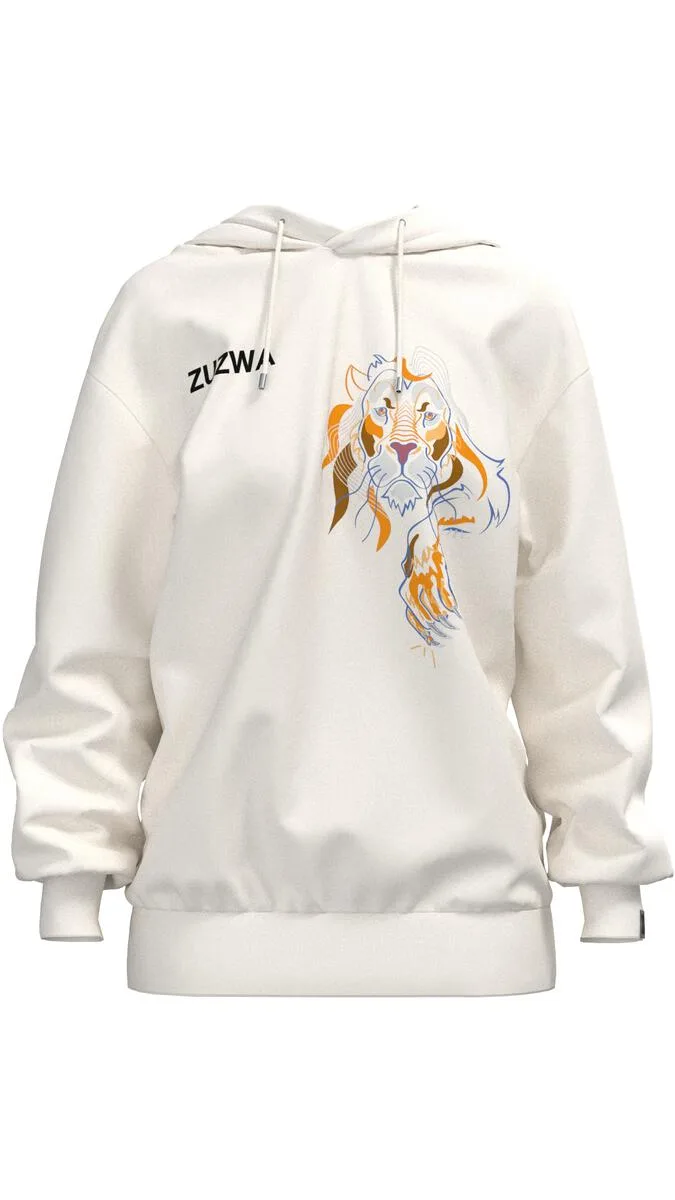
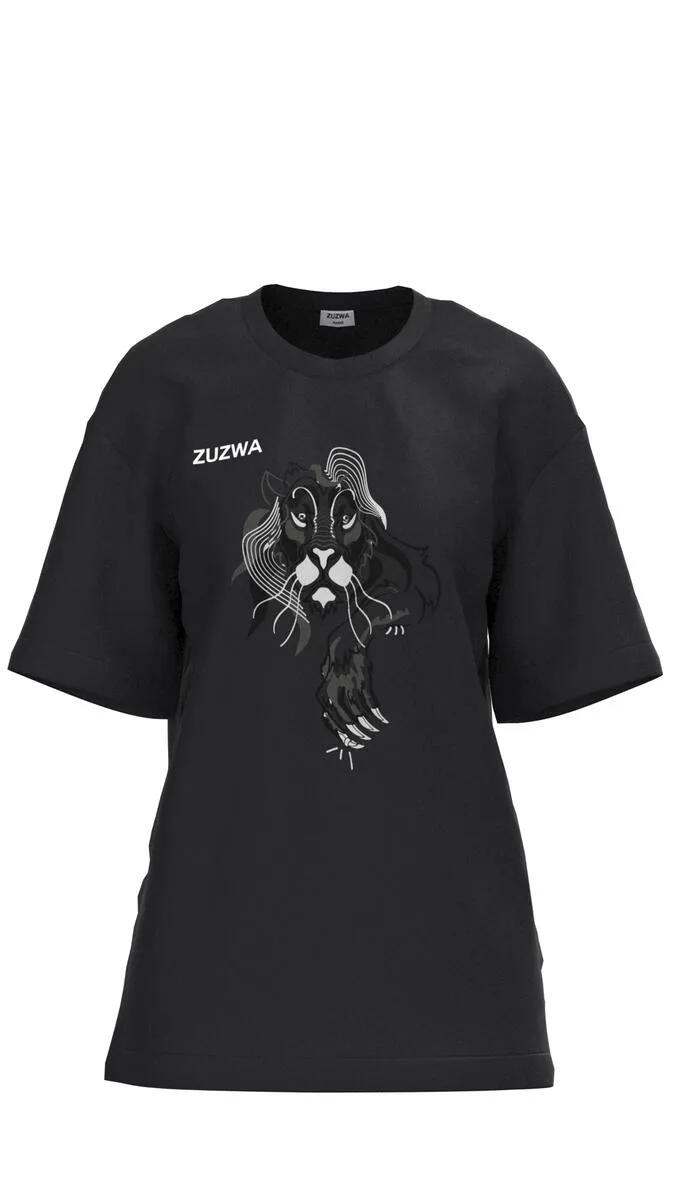
ZUZWA's overlooked codes
The first thing you notice in the ZUZWA archive—housed in a climate-controlled room beneath the Antwerp atelier—is not a handbag or a runway photograph. It's a cardboard box of buckles. Brass, mostly. Some blackened steel. A few in brushed nickel that haven't been used since 2009. They are small, asymmetric, and engineered to sit flush against leather without a visible screw. Most people who own a ZUZWA piece have never registered them.
That is the point.
The house that built from the inside out
Zoë Claes and Wim Van de Velde founded ZUZWA in 2003, the year Antwerp stopped being shorthand for deconstruction and started becoming shorthand for commerce. The city's fashion graduates were opening showrooms in Paris, signing with Kering, or folding. Claes and Van de Velde did neither. They rented a ground-floor space on Kloosterstraat, hired two pattern cutters, and made 40 leather jackets in a tobacco-brown calfskin that a tannery in Igualada had been trying to move for eighteen months.
The jackets sold. Not because of the cut—though the armscye was high and the body short, which was unusual then—but because of the lining. Claes had used a heavyweight cotton twill, the kind you'd find inside a Barbour, and stitched it flat against the leather with no interlining. When you put the jacket on, it felt like you were wearing two separate garments that happened to share a zipper. It was warm in October and breathable in June. People kept them.
That approach—engineer the interior, let the exterior follow—became the house's organising principle. ZUZWA's first handbag, introduced in 2006, had an internal frame made from laminated beechwood. The leather stretched over it like upholstery. No one could see the frame, but everyone could feel the bag hold its shape after a year of daily carry. The construction cost more than the calfskin.
The codes no one writes about
ZUZWA is known, narrowly, for two things: a logo that looks like a Cyrillic letter but isn't, and a top-handle tote called the Stam that shows up in airport departure halls. Both are recent. The logo appeared in 2015, when the house opened its first standalone store in Antwerp and needed something to put on the awning. The Stam debuted in 2017, after a Japanese department store asked for "something we can explain in 30 seconds." It worked. The bag now accounts for 40 per cent of revenue.
But neither the logo nor the Stam explains what the house actually does. That requires looking at the details most editorials skip.
Start with the hardware. ZUZWA has used the same buckle supplier—a fourth-generation metalworker in Tuscany—since 2008. The buckles are die-cast, not stamped, which means they are heavier and costlier than anything a handbag requires. They also allow Claes to set them into the leather without visible stitching. The prong slides through a reinforced hole; the buckle sits in a recessed channel. It looks like the leather grew around the metal. You only notice the engineering when you try to adjust a strap and realise there is no slack, no wobble, no creak.
Then there is the leather itself. ZUZWA does not tan its own skins, but it does buy them raw. Claes sources hides from a co-operative in Scandinavia—mostly Swedish dairy cattle, culled at four years—and sends them to a tannery outside Florence that still uses vegetable tannins and takes eleven weeks per batch. The result is a leather that darkens with handling but does not crack. It also costs twice what most contemporary houses pay for comparable calfskin. Claes has never publicly mentioned the tannery by name.
The stitching is another giveaway. ZUZWA uses a saddle stitch—two needles, one thread, each pass locked by the previous—on every bag and most garments. It is slower than a machine stitch and requires a craftsman who can keep tension consistent across 90 minutes of handwork. The house employs six stitchers full-time. When production exceeded their capacity in 2019, Claes turned down orders rather than switch to machine stitching. She has said, once, in an interview with a Dutch trade journal, that the saddle stitch is "the only reason the bags don't come apart."
What Vandenberghe changed
Raf Vandenberghe joined ZUZWA as creative director in 2021, after a decade at Hermès and a brief stint consulting for The Row. He did not arrive with a manifesto. He arrived with a question: why does every piece feel like it is trying not to be noticed?
Claes's answer, according to people who were in the room, was that discretion is the house's aesthetic. Vandenberghe's counter was that discretion and invisibility are not the same thing. A month later, he introduced colour.
Not prints. Not patterns. Colour. A burnt orange that sat somewhere between rust and terracotta. A grey-green that looked like lichen on limestone. A deep blue-black that wasn't navy and wasn't midnight but lived in between. The tones were subtle enough that they read as neutrals under artificial light, but outside, in daylight, they separated from the usual beige-grey-black spectrum that defines quiet luxury.
He also changed the silhouette. ZUZWA's garments had always been boxy—short jackets, wide trousers, straight skirts that ended at the knee. Vandenberghe kept the proportions but added weight to the hems. Trousers now break once at the shoe. Skirts no longer float; they fall. The effect is less architectural, more gravitational. You feel the cloth.
The hardware stayed the same. So did the saddle stitch. So did the tannery. Vandenberghe has said, in the two interviews he has given since joining, that his job is not to reinvent the house but to "make people look twice at what was always there."
Where the house is now
ZUZWA operates 11 stores—six in Europe, three in Japan, two in the United States. It does not wholesale to department stores. It does not do collaborations. It does not hire celebrity ambassadors or seat influencers at runway shows, because it does not hold runway shows. Twice a year, Claes and Vandenberghe invite 40 people to the Antwerp atelier, serve coffee, and walk them through the collection on a rolling rack. Most attendees are buyers. Some are journalists. No one takes photographs.
The house's revenue has grown every year since 2015, but exact figures are not public. It remains independently owned. Claes and Van de Velde have turned down acquisition offers from two conglomerates, both of which wanted to scale production and expand the logo's presence. The most recent offer, in 2022, was declined within a week.
What keeps people buying is not the logo or the flagship bag. It is the buckle that does not loosen, the lining that lasts a decade, the leather that improves as it ages. These are not the things you photograph. They are the things you feel when you pick up a jacket you have owned for eight years and realise the sleeves still hang straight.
In the archive room beneath the atelier, there is a wall of sample garments dating back to 2003. Claes pulls out a leather jacket from the first collection—the tobacco-brown calfskin with the flat-stitched cotton lining. She puts it on. The leather has darkened in places where hands have gripped the cuffs and the collar has folded. The stitching is intact. The buckle on the belt still clicks shut without slack. She wears it to the office most Fridays.