Alexander McQueen doesn't do gift-shop thinking
Alexander McQueen doesn't do gift-shop thinking. The house never has. Even at accessible price points—and there are more than you'd expect under five hundred dollars—the work still carries that foundational tension: beauty that doesn't apologise for its edge, craft that refuses to be merely decorative. This is not the place to look for safe gestures or things that fade politely into someone's existing wardrobe. McQueen gives you objects with presence, pieces that announce a point of view.
What makes something worth giving at this level isn't just the name stamped into leather or engraved onto hardware. It's whether the piece holds its own outside the box, whether it reads as considered rather than convenient. The best McQueen accessories under five hundred dollars do that work. They carry enough of the house codes—the knuckle motif, the structured silhouette, the slight provocation—without requiring a styling degree to wear them. They're legible. They're specific. And they don't feel like placeholder gifts.
What follows isn't exhaustive. It's five pieces that justify their price, that someone will actually use, and that won't read as an apology for not spending more.
The Skull Card Holder
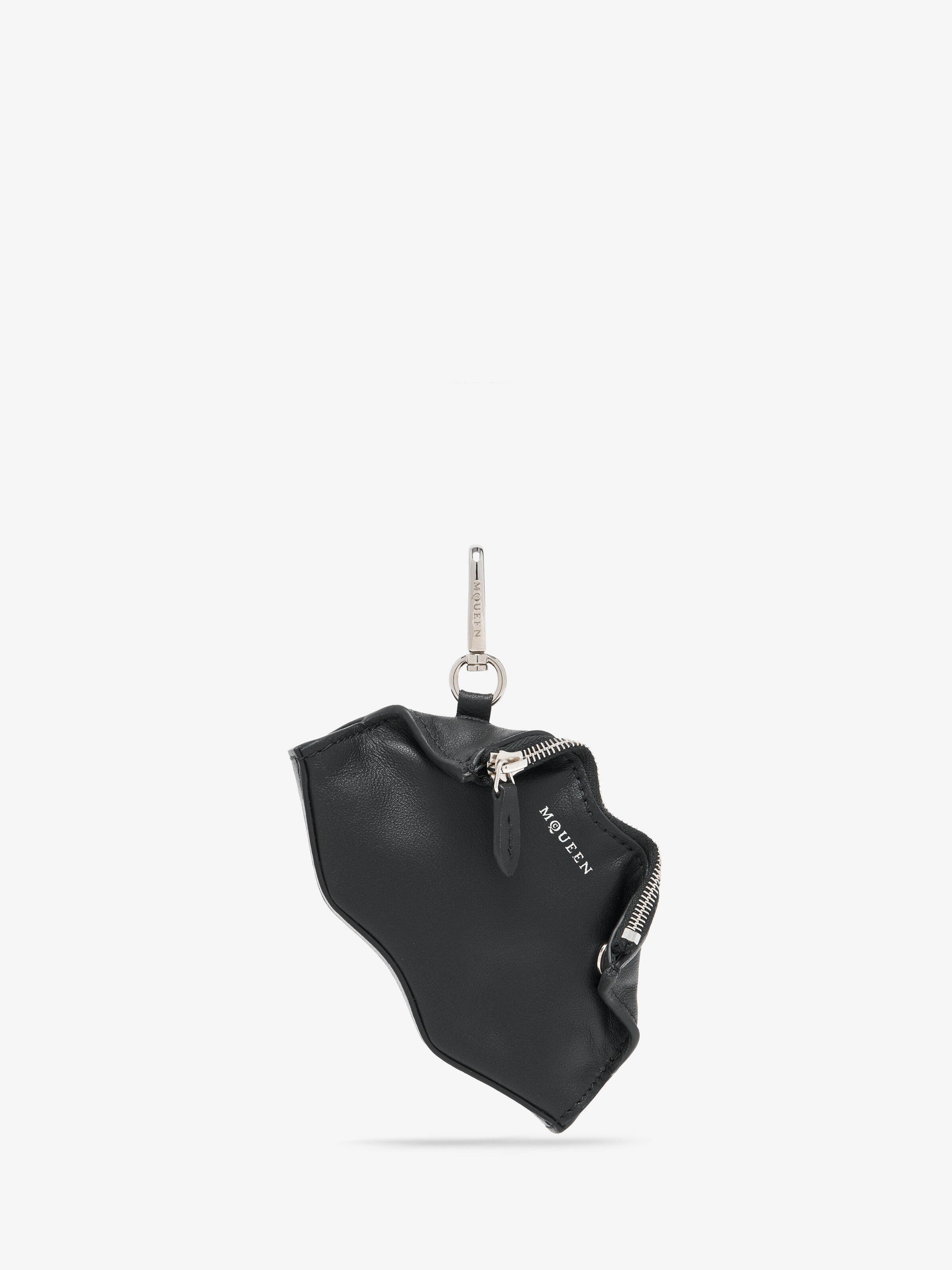
The skull card holder might be the most efficient delivery system McQueen has for its own aesthetic. It's black leather, clean lines, four card slots, and that signature skull clasp rendered small enough to sit in a palm but large enough to register. This is not subtle, but it's not theatrical either. It's declarative. The leather is structured calf, not the thin stuff that warps after three months in a back pocket. The clasp is metal, properly weighted, and it closes with the kind of clean click that signals actual engineering.
This sits around two hundred and fifty dollars, depending on the market and the season. For someone who doesn't want to carry a full wallet, or who's already committed to the card-and-phone school of leaving the house, this works. It fits in a jacket pocket, a small bag, a jeans pocket if the jeans are cut generously. The skull reads as McQueen immediately, which is either the entire point or a dealbreaker depending on who you're buying for. There's no middle ground with this piece. It's for someone who wants the reference, not someone who wants to be convinced.
The leather will patina if it's actually used. That's not a defect. That's the piece aging into itself.
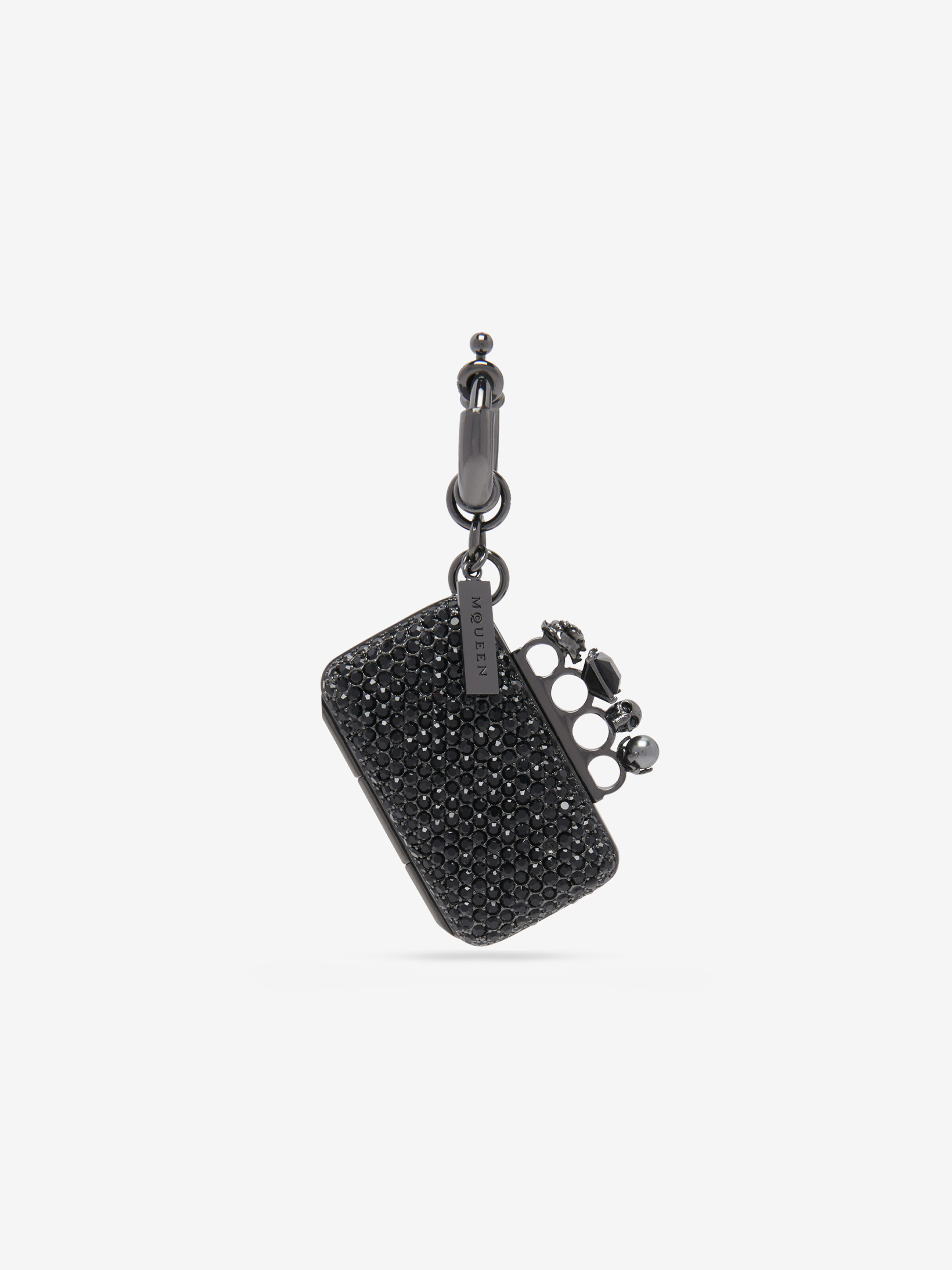
The Knuckle Box Clutch (Miniature)
The full-scale knuckle clutch is a statement that requires a certain kind of night and a certain kind of confidence. The miniature version—which hovers around four hundred and fifty dollars—asks for less theatre but still delivers on structure. This is a hard-shell clutch, small enough to hold a phone, cards, keys, and not much else. The knuckle rings are scaled down but still articulated, still metal, still the thing your hand finds first when you pick it up.
This works for someone who goes to openings, dinners where you're not expected to take notes, weddings where a shoulder bag feels like too much. It's architectural. It doesn't drape or slouch or apologise for taking up space on a table. The shell is lacquered, usually in black or ivory, sometimes in a seasonal red or deep green. It will show scratches if it's thrown into a larger bag. It's not meant to be thrown.
The clutch sits in that narrow category of accessories that only make sense if someone already has the rest of their life handled—if they have the daily bag, the work tote, the weekend holdall. This is the edit, not the essential. But if that's where they are, this is the piece.
The Oversized Scarf
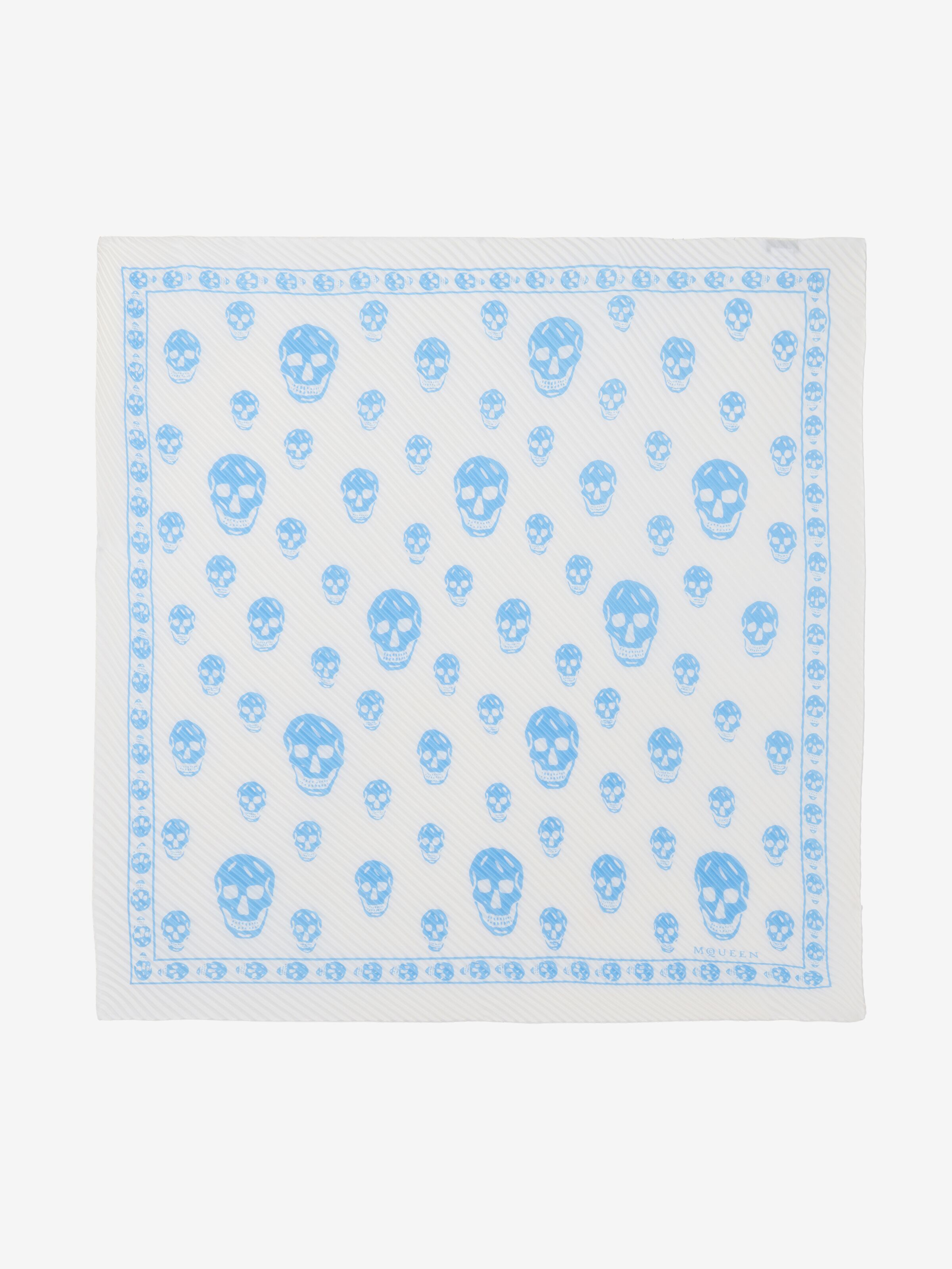
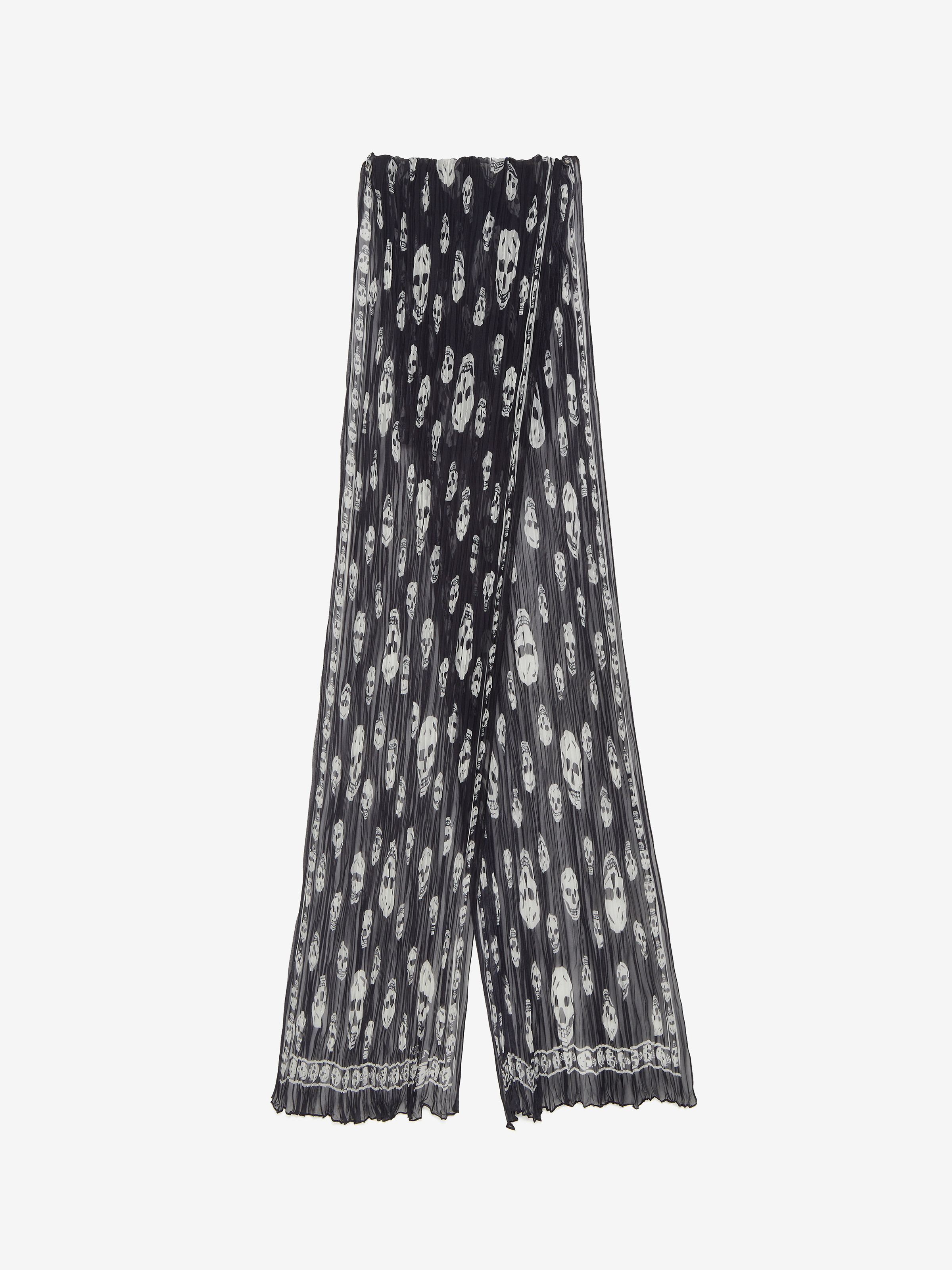
McQueen's scarves run large, and that's the point. These aren't neck-warming scraps. They're modal-silk or cashmere blends, usually 140 by 140 centimetres, printed with skulls or botanicals or both. The house has been doing this since the beginning—taking memento mori imagery and rendering it in colours that belong on a garden wall in late summer. The scarves under five hundred tend to be the modal-silk blend rather than pure cashmere, but the hand is still good. They drape without stiffness, and the scale means they work as shawls, headscarves, or the kind of scarf you knot once and let hang.
This is for someone who understands that a scarf is a whole outfit adjustment, not an afterthought. Someone who'll wear it over a coat, or with a plain black dress, or as the only pattern in a look. The prints are not quiet. Even the "subtle" ones—the ones that lean into shadow and negative space—read from across a room. You're buying this for someone who wants to be read from across a room, or who at least doesn't mind it.
The fabric will hold up if it's hand-washed and air-dried. Don't send it to a standard dry cleaner. The dyes are stable but not indestructible.
The Leather Zip Wallet
Less coded than the skull card holder, more substantial than the clutch, the zip-around wallet sits in that middle territory where McQueen's leather goods do their quietest work. This runs around three hundred dollars. It's structured grain leather, usually in black, sometimes in burgundy or navy. The house logo is embossed, not stamped in gold. The zip is heavy-gauge metal. Inside: eight card slots, a bill compartment, a zip pocket for coins.
This is not exciting. That's not a criticism. This is for someone who needs a wallet that will last five years of daily use and still close properly, whose card slots won't stretch out after a year, whose zip won't separate halfway through its second winter. The leather is thick enough that it will hold its shape, but it's not so rigid that it feels like carrying a hardcover book.
If you're buying for someone who's just started earning enough to care about where their wallet comes from, or someone who's been using the same battered thing for a decade and won't replace it unless the replacement is obviously better, this is the move. It's the least McQueen-looking thing McQueen makes at this price point, and that's sometimes exactly what someone needs.
The Studded Belt
The studded belt runs narrow—about three centimetres wide—and it's almost always black leather with silver-tone hardware. The studs are small, evenly spaced, and they run the length of the strap. This sits around three hundred and fifty dollars. It's not a statement belt in the Y2K sense. It's not asking to be the centre of the outfit. It's asking to be the detail that makes the outfit make sense.
This works with high-waisted trousers, over a long shirt, with denim that actually fits at the waist. It doesn't work if someone's still buying jeans two sizes too big and hoping a belt will fix the problem. The leather is firm enough that it will hold a trouser waistband in place, and the studs are set securely enough that they won't catch on knit fabrics or pop off after three wears.
The buckle is a simple prong, no skull, no branding beyond a small embossed logo on the interior. If you're buying for someone who wants McQueen but doesn't want to announce it every time they get dressed, this is the access point. It's the piece that does its work quietly, that codes as quality before it codes as brand.
On Longevity
McQueen's leather goods at this price tier are not heirloom pieces, but they're not disposable either. The card holder and wallet will last as long as you don't overstuff them. The clutch will last as long as you treat it like the structured object it is, not like something you can fold in half. The scarf will last if you wash it properly and don't leave it balled up in a coat pocket for six months. The belt will last if the person wearing it is consistent about their sizing and doesn't punch new holes every season.
Store leather pieces in dust bags when they're not being used. Don't leave them in direct sunlight. If hardware tarnishes, a jeweller's cloth will bring it back. These are not complicated objects. They just ask to be treated like what they are: well-made things that will reward care and punish neglect in equal measure.