Alexander McQueen's footwear has a reputation problem, and it isn't about quality
Alexander McQueen's footwear has a reputation problem, and it isn't about quality. It's about proportion. The oversized sneaker became so ubiquitous between 2017 and 2021 that the house's broader shoe offering—court pumps with architectural heels, ankle boots in calf and suede, Derby lace-ups with exaggerated soles—got buried under a wave of logo-embossed rubber. Which is a shame, because McQueen has always made shoes that hold their shape and their ground. The construction is Northamptonshire and Italian, depending on the model. The leathers are sourced from tanneries the house has used since Burton was still at the helm. And the design language, even in the commercial pieces, carries some of the angular tension that made the runway work compelling in the first place.
What separates a McQueen shoe that lasts from one that doesn't comes down to three things: sole construction, upper material, and whether the silhouette was designed for the catwalk or the street. The former rarely survives a Milan winter. The latter does, provided you're not treating a leather sole like it's Vibram. What follows are three models I've worn long enough to say something honest about them. One has been resoled. One I'd buy again tomorrow. One I wouldn't.
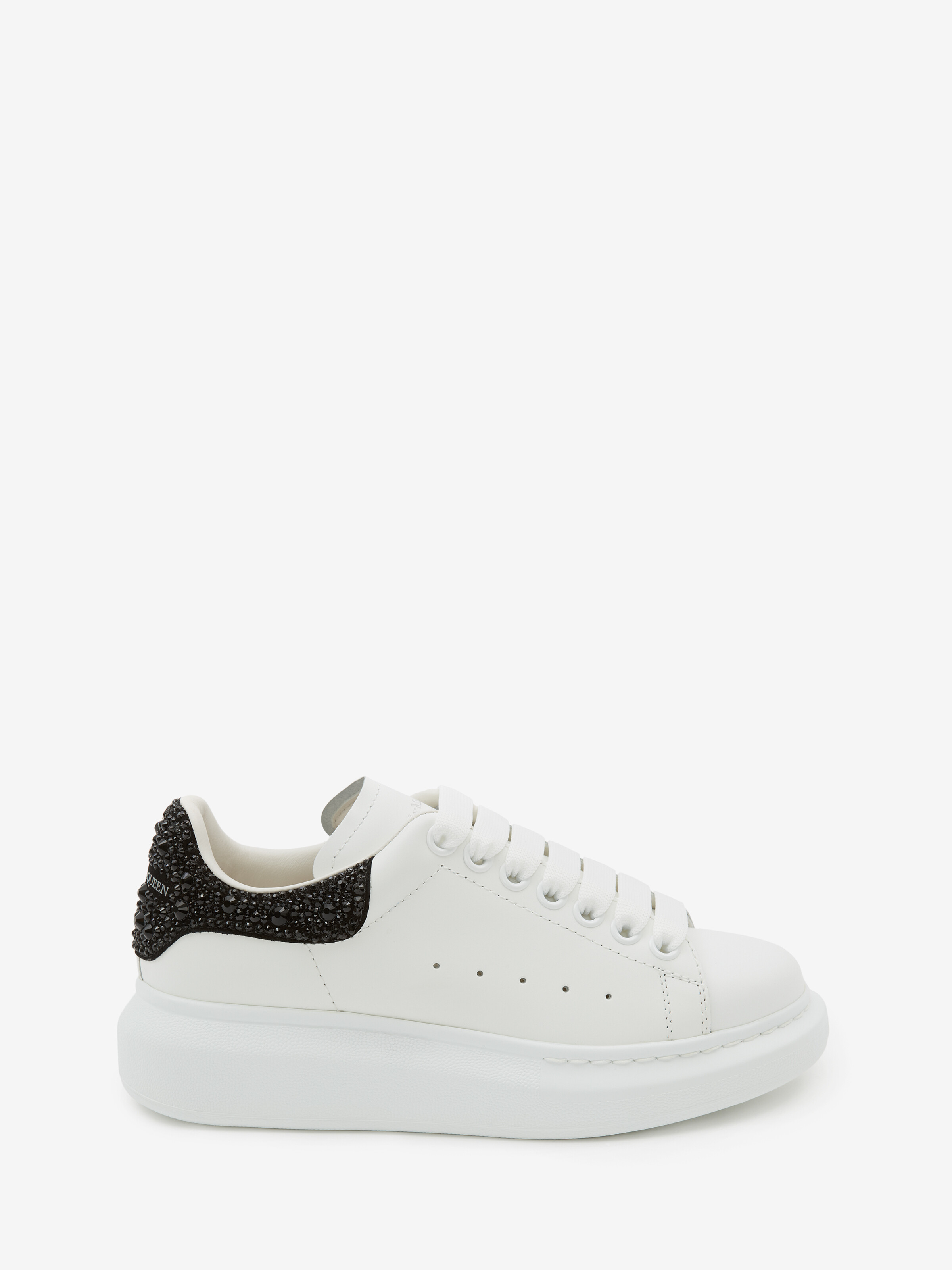
Oversized Sneaker in Calfskin
The obvious place to start, because it's still the house's best-selling style and because enough time has passed to see how the construction holds up past the first season. I've had a black-and-white pair since late 2019. Four years of regular rotation, two trips to a cobbler for sole work, and the uppers still look presentable.
The calfskin is thick—thicker than you'd expect from a sneaker marketed as casual. It doesn't crease so much as it folds, and the folds stay shallow. The rubber sole, oversized as it is, wears down predictably at the heel. By month eighteen, the tread was smooth enough that I had it replaced with a thinner Vibram half-sole. The cobbler didn't love the job—the original sole is glued and stitched in a way that makes separation tricky—but it's doable, and the shoe came back looking nearly stock.
The tongue padding compresses over time. That's the weak point. After two years, the fit loosens by half a size, and you either accept it or add an insole. I added an insole. The laces are flat cotton and fray at the tips, but they're replaceable, and McQueen sells spares through customer service if you're willing to wait three weeks.
The silhouette still reads as McQueen, even now that half of Europe has moved on to Salomon and Asics. The proportions are deliberate enough that the shoe doesn't look like it's chasing anything. It just looks like what it is: a well-made sneaker with an exaggerated sole that was designed to last longer than the trend it helped create.
Price sits around $590. For a shoe you can resole and wear for four years, that's reasonable. For a shoe you rotate heavily and then retire after eighteen months, it isn't.
Tread Slick Boot in Leather
The Tread Slick is McQueen's answer to the Chelsea boot, except the elastic gusset has been replaced with a zip and the sole has been inflated to match the sneaker's proportions. I bought a black calf pair in autumn 2020, wore them through two Milan winters, and they've become the pair I reach for when I need something that works with tailoring but won't slip on wet stone.
The leather is smooth, not grained, and it takes polish without turning glossy. The zip is YKK, which is a small but telling detail—most houses at this price point spec Italian or Swiss hardware, but YKK holds up better under repeated stress, and McQueen's design team knows it. The pull tab is leather-wrapped and stitched at four points. It hasn't come loose.
The sole is the same exaggerated rubber unit as the sneaker, and it wears the same way: predictable degradation at the heel, stable everywhere else. The boot's weight takes some adjustment. It's heavier than a standard Chelsea by at least 150 grams per shoe, and that weight sits low, which changes how your ankle flexes when you walk. You feel it for the first week. After that, it's just how the boot moves.
The shaft height is slightly higher than a traditional Chelsea, which means it works better with cropped trousers than with denim. I've worn them with both, but the proportions favour the former. The fit is true to size, and the leather doesn't stretch much, so if you're between sizes, go up.
At $890, the Tread Slick is expensive for a boot that isn't fully welted. But the construction is solid, the sole is replaceable, and the design is specific enough that it won't look like a knockoff of something else in three years.
Wander Loafer in Patent Leather
This is the one I wouldn't buy again. The Wander loafer is a slip-on with a chunky sole and a squared-off toe, rendered in black patent leather with a grosgrain collar. I bought it in 2021 because I needed something between a sneaker and a dress shoe, and the silhouette looked promising in the e-commerce photos.
The patent leather is the problem. It's coated calf, and the coating doesn't flex—it cracks. By month six, fine stress lines appeared across the vamp where the shoe bends during your stride. By month twelve, those lines had deepened into visible creases, and the patent finish had started to peel at the edges. Patent leather ages badly on any shoe that sees regular wear, but on a loafer with this much flex, it's a design miscalculation.
The sole construction is identical to the sneaker and the boot: thick rubber, Goodyear-adjacent attachment, replaceable if you find the right cobbler. But the upper won't last long enough to justify a resole. The grosgrain collar holds up fine—it's the patent that fails.
If McQueen offered this silhouette in matte calf or suede, I'd consider it again. In patent, it's a two-season shoe at best, and at $750, that's a poor return.
A Note on Care and Longevity
McQueen's shoes respond well to basic maintenance, but they don't forgive neglect. The calfskin models take standard cream polish and should be treated every eight to ten wears. The rubber soles are durable but not indestructible—get them looked at by a cobbler once the tread starts to smooth, and don't wait until the midsole is exposed. The patent leather styles are harder to maintain; use a damp cloth and avoid polish entirely, because it gunks up the coating.
Store the boots with shoe trees. The structured ones, not the spring-loaded kind. The leather holds its shape better with support, and the investment in trees is a fraction of what you'd spend replacing a pair that's collapsed at the shaft. Most of McQueen's footwear is built to last five years if you treat it right. That's more than most houses at this tier can claim.