Bottega Veneta doesn't announce
Bottega Veneta doesn't announce. It doesn't logo-stamp, it doesn't shriek from across the Rinascente floor, and it certainly doesn't make your taxi driver ask what you're carrying. What it does — what it's done since the Maier reset and through the Daniel Lee fever and into Matthieu Blazy's more composed present — is telegraph a specific kind of fluency. The person carrying intrecciato woven leather in matte calf isn't trying to be noticed. They already have been.
That restraint makes the first purchase unusually consequential. You're not buying into a logo system where any piece will do. You're buying into a vocabulary of craft, and the wrong choice reads as costume. The right one reads as inevitability, the piece you'd own regardless of what the sample sales yielded last season.
Bottega's range splits cleanly into three tiers, not by quality — the vacchetta at the entry level is the same supple calf as what lines a $4,000 Kalimero — but by how much real estate the intrecciato covers, how much structure the frame carries, and how loud the silhouette speaks. What follows are three budgets, three entry points, and the specific reasons each one works.
Under $1,000: The Card Case or Zip-Around Wallet
The small leather goods live in the $400–$750 range, and they do two things the bags can't. First, they let you handle the house's signature weave daily, in a format where the craft is unavoidable — your thumb crosses those woven strips every time you pull a card. Second, they age in ways that read as patina rather than damage. A Cassette with a corner scuff looks like you dropped it. A card case with a corner scuff looks like you've had it for three years, which you have.
The bifold card case in intrecciato nappa runs about $530 and holds six cards flat, no billfold bulk. It's scaled for trouser pockets and interior bag compartments, which means it doesn't announce itself when you set it on a counter. The woven calf comes in sixteen colours each season, but the neutrals — fondente, a near-black brown, or the house's matte black — won't date you to a specific Daniel Lee or Blazy collection. You'll use it until the stitching gives, which it won't for a decade.
The zip-around wallet, closer to $700, gives you more capacity and a full intrecciato exterior, no smooth panels. It's heavier, more present in the hand, and it works if you're the sort who carries cash or needs to organise receipts from three currencies. The zipper closure is Bottega's own hardware — no YKK, no logo pulls — and the slider sits flush enough that it won't catch on silk linings.
Both pieces come in seasonal colours that cycle through the range: mallow, a dusty lilac; parakeet, which is more wearable than it sounds; or the periodic re-releases of tobacco, a caramel-edged tan that Maier used in 2012 and that Blazy revived last autumn. If you're drawn to a colour that isn't a neutral, check whether it appeared in the mainline bags that season. If it didn't, it's a small leather goods exclusive, and those tend to disappear faster in the resale market.
$1,500–$2,500: The Small Arco or Intrecciato Tote
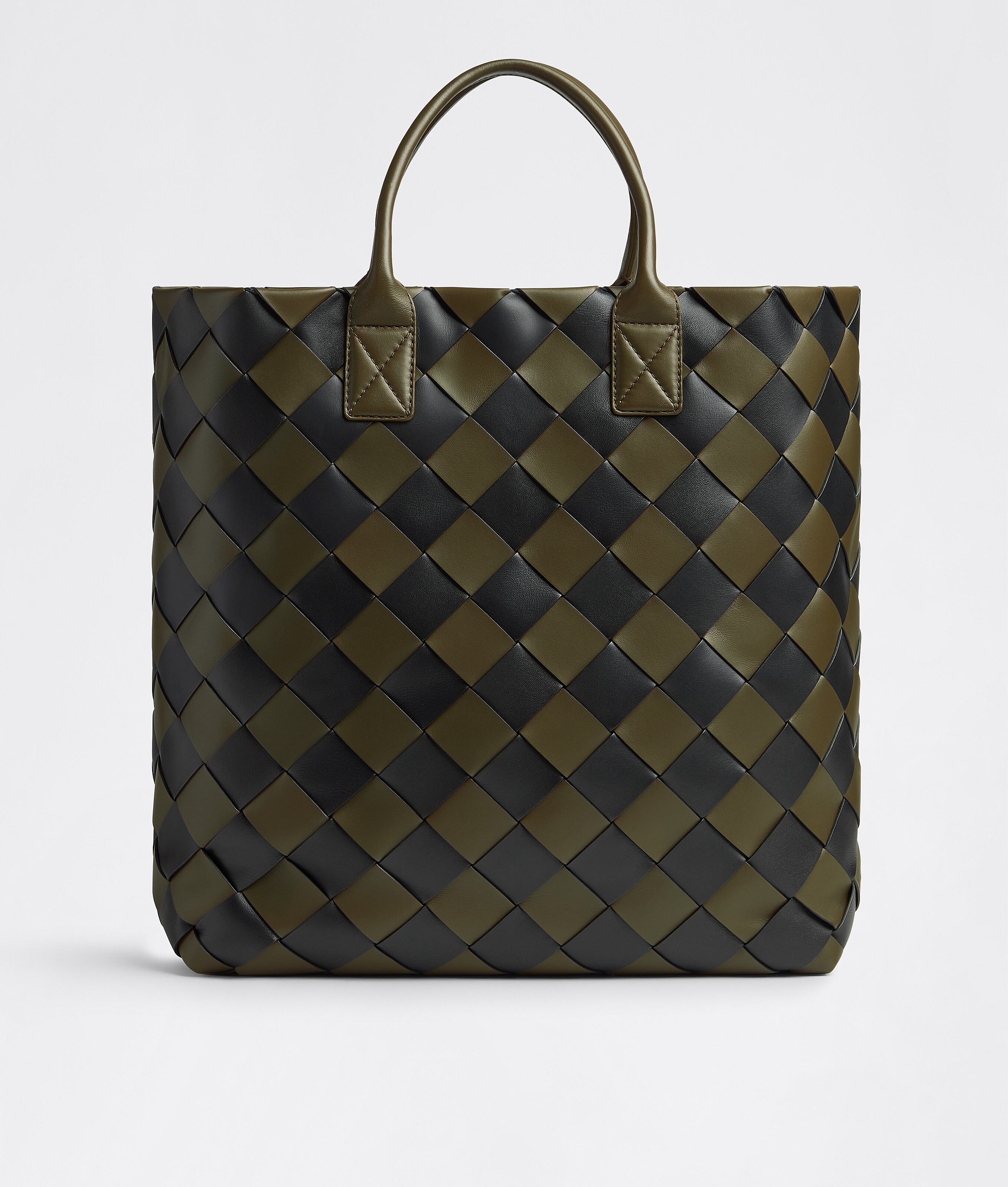
This is the bracket where Bottega's silhouettes start to register from across a room, but they still don't shout. The Small Arco — the tote with the triangular profile and the knotted top handles — runs about $2,100 and works because it doesn't try to be anything other than a daytime carryall. No chain strap, no convertible nonsense, no evening pretensions. You carry it by hand or in the crook of your arm, and it holds a laptop sleeve, a water bottle, and the debris of an actual working day without collapsing into itself.
The intrecciato here is denser than on the small leather goods, the strips wider, the weave more visible at a distance. The structure comes from an internal frame rather than stiff leather, which means the bag softens with use but doesn't sag. After a year, the handles will have moulded to your grip, and the body will have settled into a slightly less rigid triangle. That's the point. Bottega's leather isn't engineered to stay pristine — it's engineered to soften in ways that look intentional.
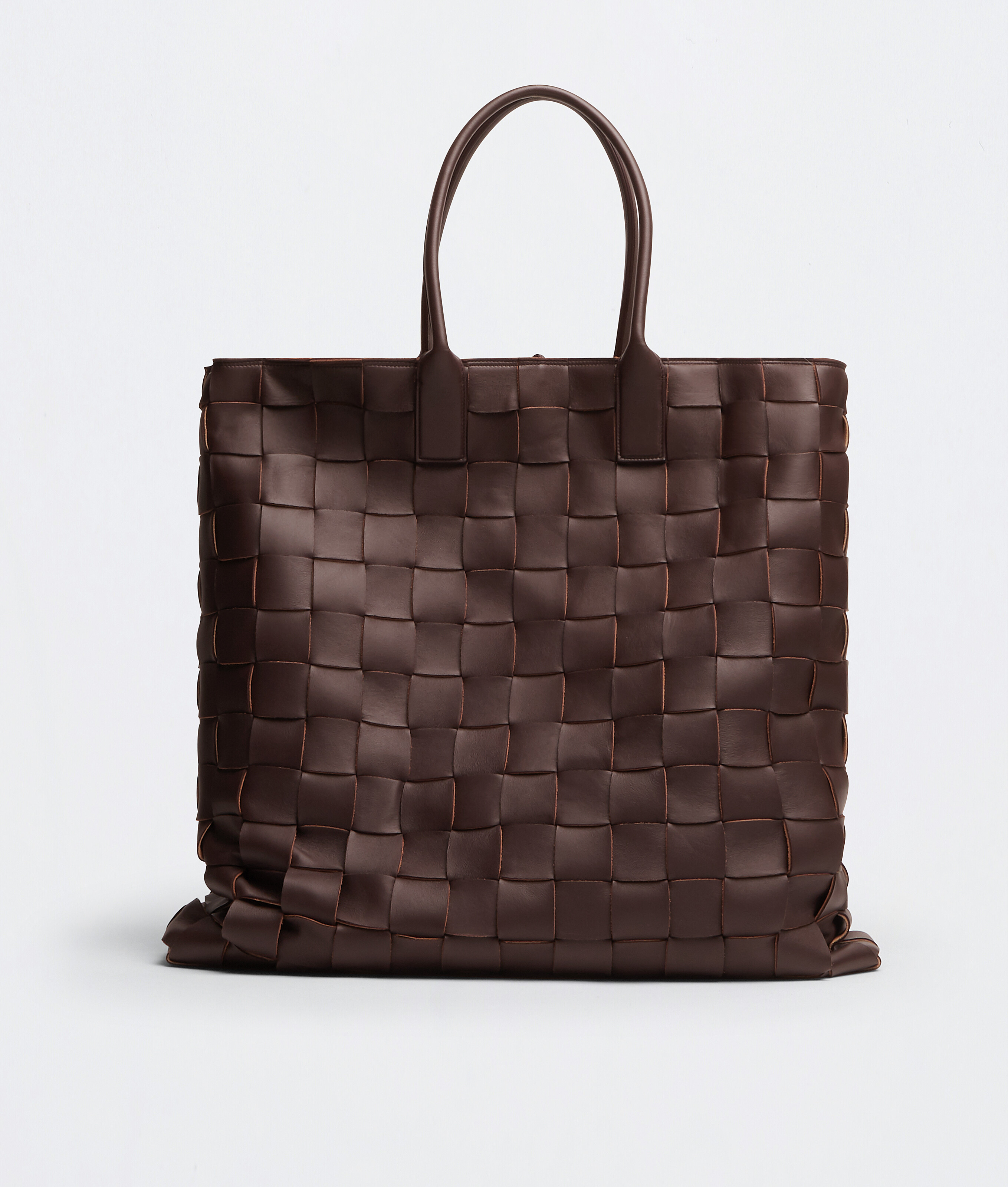
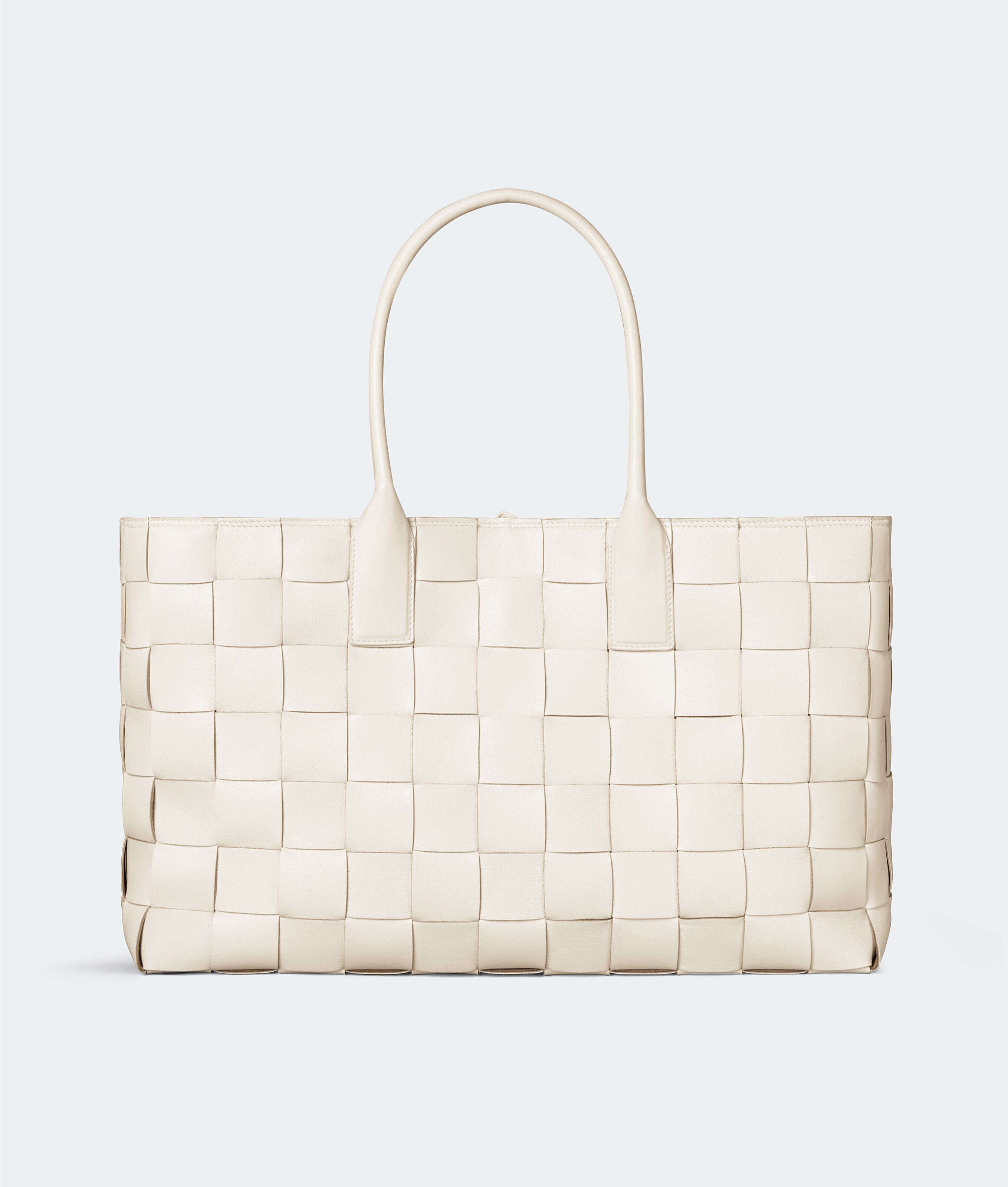
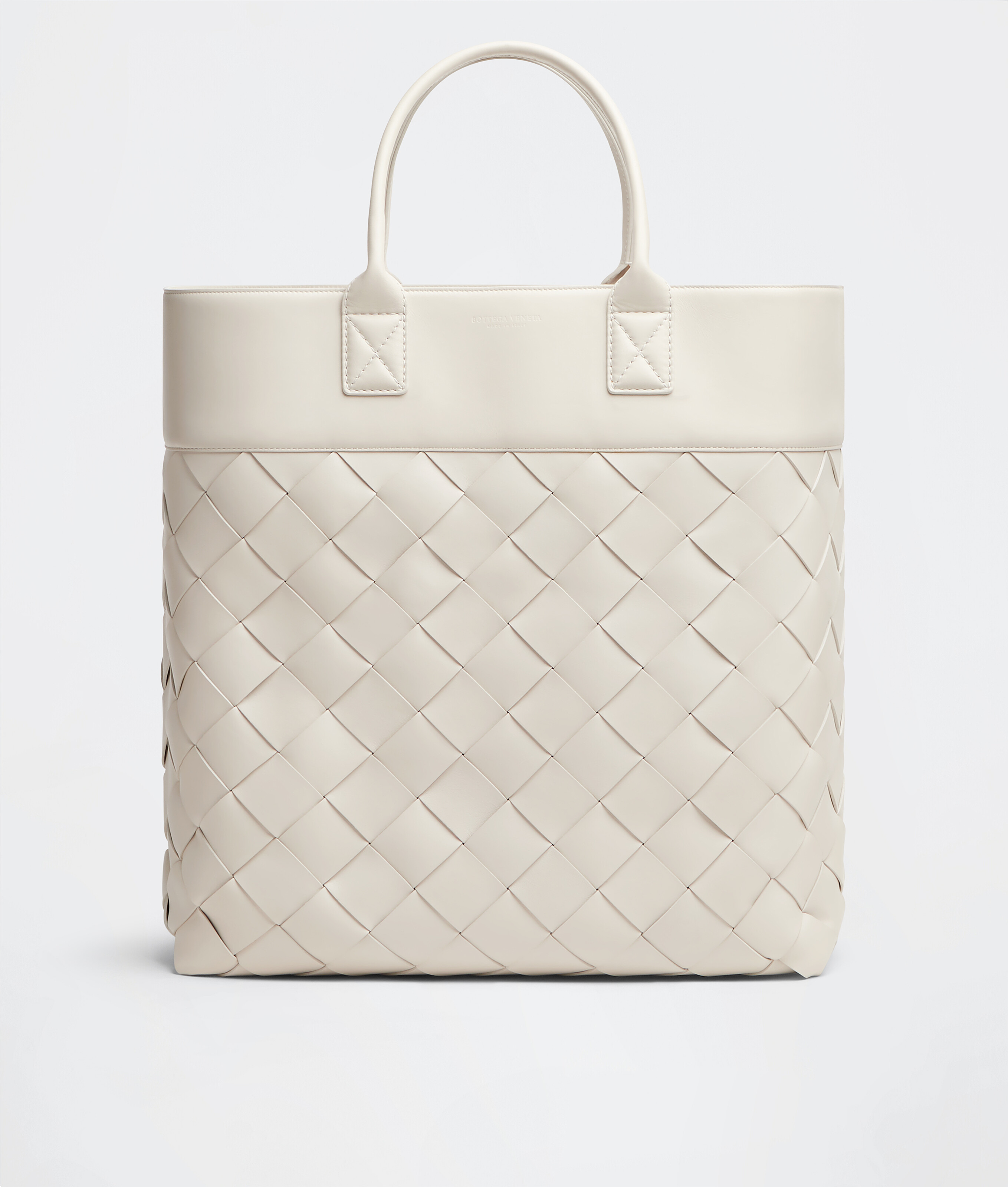
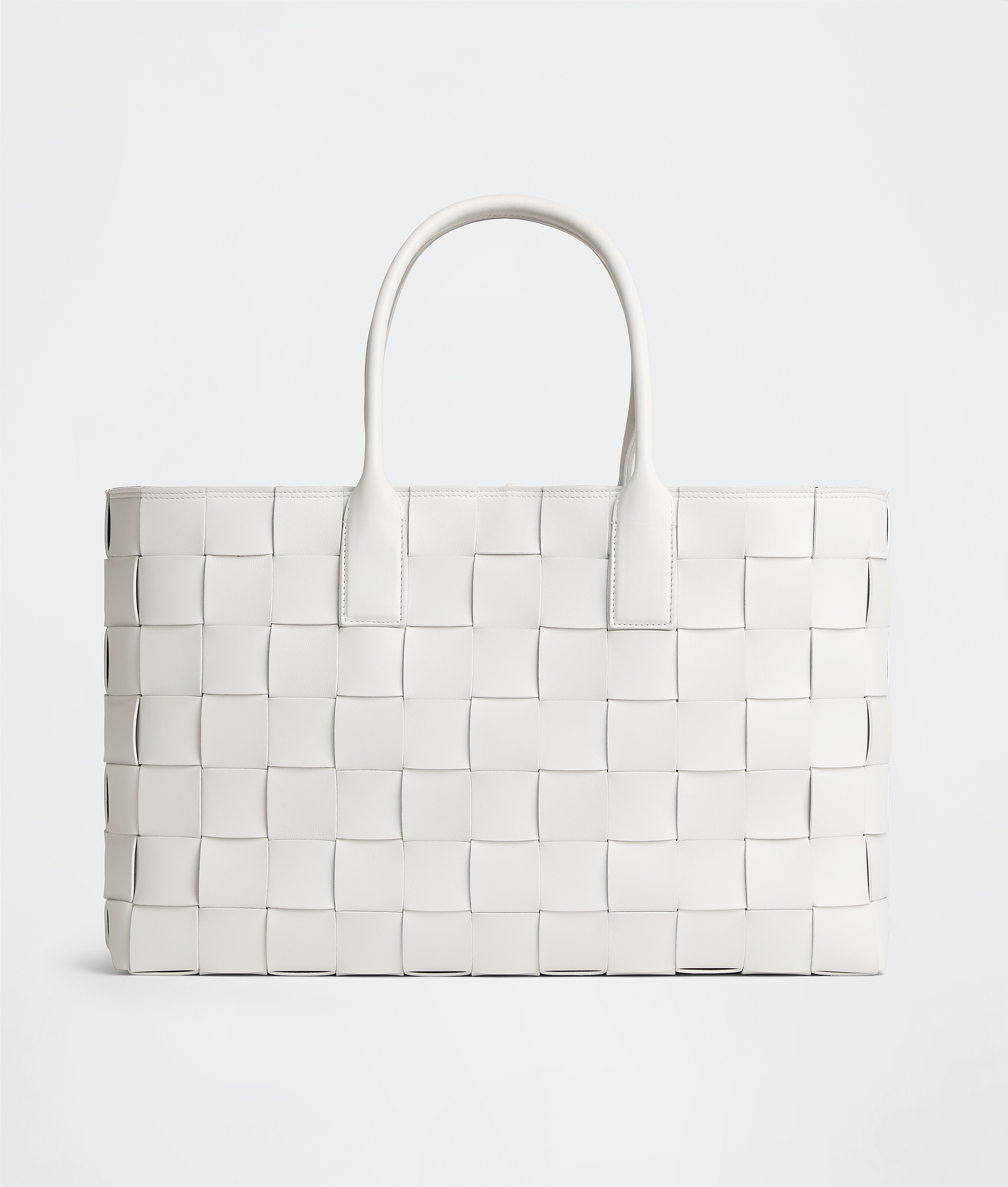
The Intrecciato Tote, a flat-profile style with short handles and no hardware, sits closer to $1,800 and works if you don't carry volume. It's a documents-and-wallet bag, the sort you take to a meeting or carry on a flight when you've checked everything else. The woven calf wraps the entire exterior, no smooth leather breaks, and the thinness of the profile means the intrecciato reads as texture rather than statement. It's also one of the few Bottega silhouettes that works as well for men as it does for women, which makes it a safer investment if you're buying for someone else.
Both styles come in the house's seasonal palette, but the smart buy here is still a neutral. The bags at this price point don't cycle through resale as quickly as the Cassettes or Jodie bags — they're less hyped, less Instagrammed — which means you're more likely to keep this one for a decade. Buy accordingly.
$3,000 and Up: The Cassette or Jodie
The Cassette is the bag that rebuilt Bottega's contemporary relevance, and it's aged better than most viral accessories manage. Three years on, it still works because the proportions are clean — a rectangular body, a padded quilted weave, a magnetic flap closure that doesn't require two hands to operate — and because the woven pattern is dense enough to read as texture rather than logo. You see it, you recognise the house, and then you move on. That's different from a monogram bag, where the recognition is the entire point.
The Cassette in the standard size runs about $3,200 and works as a crossbody or a shoulder bag, depending on how you adjust the woven leather strap. The chain version, about $400 more, adds weight and a slightly more formal register, but the leather strap is the smarter choice if you're planning to wear this daily. Chains patinate, but they also tarnish, and Bottega's chain hardware isn't plated thick enough to survive years of skin contact without dulling.
The Jodie, the knotted hobo bag that Matthieu Blazy pushed harder in his first two collections, runs $3,600 and up depending on size. It's softer, less structured, and more overtly tactile than the Cassette — the single knotted handle is the entire design gesture, and the bag slumps when you set it down, which is either appealing or annoying depending on how much you care about a bag holding its shape. The intrecciato here is supple enough that the bag folds nearly flat when empty, which makes it useful for travel but less practical for daily carry if you're the sort who needs a bag to stand upright on a desk.
Both silhouettes come in the full seasonal range, and this is the bracket where the non-neutral colours start to make sense. A Cassette in parakeet or mallow or fondente will still read as Bottega in five years, because the shape is now canonical. The same bag in a smooth leather or an exotic skin won't — those are the versions that date you to a specific collection, a specific fashion editor's Instagram, a specific moment that's already moved on.
On Care and Longevity
Bottega's intrecciato calf doesn't need much. A dry cloth after rain, a leather conditioner once a year if you're in a dry climate, and a dust bag when you're not using it. The weave will loosen slightly over time — that's the leather relaxing, not the construction failing. If a strip begins to fray, Bottega's atelier repair service will re-weave the section, though you'll wait four months and pay about 15 percent of the bag's original price.
The hardware, sparse as it is, will tarnish if you don't wipe it down after handling. The magnetic closures on the Cassette will weaken after several years of daily use, but they're replaceable. The knotted handles on the Jodie will stretch, and they're not. Plan accordingly.