Burberry is a house that people think they know until they actually look
Burberry is a house that people think they know until they actually look. The check is shorthand, yes — but it's also a trap if that's all you see. The real work at Burberry has always been in the cloth. Gabardine invented for Arctic explorers. Trench coats cut for cavalry officers who needed to move. A relationship with weather, with function, with the idea that luxury should do something other than sit in a closet.
The question isn't whether Burberry belongs in a wardrobe. It does. The question is which piece earns its place first, and at what point of entry. A scarf is one answer. A trench is another. But there's a third tier — the accessory that doesn't announce itself as Burberry until you're already wearing it well — that often makes the most sense. What you're buying isn't just the thing. It's a position on British craft, on heritage that's been worked over by Daniel Lee and others before him, on the difference between a logo and a legacy.
Three budgets. Three ways in. All of them correct.
Under $500: The Cashmere Scarf
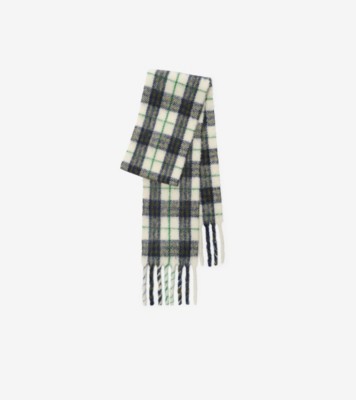
Start here if you want the material first and the branding second. Burberry's cashmere scarves run lighter than most people expect — not the heavy, stiff planks that some houses put out, but cloth with actual drape. The signature check comes in a dozen colourways now, but the camel base with black, red, and white is still the one that works hardest. It's recognisable without trying to be.
You'll wear this more than you think. Folded under a coat in February. Knotted at the neck over a T-shirt in October. Draped across the shoulders on a plane when the air conditioning is punitive. The width — roughly 12 inches — means it has presence without bulk. Cashmere this fine doesn't pill if you treat it correctly. Fold it, don't ball it. Store it flat or on a hanger with a cloth guard. If it needs cleaning, hand-wash in cool water with something gentle, or take it to someone who knows what they're doing.
The scarf also works as an education. You learn what Burberry's hand feels like. You learn whether the house's version of luxury aligns with yours. And if it doesn't, you're out $450, not $2,000.
$800–$1,200: The Knight Bag
This is Lee's clearest statement so far on what Burberry accessories should be. The Knight bag — a structured, top-handle style in grained or smooth leather — doesn't lean on archive codes. It doesn't need to. The shape is mid-century, the hardware is minimal, and the interior is laid out like someone actually thought about what you'd carry.
The small size works. It holds a phone, a cardholder, keys, lipstick, sunglasses. The handle sits high enough that you can tuck it under your arm without adjusting your gait. The shoulder strap (included, not sold separately — a small mercy) is long enough for crossbody wear. The leather options range from black grained calfskin to softer suedes in seasonal colours. Black is the obvious choice. Tan is the interesting one.
What you're buying here is a bag that doesn't try to be anything other than a bag. No monogram canvas. No logo hardware that doubles as a billboard. Just a clean, well-made object that happens to come from a house with a point of view. It's not trying to start a conversation. It's trying to end one.
The Knight also holds value differently than trend-driven bags. It's not riding a wave of hype that crests and crashes in 18 months. It's a shape that's been good since 1955 and will be good in 2035. If you decide it's not for you in three years, the resale market will be there.
$2,000–$2,500: The Kensington Trench
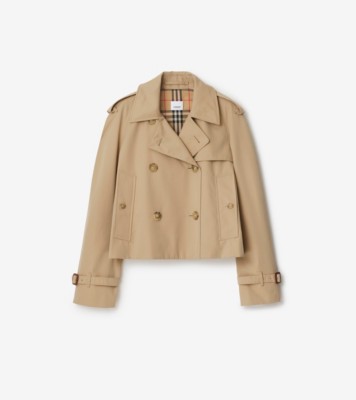
If you're going to buy one piece of Burberry outerwear in your life, this is it. The Kensington is the house's mid-length trench — longer than a car coat, shorter than the full Waterloo — and it's cut closer to the body than the traditional styles. It's the trench for people who actually move through cities, not for people standing on a runway.
The cloth is gabardine, which Burberry's founder developed in 1879 and still weaves in Yorkshire. It's a twill that's been treated to repel water without a plastic coating. It breathes. It doesn't stiffen in cold air. The weight sits around 10 ounces, which means it has structure but not heft. You can wear this from March through November in most climates.
The fit is what separates the Kensington from other trenches. The shoulder line is clean, not dropped. The sleeve is set in, not raglan, which means it actually follows your arm when you move. The belt isn't decorative — it cinches at the natural waist and holds. The storm flap, the throat latch, the sleeve straps — all of it works. This coat was designed by someone who understood that weather is not a metaphor.
Colour: honey is the classic, but navy and black both have a case. Honey shows age in a way some people love and others don't. Navy hides it. Black doesn't try.
This is the piece that makes people ask, 'Is that Burberry?' in a different tone than they ask about the check. It's the tone that means they've noticed the cut before they noticed the label.
A Note on Longevity
Burberry's pieces last if you let them. The cashmere scarf needs to be stored properly — no wire hangers, no tight folds that crease the weave. The Knight bag will develop a patina if it's leather; suede versions need a protective spray and a brush for regular maintenance. The trench should be cleaned once a season by someone who knows how to handle gabardine. Don't put it in a machine. Don't leave it balled up in a closet.
What you're buying is clothing that assumes you'll still be wearing it in a decade. The house has a repair service. Use it. A replaced button or a restitched lining costs less than a new coat, and it keeps the thing in rotation. Burberry's value isn't in the newness. It's in the fact that it doesn't need to be new to be good.