Fendi doesn't make quiet bags
Fendi doesn't make quiet bags. That's not the assignment and never has been. Since Karl Lagerfeld arrived in 1965, the Roman house has treated leather goods as a place to take risks — with structure, with hardware, with the idea that a bag might do more than hold your things. The Baguette arrived in 1997 and changed what an It bag could be: compact, unapologetic, worn under the arm like bread from the market. Two decades later, the Peekaboo gave us a different proposition — architectural, reversible, built for women who move through the world with their hands full and their schedules tighter. Fendi's range now spans those two poles: bags that announce and bags that organise, pieces for occasion and pieces for every day. What they share is specificity. These aren't templates. They're shapes that only make sense in this house's hands, stitched in Fendi's atelier in Florence, finished with hardware that weighs exactly what it should. The bags below aren't the only ones worth knowing, but they're the ones that explain the house's point of view — and they're the ones that tend to stay in rotation long after you've bought them.
Baguette
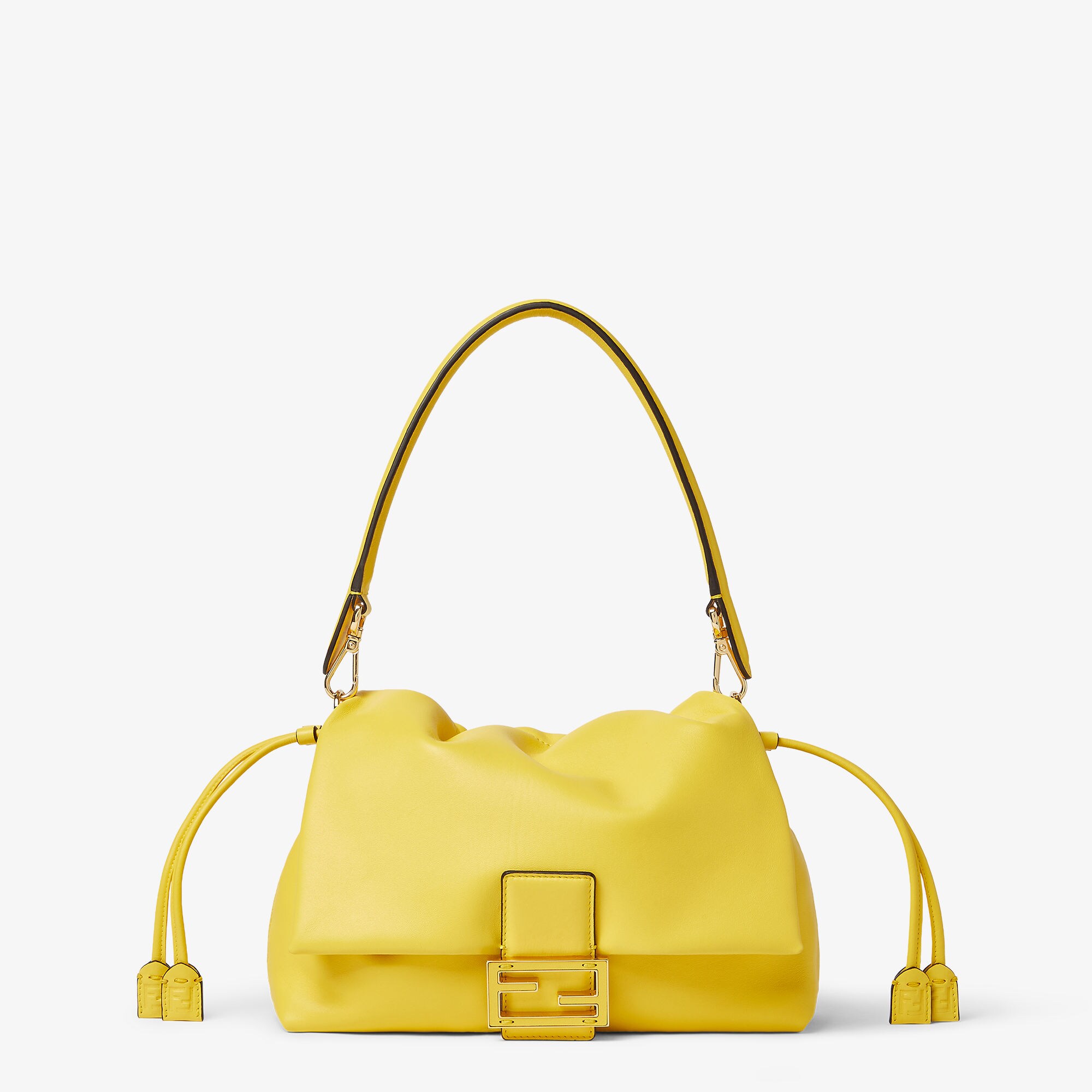
The Baguette is twenty-seven years old and still doesn't look like anything else. It's short — just over ten inches across — and meant to sit under your arm, not dangle from your shoulder. Fendi released it in 1997, the same year Sex and the City premiered, though Carrie Bradshaw didn't carry hers until three years later. By then the bag had already moved through a dozen iterations: beaded, sequinned, embroidered, done in python and shearling and canvas printed with the double-F logo that Lagerfeld designed in the sixties. The shape holds. It's a half-moon with a flap, closed with a turn-lock or a magnetic clasp depending on the season. The strap is short enough that the bag stays close to your body, which matters if you're moving fast or carrying it somewhere crowded. Inside, there's room for a phone, a card case, keys, lipstick — not much more. That's the point. The Baguette isn't a tote. It's not trying to replace your work bag. It's the bag you take when you've already decided what matters.
Fendi reissues the Baguette every season in new materials, but the structure is consistent: that compact width, that curved base, that single exterior pocket under the flap. The hardware varies. Some versions use the FF clasp; others close with a jewelled turn-lock or a slim magnetic strip. The classic iteration is done in Selleria leather, the same hand-stitched, vegetable-tanned calfskin the house has used since 1925. It comes in black, in camel, in a dozen seasonal shades. The bag works because it's small enough to feel considered but large enough to be useful. You don't carry it to prove something. You carry it because it fits.
Peekaboo
The Peekaboo is the bag Fendi made for women who needed their hands free and their bags structured. It launched in 2009, during the financial crisis, which might explain the sobriety. It's a doctor's-bag silhouette — top handles, a trapezoidal base, a frame that holds its shape even when it's empty. The name comes from the interior: open the bag and you see a divider panel, often in a contrasting leather or printed canvas, that splits the space in two. Turn the bag inside out — yes, you can do that — and the lining becomes the exterior. It's reversible, which sounds like a gimmick until you've used it. Then it's just practical.
The Peekaboo comes in three sizes: the ISeeU, which is compact and meant for evening or short errands; the regular Peekaboo, which fits a laptop and works for the office; and the X-Lite, a soft-sided version that folds when it's empty. The hardware is minimal — just two twist-locks on the top handles and small metal feet on the base. The bag is built in Fendi's Florence atelier, where each one takes a full day to construct. The leather options run from smooth calfskin to grained Selleria, and seasonal versions bring in python, crocodile, or shearling. What doesn't change is the structure. The Peekaboo is engineered to stay upright. You can set it down on a table, a car seat, a restaurant floor, and it won't tip. That's not an accident.
First
The First arrived in 2021, and it's Fendi's attempt at a forever bag — the kind of piece you buy once and carry for a decade. It's a top-handle style, smaller than the Peekaboo but more substantial than the Baguette. The body is a soft trapezoid in Cuoio Romano leather, a vegetable-tanned hide that Fendi sources from Tuscany and finishes by hand. The hardware is brass, plated in either gold or palladium, and it includes a clasp shaped like the house's double-F logo. The strap is adjustable, which means you can wear it as a shoulder bag or carry it by the handles. Inside, there's a single compartment with a zip pocket and enough room for a tablet, a wallet, a small cosmetics case.
The First is quieter than most Fendi bags. It doesn't rely on logo hardware or seasonal embellishment. The shape is classic — it could have been made in 1975 or 2015. What dates it is the leather, which Fendi treats with a wax finish that darkens as it ages. The bag is meant to patina. You're supposed to see the scratches, the worn corners, the places where your hand has rubbed the brass. Fendi sells a care kit with beeswax and soft cloths, and the house offers a repair service for hardware and stitching. The First is the bag you buy when you're done cycling through trends. It's the bag you buy when you want something that improves with use.
Fendigraphy
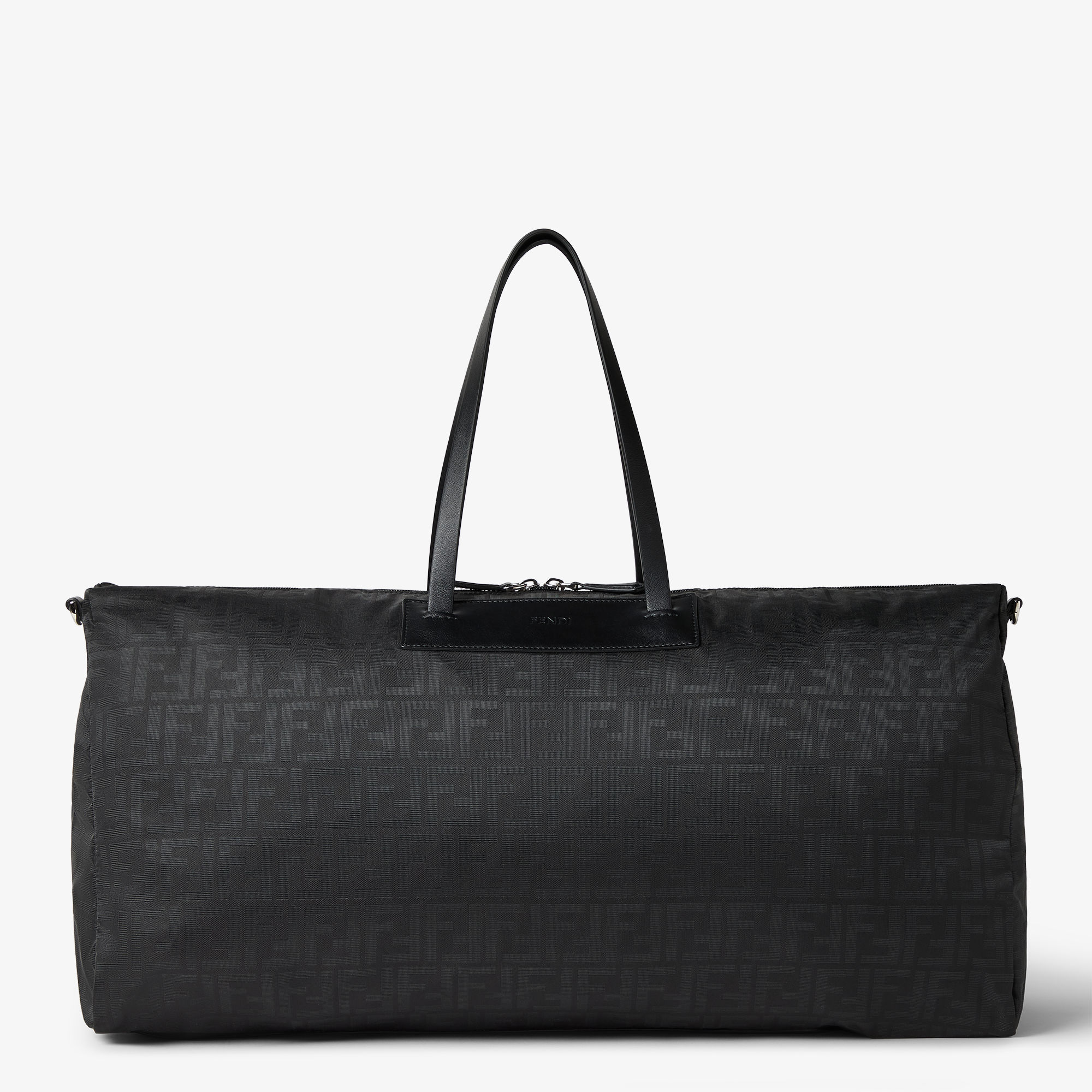
The Fendigraphy is a camera bag, but it's not small. It's wider than the Baguette — closer to twelve inches across — and it has a boxy, structured base that makes it feel more like a miniature satchel. The shape is borrowed from vintage camera cases, the kind photographers carried in the seventies, but the materials are pure Fendi: jacquard canvas printed with the FF logo, leather trim, a wide canvas strap that sits comfortably on the shoulder. The bag closes with a zip that runs along the top edge, and inside there's a padded divider you can remove if you're not actually carrying a camera.
The Fendigraphy works because it's androgynous. It doesn't read as a women's bag or a men's bag — it's just a bag. Fendi has leaned into that, releasing versions in neutral tones (black, brown, grey) and skipping the seasonal embellishments that define the Baguette. The strap is the key detail: it's two inches wide, made from the same FF jacquard as the body, and it's long enough to wear crossbody. That makes the bag practical for travel, for long days, for situations where you need both hands free but still want something more considered than a backpack. The Fendigraphy isn't flashy. It's not trying to be. It's the bag you bring when you want people to notice what you're wearing, not what you're carrying.
Nano Baguette
The Nano Baguette is the original Baguette shrunk to four inches wide. It's too small to be useful in any traditional sense — you can fit a lipstick, a credit card, maybe a folded bill. That's it. But it's not meant to replace a handbag. It's meant to replace jewellery. Fendi introduced the Nano in 2019 as part of a broader push into micro bags, and it became one of the house's most-copied shapes. The proportions are exact: same curved base, same turn-lock closure, same short strap. The only difference is scale.
The Nano works because it's specific. You wear it to dinner, to a gallery opening, to a wedding where you don't want to check a bag. You wear it when you've already put your essentials in someone else's tote and you just need something to hold your hands. Fendi makes the Nano in the same materials as the full-size Baguette — Selleria leather, beaded canvas, shearling, python — and the craftsmanship is identical. The stitching is done by hand. The hardware is brass. The bag takes the same amount of time to construct as its larger counterpart, which is part of why it costs nearly as much. The Nano isn't a novelty. It's a commitment to a very particular kind of occasion, the kind where carrying less is the entire point.
Care and Longevity
Fendi bags are built to last, but only if you treat them correctly. The house recommends storing each bag in its dust cover, away from direct sunlight and humidity. For Selleria leather — the hand-stitched, vegetable-tanned hide used on the Baguette and the First — Fendi sells a care kit that includes beeswax and a soft cloth. You're meant to condition the leather every few months, working the wax in with your fingers and buffing it with the cloth. The process takes ten minutes and it keeps the leather supple. For bags with metal hardware, avoid perfume and hand cream near the clasps — both can tarnish brass over time. If a strap frays or a stitch loosens, bring the bag to a Fendi boutique. The house offers a repair service that replaces hardware, re-stitches seams, and refinishes leather. Most repairs take four to six weeks. The work isn't cheap, but it's almost always cheaper than replacing the bag. And if you've chosen well — if you've bought one of the pieces above — you won't want to replace it anyway.