Fendi doesn't make shoes for people who want to look like they're wearing Fendi shoes
Fendi doesn't make shoes for people who want to look like they're wearing Fendi shoes. The logo is there—doubled F, turned into a clasp or a heel cap—but it reads quietly. What the house does well is construction that holds a silhouette past the first month of wear. Most luxury footwear falls apart or deforms by season two. The leather creases badly, the sole compresses unevenly, or the heel tip wears through faster than you'd expect from something priced north of €700. Fendi's best models don't do that. They age into themselves.
What matters in a shoe that holds up isn't the initial finish. It's whether the insole keeps its shape, whether the topline stays firm against your ankle, whether the welt—if there is one—remains attached after a winter of slush and salt. Fendi builds most of its core range in the Fiesso d'Artico workshops outside Venice, where the same families have been cementing welts since the Seventies. That's not romance. It's a supply chain that hasn't moved to cheaper provinces. The three models below have been worn across multiple seasons, resoled once or not at all, and still look like shoes rather than evidence of a mistake.
Flow Mule
The Flow launched in 2021 as part of Kim Jones's second year at the house. It's a backless loafer in calfskin or nappa, with a padded vamp that folds over itself and a rubber sole moulded in one piece. The shape is almost orthotic—wide through the forefoot, gently domed at the instep—but it photographs narrow. That's the trick. On foot it doesn't pinch.
Two years in, the nappa version softens into something you can slip on without a shoehorn. The vamp loses its initial puff but doesn't collapse. The rubber sole, which is thicker than it looks, wears down evenly if you walk on pavement. If you walk on marble or polished concrete, it barely wears at all. The insole is leather over cork, and it moulds to your arch by month three. After that it stays put.
The calfskin version is stiffer and takes longer to break in, but it holds its shape better if you're hard on shoes. The nappa is for people who want a house slipper that works outside. The calf is for people who don't want their shoes to look like house slippers by year two. Both versions come in black, tobacco, and a rotating selection of seasonal tones that sell poorly and end up in the sample sales by January. Retail is €750. Resole cost at a competent cobbler is around €80.
First Ankle Boot
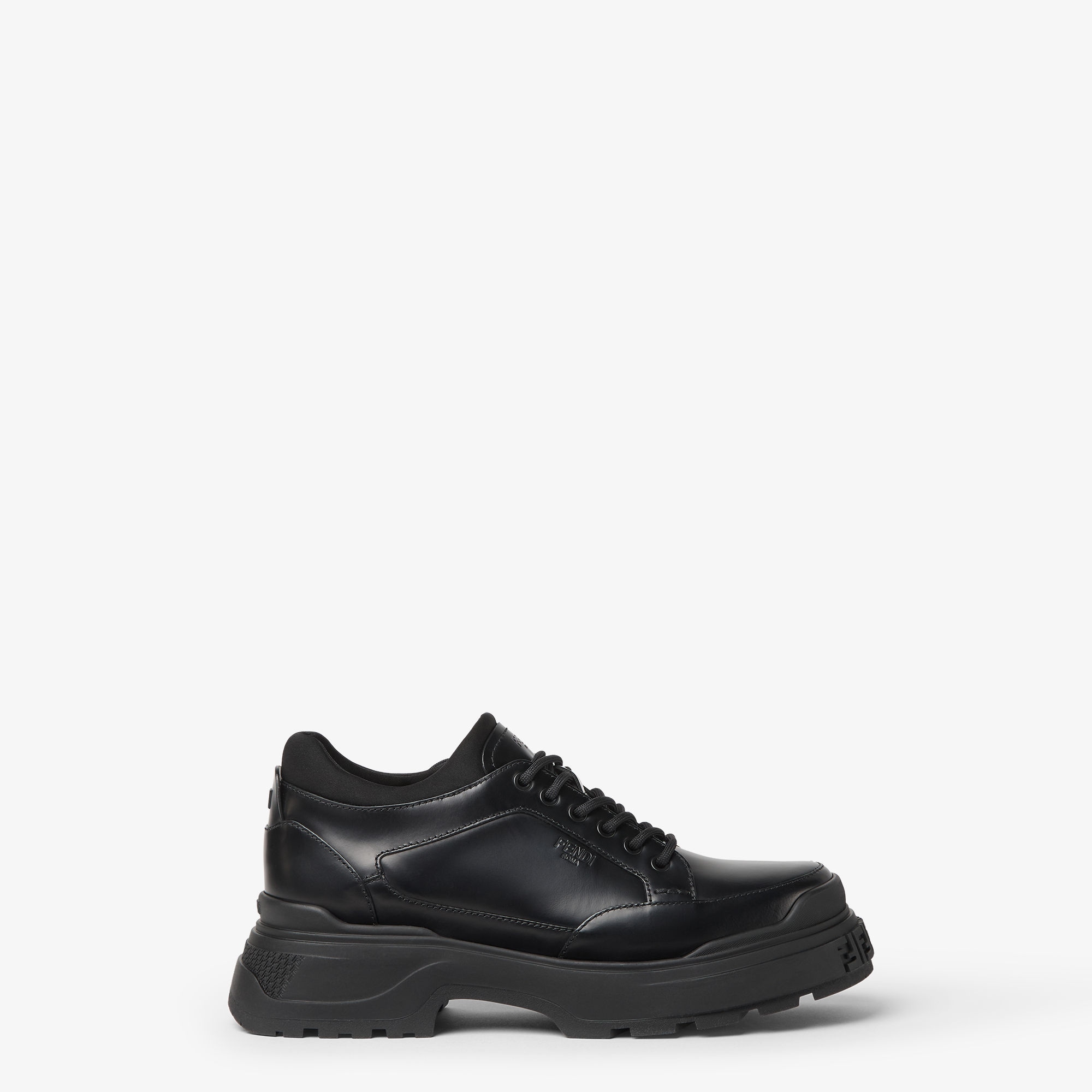
Fendi's First boot has been in the catalogue since 2020, which makes it old by the house's standards. It's a Chelsea-adjacent boot in smooth calf with an elastic gusset, a stacked leather heel at 4cm, and a rubber tap on the sole. The shaft hits just above the ankle bone. The toe is rounded but not bulbous. It's the boot you wear when you need something that isn't a sneaker and isn't trying to be a statement.
The leather is vacchetta, which scuffs easily in the first month and then stops scuffing. The elastic gusset stays taut longer than most Chelsea boots manage—Fendi uses a denser knit and doubles the stitching at the top and bottom. By season two the boot has creased across the vamp, but the crease is clean and follows the flex of your foot. Badly made boots crease in three directions. These crease in one.
The insole is the same cork-backed leather as the Flow, and it compresses into a custom fit by week six. After that the boot doesn't shift when you walk. The heel stack is glued and nailed, not just glued, which means it doesn't separate when it gets wet. Most boots in this price range are just glued. Fendi charges €890 for the First, which is high for a boot with a rubber sole, but the construction is closer to a Goodyear-welted shoe than a cemented one. You can resole it twice before the upper gives out.
The boot comes in black, dark brown, and an occasional grey that shows scuffs badly. Stick with black or brown. If the elastic gusset loosens after two years, a cobbler can replace it for €40. The boot will outlast most of your knitwear.
Karligraphy Slingback
The Karligraphy is Karl Lagerfeld's signature turned into a metal buckle on the strap of a mid-heel slingback. It launched in 2023 and it's more overtly logo-driven than the other two, but the buckle is small and sits flat against the strap. The heel is 6.5cm, set slightly forward so your weight sits over the ball of your foot rather than behind it. That's why the shoe doesn't tip you forward when you stand still.
The upper is nappa or patent, depending on the season. The nappa is softer and stretches slightly across the vamp after a few wears. The patent stays rigid but doesn't crack if you store it properly. The slingback strap is elasticated at the heel, which means it doesn't cut into your Achilles tendon the way fixed-strap slingbacks do. The insole is cushioned at the ball of the foot, where most slingbacks leave you standing on a thin layer of leather over fiberboard.
The heel is wrapped in leather and tipped with a replaceable rubber cap. The cap wears through faster than the Flow's sole—you're putting your full weight on a smaller surface—but it's a standard size and any cobbler can swap it for €15. The shoe holds its shape well if you use shoe trees. Without them, the vamp will collapse inward by season two. With them, it stays firm. Retail is €790. The Karligraphy works best if you're already comfortable in a mid-heel and don't need your shoes to feel like sneakers.
Care and Longevity
Fendi shoes last longer if you treat them like leather goods rather than accessories. Use cedar shoe trees after every wear—plastic trees don't pull moisture out, and moisture is what breaks down insoles. Condition smooth calf every six weeks with a neutral cream; nappa needs less, maybe twice a year. Avoid suede protector sprays that aren't water-based; they stiffen the nap. Resole before the sole wears through to the welt. If you wait until you've worn a hole, the repair costs double. Store in dust bags, not boxes. Boxes trap moisture. Most high-end shoes die from neglect, not wear.