Fendi doesn't need to shout
Fendi doesn't need to shout. The house has been making bags since 1925, and that kind of tenure teaches restraint — or it should. What Fendi does well, when it's working, is balance craft with a sense of play that never tips into novelty. The leather goods feel considered without being precious. They sit in the hand like something you've owned longer than you have. That's partly materials: the house works with artisans who understand how calfskin should drape, how a handle should distribute weight. It's partly design: the proportions tend to be right even when the silhouette is unexpected. And it's partly legacy. Fendi has been refining these shapes for decades, and you feel that in the details — the way a clasp closes, the way a strap adjusts without fuss.
The bags below aren't the full catalogue. They're five pieces that do specific work well, that hold their value in both the resale market and in how they actually perform over years of use. Some are quiet. Some announce themselves. All of them earn their place.
Peekaboo
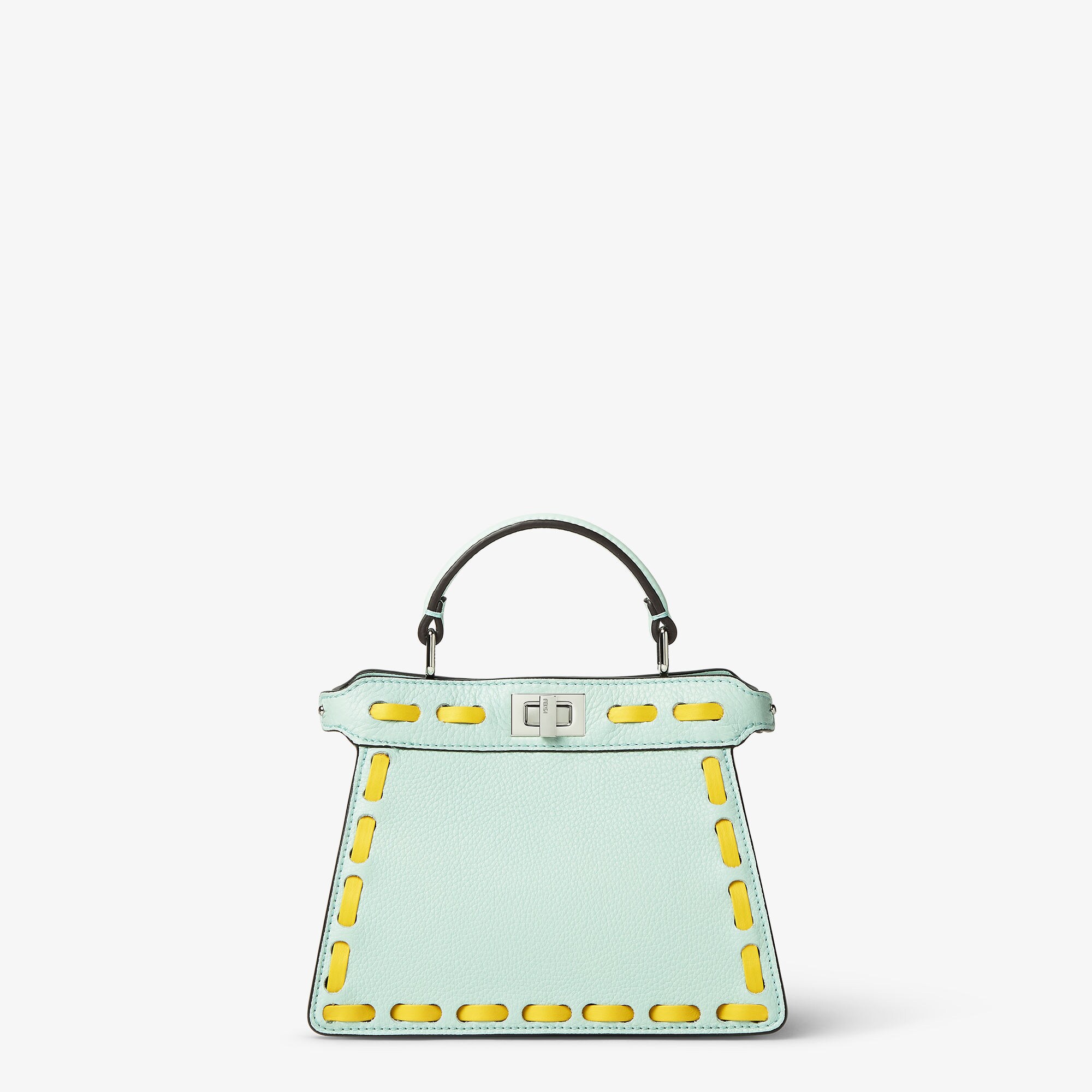
The Peekaboo is a structured top-handle that opens from the centre, revealing two compartments separated by a rigid divider. It launched in 2008 and has stayed in production because the geometry works: the bag holds its shape under load, the frame doesn't sag, and the twin-compartment layout makes sense if you carry more than a wallet and a phone. The name comes from the way the lining flashes when you open it — often in a contrasting colour or print — but that detail never reads as gimmicky because the rest of the bag is so measured. The handle sits high enough that you can carry it in the crook of your arm without adjusting your gait. The silhouette is angular, almost severe, which makes it a good match for tailoring or anything else that asks for a clean line. Fendi offers it in three sizes; the medium works for most people. The leather is typically calf, sometimes embossed, sometimes left smooth. It's not a bag that disappears, but it doesn't demand attention either. It just holds the space it occupies.
Baguette
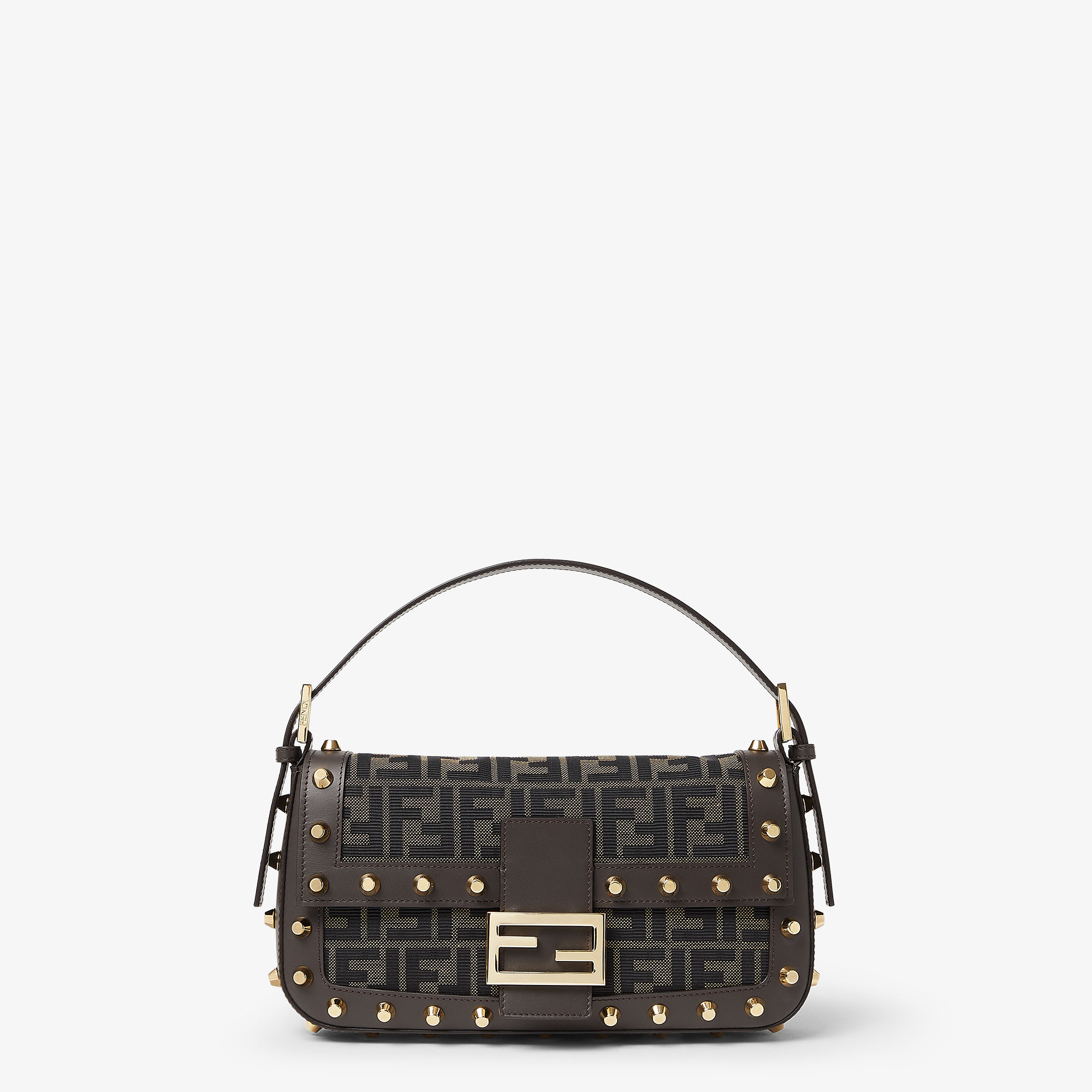
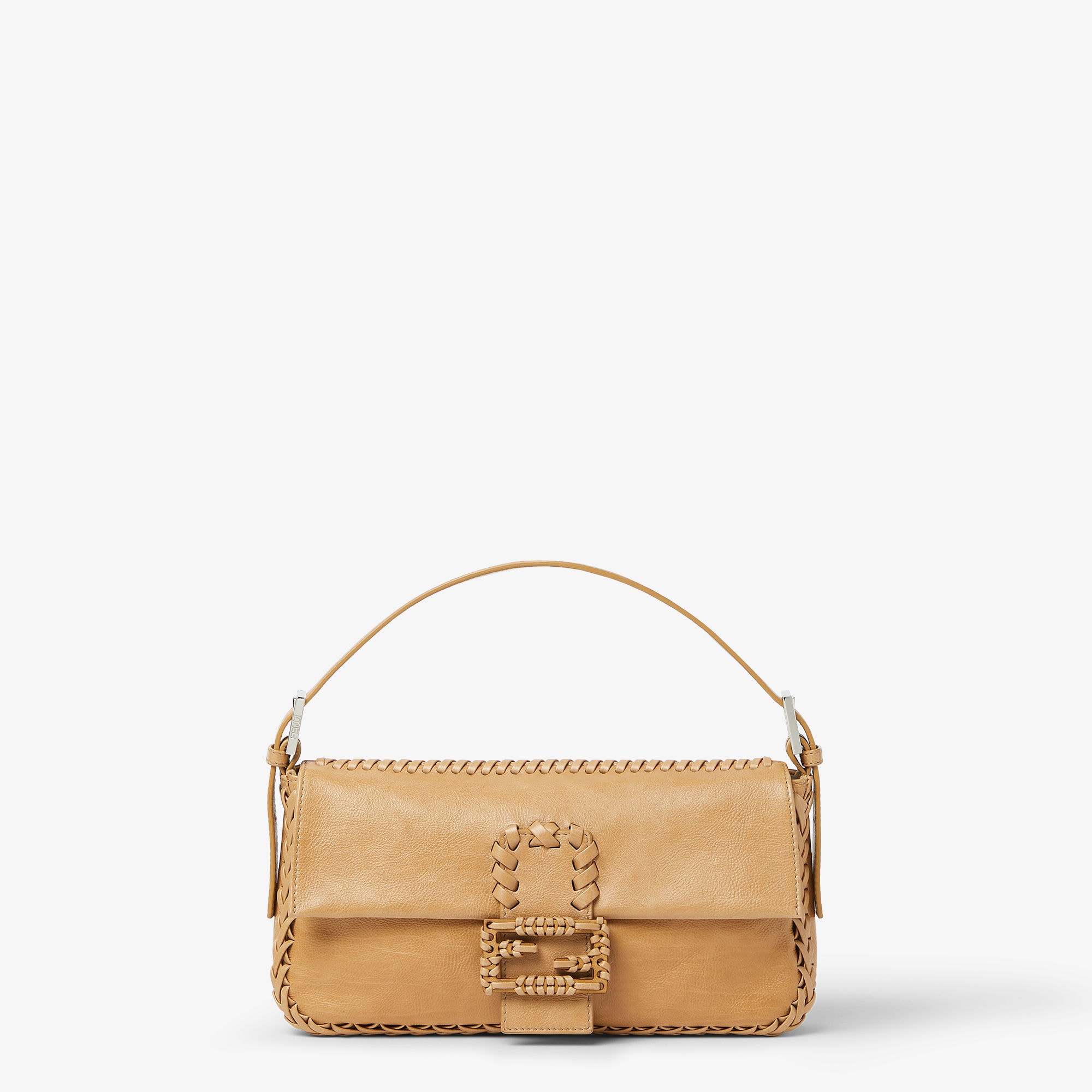
The Baguette is the bag people know even if they don't know Fendi. It debuted in 1997, underslung and compact, designed to tuck under your arm the way a Parisian might carry a loaf of bread. Silvia Venturini Fendi designed it, and it became shorthand for a specific kind of late-nineties downtown luxury — small, decorative, entirely impractical by the standards of what a handbag was supposed to do at the time. Which was the point. The Baguette doesn't hold much. It holds what matters. A phone, cards, keys, lipstick if the tube is slim. The strap is short, the body is flat, and the hardware — usually a turn-lock or a magnetic clasp — sits front and centre. Fendi has issued it in hundreds of iterations: beaded, embroidered, sequinned, shearling-trimmed, done in collaboration with everyone from Tiffany to Porter. The archive runs deep, and the resale market reflects that. But the version that works best long-term is the simplest one: smooth or grained calfskin, minimal embellishment, a strap you can adjust if your proportions change. It's a going-out bag, not an everyday bag, and it's good at what it does.
First
The First is less famous than the Baguette but more versatile. It's a small shoulder bag with a front flap and a single strap, introduced in the early 2000s and kept in rotation because it solves a specific problem: how to carry just enough without looking like you're trying. The body is soft, not structured, so it moulds slightly to what's inside. The strap is long enough to wear crossbody or short enough to sit at the hip. The clasp is a simple turn-lock, no logo, no flourish. It comes in calf and in Fendi's signature Cuoio Romano leather, which is vegetable-tanned and develops a patina that actually improves the bag rather than dating it. The First doesn't photograph as well as the Baguette — it's quieter, less graphic — but it works harder in real life. You can wear it to dinner or to run errands, and it reads differently depending on what else you're wearing. That's a rare quality in a bag this size. Most small bags lock you into a single register. The First doesn't.
Fendigraphy
The Fendigraphy is Fendi's answer to the question of what a contemporary tote should be. It's canvas, not leather, which makes it lighter and less precious. The body is unstructured, so it collapses when empty and expands when full. The handles are long enough to carry over the shoulder even in a coat. It's not trying to be anything other than what it is: a bag for carrying things. Fendi produces it in a few sizes and prints the logo in a bold, blocky typeface across the front, which is either a selling point or a dealbreaker depending on how you feel about visible branding. The canvas is coated, so it sheds water and wipes clean. The interior is unlined, which keeps the weight down. It's the kind of bag you throw in the back seat, load with groceries or books or a change of shoes, and forget about. It doesn't ask for care. It just performs.
Sunshine
The Sunshine is a newer shape, introduced in 2021, and it's the most overtly decorative bag on this list. It's a small top-handle with a rigid structure and a front flap that sits flush against the body. The hardware is statement-level: an oversized turn-lock in the shape of a sun, rendered in gold-tone or palladium-finish metal. The bag is small — it holds less than the Baguette — and the handle is short, so it's meant to be carried by hand, not on the shoulder. It's a bag for occasions, not for daily use. Fendi offers it in smooth calf and in embossed leathers, sometimes with contrast stitching, sometimes with a chain strap tucked inside for when you need your hands free. The Sunshine is the least practical piece here, but practicality isn't the goal. It's a bag that announces itself, that adds weight to an outfit without adding noise. You carry it when you want to be seen carrying something.
On Care
Fendi's leather goods hold up if you treat them correctly, which mostly means keeping them dry and storing them properly when not in use. Smooth calf scratches — that's the nature of the material — but those scratches can often be buffed out with a soft cloth or addressed by a professional. Structured bags like the Peekaboo and Sunshine should be stored upright and stuffed with tissue to maintain their shape. Canvas pieces like the Fendigraphy can be spot-cleaned with a damp cloth; don't submerge them. If a strap or handle starts to wear, take it to a leather specialist before it fails completely. Fendi offers repair services through boutiques, though turnaround can be slow. The bags that last are the ones that get used but not abused, carried often but not carelessly. That's the trade. You put in the small work — a wipe-down, a proper shelf — and the bag gives you years.